This year, the U.S. Capitol Christmas Tree traveled for more than three weeks across 4,000 miles from the Tongass National Forest in Southeast Alaska for display on the Capitol’s West Lawn in Washington D.C. The 80-foot Sitka spruce, nicknamed “Spruce Wayne,” was handpicked from the small community of Wrangell, located 120 miles from where I live in Sitka.
You may be asking yourself—why are we highlighting this tree from Alaska?
This year’s tree is especially unique due to the ornaments decorating its branches. More than 10,000 ornaments were handmade in Alaska, and among them are several dozen ornaments created from marine debris collected during Ocean Conservancy beach cleanups in Sitka. Over the past year, Ocean Conservancy helped collect more than 145,000 pounds of trash from beaches and waterways in Alaska and the Arctic as part of our ongoing effort to combat plastic pollution in the Arctic.
Never miss an update
Enter your email and never miss an update
...loading
Thanks for signing up for Ocean Conservancy emails.
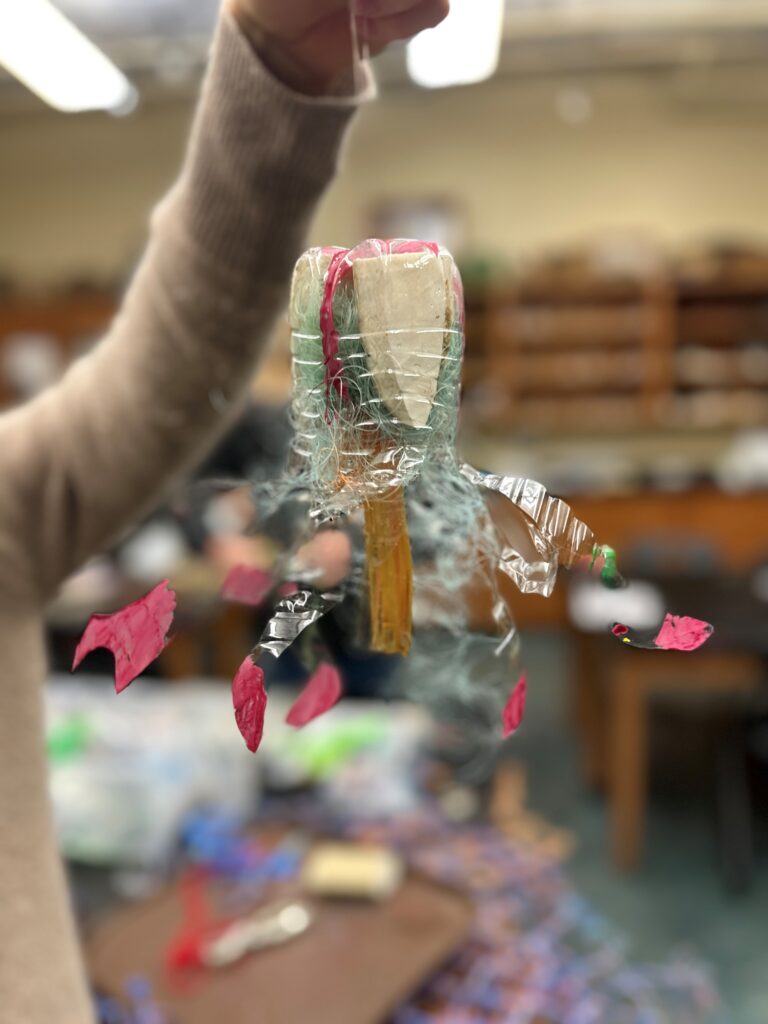
On September 26, Ocean Conservancy’s staff in Sitka organized a marine debris ornament-making workshop in partnership with the Sitka Sound Science Center and the U.S. Forest Service Sitka Ranger District. About 20 members of the community—including kids and adults—came together to learn about Ocean Conservancy’s work and transformed discarded fishing nets, ropes, buoys and plastic bottles into ornaments shaped like sea creatures and flowers.
This year’s Capitol Christmas tree and the ornaments adorning it are reminders of the connections we share—from the forests of Southeast Alaska to the steps of the Capitol in Washington, D.C.—and highlight the importance of protecting our ocean and environment from plastic pollution. For those of you in D.C. lucky enough to admire the tree this year, keep an eye out for these unique marine debris ornaments created during our workshop, including some I even made myself! And even if you’re not able to see the U.S. Capitol tree in person, we hope this story inspires you to get creative and make eco-friendly or recycled holiday decorations of your own, like an egg carton candy cane, tin can snowmen or other ideas in this ocean-friendly DIY holiday decor guide or design your own ugly holiday sweater.
Creating ornaments from marine debris collected in Sitka, Alaska for the U.S. Capitol TreeA plastic ornament created from marine debris collected off the coastline of Sitka, Alaska.
Critical minerals are key components of clean-energy technologies, which are essential to replacing fossil fuels and stabilizing the climate. At present, the United States is highly dependent on critical minerals to support a growing electric vehicle market. Yet, the United States is also vulnerable to growing geopolitical realities and supply-chain bottlenecks. China, a major supplier of these minerals to global markets, just announced a ban on some exports to the United States.
This situation raises a red flag for Ocean Conservancy as we strive to protect our ocean forever and for everyone. While some are looking to the ocean as the next frontier for securing these minerals, countries like China are positioned to mop up the international seafloor. Should they do so, this would only further weaken the United States by bolstering China’s dominance over critical mineral supplies.
Never miss an update
Enter your email and never miss an update
...loading
Thanks for signing up for Ocean Conservancy emails.
However, according to two new reports by Planet Tracker, an award-winning nonprofit that focuses on sustainable finance, deep-sea mining would be an economic boondoggle, particularly for developing countries. Simply put, seabed mining would be little more than a gold rush, benefitting the few at the expense of the many.
A market influx of marine-derived minerals, particularly cobalt, copper and nickel, is expected to directly compete with these land-based sources, depressing export earnings of countries with land-based mining operations. Planet Tracker estimates that these 12 countries, with a combined $560 billion in export revenue, would be vulnerable to potentially destabilizing price shocks as a result.
The International Seabed Authority (ISA) previously confirmed that seven of the countries in Planet Tracker’s analysis are at the greatest risk of economic harm from market saturation if or when companies begin extracting polymetallic nodules from the seabed. ISA is required to compensate developing countries for economic losses related to the impacts of seabed minerals on their export or market prices. However, the annual amount of ISA compensation each country could expect would be only $1.1 million, a paltry sum considering the 12 countries each currently generate between $5-240 billion in critical mineral export revenues.
In Planet Tracker’s second report, ISA member countries or states sponsoring mining companies were found to receive nominal payments, either in taxes or royalties, should deep sea mining proceed. The amounts of payments to members depends on the number of ISA’s financial and legal obligations, which could be substantial and take precedence over payouts to members. For example, ISA could be required to restore seafloor habitats damaged by mining, with the potential to significantly reduce royalties to member states. By one estimate, the cost to restore the seafloor on a per km2 basis could be as high as $5.3-5.7 million. According to ISA, a typical 20-year mining operation could impact an area of around 8,500 per km2. This means the potential total cost to restore the footprint of a 20-year mining tract could be as high as $48 billion, all but depleting funds for payments.
Developing countries sponsoring mining companies also might not see a dime in corporate income taxes because of the sponsorship agreements that waive company taxes. Small Island Developing States could also receive far fewer royalties than more populous countries if the amount of money to be distributed from the ISA royalty fund is tied to population size.
To add salt to the wound, Small Island Developing States could potentially experience a greater share of the environmental impacts from mining operations if the marine ecosystems on which they depend for food or cultural uses are harmed. According to one study, some Small Island Developing States or developing countries catch as much as 10% of their tuna from areas likely to see some of the earliest and largest deep-sea mining operations. In a separate study, Ocean Conservancy identified the overlap of fisheries with prospective locations for mining critical minerals in U.S. federal waters. The potential impacts of deep-sea mining on ecosystem services like fisheries and seafood are among the reasons Ocean Conservancy is advocating for a moratorium on deep-sea mining.
When you add up all the financial and economic impacts, the conclusion is that deep-sea mining would be tragically unnecessary for the ocean and for local communities, especially those located in Small Island Developing States.
But we can put the energy transition on a different path, one not dependent on minerals scoured from the deep seafloor. Technological innovation is already rapidly moving electric car batteries away from the types of minerals or metals found on the deep seabed. Some minerals, such as cobalt, a critical component in electric vehicle batteries, can instead be extracted directly from seawater, which contains 70 times more cobalt than land. Decommissioned offshore oil platforms in the Gulf of Mexico could serve as structures for harvesting cobalt, an elegant example of how old energy infrastructure can support new sources of climate- and ocean- friendly energy.
An international moratorium on seabed mining is needed to prevent further dominance of the global mineral supply chain by China and other countries. This action would give the U.S. valuable time to achieve critical mineral independence through a domestically centered supply-chain strategy that prioritizes technological efficiency, material substitution and circularity.
Society simply has too much to lose ecologically—and very little to gain economically—by plundering the deep seabed for critical minerals.
This blog was written by Kassidy Troxell, Ph.D., a Research Assistant Professor at Florida international University’s Institute of Environment, and collaborator with Ocean Conservancy on our work to promote healthy Florida aquatic ecosystems. Dr. Troxell is a lead scientist executing the nitrogen fingerprinting discussed in this blog.
November was Manatee Awareness Month, a month dedicated to highlighting the popular aquatic mammal and the broader importance of clean, healthy waterways in Florida. One of the greatest challenges to water quality in areas like Tampa Bay is nutrient pollution. Excess nutrients in coastal waters fuel harmful algae which “bloom” into patches, one example is the well-known Karenia brevis referred to as red tide, causing fish kills and human respiratory problems while also reducing the sunlight needed by underwater seagrasses to flourish. These blooms diminish essential seagrass habitats, impacting marine species like manatees, harming local ecosystems and affecting human health. Identifying the primary sources of nutrient pollution is crucial for developing targeted strategies to control nutrient levels and maintain the health of delicate ecosystems.
Love ocean content?
Enter your email and never miss an update
...loading
Thanks for signing up for Ocean Conservancy emails.
In Tampa Bay, my lab at Florida International University has partnered with Ocean Conservancy to do just that: understand and address nitrogen pollution, the nutrient that contributes to water quality impairment, in the Hillsborough Bay and the larger Tampa Bay ecosystem. By using manmade or commonly used chemicals, we can pinpoint the sources of nitrogen—whether from untreated stormwater street runoff, treated home, business or industrial wastewater, or agriculture—allowing for more targeted management efforts. Just as each of us humans have our own unique fingerprints made of various patterns and distinctions, contamination sources have a unique makeup of compounds that allows us to fingerprint and track their movements throughout a watershed.
Key findings from recent study in Tampa Bay
The Hillsborough River, which flows into Hillsborough Bay and is vital to the health of Tampa Bay’s ecosystem, serves as the geographic focus of our study. Our preliminary results reveal that nitrogen levels in these waters rise significantly during the wet season when runoff is at its peak. Chemical tracers, which act like “markers” for pollution sources, suggest that reused non-drinkable treated water (reclaimed water), stormwater and agriculture are contributing sources of nitrogen into the waterway. Within the Hillsborough River watershed, nitrogen levels show distinct patterns (i.e., “fingerprints”) linked to various sources: reclaimed water and agricultural activities are prominent in the upper watershed, while urban stormwater runoff and wastewater inputs are notable near the river’s mouth. Potential contributions from other sources, such as septic systems, are still under investigation.
Now that we have identified the preliminary nitrogen sources and hotspots, the next phase of the project will focus on the sources that are contributing the largest nitrogen loads, the geographic origins of those sources and the amounts of the nitrogen going into the waterways. Future sampling will expand sampling sites in the tributaries that feed into the preliminary hotspot locations along the mainstem (the primary downstream river segment in contrast to its tributaries). This information will help tailor interventions to reduce nitrogen loads at the source and guide management efforts to improve water quality and ecosystem recovery in Tampa Bay.
The future of Florida’s water quality
Our research underscores the need to better manage nutrient levels to protect Florida’s coastal waters. The data generated from our study will give policymakers a more precise geographical understanding of nitrogen hotspots for prioritizing actions to curb nutrient pollution. Indeed, Ben Albritton, the incoming Majority Leader of the Florida state senate, recently said as much when he pointed to the importance of fresh, accurate data needed to drive solutions, whether these are new policies, investments or on-the-ground management practices.
Our activities on land—whether through treated wastewater, stormwater runoff or agricultural practices—have direct impacts on coastal ecosystems. While the Hillsborough River is the focus of this pilot study, we believe the nutrient fingerprinting techniques will be a valuable water quality management tool in other Florida estuaries and bays as well. By pinpointing and quantifying the largest nutrient sources, we can better protect the health of our marine environments and communities alike, which will benefit all Floridians.
As we reflect on the outcomes of COP29, the most recent UN Climate Change Conference, we are struck by the stark contrast between the urgency of the climate crisis and the lack of decisive action by world leaders. COP29 in Baku, Azerbaijan, fell short in many ways—chief among them, its failure to mobilize adequate climate finance and renew the call to transition away from fossil fuels.
The last-minute $300 billion climate finance deal secured at COP29 falls far short of meeting the urgency of the moment, especially when experts and economists recommend mobilizing $1 trillion per year for developing countries by 2030. That seems like a tall order, but, ironically, $1 trillion in finance does exist—it’s roughly the amount being spent annually on subsidies for the fossil fuel industry. The deal forged in Baku is riddled with loopholes, devoid of real commitment to grants-based finance and inadequate for implementing the ambitious national climate plans required to limit warming to 1.5°C. The continued expansion of fossil fuels and the insufficient financial commitments for climate adaptation and mitigation are particularly harmful to the ocean. The impacts of climate change—warming, acidifying and rising seas—are already devastating marine ecosystems and threatening billions of livelihoods.
Never miss an update
Enter your email and never miss an update
...loading
Thanks for signing up for Ocean Conservancy emails.
To avoid the worst impacts of climate change, efforts to decarbonize the energy sector must accelerate through innovative and scalable solutions. Together with the International Renewable Energy Agency (IRENA), Ocean Conservancy co-hosted an official side event at COP29 where we launched a guidance tool designed to integrate responsible offshore wind energy into Nationally Determined Contributions (NDCs). NDCs, the commitments made by countries under the Paris Agreement, are crucial for driving efforts and increasing climate ambition and climate finance worldwide.
This tool is designed to help decision-makers set specific wind targets for responsible offshore wind projects, develop supportive policies, secure financial resources and integrate this work into their climate action plans. Produced by Ocean Conservancy and the Global Offshore Wind Alliance (GOWA), the NDC Guidance Tool is part of a broader series aimed at advancing the inclusion of ocean-based climate solutions in NDCs and generating financial and policy support for their implementation.
Regrettably, the COP29 Presidency did not prioritize ocean or nature-related topics. Nevertheless, the ocean community remains mobilized. Despite the absence of a decision text advancing the ocean-climate nexus, the Friends of the Ocean and Climate network released a powerful joint statement at the closing plenary. Representing 72 countries and the African Group of Negotiators, the statement reaffirmed their commitment to sustainable ocean-based climate solutions and the urgent need for climate finance to implement them. Ocean Conservancy, as Secretariat for this network, is proud to support these ocean-climate champions. Their leadership is critical as we strive to fully integrate the ocean into discussions on climate finance, NDCs and National Adaptation Plans.
COP29 took place under challenging international circumstances that undermined multilateralism and set a difficult tone for negotiations. Yet, several countries reaffirmed their commitment to collective action—a sentiment echoed in the G20 Leaders’ Declaration released during the conference. Climate disinformation was a significant factor, prompting UN Secretary-General António Guterres to highlight the dangers of “coordinated disinformation campaigns impeding global progress on climate change.” Brazil, the UN and the United Nations Educational, Scientific, and Cultural Organization (UNESCO) launched the “Global Initiative for Information Integrity on Climate Change” at the G20 Summit, marking a crucial step in combating climate misinformation.
Looking ahead to COP30 in Belém, Brazil, the window of opportunity to prevent irreversible damage to our ocean and coastal communities is rapidly closing. The road to COP30 must be paved with ambition. The upcoming UN Ocean Conference in Nice, France, in 2025 offers a unique opportunity to connect the dots between COP29 and COP30, building momentum for meaningful ocean action. The recent declaration by President Macron of France and President Lula of Brazil to prioritize ocean protection in their climate and biodiversity commitments brings hope that COP30 can be a turning point for ocean-climate solutions.
On a personal note, COP29’s shortcomings weigh heavily on us as both climate advocates and parents. The IPCC’s Sixth Assessment Report is unequivocal: human influence has warmed the planet, and our ocean—the lifeblood of our climate system—is bearing the brunt. COP29’s failure to deliver meaningful progress feels like a betrayal of future generations. Yet, failure is not an option. We must demand more. Parties must submit NDCs aligned with the 1.5°C target and embrace the clean energy transition. Climate finance must be concessional, grants-based, accessible and reliable. The science is clear, and the stakes could not be higher. We left Baku feeling disheartened but not defeated. The fight continues—for the ocean, for our planet and for our children.
As we enter Ocean Conservancy’s 53rd year, we bring a powerful legacy of success to tough global challenges. We are the best equipped organization to protect and defend our ocean from its greatest threats. The root of that strength is the community of supporters who stand with Ocean Conservancy as we unite people, science and policy for the good of the ocean and everyone and everything that depends upon it. I send my deepest appreciation to every person who lent us their time, passion and support this year.
The year 2024 was one of incredible accomplishments in protecting our ocean from the crises of plastic pollution, biodiversity loss and climate change. As I do each year, I wanted to take a moment to reflect on our most recent victories and proudest moments of the last year even as we look forward to the coming year.
Never miss an update
Enter your email and never miss an update
...loading
Thanks for signing up for Ocean Conservancy emails.
Achieving international climate action
There is no path to halting climate change without scaling up offshore wind, and Ocean Conservancy has been a key player in advancing this solution at the international level. At the global climate conference in late 2023 in Dubai (the UN Conference of Parties’ 28th gathering, or COP28), our intensive advocacy secured a change that will have international ramifications for decades to come. Thanks to Ocean Conservancy, the “report card” that nations use to track progress on their climate goals will now include clean ocean energy like offshore wind (OSW) as a key measure of progress. This ensures that nations are accountable for OSW’s responsible, rapid and just development. In 2024, we continued pushing the international community to act by releasing a first-of-its-kind analysis on the affordable financing of OSW in nations least able to afford it. At COP29 in Azerbaijan this November, the so-called “finance COP,” we called for the international community to commit to the funding necessary for developing countries to responsibly deploy offshore wind and other ocean-climate solutions.
Advancing scientific research into plastic pollution
In early 2024, researchers from Ocean Conservancy and the University of Toronto shared the results of startling new research, published in the journal Environmental Pollution, which found microplastics in 88% of protein samples tested. The samples were drawn from 16 different protein types destined for U.S. consumers, including seafood, pork, beef, chicken, tofu and three different plant-based meat alternatives. There were no statistical differences in microplastic concentrations between land- and ocean-sourced proteins, suggesting that humans are likely eating microplastics no matter what protein they choose. To date, there had been little research into whether microplastics enter the filets of the fish—the parts that are actually eaten by people—and little research into terrestrial protein sources like beef and chicken that make up a large part of the American diet. The study was covered in major news outlets like The Washington Post and PBS.
Safeguarding the Arctic
This year, we upheld legislative safeguards that prevent oil drilling in sensitive Arctic environments. Ocean Conservancy and our partners prevented the passage of legislation that included mandatory oil and gas leasing. We also launched a new campaign in partnership with Oceans North aiming to win an international agreement not to ship though, or mine from, Central Arctic Ocean waters. In an early win, Canada has already signaled support for our goals. This builds on our previous success negotiating a similar international agreement not to fish in these waters to protect this ocean that lies at the heart of the Arctic.
Scaling up for trash removal
Our work organizing the International Coastal Cleanup® (ICC), now in its 39th year, connects more than 485,000 volunteers annually to gather trash from our beaches and shores. Hands-on, individual actions for safe and healthy coastlines add up to a robust and thriving international movement. This year, thanks to a new partnership with the National Oceanic and Atmospheric Association (NOAA), Ocean Conservancy will take our effort to the next level and remove Large Marine Debris from U.S. coastal waters and support efforts by communities around the country to supercharge cleanup efforts. In addition to the unfathomable human and animal toll of recent hurricanes, the ensuing flooding marked the largest mass dumping of trash into the ocean in recent memory. Ocean Conservancy is here for the long haul to support coastal communities as they clean up and rebuild.
There are too many stories of success to tell them all in full, but this year we also:
Recycled 81,073 pounds of end-of-life fishing gear through our Global Ghost Gear Initiative®, protecting countless marine animals from entanglement and death.
Changed governance policy to advance ecosystem-based approaches to fisheries management.
Reduced shipping and port pollution in California by requiring vessels to plug into shore power and reduce harmful emissions when in port. We also defeated bills that would weaken clean shipping standards and won a major commitment to develop new rules to accelerate eliminating emissions from large ocean-going vessels.
Protected Florida’s coastlines with a state-wide ban on the intentional release of balloons, a particularly fatal type of pollution for seabirds and other marine animals.
Celebrated the end to the #TeamSeas campaign, which smashed its goals ahead of schedule, cleaning more than 34 million pounds of trash from the ocean while inspiring a new generation of young people to join our movement.
Launched an innovative partnership with three Florida universities to identify the sources of nitrogen pollution, which cause toxic algal blooms, in Florida waters.
I am inspired by the creativity, grit and determination our experts bring to this work. Catastrophic Gulf storms this year impacted Ocean Conservancy staff, as well as tens of millions of others across the country. Yet our incredible team kept defending and protecting our ocean, even while facing personal setbacks. That’s because we all recognize that our impact matters. And our impact is greater, thanks to supporters like you.
As conservationists who care deeply about our blue planet, we have much to celebrate from this year, as well as challenges to overcome. We are ready to turn the page and gear up for the critical years ahead.
Together, we can win a healthy ocean and a thriving planet, forever, and for everyone. I hope that you will stand with us in the year to come—our ocean needs you, now more than ever.
We have a once-in-a-lifetime opportunity to tackle one of the biggest threats facing our ocean: plastic pollution. Next week the United Nations will host the fifth and final scheduled round of negotiations (INC-5) in Busan, South Korea, for an international legally binding instrument (ILBI) to end plastic pollution. Widely known as the “global plastics treaty,” this agreement aims to curb the global plastic pollution crisis, of which the ocean often bears the brunt.
As an official U.N. observer organization, Ocean Conservancy experts have been deeply involved in the negotiation process over the past two years to develop the plastics treaty. Earlier this month, however, we got troubling news: A document being put forward as the likely basis for negotiations at INC-5 was circulated to hundreds of stakeholders and notably backtracked on many key elements that were included in past negotiations.
Never miss an update
Enter your email and never miss an update
...loading
Thanks for signing up for Ocean Conservancy emails.
The ambition that we all dreamed and spoke of in earlier negotiations is all but absent from this new document. Of particular concern is the absence of global targets for source reduction to reduce the amount of plastics we make in the first place and of action on sea-based sources of pollution including abandoned, lost or otherwise discarded fishing gear (ALDFG, or “ghost gear”). This is especially concerning because INC-5 could very well be the final round of negotiations for this agreement, and these changes take us back to the starting line. At Ocean Conservancy, we want to see an ambitious, comprehensive treaty that addresses the full life cycle of plastics to tackle plastic pollution and that holds plastic producers accountable.
We strongly believe that an effective treaty must:
Establish a global plastics source reduction target to reduce the amount of plastics we produce, especially for problematic single-use plastics.
Include specific measures for plastic fishing and aquaculture gear in order to combat ghost gear, the most-deadly form of plastic pollution in our ocean.
Include measures to ensure non-toxic packaging design and incentives to shift to models of reuse and refill.
Address microplastics, both those that are intentionally created small, like cosmetic beads, as well as those that break down from larger plastics.
Ensure the priorities of the informal waste collection sector, collectors who are responsible for nearly 60% of all the plastics recycled globally, are included and consulted on the implementation in the future.
If we are going to end plastic pollution, we need a strong, impactful global plastics treaty. Provisions should include binding requirements to address plastics across their entire life cycle to limit the environmental and human health impact of plastic pollution. Without these stronger provisions across the full life cycle of plastics, the treaty risks being ineffective and insufficient to fulfill the mandate to end plastic pollution, including in the marine environment.
There is still time to right this ship. As INC-5 begins next week, Ocean Conservancy urges negotiators to meet the plastic-pollution crisis with the urgency it demands. The science is clear: Without bold action this crisis is going to get significantly worse. To safeguard human health and food security and protect the environment that we depend on for life, we need a strong and ambitious treaty.
Even as world leaders convene in Azerbaijan for COP29 to chart a path forward to avoid a climate catastrophe, the fact is that the world has waited too long for emissions reduction alone to solve the climate crisis.
Climate change is here, and nowhere is this more immediately apparent than in our ocean. In the last year alone, we’ve seen historic marine heatwaves, intense hurricanes fueled by warming waters, and a generational coral-bleaching event.
It makes sense that our ocean would bear the most immediate impacts because it is on the front line of actually absorbing and storing the carbon that causes climate change to begin with. Since the beginning of the Industrial Revolution, the ocean has absorbed about 31% of manmade CO2 emissions. On a yearly basis, that’s more than the global emissions from the largest greenhouse gas-emitting sector, electricity and heat production.
Never miss an update
Enter your email and never miss an update
...loading
Thanks for signing up for Ocean Conservancy emails.
What if we could harness the power of the ocean to store enough carbon, more than it already is, and buy us more time to meet our emission-reduction goals? This is a question that more and more scientists, policymakers and entrepreneurs are asking. The growing field of marine carbon dioxide removal (mCDR) is exploring ways that we can augment the ocean’s ability to absorb and store the most prolific greenhouse gas warming our atmosphere.
But not all mCDR is created equal. There are a variety of methods proposed, and they differ in their potential to be effective at storing carbon and the potential impacts that might result. Any amount of engineering in the ocean has risks, and we cannot afford to trade one problem for another: mCDR that significantly harms the ocean, and its biodiversity would only set us back in our goals of tackling climate change.
Researchers are still evaluating mCDR methodologies to understand how much carbon they can draw down from the atmosphere, how long the ocean will store planet-warming emissions and what benefits or negative effects various methods may have on ecosystems and communities that depend on the ocean. For example, ocean alkalinity enhancement—a proposed form of mCDR that involves adding alkaline substances to the ocean to increase the ocean’s natural ability to absorb CO2 from the air—has the potential to sequester as much as 15 gigatons of CO2 a year. That’s slightly less than half of the world’s total CO2 emissions. But it would also require extensive mining and processing of raw materials on land, which raises local environmental and health concerns and has unknown consequences for the pH and the natural carbon cycle of the ocean.
Insert quote block: “We need to make sure that marine carbon dioxide removal (mCDR) does not turn into an unregulated, unverifiable boondoggle” – Anna-Marie Laura
With so many unknowns and the clock running down to address the climate crisis, we need to know which mCDR methods might work, and at the same time, we need to make sure that mCDR does not turn into an unregulated, unverifiable boondoggle. Last year, the White House Office of Science and Technology Policy recognized the urgency of the need for policy and research guidance and announced a Fast-Track Action Committee tasked with evaluating the merits of and concerns about different types of marine CO2 removal and developing relevant guidelines for research.
Federal oversight, coordination and scientific support are critical to ensuring mCDR projects are effective and safe. At this early stage, government involvement is especially needed to provide the monitoring, reporting and verification all parties desire to ensure any mCDR approach is not simply a greenwashing exercise. With mCDR investors and practitioners eyeing the carbon market to make projects profitable, federal oversight can ensure that the public doesn’t shoulder the long-term social and environmental impacts while private companies capture the financial benefits.
Last week, the White House’s Fast Track Action Committee on Marine Carbon Dioxide Removal released a report outlining a national research strategy for mCDR that charts a path toward responsible mCDR research to guide future decision-making. In the past, Ocean Conservancy has helped draft a code of conduct for mCDR research to set baselines for environmental practices and social consent, so we were glad to see the report recommend that federal agencies consider how adherence to one and other safeguards should be a part of requirements to receive federal funds . In particular, the FTAC strategy emphasizes the need to involve Tribal and Indigenous groups, local communities and ocean users who might be affected by the projects early and often during all project phases. Participation by relevant groups will be crucial to ensuring projects are operated in an environmentally responsible and just manner. It also recommended that an interagency working group be formed so the federal government can provide consistent and coordinated guidance on all these future endeavors, including a prioritization of research on the most promising mCDR approaches. The guidance laid out in the report should serve as a roadmap for federal agencies, and Congress should provide comprehensive legislation to execute and properly fund this work.
Some additional areas that should be considered as responsible mCDR research advances are offramps for methods as we learn more about effectiveness or potential impacts. It’s unlikely that all mCDR methods will be similarly effective, so parameters or criteria for how to determine which methods should continue to be researched and which should be deprioritized will be important in the future. We cannot afford to invest endlessly in solutions with little potential when climate finance and investment is already limited.
Tackling climate change is the number one action we can take to protect our ocean, and we need to understand if and how mCDR can be a part of the solution set. Implementation of the national mCDR strategy will make sure the research to help us answer those questions is done responsibly. For the sake of our ocean and all the communities that depend on it, we cannot afford to trade one existential threat for another. Join Ocean Conservancy in our effort to ensure that mCDR research is conducted responsibly.