Today, we’re getting in the winter spirit by spotlighting five remarkable marine animals that depend on cold and icy environments to thrive.
1. Narwhals
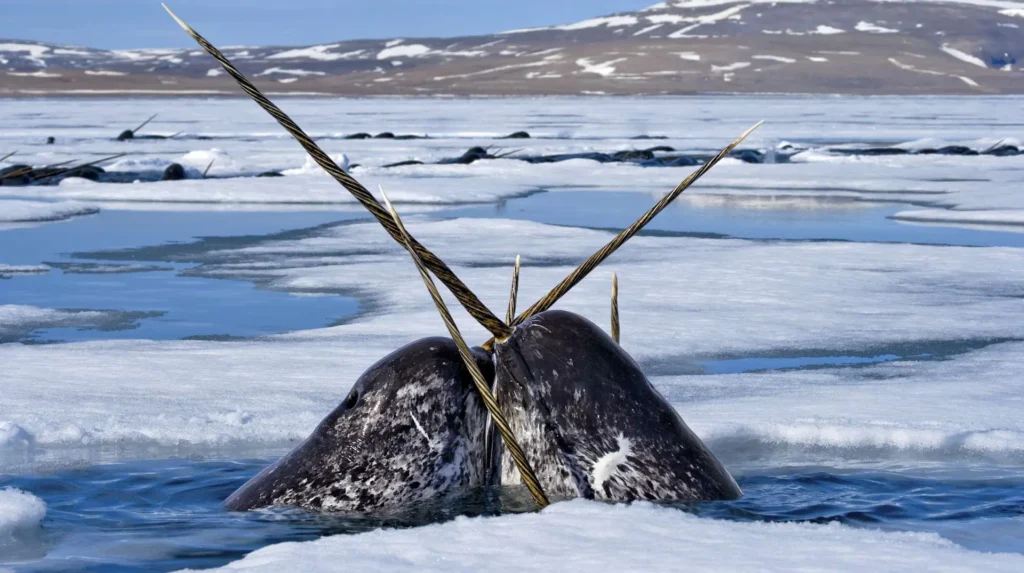
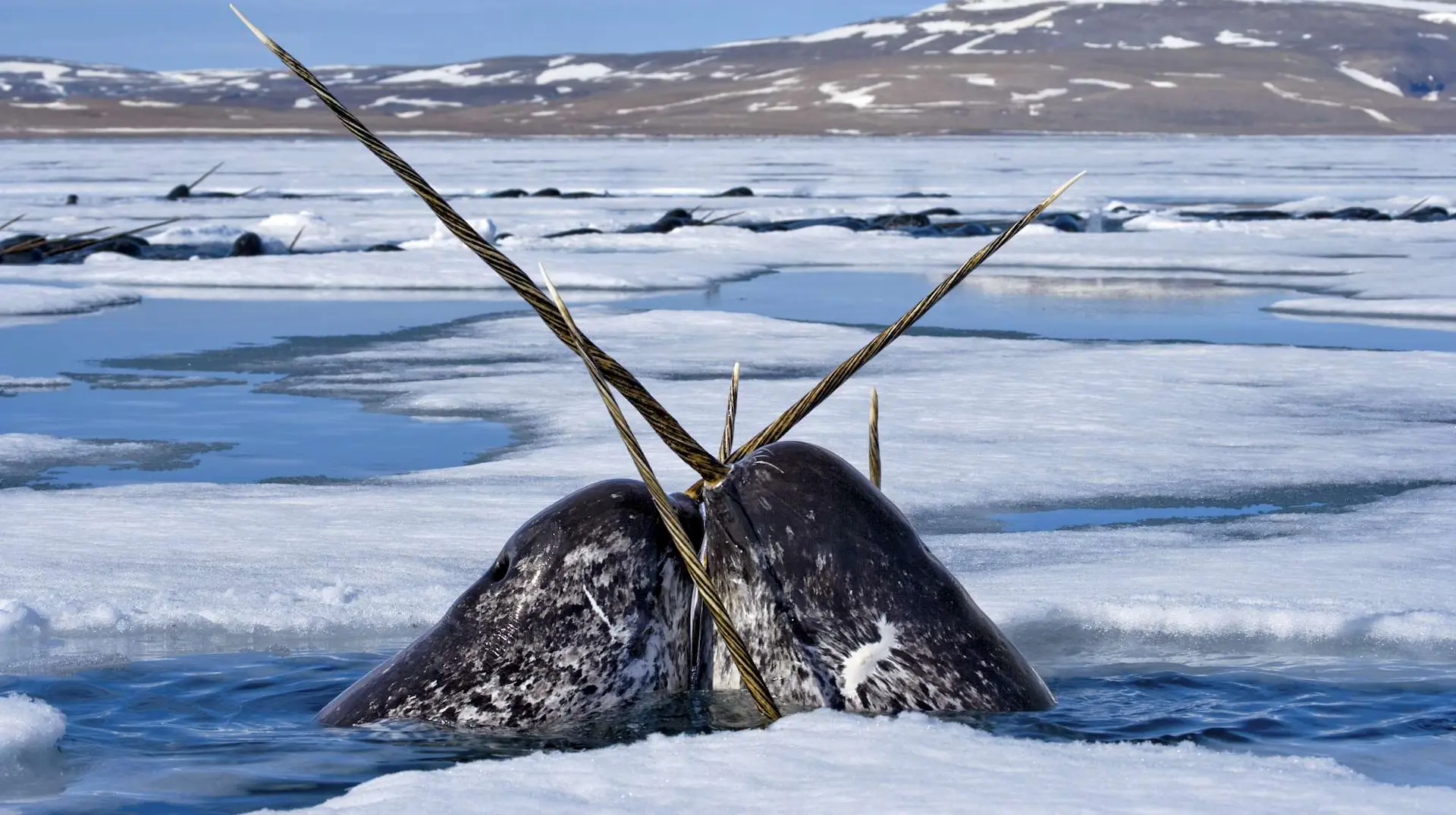
Narwhals are often called the “unicorns of the sea” because of their long, spiraled tusk. Here are a few more fascinating facts about them:
- Believe it or not, their tusk is actually a tooth used for sensing their environment and sometimes for sparring.
- Narwhals are whales. While many whale species migrate south in the winter, narwhals spend their entire lives in the frigid waters of the circumpolar Arctic near Canada, Greenland and Russia.
- Sea ice provides narwhals with protection as they travel through unfamiliar waters.
2. Walruses
Walruses are another beloved Arctic species with remarkable adaptations for surviving the cold:
- Walruses stay warm with a thick layer of blubber that insulates their bodies from icy air and water.
- Walruses can slow their heart rate to conserve energy and withstand freezing temperatures both in and out of the water.
- Walruses use sea ice to rest between foraging dives. It also provides a vital and safe platform for mothers to nurse and care for their young.
Get Ocean Updates in Your Inbox
Sign up with your email and never miss an update.
3. Polar Bears
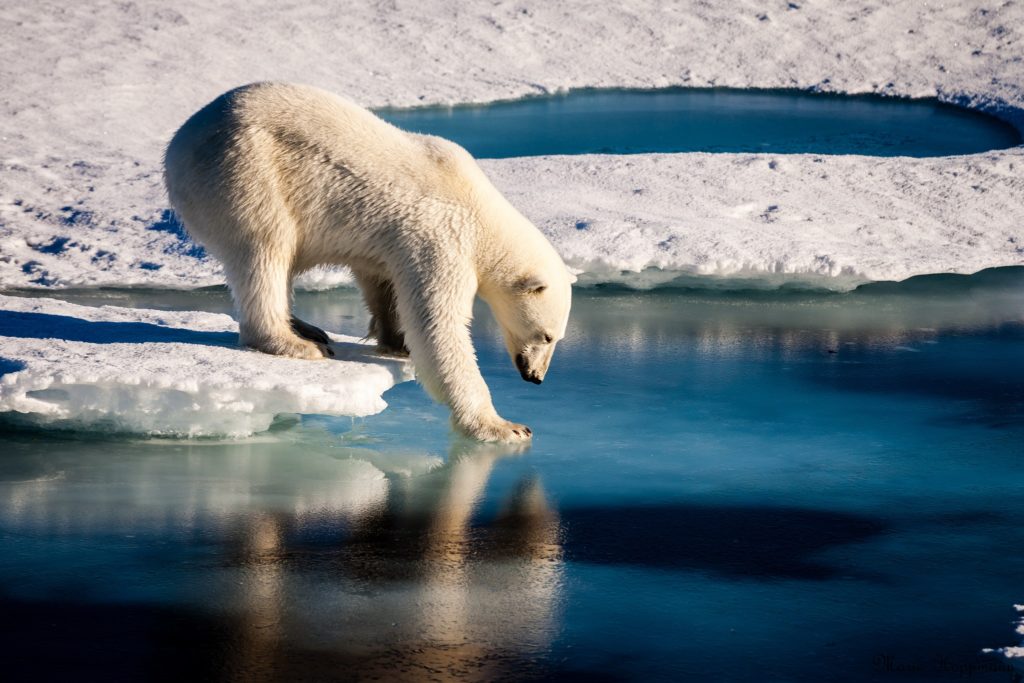
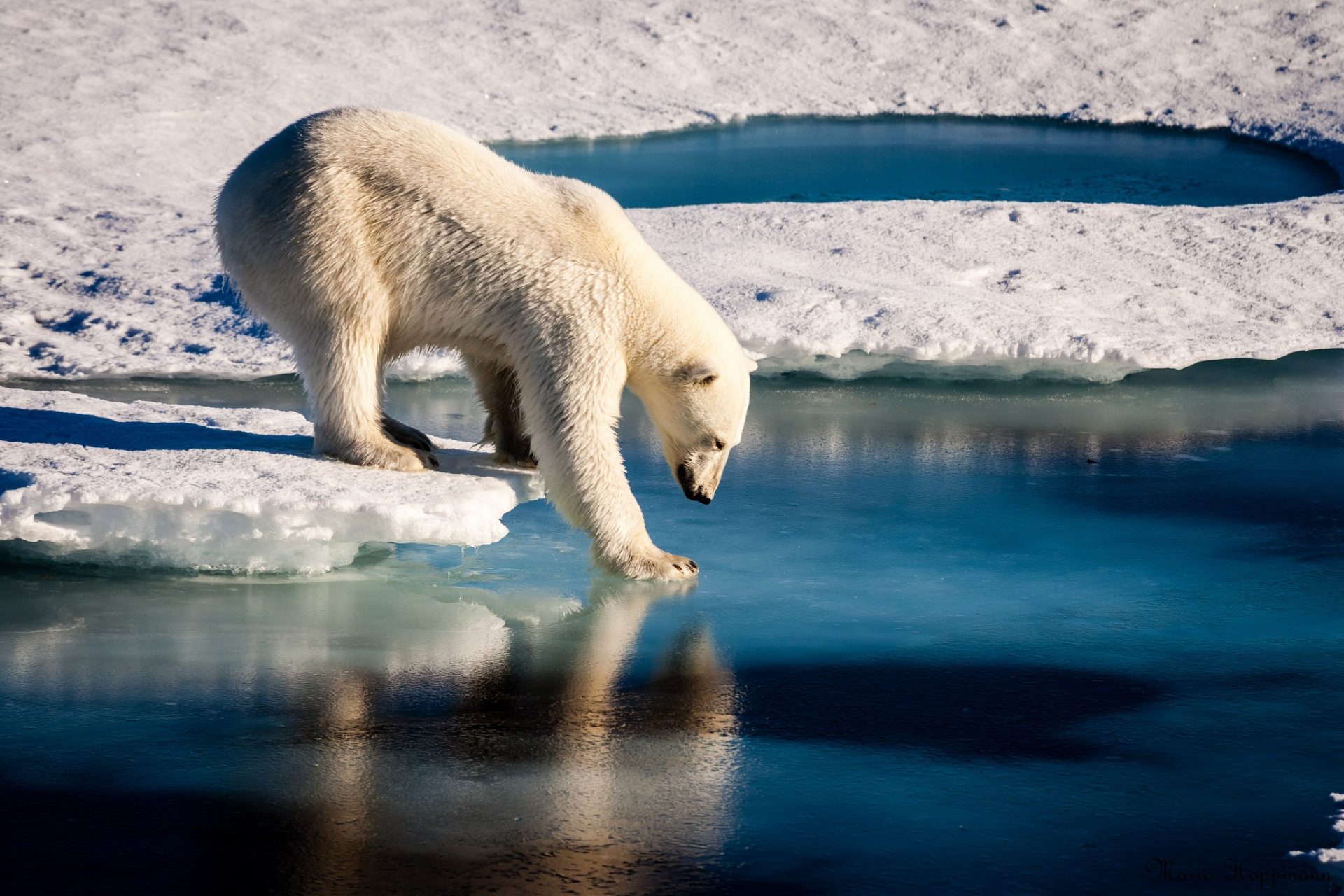
Polar bears possess several unique traits that help them thrive in the icy Arctic:
- Although polar bear fur appears white, each hair is hollow and transparent, reflecting light much like ice.
- Beneath their thick coats, polar bears have black skin that absorbs heat from the sun. This helps keep polar bears warm in their icy habitat.
- Polar bears rely on sea ice platforms to access their primary prey, seals, which they hunt at breathing holes in the ice.
4. Penguins
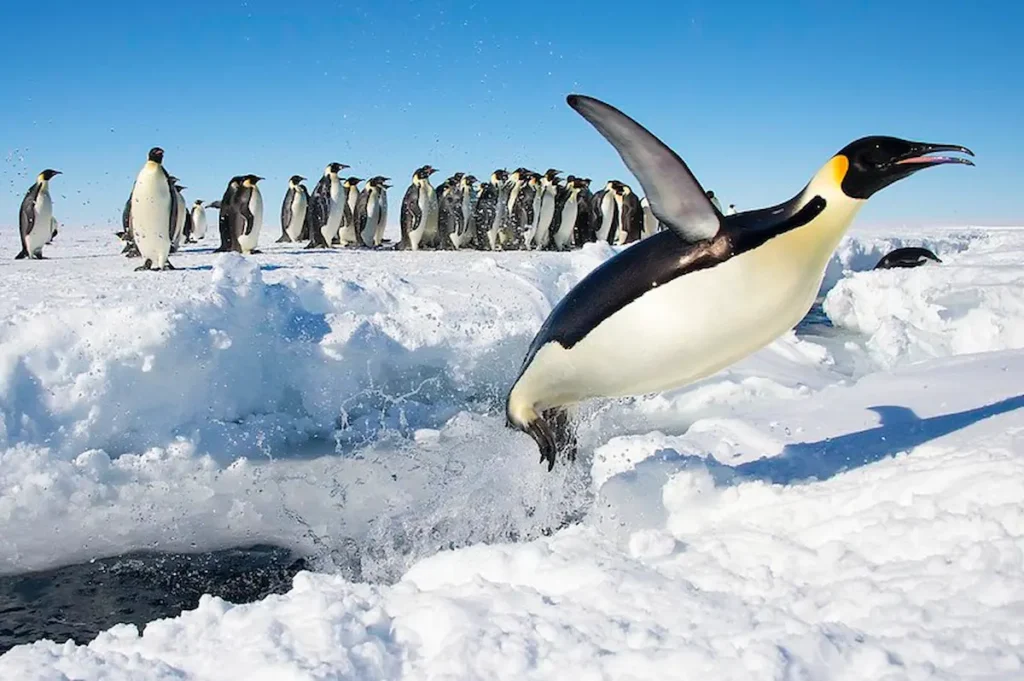
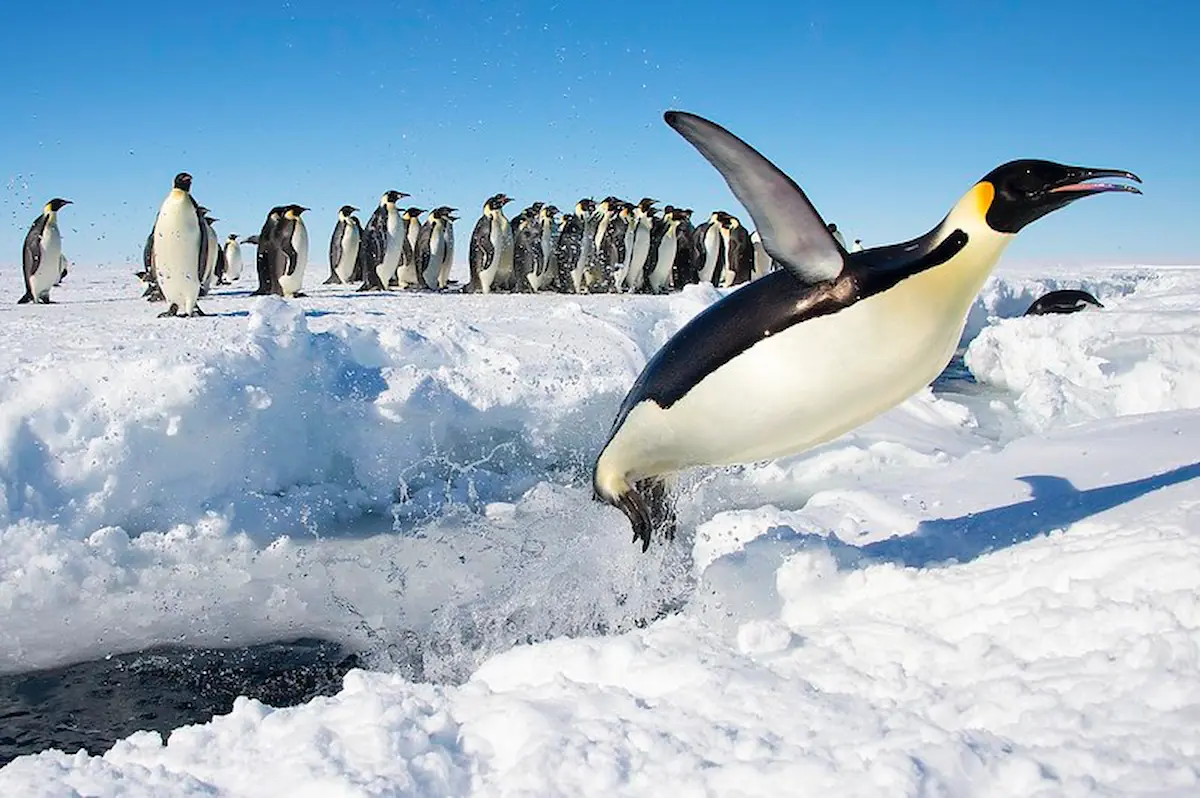
Penguins are highly adapted swimmers that thrive in icy waters, but they are not Arctic animals:
- Penguins live exclusively in the Southern Hemisphere, mainly Antarctica, meaning they do not share the frigid northern waters with narwhals, walruses and polar bears.
- Penguins spend up to 75% of their lives in the water and are built for efficient aquatic movement.
- Sea ice provides a stable platform for nesting and incubation, particularly for species like the Emperor penguin, which relies on sea ice remaining intact until chicks are old enough to fledge.
5. Seals
Seals are a diverse group of carnivorous marine mammals found in both polar regions:
- There are 33 seal species worldwide, with some living in the Arctic and others in the Antarctic.
- There are two groups of seals: Phocidae (true seals) and Otariidae (sea lions and fur seals). The easiest way to tell seals and sea lions apart is by their ears: true seals have ear holes with no external flaps, while sea lions and fur seals have small external ear flaps.
- Seals need sea ice for critical life functions including pupping, nursing and resting. They also use ice for molting—a process in which they shed their fur in the late spring or early summer.
Defend the Central Arctic Ocean Action
Some of these cold-loving animals call the North Pole home, while others thrive in the polar south. No matter where they live, these marine marvels rely on sea ice for food, safety, movement and survival.
Unfortunately, a rapidly changing climate is putting critical polar ecosystems, like the Central Arctic Ocean, at risk. That is why Ocean Conservancy is fighting to protect the Central Arctic Ocean from threats like carbon shipping emissions, deep-sea mining and more. Take action now to help us defend the Central Arctic Ocean.
Learn more
Did you enjoy these fun facts? Sign up for our mobile list to receive trivia, opportunities to take action for our ocean and more!
The post 5 Animals That Need Sea Ice to Thrive appeared first on Ocean Conservancy.
from Ocean Conservancy https://ift.tt/3WGxty5 https://ift.tt/GZKzgPQ

No comments:
Post a Comment