Far below the ocean’s surface—where sunlight disappears, pressure skyrockets and temperatures plunge—some of the strangest animals on the planet have evolved to survive. Transparent heads. Glowing bodies. Needle-like teeth. Tentacles that seem straight out of science fiction.
And yet, these bizarre sea creatures are very real.
An estimated one million deep-sea species remain undiscovered. In fact, many deep-sea creatures have only been seen a handful of times because their habitats are so vast and difficult to explore.
Here are seven ocean animals that prove our blue planet can be just as strange as outer space.
1. The Vampire Squid
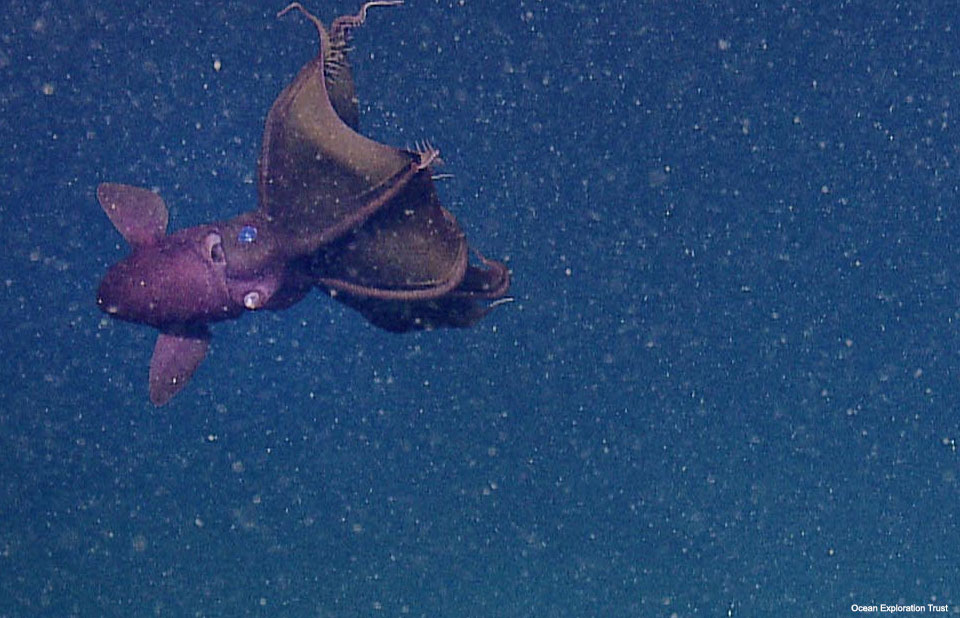
Despite its dramatic name, the vampire squid does not want to suck your blood. This deep-sea animal earned its spooky reputation because of its dark color, glowing eyes and cloak-like webbing stretched between its arms.
Unlike many squid species, vampire squid don’t actively chase prey. They have the ability to match the density of surrounding seawater to avoid constantly swimming by hanging suspended or drifting. They then use long, filament-like appendages to feed on “marine snow”—tiny drifting particles of organic material.
To avoid predators in the darkness, vampire squid rely on bioluminescence. Light-producing organs, called photophores, help them blend into faint light filtering down from above. When threatened, photophores near the tips of their arms create bursts of light that may confuse or distract predators long enough for the squid to escape.
2. The Barreleye Fish
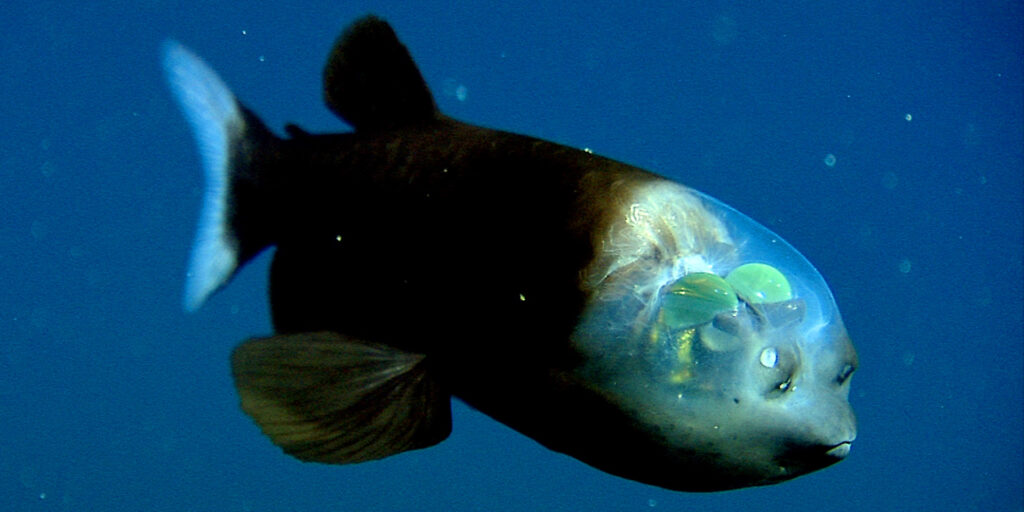
If aliens wore fishbowls on their heads, they might look something like the barreleye fish.
This bizarre fish has a transparent head filled with fluid, allowing us to see its bright green eyes rotating inside its skull. Barreleye fish eyes can point upward to search for prey silhouetted against faint sunlight—or rotate forward when it’s time to feed.
For decades, scientists misunderstood how barreleyes actually looked, likely because damaged specimens lost the transparent tissue around their heads during the collection process. That was the case until researchers at the Monterey Bay Aquarium Research Institute were able to observe one alive.
Barreleyes serve as good reminders that we still have so much to learn about life beneath the waves.
3. The Giant Isopod
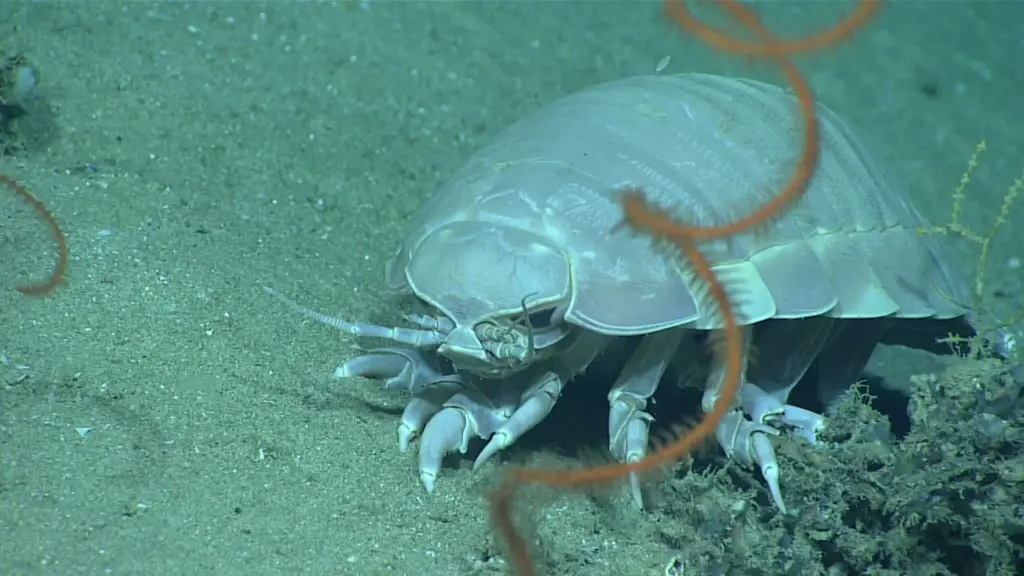
Imagine a roly-poly the size of a housecat. That’s basically a giant isopod.
These enormous crustaceans live deep on the ocean floor, up to 7,000 feet down, and they can grow more than a foot long! Their segmented armor, multiple legs and glowing eyes give them a prehistoric appearance—fitting, as the first recorded isopod fossil is more than 300 million years old.
Because food is scarce in the deep sea, giant isopods are built for survival. They can go surprisingly long periods of time without eating—sometimes years—and often scavenge remains that drift down to the floor.
4. The Anglerfish
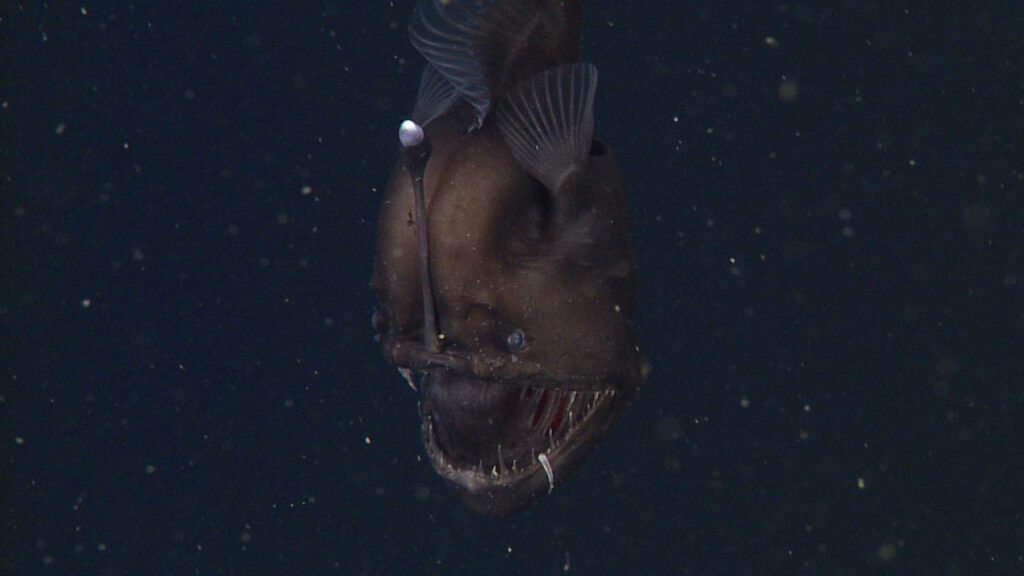
Few creatures scream “deep-sea alien” more than the anglerfish.
With oversized teeth, expandable stomachs and a glowing lure dangling from its head, the anglerfish looks like something designed for a science-fiction movie. The glowing lure is actually bioluminescence—a natural chemical light used to attract prey in the darkness of the deep ocean.
Anglerfishes hunt using their bright lures to entice fish and crustaceans to draw close. Only females have the lures, however (you go, girl!). They also use this method to attract males.
In a habitat that sunlight never reaches, producing light can mean the difference between survival and starvation.
5. The Dumbo Octopus
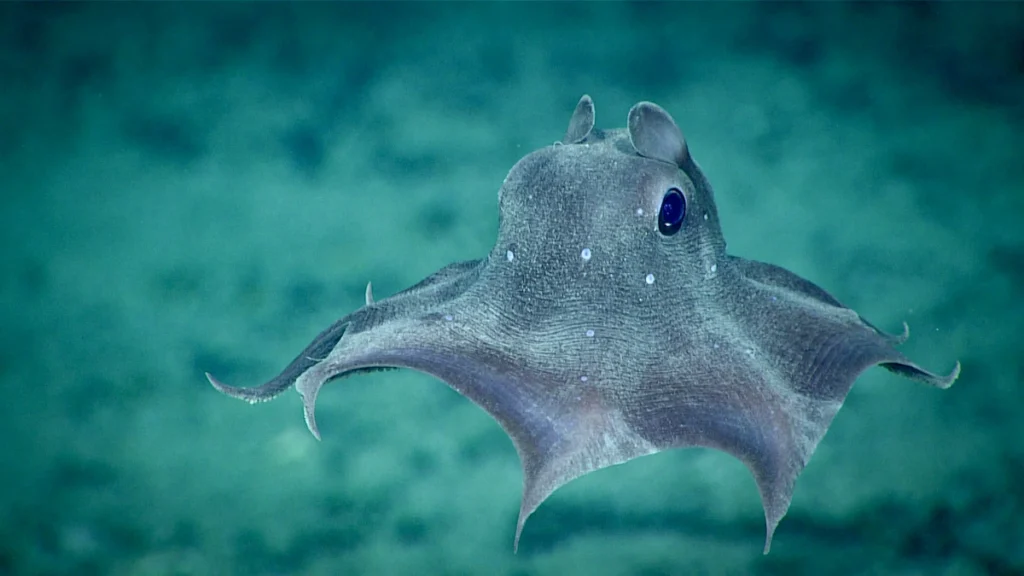
Yes, the dumbo octopus is actually named after Disney’s Dumbo. Dumbo octopuses are, in fact, adorable and measure an average of just 8-12 inches in length.
Dumbo octopuses have ear-like fins extending from the sides of their heads that flap through water like tiny wings. They live at extreme ocean depths, 1,000-13,000 feet beneath the surface, making them one of the deepest-living octopus species scientists know about.
Unlike some octopus relatives, dumbo octopuses don’t ink when threatened. With predators limited that far down in the ocean, they don’t possess a defensive ink sack like other octopuses do.
Their cute appearance may seem less alien than some deep-sea creatures but make no mistake: An octopus flying through total darkness thousands of feet underwater is still pretty otherworldly.
6. The Goblin Shark
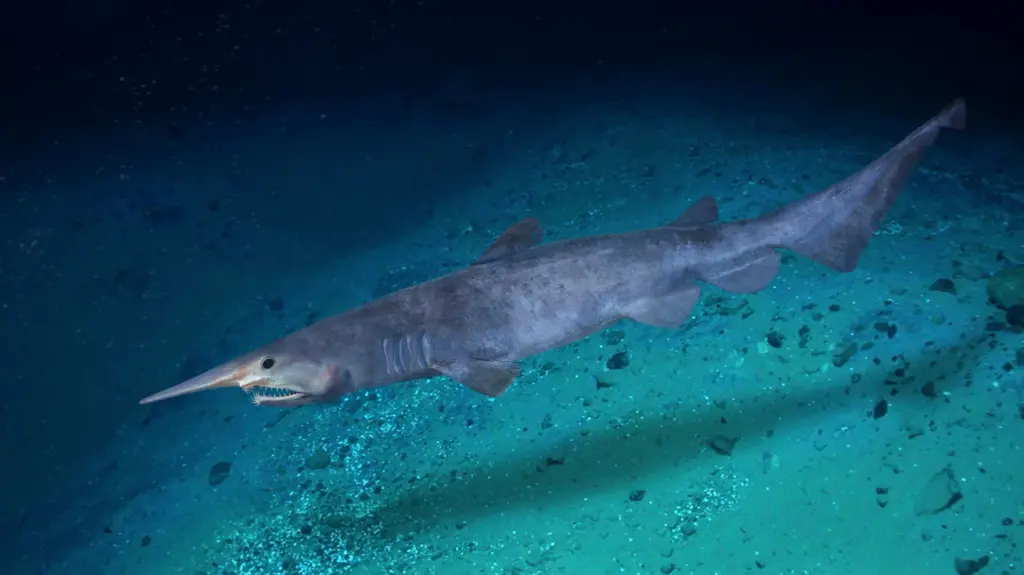
Nicknamed a “living fossil,” the goblin shark looks unlike almost any other shark species alive today.
Goblin sharks have semi-translucent skin, and their blood vessels can be seen through it. That’s why the goblin shark may look different colors in photos—sometimes a pale white, grey or pink. Its long, flattened snout and protruding jaws create an unmistakable profile. Even stranger? Those jaws can rapidly shoot forward to snatch prey before retracting again.
The mysterious allure of goblin sharks remains strong, as information is sparse, and photos of the species are extremely rare. Encounters with humans, through observation or accidental catch, are limited. What’s more alien than that!?
7. Gelatinous Deep-Sea Creatures
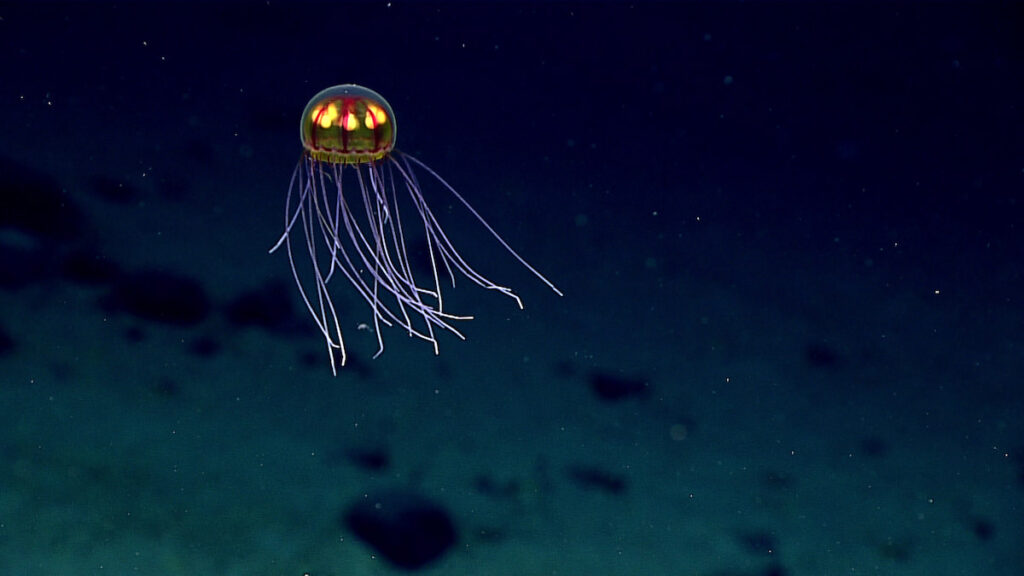
Some of the ocean’s strangest residents aren’t even solid.
Gelatinous animals include glowing jellies and drifting organisms that appear almost holographic underwater. Some pulse with neon colors. Others trail unbelievably long tentacles.
Sea jellies date as far back as 500 million years ago—if not longer. They are soft-bodied creatures consisting of at least 95% water, possessing a simple structure and a noticeable lack of almost everything that distinguishes plant from animal—including blood, a heart and a brain. Talk about out of this world!
Get Ocean Updates in Your Inbox
Sign up with your email and never miss an update.
It’s easy to think of deep-sea creatures as mysteries, but these animals are essential parts of our ocean ecosystem. The deep ocean regulates climate, stores carbon and supports biodiversity on a massive scale.
Yet much of it remains unexplored.
That’s why Ocean Conservancy is committed to protecting our entire ocean—and all the creatures that dwell there, no matter how mysterious they may be. The truth is, some of the most incredible discoveries on our planet may still be waiting in the dark depths below.
And honestly? That’s way cooler than science fiction!
The post Deep-Sea Animals That Look Like Aliens appeared first on Ocean Conservancy.
from Ocean Conservancy https://ift.tt/SHo0FYs https://ift.tt/HcxBfrl

No comments:
Post a Comment