If you need proof that there is still plenty to discover in our ocean, look no further than the recent deep-sea expedition in South America.
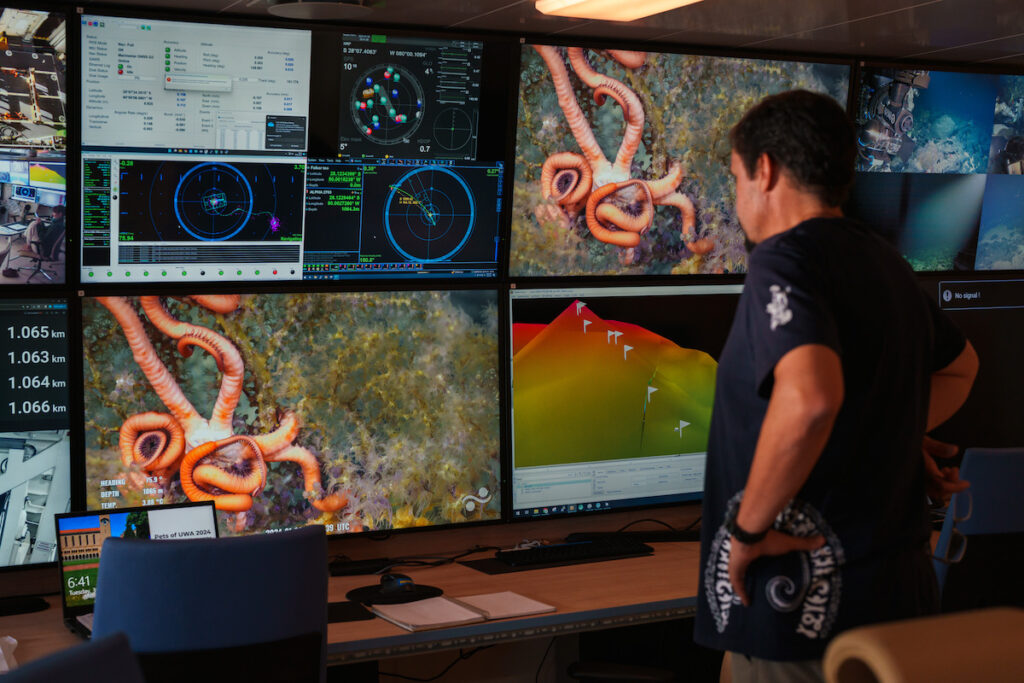
In January 2024, a group of scientists boarded Schmidt Ocean Institute’s research vessel Falkor (too) to explore underwater mountain ranges off of Chile’s coast. The team, led by Dr. Javier Sellanes of the Universidad Católica del Norte, wanted to understand the biodiversity of these little-explored seamounts. They used cutting-edge technology like remotely-operated vehicles, multibeam sonar and other sensors to get a comprehensive look at life on a seamount.
Want to learn more about ocean animals?
Sign up to receive our emails.
...loading
Thanks for signing up for Ocean Conservancy emails.
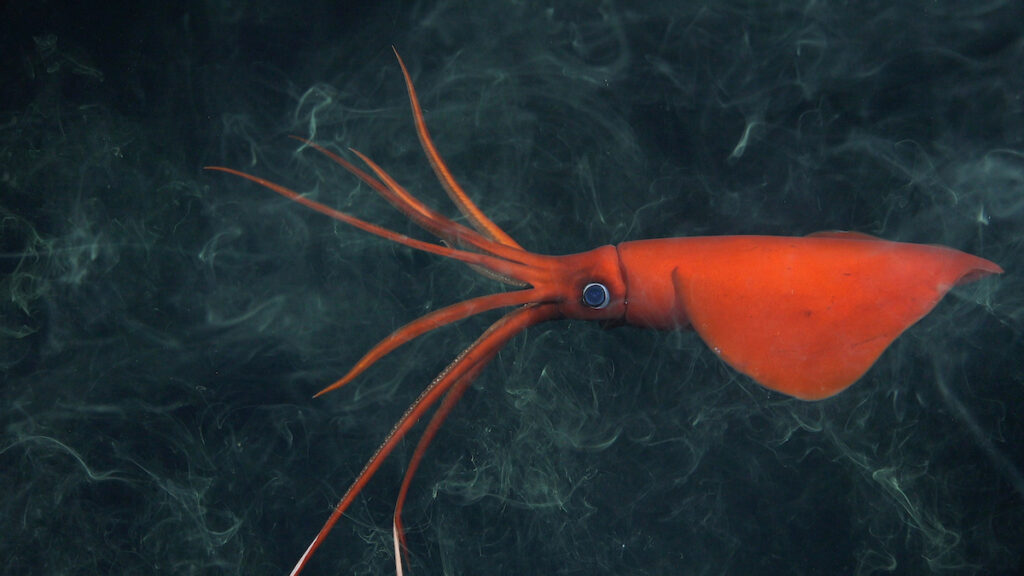
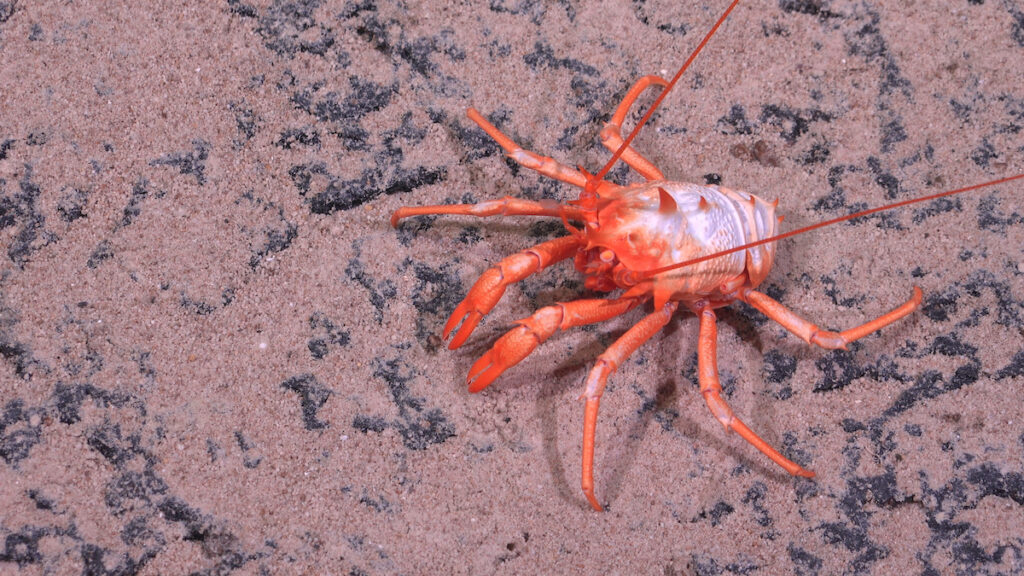
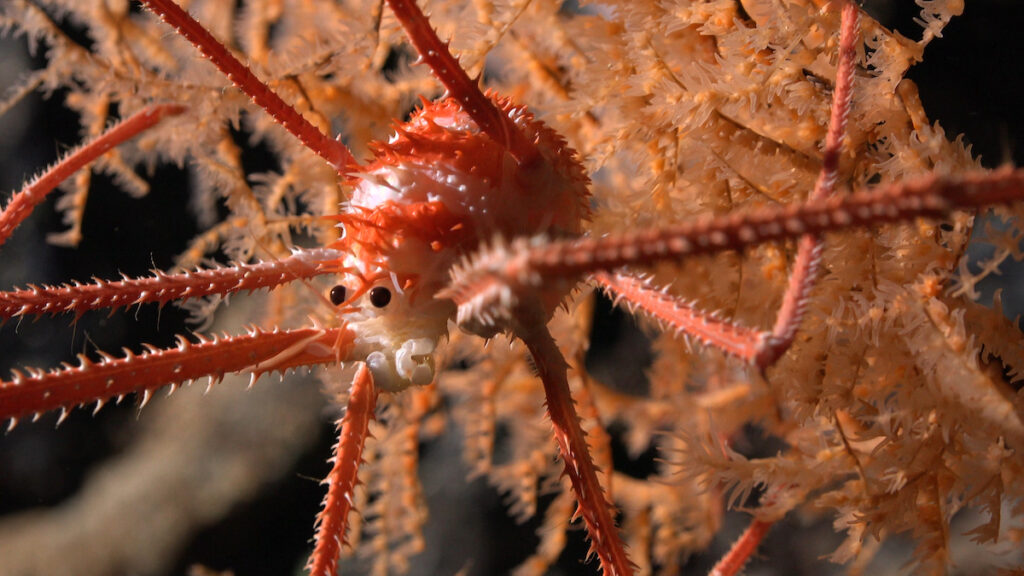
The results were astounding. In less than a month, the expedition had documented 100 newly discovered deep sea animals, including species of deep-sea corals, glass sponges, squat lobsters and more. Additionally, they documented dumbo octopuses, siphonophores and jellies—it was an all-star lineup of some of the deep sea’s most captivating residents.
This expedition targeted a 2,900 square kilometer stretch of mountains created through volcanic activity. The area’s unique combination of currents and a nearby low-oxygen zone mean this particular stretch is somewhat isolated, resulting in very high levels of endemism—meaning there are animals here that aren’t found anywhere else on the planet. In fact, about half of the animals in this deep sea region are endemic.
Many of the dives took place in a marine protected area roughly the size of Italy. The team collected samples and data from ten seamounts at depths of up to 4,500 meters. They also used underwater mapping technology to record more than 52,000 square kilometers of ocean floor, and in the process, discovered four new seamounts.
According to Sellanes, their results “far exceeded” their hopes for the expedition. “You always expect to find new species in these remote and poorly explored areas, but the amount we found, especially for some groups like sponges, is mind-blowing,” he said.
Next, the scientists and their partners will be hard at work using genetics and other methods to officially identify the observed species. Another expedition is already underway to continue to explore this region—follow along in real time with Schmidt Ocean Institute’s YouTube channel.
As you walk along the beach, taking in the calm waters, it’s hard to really understand how vast and complex the ocean is. While the ocean has been around for a whopping 3.8 billion years, there’s still so much we don’t know about it.
Far below the ocean’s surface lies something even more mysterious: the deep ocean. The deep ocean is one of Earth’s largest habitats and least understood places. Exploring this part of the ocean is difficult because of its remoteness and extreme conditions. Sunlight stops reaching the water at 3,280 feet below the ocean surface, leading to frigid cold temperatures that average just 39°F. The pressure at these depths can reach up to 110 times what we feel on land.
Due to this unique environment, the deep ocean is home to an array of seemingly otherworldly species that have adapted to their rugged surroundings. Much of the life in the deep ocean has only recently been discovered, including a remarkable creature called the squidworm(Teuthidodrilus samae).
Love ocean content?
Enter your email and never miss an update
...loading
Thanks for signing up for Ocean Conservancy emails.
Just like its name suggests, the squidworm looks like a mix between squids and worms. It’s related to the earthworms you might see in your backyard. It has 25 pairs of white paddles for swimming and 10 squid-like limbs for touch and smell. The squidworm has a flat body about the size of the palm of your hand.
Squidworms primarily feed on marine snow—things like plankton, fecal matter and dead/decaying organic material sinking from the upper layers of the ocean. Even though their diet might not seem super tasty to us, squidworms play a crucial role in marine research.
Scientists from the Woods Hole Oceanographic Institute and the Scripps Institution of Oceanography discovered the squidworm in 2007 using a remotely operated vehicle (ROV) that dove about 9,500 feet into the Celebes Sea between the Philippines and Indonesia. The Celebes Sea is part of a region known as the Coral Triangle—considered by many researchers to be the epicenter of global marine diversity, housing a vast family of marine life.
Scientists think squidworms might help connect deep-sea creatures to those higher up in the water. Studying squidworms could help us understand how other species in the Coral Triangle evolved and what unique traits they developed. Plus, finding squidworms suggests there are probably more unknown species waiting to be discovered in this part of the ocean.
Sadly, the deep ocean and its countless habitats, including the marine wildlife that depend on them, are under threat. That’s why Ocean Conservancy leads the charge against pollution by opposing the creation of new offshore oil and gas operations. These developments contribute to the climate crisis and put squidworms and other deep-sea species like blob sculpin, gulper eel, lizardfish and snailfish in danger.
If you’ve ever been to an amusement park, you’ve probably heard or read the phrase, “Keep your hands and arms inside the vehicle at all times.” While our planet is full of magical, mesmerizing and often enticing creatures, the same “look, don’t touch!” rule applies when visiting and exploring the beach, ocean or any body of water. And this is especially true for the cone snail—one of the most venomous animals on Earth.
Cone snails’ shells are narrow at the base and wide at the opposite end and have spires, or coils. Though their shells are often colorful and intricately patterned, that is not an invitation to be touched or picked up. There are at least an estimated 600-700 species of these marine gastropods, from the familyConidae, all of which are venomous.
Love ocean content?
Enter your email and never miss an update
...loading
Thanks for signing up for Ocean Conservancy emails.
Cone snails are stealthy when hunting prey and have a “harpoon-like” tooth called a radula that extends like a long, flexible tube and rapidly injects toxic venom. While the radula is most often used to hunt and paralyze fish and worms before consuming them, be cautious: Humans can be jabbed by stepping on or picking up a cone snail.
The complexity of the toxins in the venom, and the fact that the venom composition varies widely from species to species, makes the creation of antidotes difficult. Typically, a cone snail’s venom will initially cause tingling or numbness at the injection site, then spread to the impacted limb and eventually the entire body.
Cone snails are not currently listed as endangered or threatened, but their populations are at risk of depletion due to being over-harvested for their highly-prized shells, as well as being collected for scientific and medical research on the potential uses of their venom as medicine.
These tropical and temperate ocean dwellers tend to live in shallow waters and are commonly found near coral reefs or hiding in the sand or under coral shelves; some cone snails spend their time among mangroves. Their sizes range from just half an inch to more than nine inches in length, and they comprise three groups according to their diets: molluscivores (mollusk-eaters), piscivores (fish-eaters) and vermivores (worm eaters).
Watch below for an up-close look at a deadly cone snail hunting prey.
As always, we encourage everyone who can to enjoy exploring our beautiful ocean and all it has to offer—including intriguing cone snails—but be cautious and think twice before touching or picking anything up. Take a virtual deep dive through Ocean Conservancy’s Wildlife Library and learn more about several fascinating creatures that dwell in our ocean.
Last summer while visiting family in Bogotá, Colombia, a city located 9,000 feet above sea level in the Andes, I noticed more plastics than during my visit a decade ago. I also visited my city of birth, Santa Marta, a port city on the Colombian Caribbean coast. Although these two cities are 600 miles apart and have wildly different climates, social justice in Bogotá is deeply interconnected to plastic pollution in the Caribbean.
Santa Marta is just 15 miles from La Ciénaga Grande, a coastal wetland slightly larger than Rhode Island that is recognized as the most productive estuarine system in the world. La Ciénaga and its mangrove forest are home to 130 fish species and 200 bird species, among other wildlife. La Ciénaga and its incredible diversity are fed by the warm embrace of the Caribbean Sea and the Magdalena River, a 956-mile-long river that drains Colombia from south to north.
Never miss an update
Enter your email and never miss an update
...loading
Thanks for signing up for Ocean Conservancy emails.
Rivers and waterways are conduits for water, nutrients, sediment and life. Unfortunately, they have also become conduits for plastic pollution, carrying waste into the ocean from places where waste management systems are overwhelmed with the amount of plastic being produced or where illegal dumping occurs. Sadly, the Magdalena is no different, transporting Bogotá’s plastic waste footprint and that of 34 million people across its basin into the Ciénaga and the Caribbean.
During my trip, I also witnessed part of the system that deals with this massive amount of plastic waste. I saw human-powered carts carrying vast amounts of recyclable materials. Informal sector waste collectors in Colombia and across the globe help fulfill our mission to protect the ocean from one of today’s greatest global challenges, plastic pollution. According to Ocean Conservancy’s local partner Compromiso Empresarial para el Reciclaje (CEMPRE), by the end of their daily journey, each of these unrecognized environmentalists carry up to 330 pounds of recyclable materials on their backs. In Colombia alone, these unsung heroes recover at least 1.2 billion pounds of plastics and recyclable materials from the waste stream every year, preventing many of those materials from entering landfills and the ocean.
In Bogota’s cloud forest climate, these environmental stewards often walk city streets in the rain with temperatures that average just 57 degrees Fahrenheit. In Santa Marta’s coastal climate, they often work in muggy conditions under the beating sun in temperatures north of 90 degrees Fahrenheit. They work without formal contracts, minimum wage, overtime, health insurance or any minimal health and safety standards. Their hope at the beginning of each shift is to be able to collect enough recyclable materials to bring home between $2 and $16 per day (based on research done by CEMPRE) to provide for their families.
Because of fossil-fuel subsidies, it is currently cheaper to make plastics from crude oil than from recycled plastic. In 2022, the 20 biggest economies in the world provided fossil-fuel subsidies amounting to U.S. $1.4 trillion despite committing to phasing out fossil fuel two years ago. The work of informal sector waste collectors like those in Bogotá and Santa Marta, and across the globe, is local, but that doesn’t mean they are isolated from global forces. Cheaper virgin plastic decreases the demand for recycled plastic. As demand for recycled plastic decreases, what these workers get paid per pound also decreases, affecting their daily well-being.
An informal sector waste collector (sometimes called a recycler or waste picker) carries their daily load of recyclables that they have gathered from homes, businesses, roadways, and other places, through the streets in Colombia.
Recognizing the contribution of informal sector waste collectors in protecting the ocean and improving material circularity is why Ocean Conservancy established a partnership with CEMPRE and the Inclusive Waste Recycling Consortium in Colombia. Since 2021, more than 26 informal recycling cooperatives have been supported with training on health, safety, labor laws and management, as well as enhanced income opportunities through this partnership. These trainings, in combination with actions to leverage, formalize and dynamize the commercialization of material under the Extended Producer Responsibility framework, have enabled the cooperatives to enter the Colombian government formalization process. As a result, the government will recognize them as service providers, providing additional income—a small but important step in pursuing a more just system.
I moved out of Colombia in 2000 to look for a place to further my education; a series of fortuitous events resulted in my living in the United States. My only certainty when I left home was that wherever I ended up, I wanted eventually to contribute to conservation in Colombia. I have been looking for this opportunity ever since. When I started my job at Ocean Conservancy in February 2023, I was not yet aware of the partnerships in Colombia, but soon learned the opportunity I had been seeking was here. From conversations with informal waste collectors, I learned about how Ocean Conservancy’s involvement in advancing social justice issues (e.g., trainings on health, safety and labor laws) contributes to the individual empowerment of these workers and dignifies their work. From them, I learned the impact of working on plastic pollution through a justice lens supports a motivated workforce that continues to keep plastics out of the ocean from places as far away as the Andes.
Pushing for a decrease in plastic production, especially here in the United States where much of it is produced, will cut the amount of plastic that could enter the ocean, as well as improve air and water quality in communities around petrochemical facilities. At the same time, dignifying the labor of informal sector waste collectors across the globe contributes to less plastic entering the ocean and therefore a healthier ocean. Ocean Conservancy is advocating for the inclusion of informal sector waste collectors in the negotiations for a global plastics treaty (currently underway). We are also advocating for a reduction in plastic production overall. I hope you can join us to continue advocating for the inclusion of justice as the lens through which conservation is conducted.
Under the wet sand along beautiful shorelines, just beneath our feet during beach strolls, there lies an entire ecosystem. The mole crab (also known as a sand crab or sand flea) is a small but mighty sea creature that lives just below the surface of the sand.
When thinking of a sand flea, the first thought that comes to mind is probably not pleasant. After all, fleas are not the most welcomed guests in any room. Despite this unpleasant first impression, these creatures can be endearing with their quirky habits and harmless nature.
Dive deeper into the small world of the mole crab.
Love ocean content?
Enter your email and never miss an update
...loading
Thanks for signing up for Ocean Conservancy emails.
Habitat
Less than one inch long, mole crabs are small yet durable ocean creatures. These animals live in colonies within the swash area (the area on the beach where the waves wash over the sand) of the intertidal zone on tropical and subtropical beaches. The intertidal zone is no picnic for its inhabitants. Constant waves crash over this zone and can move around things in its path. Tides also change as the day progresses, so mole crabs are tasked with following the tides to stay in the wet swash zone of the sandy beaches. This means that entire mole crab colonies move up and down the swash zone as the tide shifts every day—talk about hard work and perseverance.
Appearance
These sand fleas are barrel-shaped creatures equipped with tough, brown-speckled armor that blends into their sandy surroundings. Their exoskeleton acts as protection from oncoming waves. Underneath they have five leg-like appendages and a short tail-like appendage known as a telson (the perfect tool for digging) that they hold into their body when bracing for impact. These features allow them to float around in the tidal waves and land safely somewhere new. Mole crabs also typically have eyes on short stalks and feathery antennae that are used for filter feeding.
Feeding
Mole crabs use their appendages to their advantage in the swash zone, the beach area where waves wash up, employing their legs to back up and burrow their bodies just beneath the surface of the sand. Some species leave their protruding eye stalks above the surface so they can watch for oncoming food (although they’re so tiny it would be quite difficult to spot them from above). Mole crabs are filter feeders, meaning they take advantage of the water moving around them to feed. As the tides roll in, mole crabs release their antennae and use these feathery tools to filter food like kelp, plankton and detritus. The crabs then pass their antennae over their mouths to release the gathered mixture of sand and nutrients.
Reproduction
These tiny creatures have a relatively short lifespan of about two to three years. When mating, males will sometimes attach themselves to females, becoming semi-parasitic until they eventually outgrow the area. Females are typically larger than males and carry orange eggs ranging as many as 45,000 on their undersides. That’s a lot of mole crabs.
Predators
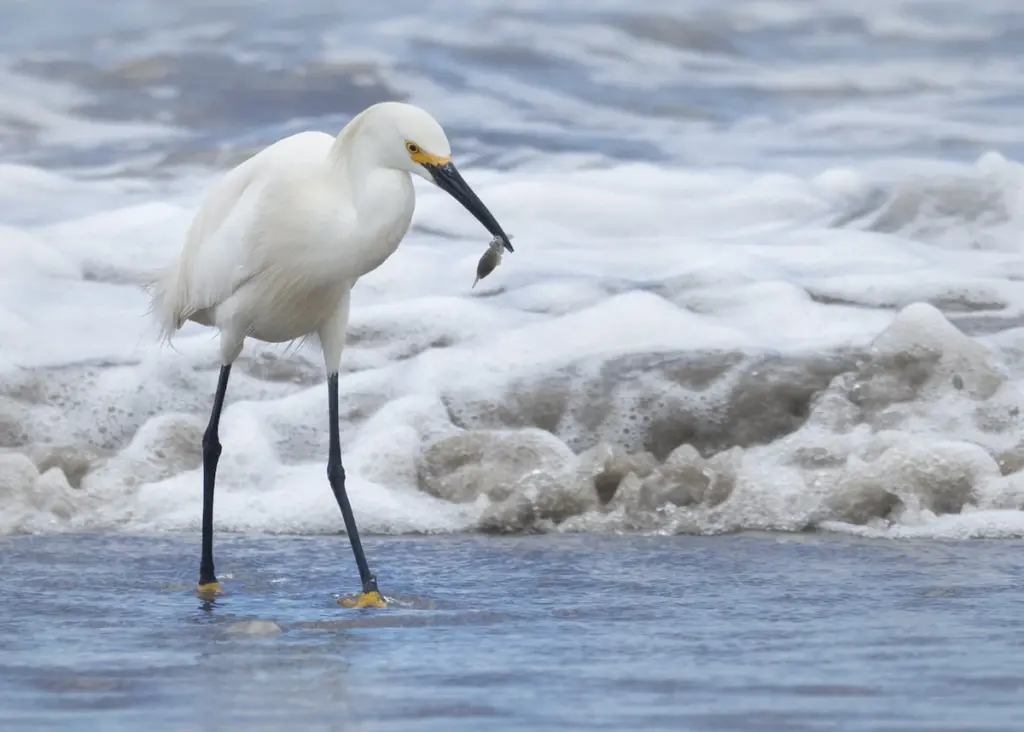
For these small sand fleas, the crashing tidal waves aren’t their biggest threat. Many seabirds love to walk along the shore and search for mole crabs hiding just beneath the surface of the sand. Other species of crab and some fish also feed on these tiny sand fleas. Mole crabs face their hungry predators constantly which means their ability to hurriedly burrow into the dense wet sand is highly necessary for their survival. Against a predator, these tiny crabs’ best defense is a swift tide rolling in which allows the crab to quickly disappear into the sand.
Despite looking like a creepy crawly, mole crabs are harmless to humans and don’t bite or sting. So, unless you are part plankton, you have nothing to worry about. Their filter feeding techniques and tough exteriors render them amazing tenants of the intertidal zone and fascinating ocean animals that make the word “flea” seem less daunting. These creatures have their own little ecosystem right below our feet, unbothered as we walk along the sand above them. Perhaps on your next walk on the beach, you can shift your attention to the sand where you just might see a tiny sand hole fit for a mole crab.
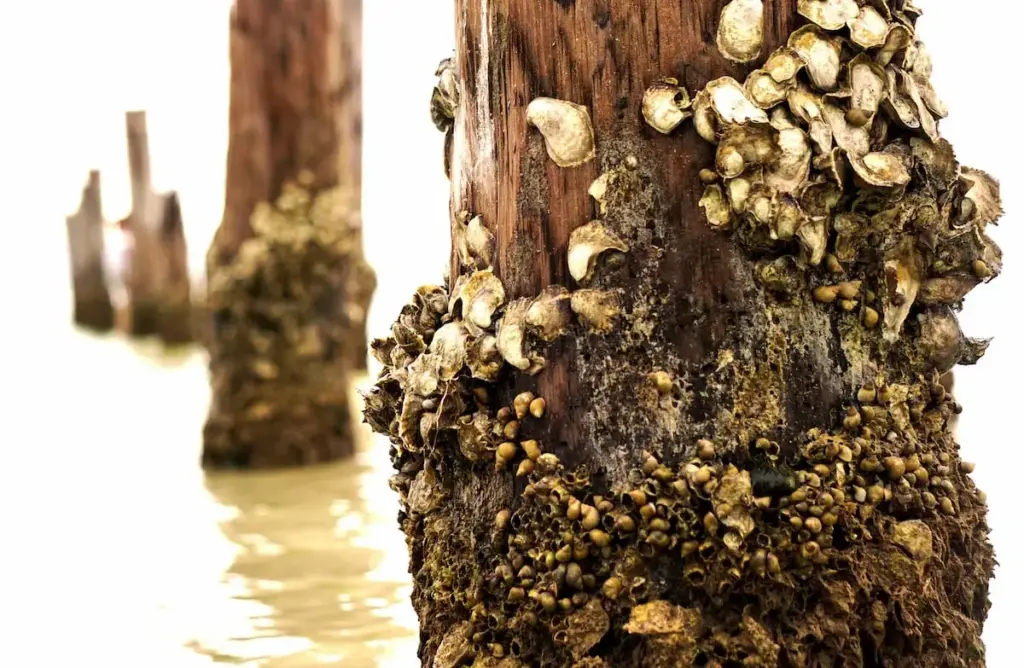
Have you ever seen barnacles on a rocky shore or the side of a boat and felt amazed? Chances are, probably not. These small, bumpy organisms are known to grow on rocks, boats and even whales, but most people probably don’t think twice about them. Barnacles may just seem like lumpy things in the water, but there is so much more to them than meets the eye.
Barnacles are living organisms (yes, they’re alive!) They are crustaceans, related to crabs, shrimp and lobsters. Scientists have discovered more than 1,400 species of barnacles, with the acorn barnacle being the most commonly known. These animals like to live in rocky intertidal areas or even near underwater volcanoes where there is active, moving water. This makes mealtime much easier for them since they are filter feeders. Barnacles use sensory appendages called cirri to comb through the water to grab their next snack.
Love ocean content?
Enter your email and never miss an update
...loading
Thanks for signing up for Ocean Conservancy emails.
Unlike many other crustaceans, barnacles are sessile as adults, which means they stay in one place. Barnacles begin their lives as itsy-bitsy larvae, floating through the water column until they find a suitable place to call home. Once they find their prime choice in real estate (most often rocks, but sometimes vessels or other organisms), they set up shop permanently. To secure themselves to their new home, barnacles secrete a fast-curing and extremely adhesive “cement”. This natural protein-rich adhesive is one of the strongest natural glues known to science to date. Once barnacles glue themselves to an object, they never move again. Now that’s some serious commitment!
After attachment, a barnacle begins to grow its shell. Over time, the animal grows six calcium carbonate plates. Four of these plates become a “door” that the barnacle uses to feed and, if living in intertidal areas, retain moisture when the water recedes. Like other crustaceans, barnacles outgrow their shells. Unlike other crustaceans, they can’t move to find a new home. Instead, they molt their outgrown shell and regrow a new one. Scientists are still unsure how exactly barnacles do this, but they theorize it involves a unique chemical reaction that creates space inside the shell as new calcium carbonate develops.
People in maritime industries are often annoyed by barnacles, and it’s not just because they are hard to remove from boats and buoys. Large barnacle colonies can increase drag, affecting the energy efficiency of a ship, which in turn causes them to use more fuel than usual. The United States Navy estimates that extreme barnacle growth could increase fuel consumption up to 40%. This poses significant environmental and economic impacts, so it’s important to keep barnacle growth on vessels in check.
While barnacles may cause nautical hindrances, they are proving to be helpful in some areas of science, including forensic investigations. About a year after the vanishing of Malaysian Airlines Flight 370 (MH370) in 2014, pieces of wreckage began to wash ashore on the island of Réunion. Gooseneck barnacles (Lepas anatifera) had grown on the debris, which led investigators to recruit scientists trained in a discipline called sclerochronology. This is the study of chemical composition and temperature markers within a shell over time (similar to tree-ring science, but for shells). The barnacle shells could offer critical coded information about where the debris has been in the ocean and when. While this science is still in its infancy, these studies could help tremendously in the journey to retrace the drift path of MH370 and deconstruct the mystery behind the airline’s disappearance.
Barnacles may not be as cute or charismatic as other marine wildlife, but they still depend on a healthy ocean to thrive. Ocean acidification can harm their growth and shell maintenance, making them especially vulnerable to the impacts of climate change. Click here to learn more about Ocean Conservancy’s work to combat ocean acidification and strengthen the wildlife and communities affected by it today.
This year marks the 50th anniversary of the Endangered Species Act (ESA), a critical law that protects our country’s most imperiled species on land and at sea.
This anniversary sends me back in time to reflect on the history that gave birth to this law. In the 1970s, there were growing concerns from citizens and leaders alike about the impacts of human activity on wildlife. Centuries of whaling had heavily depleted many whale populations. While commercial whaling was no longer practiced in U.S. waters, these recovering whale species faced new threats. Global trade was picking up steam, with goods moving across our seas in ocean freighters. And the commercial fishing industry boomed with few restrictions on where or how you could fish.
At the time, the introduction of the ESA and, similarly, the Marine Mammal Protection Act (MMPA), were innovative solutions to protect wildlife amid this activity in our ocean.
Never miss an update
Enter your email and never miss an update
...loading
Thanks for signing up for Ocean Conservancy emails.
Today, our society’s economic demands on the ocean are much higher and continue to increase. Global commerce is at record levels, moving in container ships six times larger than in the 1970s. Lost or discarded fishing gear, known as ghost gear, presents another threat to whales and other wildlife. Despite improvements in fishing gear in the past decades, recent studies have found that as high as 86% of floating trash in the Great Pacific garbage patch is ghost gear. or And the fossil fuel industry has more than 3,500 structures used for offshore drilling in the Gulf of Mexico alone.
On top of this, a century of burning oil and gas has warmed our ocean waters. This impacts marine food systems and migration patterns for species from zooplankton to whales. Now, as we work to address climate change, new industries, such as offshore wind, will operate in our shared waters. With many industries using our ocean, we must work together to ensure the safety of the marine life that calls our waters home.
While ESA and MMPA remain critical laws, we need more tools to pair with them to effectively protect marine mammals, especially our endangered whale species.
Particularly, we are seeing new protections for ocean wildlife develop in the offshore wind sector. Government agencies, researchers, environmental nonprofits and the offshore wind industry are joining forces through the Regional Wildlife Science Collaborative for Offshore Wind. Together, they are working to advance mitigation technologies to protect ocean wildlife. Specifically, they are developing a set of criteria to verify the effectiveness of new solutions and technologies for protecting whales.
Below are a few measures and technologies within the offshore wind sector that have proven effective or are gaining traction to help reduce risk to endangered whale species like the North Atlantic right whale. While these measures may seem straightforward, some come with tradeoffs given the complexities of our ocean economies.
Using protected species observers: Protected species observers (PSOs) are trained third-party professionals who are hired by developers as part of monitoring teams on vessels. Their job is to identify any marine mammals or turtles within range and work to prevent harm to them. They minimize the possibility of a vessel coming into direct contact with the animals and stop any noise disturbances until they have left. PSOs have shown proven results, prompting the National Oceanic and Atmospheric Administration (NOAA) and the Bureau of Ocean Energy Management (BOEM) to require them for a range of ocean activity, including all offshore wind surveying and development.
Incorporating passive acoustic monitoring underwater: Passive acoustic monitoring is a new technology that uses underwater microphones to detect sounds made by marine mammals, fish and other sources. These data collectors come in many forms, including seafloor-mounted devices, floating buoys streaming data in real-time, remotely operated vehicles and devices on ships. This monitoring can help detect underwater animals so that vessels can slow down or stop surveying or construction work. Whales don’t always make noise, so sound monitoring must be combined with visual observers and other technologies. Offshore wind developers are investing in these technologies and using data from this monitoring to predict when and where these mammals can be found.
Adding infrared cameras at the surface: Infrared cameras, or thermal imaging, are an evolving technology that can detect surfacing whales. They detect the temperature difference between the cold water and the warmth of a whale’s body and the air they exhale.. These cameras are focused on the water’s surface and work in tandem with human observers. This technology is being tested by offshore wind developers along the East Coast. If they perform better than human observer standards, they may open up new opportunities to monitor whales around sites.
Reducing speeds to 10 knots: Vessel strikes are among the leading causes of deaths for whales like the North Atlantic right whale. One of the most effective, proven and simple strategies for preventing these deaths is a 10-knot vessel speed restriction. Lower vessel speeds particularly for large ships, like cargo ships, can significantly reduce fatal collisions with whales. Federal restrictions on large vessel speeds in nearshore areas are already in place.
We must continue to test and prove these, and other measures and technologies, are effective at protecting marine life in our shared seas. This will help enable them to become standard practice for all ocean activity, whether shipping or offshore wind development. Ocean Conservancy is working to ensure offshore wind is developed responsibly and implements these solutions to protect our ocean’s vital ecosystems and wildlife. With collaboration and a new era of innovation, we can continue to uphold the promise of the Endangered Species Act for the next 50 years.