By now, we all know the damage single-use items can do to our ocean and the creatures that call it home. That’s why thousands of people have taken Ocean Conservancy’s pledges to reduce waste in their daily lives by skipping the straw and quitting the cutlery.
With more than 11 million metric tons of plastic entering our ocean every year, we need a sea change in our relationship with single-use items. By far the biggest part of the solution must come from industry producing less plastic, companies changing packaging and serving formats and governments improving recycling standards. But it will also require some changes in consumer behavior. Many companies are experimenting with refillable models, which allow customers to bring in and reuse packaging time and time again. And individuals are taking steps—like carrying a reusable water bottle or bringing in their own cup for their morning coffee—to reduce their personal impact on our ocean.
Never miss an update
...loading
Thanks for signing up for Ocean Conservancy emails.
Actions like these are small but important steps towards a future that will inevitably include more circular systems. A truly circular economy will help tackle the climate crisis, reduce plastic in our ocean and allow all of us to make more durable choices in our everyday lives.
Companies like Starbucks have a major role to play in reducing ocean trash—specifically when it comes to plastic pollution. Single-use cups and lids are among the most common types of trash found on our beaches: on a single day in 2019, International Coastal Cleanup (ICC) volunteers collected more than a million plastic beverage cups and lids globally.
Starbucks has long been taking steps to address their impact on our ocean. In 2018, they began to phase out the plastic drinking straw from their stores, and in 2020 they began market testing a hot cup made with more recyclable and compostable materials as part of the NextGen Cup Challenge. Starbucks is also a member of Ocean Conservancy’s Trash Free Seas Alliance® where they engage in collaborative efforts to reduce ocean plastic pollution.
By encouraging customers to bring in their own clean, reusable cups, Starbucks is helping to reduce the amount of waste produced in their stores and is giving their customers a simple way to help the ocean. Whether you order a green tea, a chai latte or (my personal favorite) a dark roast coffee with a shot, as long as your drink is ordered to be served in a reusable cup in Starbucks stores, proceeds will go towards helping to protect our blue planet. With the support of Starbucks, Ocean Conservancy will scale up our ICC efforts, improve recycling systems in key areas and install trash capture devices in debris hotspots and critical ecosystems.
One cup skipped may not seem like it matters much, but trust me–as someone who spends countless hours every year at beach cleanups, I know that every single step we take together makes a huge difference for our ocean.
Tampa Bay was in the national spotlight in April when the state government intentionally released 210 million gallons of nutrient-rich water from the Piney Point gypsum stack into the bay. This decision was based on the belief that to prevent a catastrophic breach of the stack, the water behind it needed to be quickly bled off. Unfortunately, this meant endangering the fragile Tampa Bay estuary and putting at risk the bay’s decades-long recovery from the ecological brink. Residents and businesses were rightly outraged. Piney Point threatened their beloved bay, way of life and estuary-dependent livelihoods.
Never miss an update
...loading
Thanks for signing up for Ocean Conservancy emails.
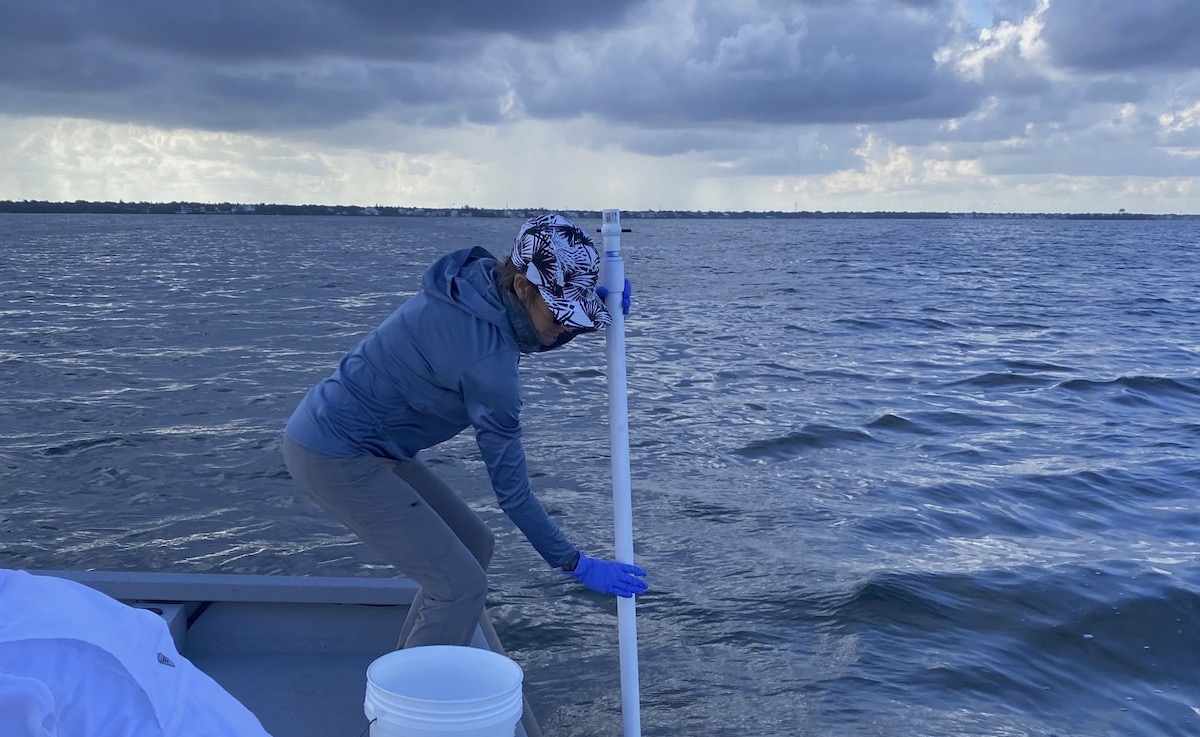
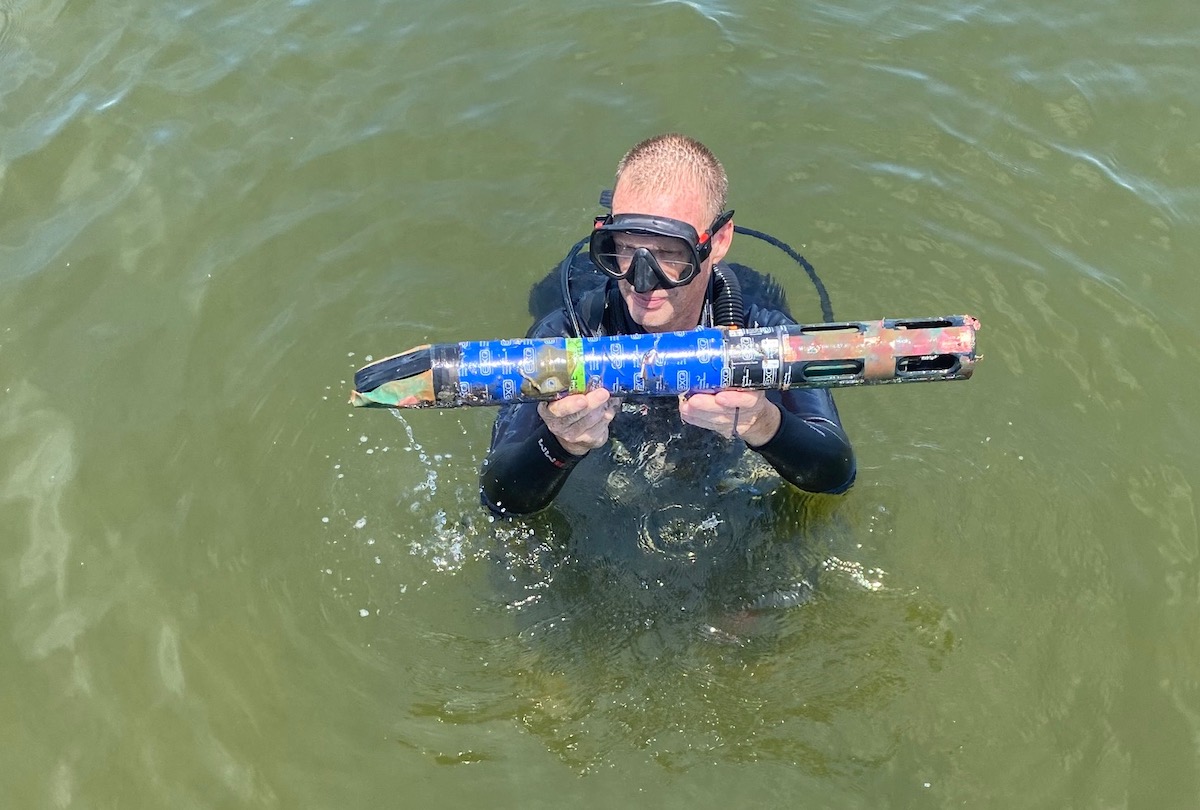
Scientists sprang into action to study Piney Point’s impacts. The University of Florida’s (UF) Center for Coastal Solutions, with funding from Ocean Conservancy, is one of a dozen entities, including the Tampa Bay Estuary Program, studying ecosystem changes linked to the release. I recently joined the Center’s Drs. Elise Morrison and Andrew Altieri to see their research firsthand.
Impacts on algae and seagrass beds
Dr. Morrison, Dr. Altieri and Dr. Edward Phlips are tracing the pulse of nutrients from the gypsum stack through the ecosystem to see how algae and seagrass beds respond. This is significant because algae and seagrasses are at the base of the food web. Too many nutrients can turbocharge algal growth, which clouds the water and smothers the bottom, preventing sunlight from reaching and sustaining seagrasses. Numerous species including manatees, fish, turtles and birds depend on seagrasses for food or protection from predators, and declines in seagrass abundance have ripple effects. On the Atlantic Coast, for example, manatees are starving to death in record numbers due to loss of seagrass critical to their diet. The recent uptick in deaths in Tampa Bay, possibly red tide-related, is worrying.
Low to very low counts of Karenia brevis, the microscopic organism that causes red tide, were reported in Lower Tampa Bay starting at the end of April and into much of May. However, this organism proliferated into a large and severe bloom within the bay during June and July 2021, resulting in fish kills in the region. Its recent intensification is likely due in part to drought-induced high salinities in bay waters, ideal conditions for Karenia, and nutrient pollution from other land-based sources. Additionally, in late May, thick mats of the cyanobacteria Lyngbya were also seen within upper Sarasota Bay. To evaluate whether and to what extent the Piney Point nutrient-rich releases have impacted the bay, Morrison and Phlips are looking at changes in nutrients and phytoplankton communities in the region, while Altieri is examining seagrass and seaweeds.
Piney Point threatens the huge gains in seagrass cover that had been achieved in Tampa Bay in recent decades. Tampa Bay is the one estuary in Florida where one could point to a clear example of investments in water-quality improvement resulting in significant improvements in estuary health.
Ongoing water quality problems
Whether it’s Tampa Bay, Biscayne Bay or Indian River Lagoon, Florida’s bays, estuaries and lagoons face ongoing water-quality problems and the economic consequences that result. Harmful algal blooms and their ecological, economic and human health impacts, including fish kills, canceled vacations and illness, will persist until the flow of nutrients, especially nitrogen and phosphorous, from inland and coastal watersheds into local waterways is meaningfully curtailed.
To his credit, Governor Desantis has made water quality and harmful algal blooms a priority since his first days in office, and the state legislature has passed some rules to improve water quality. The incremental progress, however, is simply not keeping pace with the severity of the crisis. A growing population and associated expansion of roads, septic tanks lawns, and golf courses coupled with agricultural runoff and legacy nutrients in Lake Okeechobee are overwhelming Florida’s aquatic ecosystems. The climate crisis is making matters worse by warming waters that fuel longer-lasting and more frequent and potent harmful algal blooms.
Removal and reclamation of gypsum stacks
Piney Point and other gypsum stacks around the state are priorities for removal and reclamation so that future intentional water releases or catastrophic failure can be avoided. However, the drip, drip, drip of nutrient pollution from numerous chronic, non-point source pollution sources, along with other stressors, collectively poses an existential threat to Florida’s estuarine and marine waters and the communities that depend on them. A comprehensive approach is needed to identify sustainable solutions that can benefit the intertwined wellbeing of Florida’s human population and coastal ecosystems.
A major concern for ecosystems is a tipping point, which occurs when ecological conditions shift abruptly and possibly irreversibly from one state to another. Tipping points turn ecosystems on their heads. Some species disappear, while others, usually less-desirable ones, move in and dominate. For example, if harmful algal blooms and the nutrients fueling them are not controlled, seagrass beds in some estuaries could be permanently replaced by macroalgae. All the benefits of seagrasses, including essential fish habitat and the fisheries they support, would be lost. Unfortunately, no amount of seagrass planting will save a system if the underlying stressors (pollution) remain unresolved. The Indian River Lagoon is a system that has flirted with tipping points and might be doing so again now.
Working together to improve water quality
Morrison, Altieri and Phlips hope to make some preliminary findings later this year on Piney Point’s role in the bay’s red tide event and on the resilience of seagrasses exposed to phytoplankton blooms in Tampa Bay. In the meantime, Floridians must continue to advocate for nutrient pollution curbs and improved water quality by urging their elected officials to make these issues top legislative priorities in 2022. Up-to-date information on conditions in the bay can be found through the FWC’s red tide map and Tampa Bay Estuary Program’s data portal, and details about UF’s efforts to safeguard Florida coasts can be found at the Center for Coastal Solution ’s website.
We don’t typically think of ocean animals as having friends. And they don’t, really—not in the way we think of friends as folks you invite to happy hour and send pictures of your dog.
But they do have relationships where they help each other out. Today, the International Day of Friendship, we’re recognizing one of the many inter-species relationships in the sea: sharks and remoras.
If you’ve ever watched Shark Week, you’ve probably seen remoras hanging out alongside the sharks. Also known as suckerfish, they’re fish in the family Echeneidae that attach or swim alongside large marine animals like sharks. There are eight species in the family, and all are generally long and thin. The largest species is the slender suckerfish, which can grow to more than 43 inches, and the smallest is the white suckerfish, which grows only to about 12 inches.
Never miss an update
...loading
Thanks for signing up for Ocean Conservancy emails.
Remoras have a flat disc on top of their backs that functions like a suction cup (hence, “suckerfish”). They stick themselves to sharks, rays, whales and other large animals and cruise along. They’re sometimes referred to as the “hitchhikers of the sea.”
So what’s in it for remoras? These fish benefit by nibbling on parasites or grabbing leftovers from the sharks’ meals. The sharks aren’t harmed at all by remoras hitching a ride on their sides.
Recent research has helped us understand how remoras are able to stick so well to their hosts. Their suckers have collagen fibers that allow them to stick 3.5 times longer than the suction cups we’re used to.
This is a type of symbiotic relationship, or established interaction between two species where at least one species benefits. Other examples are coral and zooxanthellae, where zooxanthellae make food and get shelter, and cleaner wrasses and predatory fish, where the wrasses get a meal and larger fish get cleaned up.
In President Biden’s first six months in office, his Build Back Better plan has been at the forefront of his agenda. It consists of three parts: the American Rescue Plan, which provided COVID relief to families and small business; the American Families Plan, intended to bolster the middle class; and the American Jobs Plan, which focuses on revitalizing infrastructure.
With the American Rescue Plan having passed earlier this year, both the American Jobs Plan and the American Families Plan are currently making their way through Congress. Although both the Jobs Plan and the Families Plan are critical components of building back better, I want to take a deeper look into why the American Jobs Plan is inexplicably linked to our ocean and climate—and why accounting for this link is vital to the plan’s success.
Never miss an update
...loading
Thanks for signing up for Ocean Conservancy emails.
First, we need to look at what is actually in the plan Congress is debating. The American Jobs Plan proposes to do a number of things, including revitalizing highways and bridges, delivering broadband internet to all Americans, upgrading schools and veterans’ hospitals and more. Importantly, it also prioritizes efforts that reduce emissions and reduce the effects of climate change—which is crucial for maintaining a healthy and functioning ocean—including:
Increasing energy efficiency of buildings across the country.
Improving public transportation options, including investing billions into rail systems.
Enhancing electric grids, food distribution and hospitals in communities vulnerable to climate-driven disasters.
Incentivizing clean energy to transition away from fossil fuels.
Restoring and protecting natural lands that mitigate the effects of hurricanes, sea-level rise and wildfires.
Establishing a Civilian Climate Corps that will work to advance environmental justice.
These measures are just the tip of the iceberg of the initiatives proposed in this bill, which has several important things to note. First, and perhaps most importantly, is the critical emphasis within it on increasing climate resilience and mitigation of climate change effects. In the last month alone, we’ve seen the Pacific Northwest coast bake under record breaking temperatures; unprecedented manatee deaths, massive red tide events and water quality degradation in Florida; and a Miami condominium building collapse potentially in part due to the coastal effects of climate change. Clearly, it’s impossible to discuss the future of infrastructure in the United States without framing it in terms of climate change.
We are already seeing and feeling the effects of climate change in our ocean, along our coasts and throughout the entire country—to “build back better” means to build to withstand future climate conditions.
Second, within the bill there is a necessary focus on minority and low-income communities that are disproportionately affected by severe weather events and other effects of climate change. The bill proposes that 40% of the benefits of climate-focused investments be used to assist disadvantaged communities and provide tax credits for disaster-resilience projects in low- and middle-income areas.
Third, the plan presents expansive opportunities to invest in our ocean and coasts, which will help mitigate climate change and improve the lives of people throughout the country. By investing in coastal restoration and resilience projects, for example, we can buffer the effects of sea level rise, improve habitat for threatened wildlife and create thousands of jobs. Initially the plan called for $2.5 billion in investment for these projects, but a new report found that half of all coastal U.S. states and territories have identified a need of over $6 billion in these projects. That’s why we’re encouraging Congress to invest at least $10 billion in these initiatives.
Another example is the bill’s Healthy Ports Program, which would help modernize our nation’s ports and improve the shipping sector to help move us into a clean-energy future. We know a zero-emissions shipping industry is possible, and investing in this vision through the infrastructure bill is a critical step in achieving this goal.
I encourage you to review the other ways the American Jobs Plan can advance ocean-based climate solutions and support vulnerable and marginalized coastal communities by reading our recent report. It is powerful to see all the ways this funding could be applied to better the lives of people around this country in the face of climate change and help protect our ocean in the face of increasing threats.
However, outlining a plan is only the first step. A plan means nothing if it is not put into action.
As Congress continues to debate the future of this plan, we must hold our elected officials accountable to ensure the measures aren’t weakened to the point of ineffectiveness in the name of compromise. Money that is channeled into ineffective or incomplete programs is a waste of valuable resources—we need to ensure that the legislation that is passed remains strong on ocean-based climate solutions and environmental justice. Then, the next phase of the work begins. Our leaders at every level of government need to be held accountable to ensure the funds are being used properly to advance the goals outlined in the plan.
I am very encouraged to see this climate-focused infrastructure plan put forward by the Biden administration. It is a strong example of fulfilling the administration’s goal of working towards a greener future that actively tackles the threats of climate change. Although the work is just beginning, it gives me hope that we can make great progress in implementing large scale ocean-based climate solutions.
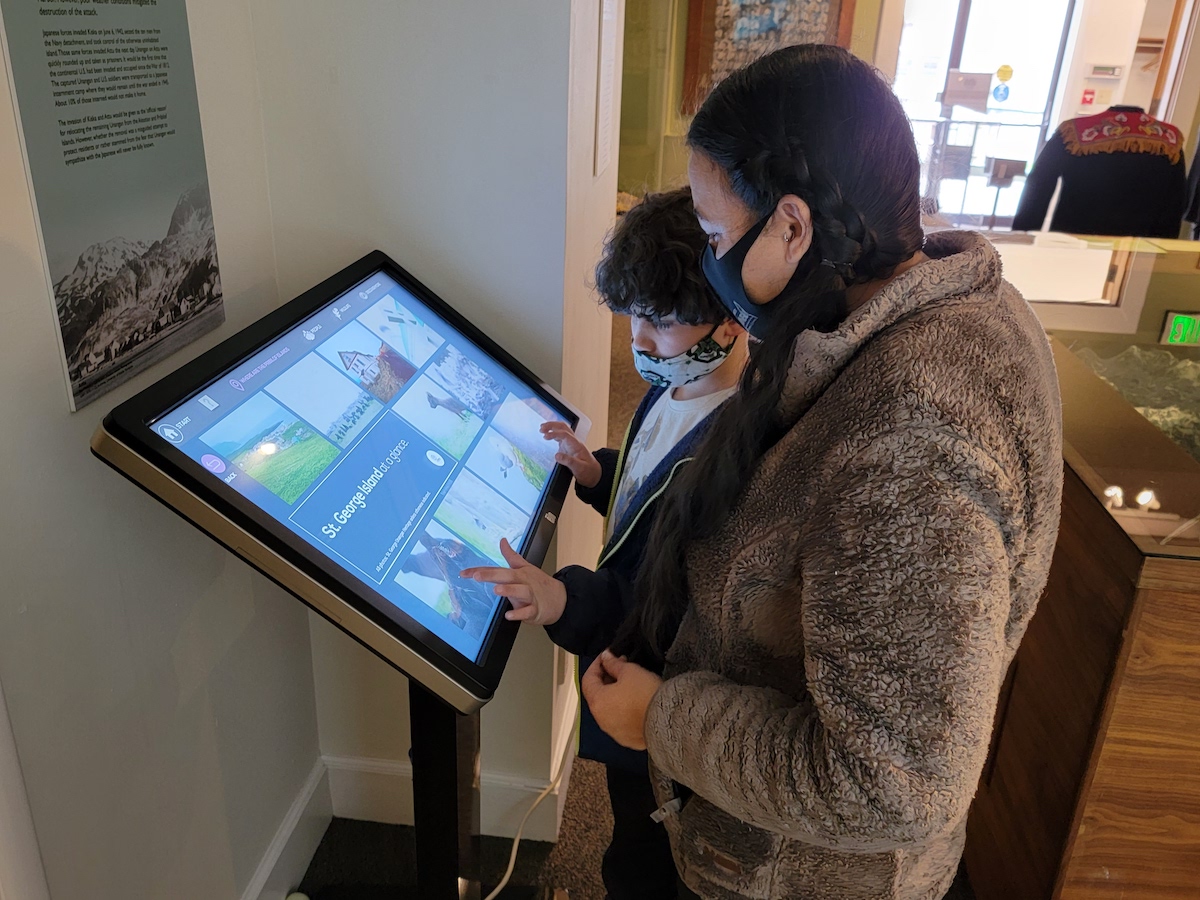
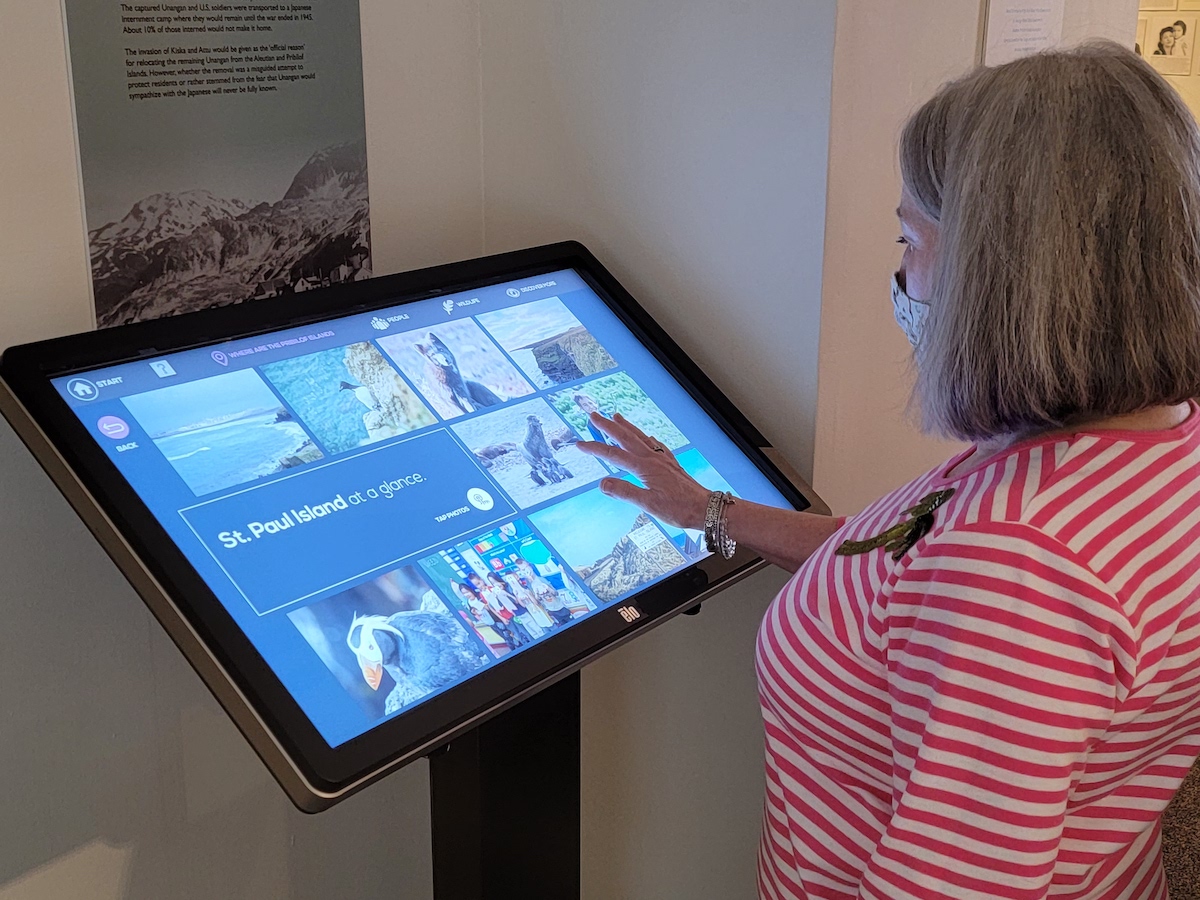
Collaborative creation is a powerful experience. It’s a natural fit for learning through collective problem solving, building partnerships and trust and empowering positive impacts in all sorts of unforeseen ways. A recent example of this is a newly developed immersive-learning touchscreen developed by Ocean Conservancy’s Arctic program in collaboration with the Aleut Community of St. Paul Island Ecosystem Conservation Office (ACSPI) and the Juneau-Douglas City Museum (JDCM).
The goal of our mutual project seemed simple enough: We would work side-by-side (both virtually and in-person) to create a touchscreen for the Pribilof Islands that would include information, pictures, stories and history related to the people and ecosystems surrounding the remote Pribilof Islands, St. Paul and St. George. Eventually, the interactive kiosk would live on St. Paul and serve as a learning outreach tool for and by the community and could be updated over time.
Early on in the design process, Ocean Conservancy’s Senior Arctic Fellow Mike LeVine got wind of an upcoming year-long exhibit in his hometown of Juneau, Alaska, that would spotlight the internment of Pribilovian Unangan (Aleut) at Funter Bay during World War II. To our delight, a new collaborator joined the team: the Juneau-Douglas City Museum! We agreed to loan the kiosk to the museum as part of their exhibit and worked together to incorporate Unangax̂ internment experiences into the touchscreen.
Never miss an update
...loading
Thanks for signing up for Ocean Conservancy emails.
By early 2021, the touchscreen was completed and arrived on the museum’s doorstep to become an official part of their exhibit, Echoes of War: Unangax̂ Internment during WWII.
After the museum exhibit ends in October 2021, the touchscreen will move on from Juneau to St. Paul Island. The touchscreen houses over two and a half hours of interactive experiences—videos, photo galleries, maps, audio interviews, language word games, music and articles about both St. Paul and St. George.
The exhibit offers visitors a chance to explore the ecology, culture and biological wonders of the Pribilof Islands. It also highlights the unique and critical importance of the islands and their people in the Bering Sea ecosystem.
Now that the touchscreen is in full operation, I asked our museum partner how their visitors were enjoying the kiosk and if they could look back and share their reflections on the project.
NikoSanguinetti, Curator of Collections and Exhibits Juneau-Douglas City Museum
Question: How do you think the touchscreen adds to the exhibit?
Answer: This touchscreen completes the story that we were trying to tell in a way that we never would have been able to do with the resources that were previously available to us, for which I am incredibly grateful.
As we were working through the development of the museum exhibit, I was constantly running this very difficult line of trying to create an “immersive” exhibit in a relatively small space and with very little money. An immersive exhibit also generally equates to having few words, which was becoming a problem for my partners. The history and memory of the Funter Bay internment is rich with experiences and stories with each one having special meaning to each individual person. I was struggling with the task of telling a fully developed story in as few words as possible. Inevitably, I was always leaving something, or someone, out. And that “something” varied from person to person. However, what was often getting left out was more information about the people who were interned and the islands and culture that shaped them.
In this regard, the touchscreen was a game changer. It allowed us to include much more information, tell a richer story and engage visitors in a different way than the rest of the exhibit. And it did all of this without contributing to museum fatigue or bogging down the exhibit with more words that visitors most likely wouldn’t read.
Q: What do you think makes this project noteworthy?
A: I think what makes this project noteworthy is the true collaborative nature of the project between different agencies (and people) to produce something interactive and engaging for various audiences (not just museum goers but eventually on St. Paul for both locals and different types of visitors). In addition, the project changed and evolved to incorporate and enhance the museum exhibit—an exhibit that was not part of the original project plan or scope. It is a shining example of collaboration at its best. All the work was directed at creating a better product with as wide a reach as possible. Ego and expectations were left at the door.
The fact that the touchscreen was almost commandeered by the Funter Bay Project to enhance the exhibit as a whole speaks to the idea of collaborating for a cause. Allowing me to join the conversation—with ACSPI allowing the touchscreen to come to the museum before heading home—is a fantastic example of that. I might be slightly incorrect in my thinking, but I saw the whole touchscreen project as being its own separate entity that was then augmented to feed into this larger project in a meaningful way. The entire team was extremely accommodating and flexible to create an incredible addition to the JDCM exhibit that could also achieve its original purpose of being a stand-alone display.
Q: Any last thoughts to share?
A: The touchscreen and its content also came at a critical time. With many institutions shut down due to the COVID-19 pandemic, digital access became the name of the game. While we stopped just short of making all the content available online, the idea of the project to centralize a large amount of resources into an accessible place is moving in the direction all museums are shifting towards. In its physical form, the touchscreen also helped bring a new aspect of the exhibit to life in a digital format. Museums are shifting the way they approach exhibit design and are often struggling with how to engage with younger audiences of museum visitors. This touchscreen helps the JDCM be that much more accessible—a trait we hope to nurture in the future.
In early June 2021, Alaska Gov. Mike Dunleavy travelled to the Juneau-Douglas City Museum to sign a bill into law protecting the Unangax̂ cemetery in Funter Bay. The bill adds the cemetery to the Funter Bay Marine Park making the land safe from being sold or developed, and ensures protection for the grave sites.
The bill signing at the museum helps bring to light that exhibits and outreach tools can provide an important and necessary function in helping to heal, educate and share cultural stories—a keystone of keeping any community healthy and vibrant.
Ocean Conservancy wishes to express our gratitude to the residents of St. Paul and St. George for sharing their stories, experiences, pictures and other information with us to make the touchscreen possible, and to the Juneau-Douglas City Museum. Funding for this project was provided by the Gordon and Betty Moore Foundation.
Along the coast of the United States, marine ecosystems support fisheries that feed us, connect us with friends and family, and sustain cultures and traditions. As a result of decades of hard work by fishermen, managers, scientists and conservation groups, our country has some of the most sustainably managed fisheries in the world.
But the work is not done. New challenges, like our rapidly changing climate, are making it harder to tackle ongoing ones. Our fisheries face challenges in rebuilding stocks to healthy population levels, reducing our impact on ocean habitats and other ocean creatures, supporting subsistence and Tribal fishing and cultural activities, and maintaining strong fishing communities and coastal economies.
Never miss an update
...loading
Thanks for signing up for Ocean Conservancy emails.
After an extensive listening tour to get input from regional fishery participants and experts, Congressmen Jared Huffman (D-CA) and Ed Case (D-HI) have introduced the Sustaining America’s Fisheries for the Future Act. This ambitious bill would amend and reauthorize our existing marine fisheries law, the Magnuson-Stevens Fishery Conservation and Management Act. The new bill tackles the most challenging issues facing our fisheries and fishing communities today and offers forward-looking solutions to better prepare our fisheries for long-term sustainability, even in the face of changing ocean conditions.
Here are my top six favorite solutions from the bill:
1. Consider climate change impacts throughout the management system.
The ocean is getting warmer, there’s less oxygen in the water and acidification is affecting water chemistry. Populations of fish are shifting, seeking cooler waters like what they’re more used to. And many fish populations are becoming less productive, leaving fewer fish to support ecosystems and fishing opportunities. This bill conveys one clear message: climate change is here, and America’s fisheries must be sustainable even in the face of it.
To do that, the bill directs scientists and managers to consider climate impacts when they make decisions about how much fishing can occur each year. Working with NOAA Fisheries, managers will focus on the stocks most vulnerable to climate impacts. And for those instances where stocks are shifting from historic fishing grounds to new areas, managers should ensure fishing is sustainable while determining how to manage fisheries across geographies.
2. Do more to bring vulnerable stocks back to healthy levels.
I recently wrote about a growing challenge in fisheries management—while we’ve been successful in rebuilding 47 stocks since 2000, 20% of our fish stocks still need to be rebuilt to healthy levels. Of those, many just aren’t improving under current management. Even more worrying, more stocks are slipping into an overfished status each year, meaning that our management system is still allowing stocks to decline.
To address this situation, the bill encourages managers to more actively manage stocks that are in rebuilding plans, which means checking on their progress more frequently and improving management when stocks are struggling to recover. The bill also recommends that when a rebuilding plan ends without restoring the stock, the next rebuilding plan should be more likely to succeed than the last one. With climate change lowering the resilience of fish stocks, rebuilding is a key way to protect them from climate-related disasters.
3. Expand Tribal representation in the management system.
Indigenous people stewarded the waters, ecosystems and fish in the region we now call North America since time immemorial. Sustainable management practices by Native peoples maintain the health and productivity of ocean resources that, in turn, support enduring societies. But our fishery management system contains profound inequities that prevent sovereign Tribes and Native Americans from co-equal management of the fish and marine ecosystems which they have historically stewarded and of which Indigenous people and culture are an intrinsic part.
The Sustaining America’s Fisheries for the Future Act takes important steps to begin addressing these long-standing issues, adding two Tribal seats to the management body that governs fishing in the North Pacific, representing more than half of our nations coastline and 229 Federally-recognizes Tribes. It also acknowledges and defines subsistence fishing and makes those fishermen eligible for disaster aid.
4. Improve data collection and use, particularly in recreational fisheries, for better sustainable management.
Fishery management is a data-hungry enterprise. Science-based management means we need to frequently assess the health of fish stocks to know how to keep fishing at sustainable levels. To do this, we rely on accurate and timely data on how much is being caught each year, along with data on ocean conditions and biological information.
The bill makes changes to improve the handling of existing data by NOAA Fisheries so it can be more easily utilized for management and to facilitate growth in use of electronic technologies for fishing vessels to report on and monitor their catch. The bill further tackles one of the biggest remaining challenges in sustainable management—improving data on recreational fishing. Private anglers around the country catch significant amounts of fish each year—often the reason that overfishing is still occurring in some important fisheries. Improving the collection of data from anglers and integrating that data into management is a crucial step in ensuring the recreational fishing sector is accountable for its catch.
5. Address ecosystem impacts while we manage fisheries to keep the ocean healthy.
U.S. fisheries are some of the world’s most sustainable, but fishing still has an impact on the environment. Additionally, energy development, shipping, activity within ports and pollution can damage the ecosystems that fish and fishermen rely on.
The Sustaining America’s Fisheries for the Future Act tackles issues around habitat, forage fish and bycatch to try to lessen ecosystem impacts. For habitat, the bill strengthens managers’ abilities to keep non-fishing activities from damaging habitats essential to fish and also improves the ways we plan for and manage those habitats. The bill removes loopholes that are preventing common-sense management measures that would reduce bycatch and improves reporting of bycatch in fisheries. And the bill looks to improve management of forage fish, which are important prey species that support the needs of many predators, including other fish.
6. Support fishing communities to keep our fishing traditions alive.
Healthy fisheries around the U.S. support commercial, recreational and subsistence fishing activities that, in turn, feed families and bring people together. But fishing communities are vulnerable, especially as climate change threatens the health of our ocean.
The bill reforms the way disaster assistance is provided to fishermen and fishing businesses, which will be important as marine heat waves, harmful algal blooms and other unexpected events increase in frequency. It also supports and preserves working waterfronts, maintaining critical infrastructure for fishing communities. The bill also takes into consideration the social and economic benefits of coastal communities’ participation in fishing to sustain the cultures, livelihoods and practices of fishing communities.
These six solutions couldn’t be more important or timely. I spend a lot of time worrying about the future of our fisheries, and this bill has given me hope. While we are only at the start of the legislative process, I’m encouraged that Congress is having the right conversation about fisheries, and I thank Representatives Huffman and Case for leading that work.
It’s a shark. But, it doesn’t use teeth to eat. Yes, I’m serious. I’m writing about none other than the basking shark. These gentle giants are often overlooked, thanks to the popularity of great white sharks and whale sharks—who steal all the glory.
But, I think the more we learn about basking sharks, the more we will find them both endearing and fascinating. Dive in….
See more wonderful ocean animals!
...loading
Thanks for signing up for Ocean Conservancy emails.
Where do basking sharks live?
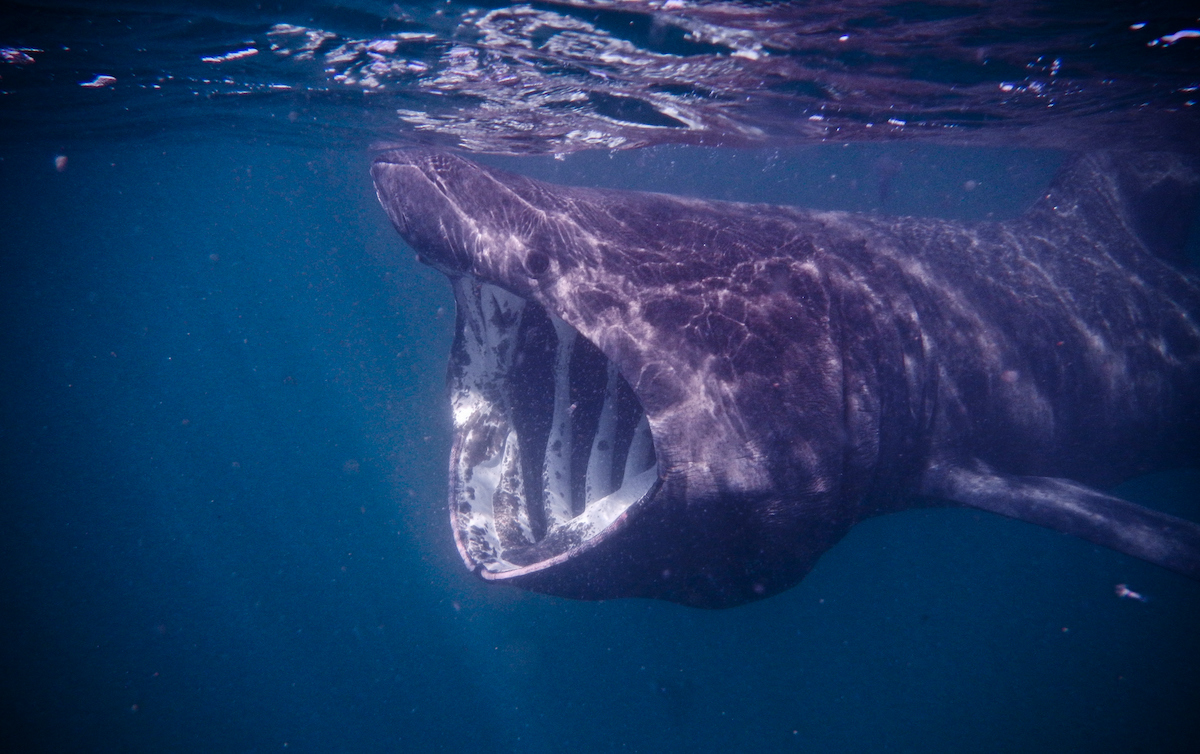
Basking sharks are typically seen swimming slowly at the surface, mouth wide open. Preferring life along the coast, they have been known to enter bays and estuaries—and to venture out into the open ocean, on occasion. Basking sharks can be seen in pairs and in larger groups of up to 100 or more. Their name comes from their habit of “sunning” themselves at the surface, with their first dorsal fins fully exposed. Basking sharks are highly migratory and live all over the world—in both cold and warmer temperate seas.
What do basking sharks eat?
These gentle giants are happiest when they are moving slowly through the water eating zooplankton. That’s why you’ll find these sharks feeding along areas that contain high-density zooplankton. Basking sharks are one of three species of large, filter-feeding sharks, alongside whale sharks and the megamouth sharks.
Basking sharks rely on the passive flow of water through their throats, also called the pharynx, while swimming. Food is filtered from the water by gill rakers, which look like the prongs of a rake, located in the gill slits. The basking shark’s gill rakers can strain up to 2,000 tons of water per hour.
Basking sharks are the second largest fish in the ocean—first place goes to the whale shark. Basking sharks can grow as long as 40 feet and weigh more than five tons. Did you know that basking sharks can swim just as fast as great white sharks? It’s true. A 2013 study found they can have bursts of speed up to 11 mph and are even able to jump (breach) out of the water.
If this doesn’t sound impressive, let’s put swimming 11 mph into perspective. It is twice as fast as the average speed seen in the men’s Olympic 50-meter (164 feet) freestyle swim and 100x as fast as I can doggy paddle to the other side of my community pool.
It’s still a mystery to researchers as to why these sharks jump out of the water. They don’t need to breach for food, like the great white shark. The best guesses, so far, are for communication or to rid themselves of parasites.
Basking sharks need your help.
The basking shark is currently categorized as “Endangered” throughout its range by the International Union for Conservation of Nature (IUCN).