Friday, 19 March 2021

Biden Administration Adds Another Ocean Champion

The Environmental Protection Agency (EPA) has a new leader, and that’s big news for our ocean. Last week, the Senate overwhelmingly voted to confirm Michael Regan as EPA administrator.

Regan, hailing from North Carolina, served as the Secretary of North Carolina’s Department of Environmental Quality, whose mission is similar to that of the EPA. During his time as Secretary, Regan led the development and implementation of North Carolina’s plan to address climate change and transition to clean energy. Regan also established the state’s first Environmental Justice and Equity Advisory board to help achieve fair and equal treatment of North Carolinians, regardless of race or income, in the implementation of environmental law and policy.

From climate change to marine debris, the EPA is instrumental to the long-term health of our ocean. As the newly appointed administrator, Regan is faced with a laundry list of challenges left by the last administration, as well as a great opportunity for action. Here are four areas we could see Administrator Regan take action to benefit the health of our ocean and the health of our nation.

Environmental Justice

Tribal communities, Indigenous communities, minority-majority communities and low-income communities continue to experience disproportionate levels of pollution and environmental risk, and these inequities must be addressed. Listening to the needs of these communities and actively working with them to reduce their exposure to pollutants should be at the core of the EPA’s work. Achieving pollution reduction will benefit the health of our communities, and none more than environmental justice communities. The EPA has the tools and resources to achieve these reductions.

Climate Change

The EPA’s mission is to protect our human health and environment, putting the agency in a unique position to address the greatest threat to our ocean and communities: climate change. We’re already experiencing the impacts of climate change today, from warming oceans to sea-level rise to ocean acidification, and if we don’t take action today, the impacts will only get worse.

We cannot begin to mitigate the impacts of climate change without reducing greenhouse gas emissions. Luckily, the EPA plays a pivotal role in regulating the greenhouse gases that cause climate change via the Clean Air Act. Through the Clean Air Act, Administrator Regan can begin to reduce the greenhouse gas pollution responsible for ocean warming, sea-level rise and ocean acidification. Reduced emissions mean a healthier ocean and safer coastal communities.

Marine Debris/Plastic Pollution

The United States generates the most plastic waste of any country in the world. While we have just 4% of the world’s population, we create 17% of the world’s plastic waste. And this production of plastic waste has for too long outpaced our ability to manage it.

Leading the EPA, Administrator Regan will have the opportunity to address this devastating plastic waste trend. The agency oversees a number of federal laws that govern waste management, recycling and plastics production. This means the EPA must be at the forefront of developing, proposing and executing policies that will reduce the amount of plastics we produce and consume, and dramatically increase our ability to reuse and recycle plastics, closing the lifecycle loop and encouraging a more circular economy that produces less waste to manage.

Scientific Integrity & Agency Morale

The last four years saw an unprecedented effort to discredit scientists and the data and information they rely upon to assist in decision-making. We also experienced political pressures placed upon scientists, with political officials overruling scientists to weaken the health assessment of a toxic chemical found in drinking water. Administrator Regan will be charged with rebuilding the agency and restoring the public’s trust in one of our lead scientific agencies.

Though a daunting task, Administrator Regan is the right person to lead the agency and rebuild its reputation. By promoting science-based actions and improving scientific integrity, Administrator Regan will rebuild the foundation that made the EPA a leading and trusted source on keeping our communities and environment healthy.

The post Biden Administration Adds Another Ocean Champion appeared first on Ocean Conservancy.


from Ocean Conservancy https://ift.tt/3eQmJwC https://ift.tt/eA8V8J

Thursday, 18 March 2021

A Rainbow of Sea Creatures to Get You Excited for Spring

Spring is just around the corner, and I don’t know about you, but I couldn’t be more excited. One of the most vibrantly-colored seasons of them all, springtime has always been one of my favorite times of the year. Flower buds start blooming, the weather becomes slowly sunnier and an overall sense of fresh starts seem to blanket the land.

As I thought about how much I loved springtime on land, though, I couldn’t help but be reminded that there’s one place where some resident species are vibrant year-round: our ocean, of course! In celebration of these bright and colorful sea creatures, dive in and learn about five species that I happen to believe are truly reflective of the springtime spirit.

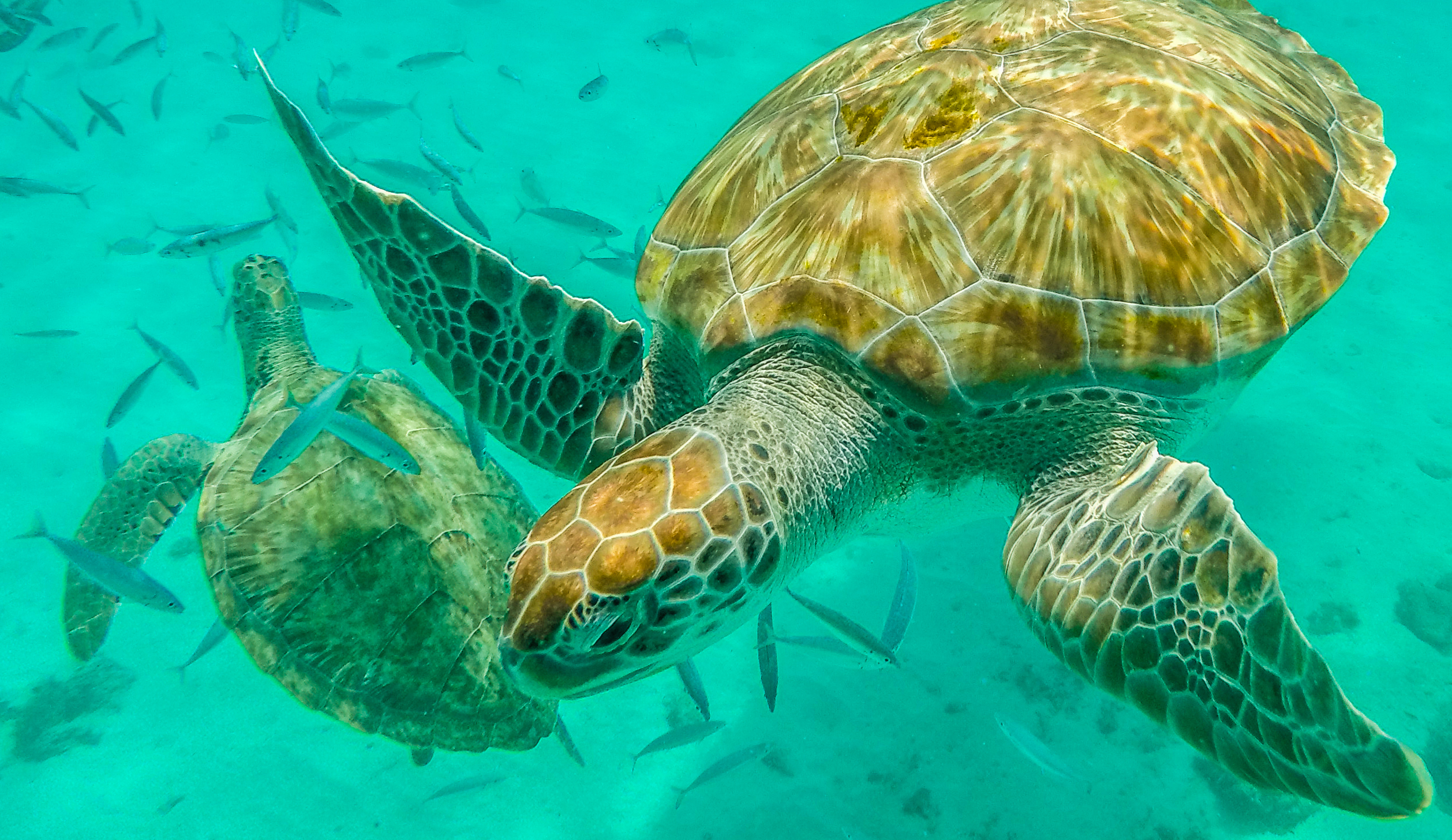
Who doesn’t love green sea turtles?

153-Green Sea Turtle In Barbados_Christian Martinez
© Christian Martinez

While their shells take on an olive to brown color that happens to look stunning in the sunlight, green sea turtles are actually named for the greenish tint to their skin. They’re also the only sea turtle species to be strict plant eaters as adults, which may explain that unique green tint.

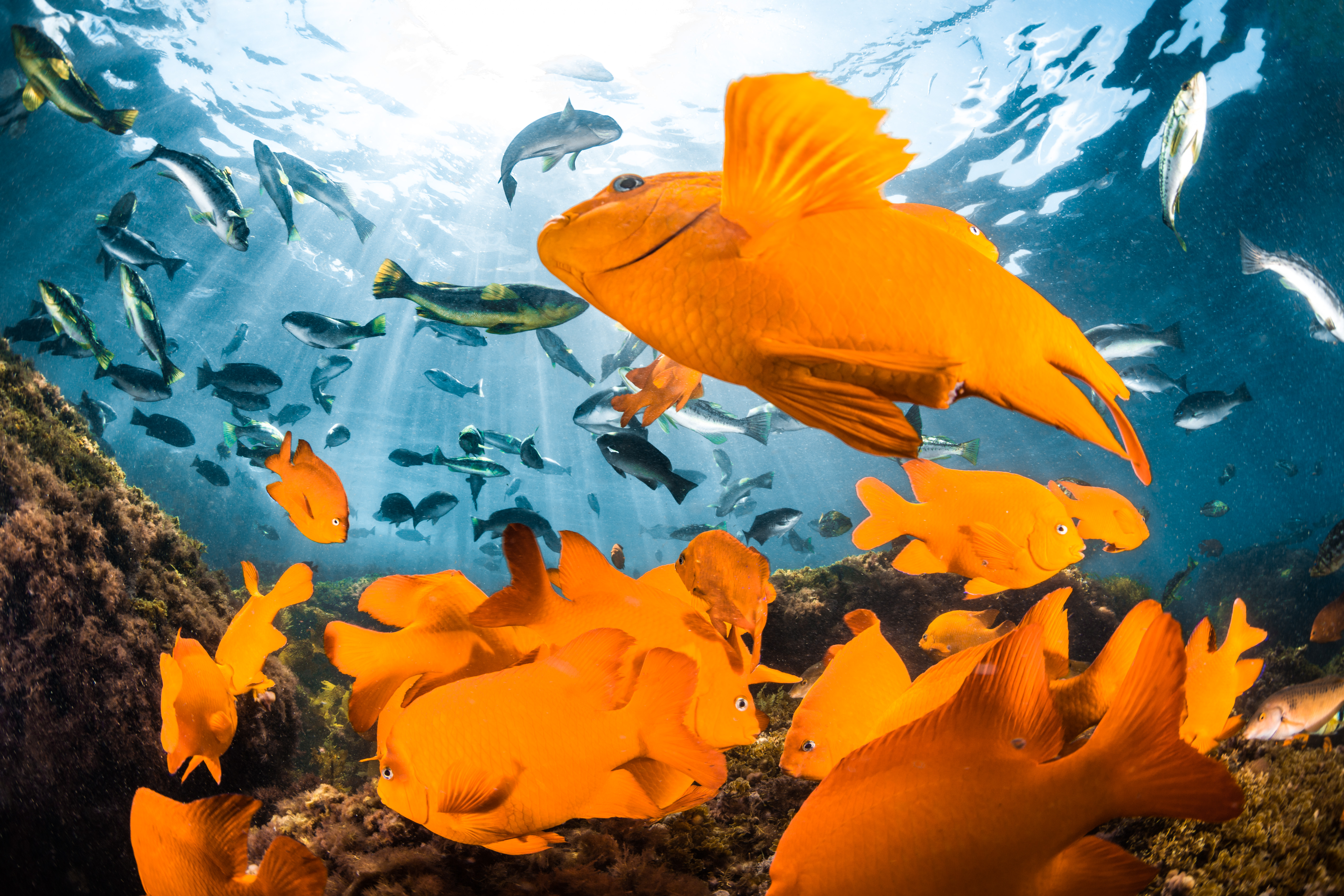
Orange you glad we included this species?

Garibaldi Adam Martin Los Angeles
© Adam Martin

These vibrant, kelp-loving fish are garibaldi, very often found in waters off of southern California. This photo, in fact, was photographed in waters just off of Los Angeles.

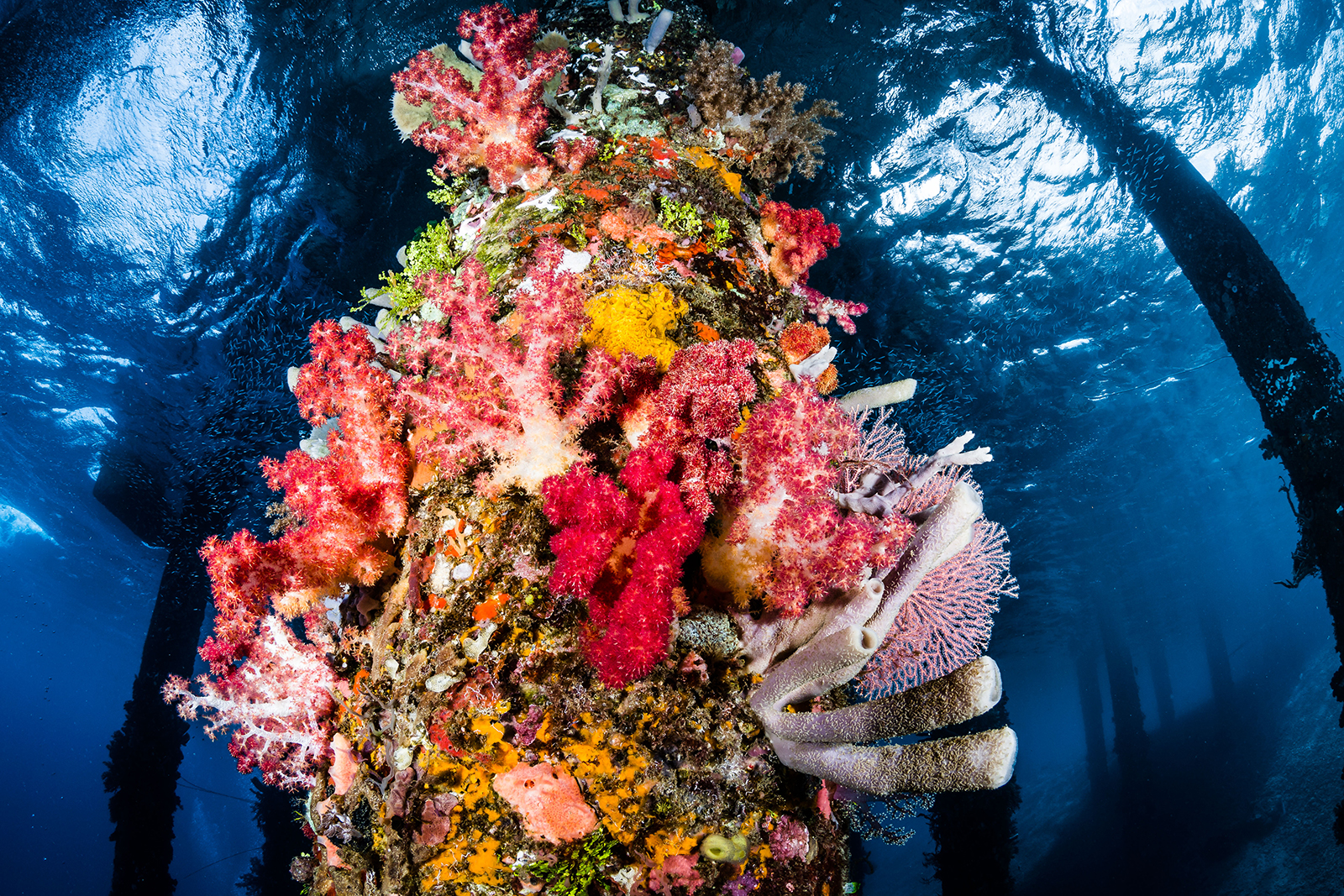
Now that is what we call a bountiful ocean bouquet!

IYORBank_CoralReefs_ErikLukas_02
© Erik Lukas / Coral Reef Image Bank

Newly-bloomed spring flowers are certainly beautiful, but you’ll be hard-pressed to find an arrangement as vibrant and intricate as this coral rainbow. Did you know coral reefs are noted to serve as key habitat for nearly a quarter of all ocean species? They’re found in both warm tropical waters and the cold depths of places like the Arctic. Colorful and critical, of course!

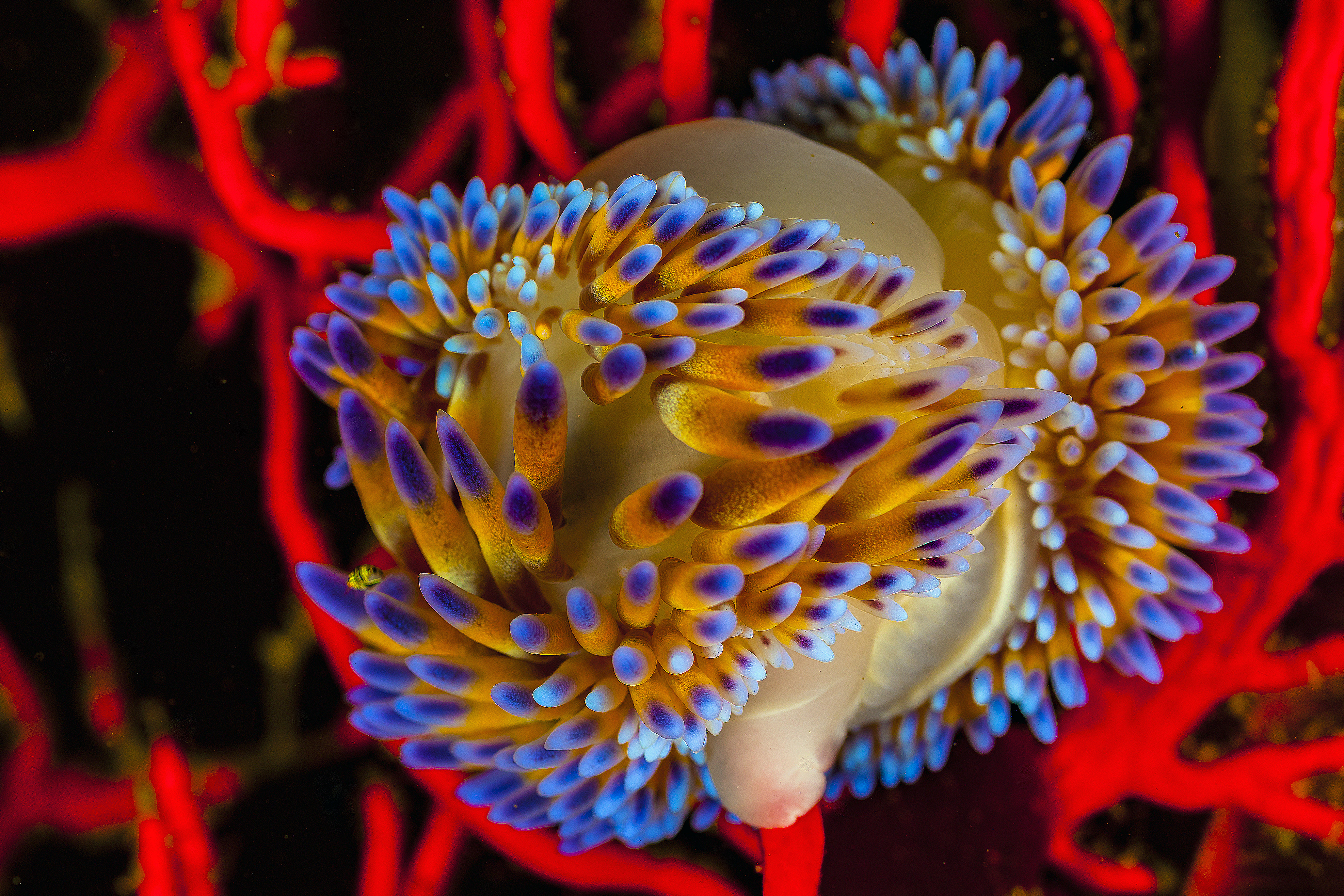
Oh, those nudibranchs, always stealing the show…

gasflames nudibranch_peetj_vaneeden
© Peetj Vaneeden

This stunning photo features what’s known as a gas flame nudibranch. As you can probably tell, this critter’s name comes from its appearance being very reminiscent of an open gas flame. Regardless, its fiery look certainly gets me excited for bonfires in the late spring!

Spotted: An itsy bitsy teenie weenie (sort of yellow in this lighting with red polka dots) crustacean!

Coral Crab
© David P. Robinson / Coral Reef Image Bank

This crustacean is a coral crab and, as their name suggests, they dwell amongst our ocean’s diverse reef ecosystems in a symbiotic relationship with resident corals. They’re sometimes referred to as “guard crabs” because they help protect the corals from potential predators.


No matter where you look within our ocean, vividly colorful creatures are waiting around every corner to share a dose of wonder. If you haven’t yet, be sure to join our email list to make sure you’re the first to know about all the latest and greatest discoveries, conservation efforts and advocacy campaigns launched by Ocean Conservancy to protect our incredibly biodiverse blue planet and the wildlife that depend on our ocean.

The post A Rainbow of Sea Creatures to Get You Excited for Spring appeared first on Ocean Conservancy.


from Ocean Conservancy https://ift.tt/2ODmt9D https://ift.tt/eA8V8J

Tuesday, 16 March 2021

The Collective Power of Trash Traps

This blog was written by Chelsea Rochman, Assistant Professor at the University of Toronto, co-founder of the University of Toronto Trash Team and Scientific Advisor to the Ocean Conservancy.

Plastic pollution in freshwater and marine ecosystems is increasing across the globe. Last year, it was estimated that roughly 30 million tonnes of plastic waste entered our aquatic ecosystems. If we continue business as usual, this number may increase as much as three-fold by 2030—in less than one decade.

There is no time to waste, and we all must do our part.

To prevent the devastating impact of plastic pollution, we must implement diverse mitigation strategies today, including reduction of plastics, more sustainable waste management and cleanup. Even as countries ban single-use plastics and increase their waste management, cleanup will continue to be an essential part of the solution toolbox. And if we really want to significantly reduce the amount of plastic ending up in our waters, then we must increase our level of cleanup by orders of magnitude—in order to meet our target cleanup goal at least 1 billion people would have to participate in Ocean Conservancy’s International Coastal Cleanup each year. So how can we increase our cleanup effort, and do it substantially?

The answer, in part: trash trapping technologies! These devices work around the clock to make a huge impact: Mr. Trash Wheel in Baltimore harbor can collect up to 38,000 pounds of trash in a single day. Not only do they help us remove plastic directly from our waterways, but they are also a research tool. By collecting data, like the types and amount of plastics these devices capture, we can quantitatively measure our impact and inform local source-reduction. They are also an incredible way to raise awareness and can easily become a centerpiece for education and outreach, like Mr. Trash Wheel, who inspires imagination and local solutions in the Baltimore community.

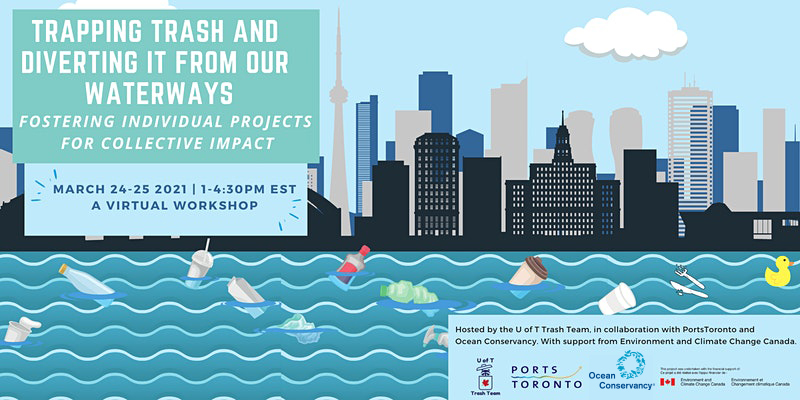
Together, the U of T Trash Team and Ocean Conservancy are developing a trash trapping network to increase the impact of the International Coastal Cleanup. We aim to bring together stakeholders from across the world with a shared interest in the collective power of trash traps to share data and best practices. To launch our network, we are hosting a virtual workshop, along with PortsToronto, that is free and open to the public.

https___cdn.evbuc.com_images_124377101_312278379382_1_original (1)

Part of our mission is to work locally to make a difference globally. At our “Trapping Trash and Diverting it from our Waterways” workshop, we aim to motivate local groups of stakeholders to come together to form a more impactful, global collective. We will provide the recipe for success, and share our tools for harmonized data collection to enable each team to quantify their individual impact and share it within the International Coastal Cleanup global database.

If we truly combine our efforts to strengthen the volume of plastic waste cleaned up around the world, we can make a measurable difference. And we can do it better together.

The post The Collective Power of Trash Traps appeared first on Ocean Conservancy.


from Ocean Conservancy https://ift.tt/3rZa2Dy https://ift.tt/eA8V8J

Monday, 15 March 2021

How Animals Mimic Each Other to Survive and Thrive

Ocean animals use a variety of weird and wonderful strategies to survive. These methods, which can range from changing color to using tiny stingers, help them attract mates, avoid predators and find food. These survival techniques have evolved over thousands—if not millions—of years.

Sometimes, it’s easier for animals to copy another species’ method than to develop their own. Why reinvent the wheel, right?

Mimicry is when two or more organisms who are not closely related resemble each other, and that leads to an advantage for one or both species. There are a few different types of mimicry depending on how and why one species mimics another. Batesian mimicry, for example, is when a harmless organism looks like a dangerous one, deterring potential predators or competitors. Aggressive mimicry takes a “wolf in sheep’s clothing” approach, where an animal looks like prey or a harmless species in order to lure an unsuspecting victim in.

There are countless examples of mimicry throughout the animal kingdom—if you grew up in the mid- or south-Atlantic (like me!), then you might be familiar with the eastern coral snake and its mimic, the kingsnake. Coral snakes are highly venomous and use their bright yellow and red bands to warn predators to stay away. Kingsnakes are quite harmless, but their similar vibrant bands are enough for any potential threat to do a double take. Kingsnakes are all bark, and no bite. To tell them apart, there’s a rhyme about the pattern of the bands: “Red touch black, safe for Jack. Red touch yellow, kill a fellow.”

The ocean is packed with tricky copycats, too. All of these species use mimicking to their advantage to avoid predators, lure in prey or generally blend into their environment.

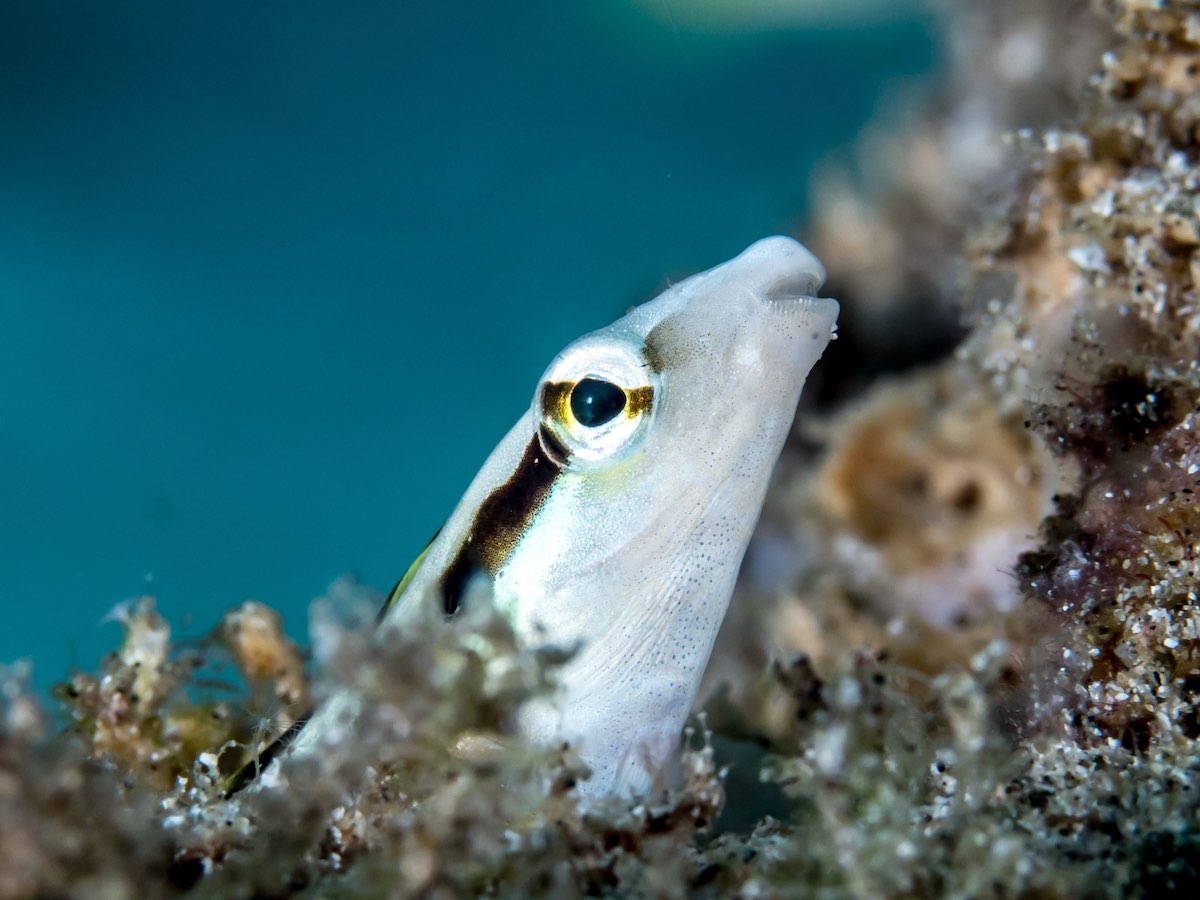
One example of aggressive mimicry takes advantage of an important symbiotic relationship in the ocean: cleaner wrasses and reef fish. Typically, when predators on the reef need a refresh, they enlist the service of cleaner fish—these critters set up cleaning stations where they eat dead tissue and parasites off of larger fish. The sabre-toothed blenny looks like a cleaner fish called the bluestreak cleaner wrasse, and will position its body to invite fish in, thinking they’re going to get a good clean. When the unsuspecting victim comes close, the blenny will strike, biting into the fish and tearing off skin before quickly swimming away.

OLYMPUS DIGITAL CAMERA
The sabre-toothed blenny looks like a cleaner fish. © Rickard Zerpe / Wikimedia

The iconic frogfish uses another form of aggressive mimicry. These weird and wonderful fish have a dangling lure coming off their head that looks like a small worm. As a curious fish or crustacean comes close, the frogfish will move the lure so the “worm” looks alive. Once their prey is close enough, the frogfish will snap forward, grabbing its meal.

Not all mimicry is nefarious though. Some animals, like the marine betta, are just trying to be left alone. They have tiny white spots all over their dark bodies and one big black dot towards their tails called an eyespot. If a predator comes close, they can dart headfirst into a hole, leaving their tail end exposed. To a clueless predator, the tail looks suspiciously like the head of a whitemouth moray eel, who they do not want to pick a fight with.

At the end of the day, ocean animals are just like the rest of us—doing what they can to get by and live another day. Mimicry is one of the creative ways they do just that.

The post How Animals Mimic Each Other to Survive and Thrive appeared first on Ocean Conservancy.


from Ocean Conservancy https://ift.tt/2OxqhsS https://ift.tt/eA8V8J

Thursday, 11 March 2021

What Exactly is Marine Conservation Biology?

This blog was written by Dr. David Shiffman, a marine conservation biologist and public science educator based in Washington, D.C. Renowned for his witty social media presence, he has written for the widely-read ocean science blog Southern Fried Science, and his science writing has appeared in publications including the Washington Post, Scientific American, Gizmodo and Scuba Diving Magazine. Follow along with him on Twitter, Facebook and Instagram, and stay tuned for his future contributions to the Ocean Conservancy blog.

If you read my first blog for Ocean Conservancy, you may have noticed that I identified myself as a “marine conservation biologist.” While many people may know that a marine biologist is a scientist who studies organisms that live in the ocean, my introduction as a marine conservation biologist tends to inspire some questions from readers. For example: “What’s the difference between marine biology and marine conservation biology?” and “What exactly does a marine conservation biologist do?” Today, I’m here to answer these questions for you. Let’s dive in!

What is conservation biology?

I’ll start by referencing a powerful essay that was published in 1985, the year after I was born. The Endangered Species Act and the entire environmental movement in the United States were relatively new, with ideas on how to move forward actively discussed by passionate environmentalists and concerned scientists. Michael Soule, who died earlier this year, described conservation biology as an entirely new discipline of science. This type of biology was designed to be practical, focused, applied science that borrows methods and approaches from other closely related fields like ecology, biology and environmental science. By “applied,” I mean that we’re not just talking about learning new information about our natural world for the sake of knowledge. While that is, of course, incredibly important work (because there is so much more still to learn), we’re talking about something different here: using scientific approaches to answer specific questions with immediately obvious real-world implications.

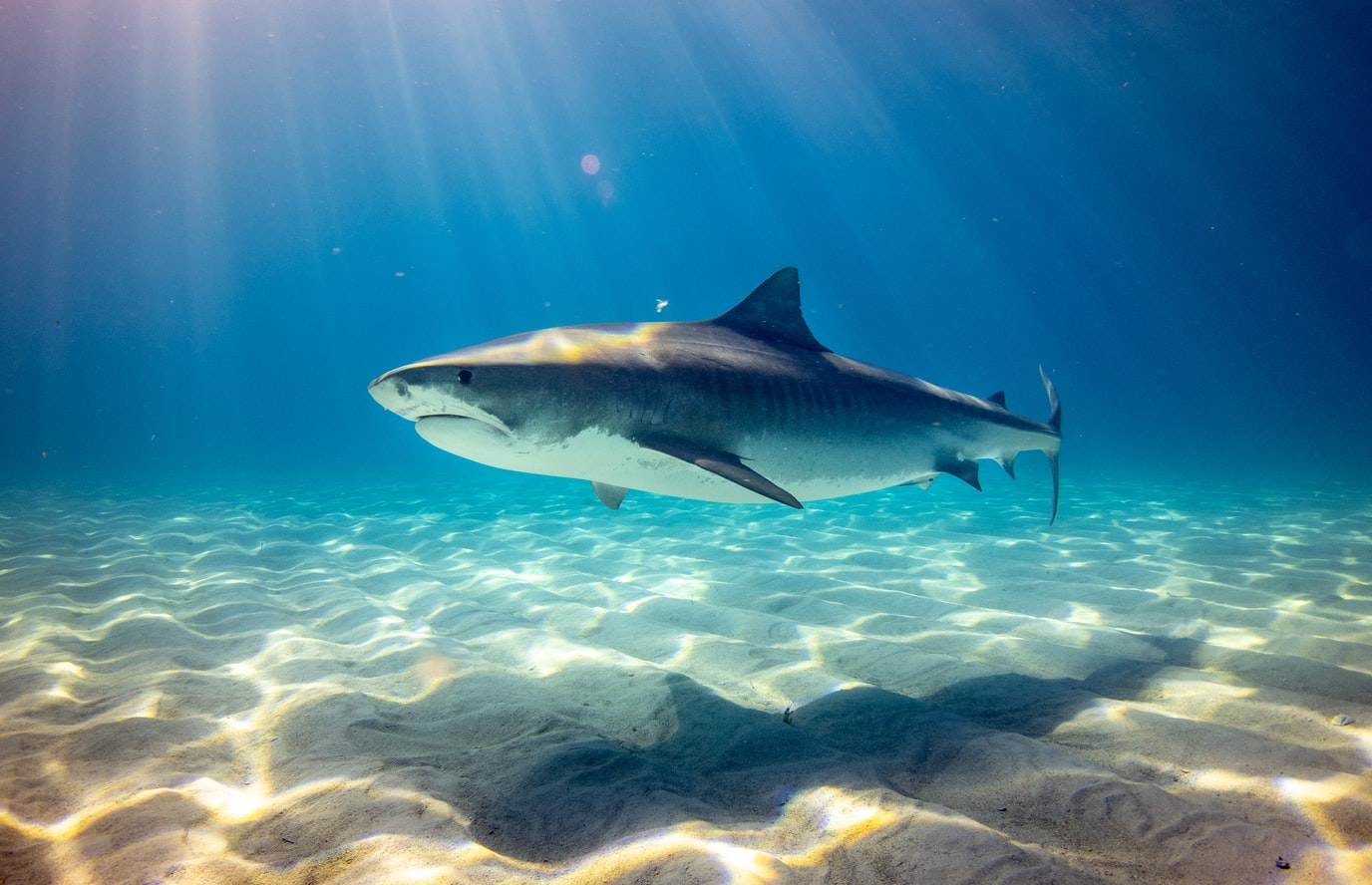
Gerald Schombs Unsplash
© Gerald Schömbs/Unsplash

In the case of the Endangered Species Act, for example, we’re of course focusing specifically on preventing the extinction of endangered species. With growing recognition of the threats facing the environment, it was no longer enough to just learn more about the ocean in general. It became more and more clear that it was necessary to learn specific information to try and help stop these problems. Essentially, conservation biology is the use of science to learn how to most effectively protect wildlife and wild places, and marine conservation biology is exactly that, but specifically centered around the ocean.

Marine biologists study living things in the ocean with the open-ended goal of learning more about them. Marine conservation biologists take a more applied and specific approach; for example, they ask not just “Where do sea turtles go?” but “Given that these sea turtles are endangered, what can a greater understanding of their habitat use and how it overlaps with potential threats tell us about how to protect them from threats so their population can recover?”

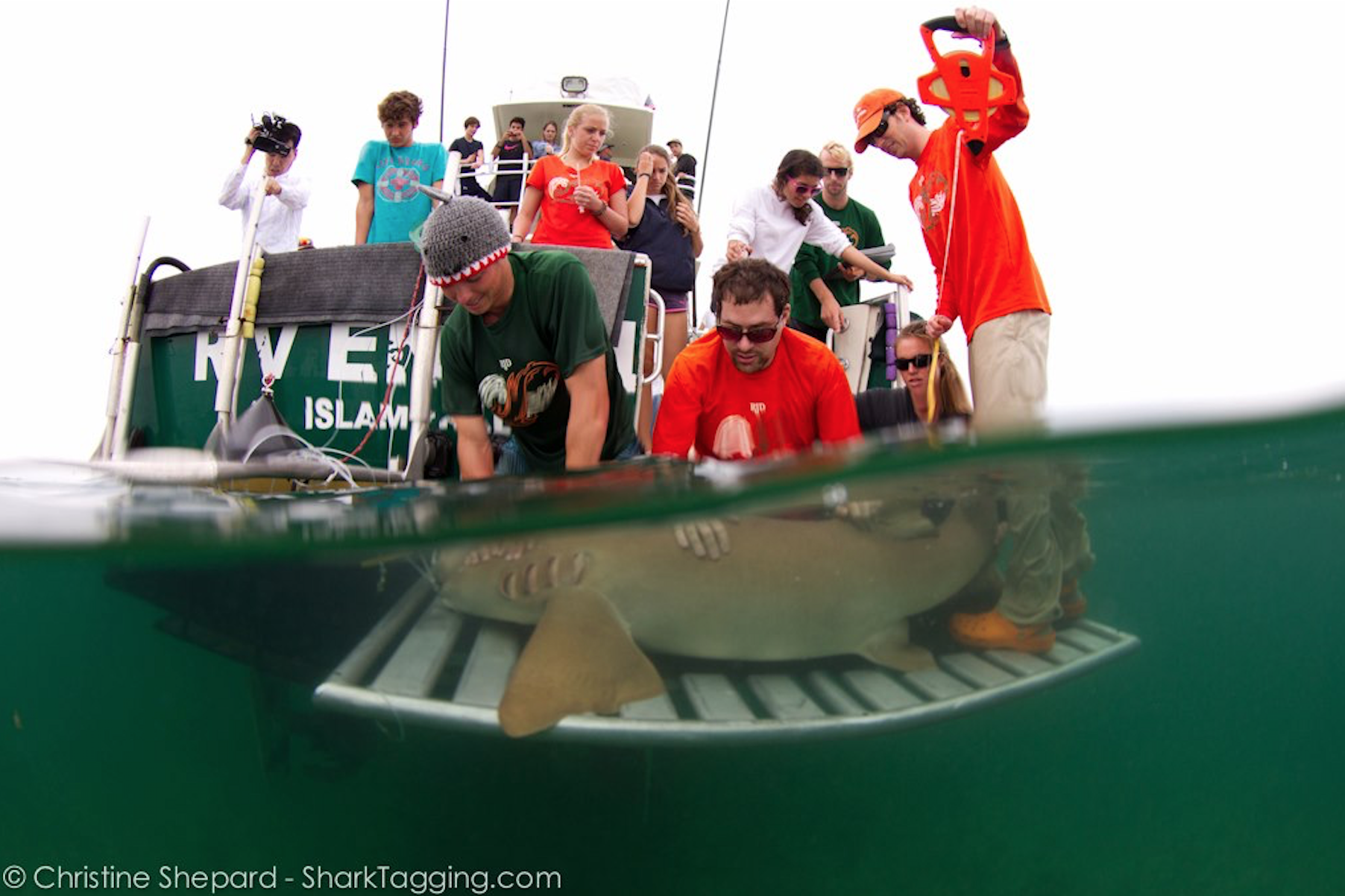
headshot
© Christine Shepard/U. Miami Shark Research + Conservation Program
While the boundaries between marine conservation biology methods and marine biology methods may be blurry at times, an important difference is what happens next. Traditionally in the scientific field, publishing a peer-reviewed paper with the results of your study in a scientific journal represents the end of a research project. Many marine biology papers note that their results may be “significant for management” in some way, but they’re rarely specific about what the current issue is with management or what specifically should be changed due to these new results.

Marine conservation biology papers often dive much deeper into detail about a proposed policy change, as the goal of many studies is often to find out what needs to be done to solve a specific real-world problem. In marine conservation biology, while publishing a paper is often an important step, it’s not the end of the process—in order to protect our ocean and the wildlife and communities that depend on it, we need to then make sure that the public and decision-makers know there’s a problem in the first place. Then, we must work to pinpoint and communicate what we can do to solve it, either ourselves or by partnering with people or organizations that will communicate our key findings to leadership (or communities that influence those leaders).

What does a typical day look like for you as a marine conservation biologist?

As a marine conservation biologist, many of my days are pretty similar to those of my colleagues in “pure” marine biology, spending time on a research vessel collecting data or digging into academic databases, analyzing samples in a lab or writing up results for publication in a peer-reviewed journal. But unlike several of my colleagues, I also spend a lot of time publicizing and communicating about science, making sure that the right people know what was found, why it matters and what we need to do about it. While this isn’t technically part of some of my job descriptions and isn’t for everyone, I know it’s a vital step in turning scientific results into policy action. Rather than mostly working closely with scientists alone, I also work with environmental advocacy groups, science journalists and government decision-makers on a regular basis.

David Shiffman 1
©  CHRISTINE SHEPARD/U. MIAMI SHARK RESEARCH + CONSERVATION PROGRAM

As you can see, a significant difference is who we frequently collaborate with. Most marine biologists, if asked, can easily name five other scientists in their field, but not necessarily many others in external fields and disciplines. Marine conservation biologists, on the other hand, tend to have colleagues much more diversified in their type of work, such as environmental advocates who advocate for issues related to what they study, journalists whose beat includes their area of expertise or government officials who make decisions that affect their study system.

Of course, it’s also important to note that the role of a marine conservation biologist is also notably different from that of an ocean conservation advocate, such as some of the fine folks who work for Ocean Conservancy. For some, their job is to directly lobby government officials for change, though conservation advocates also often have scientific training and may participate in scientific research projects, too. With that, many environmental non-profits like Ocean Conservancy do employ marine biologists, marine conservation biologists or both, as do academic institutions. In sum, both marine biologists and marine conservation biologists have important and diverse roles to play in a variety of fields!

When did you know you wanted to be a marine conservation biologist?

I’ll first note that I’ve known I wanted to be a marine biologist since I was a toddler. It was in college that I transitioned into the applied side of marine conservation biology as I learned more about the various threats facing the ocean and the core need for scientific data to solve some of these increasingly pressing problems. Today, I use scientific methods and approaches to understand specific threats to endangered species that live in our ocean and what solutions can be used to help protect them.

I’ll end by saying that there are so many paths to a career in the realm of ocean conservation, and my path is just one of them. I hope that this blog helps lift the curtain to show you the “behind the scenes” in the life of a conservation biologist and the type of work we do in the field of ocean conservation!

The post What Exactly is Marine Conservation Biology? appeared first on Ocean Conservancy.


from Ocean Conservancy https://ift.tt/3csLxYS https://ift.tt/eA8V8J

Tuesday, 9 March 2021

4 Ways to Channel Your Inner Jellyfish When Times Get Hard

These past few months have been a roller-coaster of ups and downs, not only for our ocean but for daily life. As we finish out the last of the cold days of winter, it’s important to stay positive for the spring ahead. That’s why I’ve taken a note out of one of my favorite creature’s book: the sea jelly, better known as jellyfish (and no, they are not actually fish).

Jellyfish are pros at riding those waves of change that can cause you to stumble, face-first into the sand. But when you think like a jellyfish, life’s roadblocks can feel like a fresh sea breeze. Not convinced? Here are some sweet jelly facts that may help you think otherwise:

1. Jellyfish are 95% water and lack a brain, heart, bones and respiratory system.

No brain, no heart, no problem! Sea jellies only possess a basic network of neurons to sense their environment, and yet they have been surviving and thriving for more than 500 million years! This also means they don’t get caught up in all the drama and emotions that us humans wrap ourselves in—and we like to think they are much happier for it!

2. Jellyfish have unlocked the key to immortality.

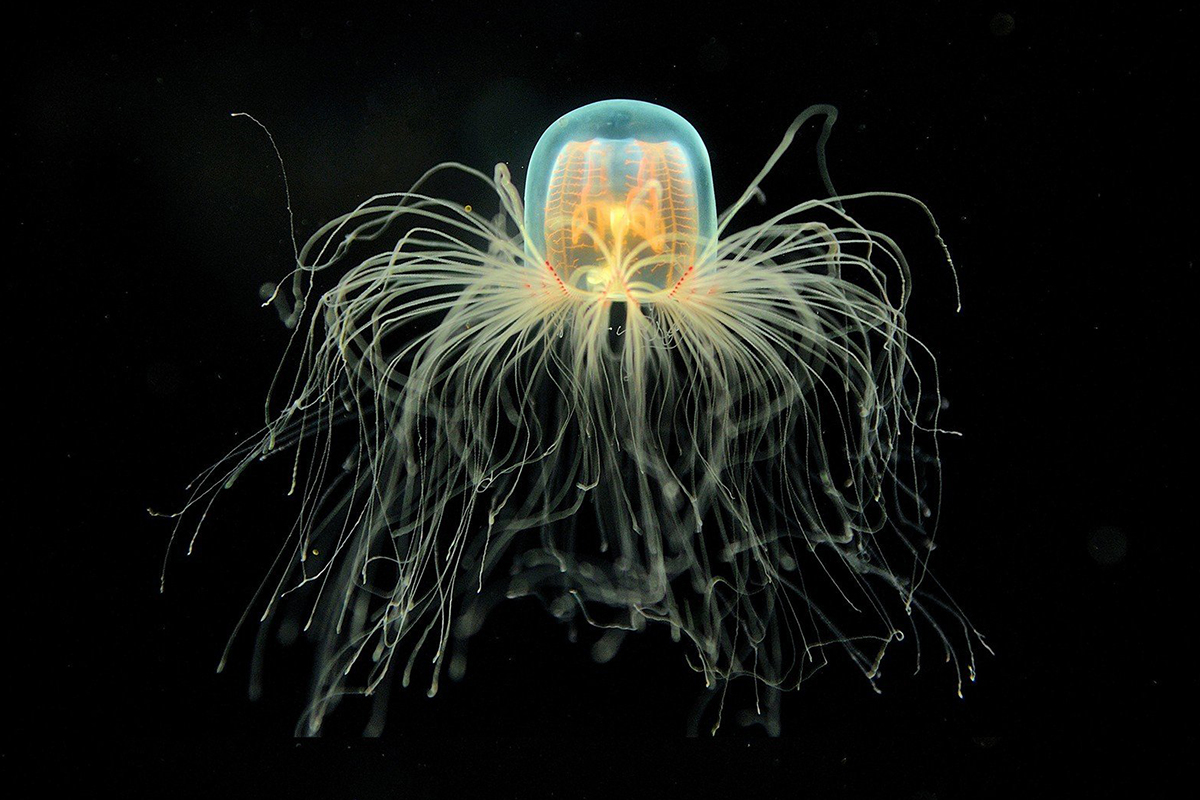
Although the life span of jellies varies among species, there’s one special jellyfish that can reverse their aging process: Turritopsis dohrnii. When the jelly is old, sick or facing danger, they are able to reprogram the identity of its cells to become a younger version of itself … if only we could learn their secret and get rid of those stress-lines that have popped up this past year.

Immortal Jellyfish
Immortal Jellyfish © Shutterstock

3. Some species of jellyfish can glow in the dark.

Some jellyfish have bioluminescent organs which enable them to emit light. This is believed to be primarily used as a defense mechanism to distract predators, but can be used to attract prey or for intraspecific communication. In uncertain times, when you and those around you are feeling down, always try to remember that you have your own light shining inside of you!

4. Jellyfish are highly adaptable.

In fact, jellyfish are on the front lines of tackling the effects of climate change. While many species are suffering due to these impacts, jellyfish are thriving in warmer temperatures, increased salinity and increased acidic waters. And since their natural predators, like sea turtles, fish and sharks, struggle in these changing environments, their numbers will only continue to grow.

Millions of jellyfish, Mastigias papua etpisonii, fill a unique marine lake in Palau. There are five marine lakes, that each have their own endemic jellyfish, scattered throughout Palau.
Jellyfish Lake, Palau, Micronesia, Pacific Ocean. © Ethan Daniels

So, if you’re like me and are looking for some inspiration to get you through this year, I would encourage you to channel your inner jellyfish and to stay sane, stay young and start thriving.

Can’t get enough of our jellyfish facts and photos? Find out how jellyfish play a crucial role in ocean health and view these sea-sational jellies.

The post 4 Ways to Channel Your Inner Jellyfish When Times Get Hard appeared first on Ocean Conservancy.


from Ocean Conservancy https://ift.tt/30oqXTP https://ift.tt/eA8V8J

Monday, 8 March 2021

Celebrating Women in Ocean Conservation and Science

International Women’s Day is an opportunity to celebrate the contributions, achievements and challenges of women around the world.

Women play an integral role in furthering ocean research, conservation and policy. More than half of undergrad marine science degrees today are awarded to women, and women make up the majority of biology graduate students around the country. In 2018, women made up more than half of all law school students. From the halls of Congress to regional fisheries management councils to local beach cleanups, women are leaders in the fight for a healthy ocean.

It wasn’t always this way—for centuries many women were barred from participating in official ocean research. In 1872, the HMS Challenger set out to sample the world’s ocean and is recognized as the first modern oceanographic expedition. It had 243 people on board—none of whom were women. In fact, no women were allowed on research vessels in the U.S. until the 1960s. Within ten years, Sylvia Earle led the first all-female aquanaut team in an experiment where they lived in an underwater habitat for two weeks. In my chosen profession, women were only admitted to the American Bar Association in 1918. With each decade since, women’s role in academic research and marine policy has skyrocketed.

Although we’ve made great strides in the gender representation in ocean research and conservation, we still have work to do. Although women make up the majority of marine science and biology students, they are underrepresented in professor positions. Women also face biases in the workplace—a study of applications for a science research position found that faculty rated male applicants more highly than female applicants, even though their resumes were identical. Another study found that women were half as likely to receive stellar letters of recommendation for postdoctoral fellowships than their male counterparts. We also have a serious problem with harassment in the field—according to a recently-released study by Women in Ocean Science, 78% of women have experienced sexual harassment in marine science. We still have significant work ahead of us.

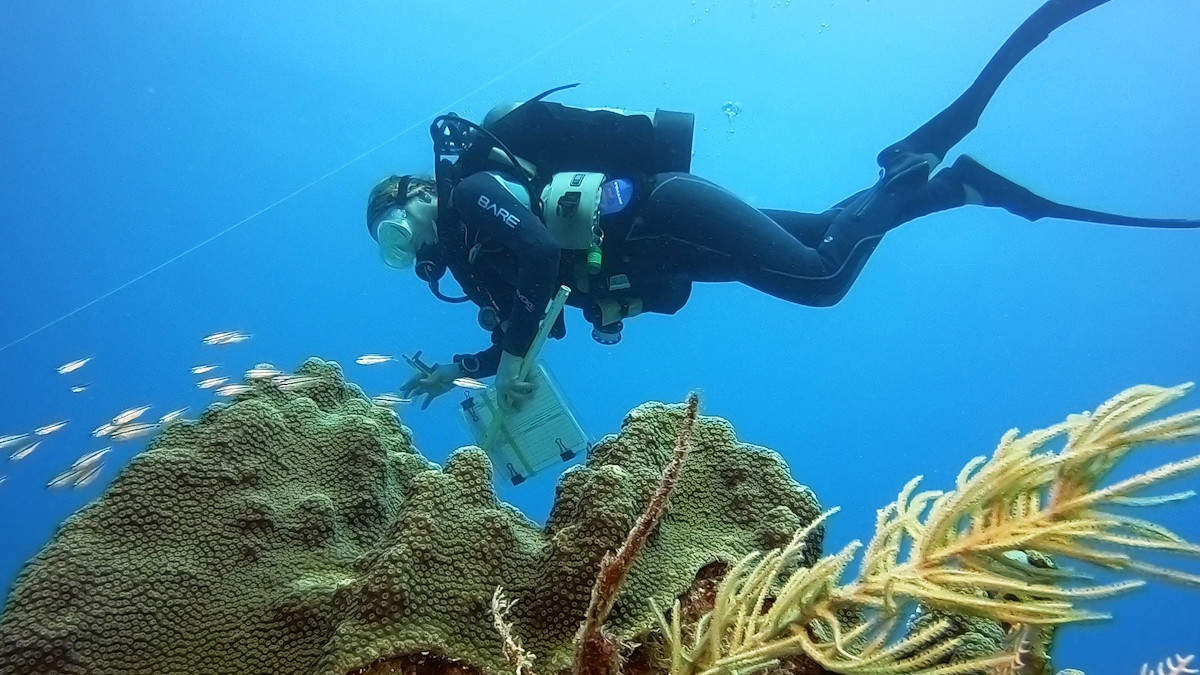
50930554498_830489b789_k
© FWC Fish and Wildlife Research Institute

To make this field accessible to everyone, we need to take strong action. First, we need to acknowledge that experiences in ocean conservation are not the same for all women—black, indigenous and women of color face compounding biases and racism that must be highlighted and addressed. It is dangerous to paint the issues facing “women in ocean conservation” with too broad a brush—we need to make sure that the voices of all women are heard, regardless of race, sexual orientation, gender identity, socio-economic status and family status.

For women in this field, we need to lift and celebrate others as we climb. We are leaders in the field today because of the work of generations of women who came before us, and it’s our responsibility to continue to open doors for the women who will come after us. For the men in this field, I urge you to stand alongside your female peers and continue to challenge the status quo, whether that is advocating for equal pay or calling out bias and harassment when you see it.

It is a gift to work alongside a group of incredible women here at Ocean Conservancy—lawyers, scientists, advocates, communications and policy experts, and all of the women volunteers around the world who make our work possible, like the International Coastal Cleanup. I am grateful to the women in my life who encouraged me to pursue my path of environmental law and ocean conservation—if I am able to do the same for other women, I know I will have left this sector and the ocean a better place.

Join me in celebrating the incredible women in ocean science and conservation. I invite you to read about some women leaders in conservation in our blog:

The post Celebrating Women in Ocean Conservation and Science appeared first on Ocean Conservancy.


from Ocean Conservancy https://ift.tt/3sS23rQ https://ift.tt/eA8V8J

The Annual Migration to Clean Up Our Coasts

Annually, seasonally and sometimes even daily, amazing oceanic migrations are taking place. Humpback whales migrate thousands of miles to b...