Wednesday, 30 July 2025

What is the Science Behind Plastic Pollution?

This blog was co-written with Hannah De Frond. Hannah works with Ocean Conservancy and the University of Toronto Trash Team to manage the International Trash Trap Network (ITTN), a global network of local groups using trash traps to increase cleanup efforts, engage communities and inform upstream solutions. 

Over the past year-plus, scientists have made significant strides in understanding the scope, impact and potential solutions to the global plastic pollution crisis, and we’ve gathered them here by theme. Let’s dive in!

Where it comes from and where it’s going

Increasingly, scientists recognize plastics as a planetary-scale pollutant, disrupting key Earth systems including biodiversity, terrestrial, freshwater and marine health. Researchers are now identifying specific areas where plastic accumulation—and therefore, risk—may be greatest. A long-term study published last year showed that more than 70% of macroplastics released into rivers remain near their source, often trapped by floating vegetation which can hold plastic concentrations nearly 200 times higher than surrounding waters. These accumulations have led to the formation of so-called “river garbage patches,” some with plastic levels exceeding those found in the North Pacific Gyre.

Meanwhile, modelling efforts have expanded to estimate plastic concentrations in ecosystems beyond the ocean surface, including in the atmosphere, below the ocean surface, in inland waterways and in marine animals. Estimates published last year suggest that 3 to 11 million metric tons of plastic now reside on the ocean floor—up to 100 times more than at the surface—threatening deep-sea ecosystems vital to climate regulation. Coastal convergence zones—coastal waters wherecurrents and wind cause water from different areas to meet—were also recently found to be microplastic hotspots. These hotspots included more than 1,800 marine protected areas identified as under significant stress from microplastic pollution.

Human health and micro/nanoplastics

Recent research has further informed estimates of human exposure to micro- and nano- plastics through both diet and inhalation. One study co-authored by Ocean Conservancy found microplastics in nearly 90% of protein products tested—including beef, chicken, pork and plant-based samples. From this, we estimated that the average adult in the United States could ingest up to 3.8 million plastic particles annually from proteins alone. Drinks, dairy products and other non-protein food sources also serve as ingestion pathways.

But we don’t just eat plastics. A new study estimated that globally, adults breathe in an average of 1,355 plastic particles daily, or roughly 500,000 particles a year. From 1990 to 2018, researchers estimate human dietary and airborne microplastic exposure increased more than sixfold in some parts of the world, underscoring growing global concern.

Learn more about our wonderful ocean!

Plastic particles have now been found throughout the human body in arteries, stomach tissue, brains and reproductive systems, raising serious health concerns. One study published this year found that roughly 25% of the 16,325 chemicals associated with plastics are considered hazardous.” More worrisome is that the vast majority chemicals used in plastics remain unregulated and understudied. The health consequences are not only physiological but economic: In 2018 alone, plastic-related diseases cost the United States an estimated $249 billion, largely from exposure to plastic-associated chemicals as polybrominated diphenyl ethers (PBDEs).

What we can do about it

As our knowledge about the extent and impacts of plastic pollution grows, so does public concern. An Ocean Conservancy-led study published last year found that in the United States, plastic pollution is seen as the greatest threat to the ocean, and there is strong public support for policies to solve this problem by holding plastic producers accountable.

Experts agree that solving the plastic crisis requires a full lifecycle approach and multinational collaboration, with one study showing that implementing four global interventions—a 40% recycled content mandate; a 2020 virgin production cap; a $50 billion investment in waste management infrastructure; and a plastic packaging tax—could reduce mismanaged plastic waste by 91% and plastic-related GHG emissions by one-third by 2050.

Policy momentum is building, with an increasing number of studies investigating the efficacy of actions addressing not just waste management but also upstream production and consumption. One 2025 study looking at data from Ocean Conservancy’s International Coastal Cleanup found that plastic bag bans and fees meaningfully reduce the relative amount of bags in beach litter by 25% to 47% in the United States, while a 2024 study estimated that a U.S. national deposit return scheme could significantly boost recycling rates for PET bottles from 24% to 82%. To support better decision-making and community action, science-backed tools such as the Circularity Assessment Protocol (CAP) have been developed to map waste flows and identify points for intervention.

Join us

While there is still a lot to learn, we know enough to act now. Here is how you can join the fight: 

  • Push for policy change: Advocate for legislation to address plastic pollution by holding corporations accountable for the waste they create, expanding support for reuse and refill systems and much more. See how your state stacks up in efforts to tackle plastic pollution, and then visit Ocean Conservancy’s Action Center to see how you can get involved.
  • Reduce plastic use: To tackle our plastic pollution crisis, we need to use less plastic. We can each do our part by avoiding single-use plastics where possible in our daily lives, from carrying a reusable water bottle and bag to skipping the straw. These small actions add up and collectively reduce the amount of plastic waste we create, while sending a clear signal to plastic producers that we are fed up with single-use plastics. 
  • Clean up plastic pollution before it enters the ocean: Cleaning up plastic waste, whether on the beach, along a river, or in your neighborhood park, reduces the likelihood that it will later be consumed by marine life. One of the best ways to do this is by joining the International Coastal Cleanup (ICC). Use our map to find a coordinator planning a cleanup in your region. Want something closer to home? Team up with friends and family to clean up your favorite beach or beloved park. If you see plastics on beaches, shores or elsewhere, remember to clean them up and log what you found in our Clean Swell® app.

The post What is the Science Behind Plastic Pollution? appeared first on Ocean Conservancy.


from Ocean Conservancy https://ift.tt/YOslvSk

Thursday, 24 July 2025

How are Sharks Affected by Plastic Pollution?

It’s one of the best weeks of the year: Shark Week. As our finned friends get a lot of extra attention this week, I am reflecting on my love of sharks and the threats they’re facing. In fact, before I was an ocean plastics guy, I was a shark guy. And sadly, on a perfect sunny day in the tropics while searching for sharks, I also found plastics.

Two decades ago, I was researching these magnificent animals in the crystal-clear waters of the Turks and Caicos Islands (TCI) at the School for Field Studies. Each day, we’d take our research boats out in hopes of tagging juvenile lemon sharks to better understand their movements, site fidelity and nursing habitats in the shallow waters surrounding South Caicos. Every interaction with these animals was exhilarating, and quite often we’d get the bonus of spotting or tagging other species like bonnethead sharks, Caribbean reef sharks and even the awe-inspiring tiger shark—my personal favorite!

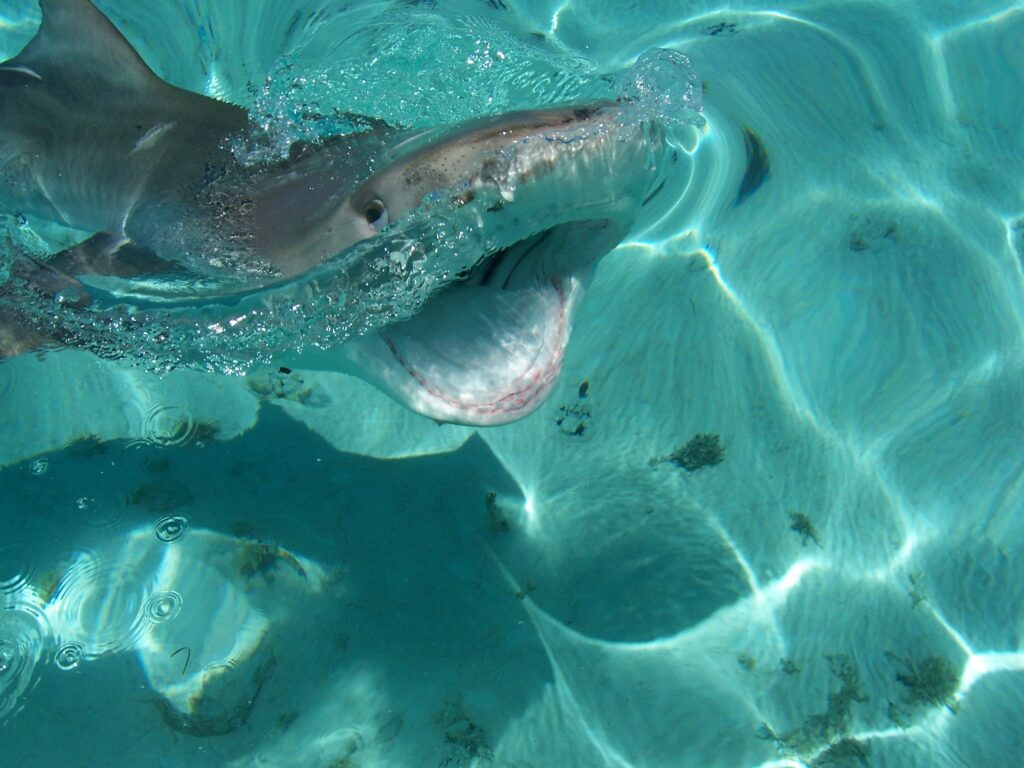
A lemon shark swims with open mouth in clear turquoise Turks and Caicos waters

While out on shark patrol one Sunday afternoon along the eastern reef of South Caicos, I first encountered plastic pollution on a magnitude I had never previously seen. Due to the steep cliffs that backed the beach and the shallow reefs that protected it seaward, piles of plastics and debris that drifted over the reef and onto the sand remained stranded. And with little to no human access to these beaches in the early 2000s, the accumulations grew with each passing day.

Sharks are increasingly threatened by plastic pollution, primarily through entanglement and ingestion. At least 34 species have been reported entangled in plastic debris, although actual numbers are likely much higher due to underreporting. The most common item causing entanglement is abandoned, lost or discarded fishing gear (also known as “ghost gear”), though plastic strapping bands also pose a major risk. Looped plastics like strapping bands can constrict sharks, interfering with feeding and breathing.

Sharks are at risk from eating plastics, too. Plastic bags, plastic packets and even a boot have been found inside shark stomachs. And scientists believe microplastics may pose a particular risk to filter-feeding species like whale sharks, although hundreds to thousands of microplastics have been documented inside individual tiger and hammerhead sharks as well. There is still much more to learn and understand about the interactions and effects of plastics on sharks, but what is known raises concerns about the long-term impacts of plastic ingestion on shark health and ocean health more broadly.

See more wonderful ocean animals!

It was on that same reef in South Caicos in 2006, during a break from shark patrol and long before joining Ocean Conservancy where I first participated in the International Coastal Cleanup® (ICC). And like the millions of ICC volunteers around the world who participate each year, I too collected data on every item I picked up. And with each item, I was more and more curious, asking the questions: “Where did these plastics come from? “How the heck did they end up here?” and “This can’t be good for ocean animals, can it?”

I would later learn that the piles of debris that littered that stretch of coast came from all over the Caribbean. This was also my first glimpse of how the brands and languages on plastics provide valuable information to trace where trash comes from, an approach I still use to this day in fieldwork around the world. Further, it showcased the interconnectedness of the waters and people throughout the Caribbean Sea and North Atlantic Ocean.

These early, formative encounters with ocean plastics have stuck with me over the past 20 years, as have the sights of sharks effortlessly navigating their natural environments in those TCI waters. It is something that is forever lodged in my memory, something I never forget or tire of. Sharks have existed in our ocean for more than 400 million years, and over this time, they have perfected every aspect of their design. However, sharks were never meant to contend with the plastic pollution that now overwhelms every dimension of their marine environment.

Today, the most harrowing fact this Shark Week is that the plight of sharks has never been greater. And the scariest thing in the ocean isn’t a shark, it’s plastic pollution. Join Ocean Conservancy for Plastic Free July and beyond and call on your elected leaders to phase out wasteful, harmful single-use plastics.

The post How are Sharks Affected by Plastic Pollution? appeared first on Ocean Conservancy.


from Ocean Conservancy https://ift.tt/2law8AT https://ift.tt/5DHUJCh

Wednesday, 16 July 2025

Do Beach Cleanups Really Work?

This blog was written by Hannah De Frond. Hannah works with Ocean Conservancy and the University of Toronto Trash Team to manage the International Trash Trap Network (ITTN), a global network of local groups using trash traps to increase cleanup efforts, engage communities and inform upstream solutions. 

There is no one-size-fits-all approach to solving the plastic pollution crisis. In addition to preventative actions like reducing plastic production and improving waste management systems, cleanups play a valuable role—and the greatest impacts to reduce plastic pollution will be achieved when all three of these strategies happen together. With Ocean Conservancy’s International Coastal Cleanup® (ICC) season fast approaching, there’s no better time to remind ourselves of the positive impact of cleanup efforts around the world.

The scopes, types and sizes of cleanups vary widely. The ICC focuses on global-scale, human-powered, volunteer-led events that can range from just a couple of people picking up trash in their local park or beach to large groups of hundreds of people coming together for an event. Other types of cleanups, such as those used by groups in the International Trash Trap Network (ITTN), rely on a variety of cleanup technologies that can capture debris 24 hours a day. The ITTN is a global network of local groups working together to increase plastic pollution cleanup efforts using trash traps. Through each trash trap program, local stakeholders come together to clean up plastic pollution, engage and inform communities about the issue, and collect harmonized data to inform, empower and motivate upstream solutions to prevent future plastic pollution.

Cleanup technologies like trash traps also come in lots of different shapes and sizes. One of the key benefits of employing these devices is that they can be used to support volunteer-powered cleanups by accessing areas that are unsafe or inaccessible for humans. Some trash traps are also designed to clean up small plastic waste, such as microplastics, that manual cleanups often miss as they are difficult to see and pick up by hand. As all types of cleanups remove harmful debris (including plastics) from the environment, they all have value and make a positive contribution to the health of our ocean and our planet.

Up to 23 million metric tons of plastic waste are estimated to enter global aquatic ecosystems annually. This massive amount is expected to more than double by 2030 if we don’t change our relationship with plastic. Plastic waste persists for many years and breaks apart over time, eventually forming smaller and smaller pieces such as microplastics and nanoplastics that are notoriously difficult, if not impossible, to remove once they reach waterways, coasts or the ocean.

Stay current

The impacts of plastic pollution on ocean animals are widespread. To date, roughly 1,300 ocean species have been documented to ingest plastic. In particular, all seven species of sea turtles are known to ingest or become entangled in plastic, and more than half of marine mammal species, including whales and seals, also ingest plastic debris. Cleanups are necessary to reduce these animals’ chances of ingesting plastic which harms, or even kills, them.

By collecting data on the debris we collect, we can better understand local pollution sources which helps inform and prioritize specific solutions. We have seen this firsthand with ICC data that records counts, weights and categories of items removed. In 2022, data collected during the ICC were used to highlight the presence of single-use plastics in the environment, informing successful legislation in California (Senate Bill 54), creating targets for reducing single-use plastic, increasing recycling and improving recyclability of packaging and plastic foodware.

Cleanup data can also identify and trends in pollution over time and measure the effectiveness of specific policies aimed at reducing that pollution. For example, a trash trap in Baltimore named Mr. Trash Wheel captures and diverts plastic waste before it reaches the Baltimore Harbor. Each time Mr. Trash Wheel is emptied, data are collected on the weight and count of items it has retrieved. When polystyrene foam items were found in high numbers in Mr. Trash Wheel, activists used those data to inform a ban, passed in 2019, on disposable polystyrene foam products in Baltimore. In the next year, data from Mr. Trash Wheel revealed that foam containers had decreased by more than 80% in the harbor! By using data locally and sharing it through public platforms like Ocean Conservancy’s global database, TIDES, it be used by many groups for different needs, including scientific research and motivating policy change. To date, ICC data has been used in more than 40 published scientific studies and has been cited by more than 250 papers. In addition, these data have served as the backbone of policies enacted by governments throughout the world.

Cleanups are also a great way to create community and inspire hope by gathering with others who share the same passion. Involvement in cleanup efforts allows individuals to encounter the problems caused by plastic pollution firsthand, and often this experience empowers people to call for upstream solutions.

Cleaning up is a longstanding practice in many communities worldwide. By continuing cleanup efforts around the world and using them for both data collection and community education, we can reduce the impacts of existing plastic pollution while supporting other strategies to prevent it in the future. Alongside cleanups, Ocean Conservancy is working hard to keep plastics out of our ocean by pushing for policies to produce and use fewer plastics and improve the collection and management of the plastics we do use. It’s clear there’s much more work to be done to protect our ocean, and it will take all of us to tackle this issue through both individual action to reduce plastic pollution and using our voices to support policies that will drive the change we need—at the local, state and national levels.

Be sure to join Ocean Conservancy this September for the 40th ICC this year and other events all year round. Find an International Coastal Cleanup (ICC) event near you, download the Clean Swell® app to record the trash you collect, and take action for a cleaner ocean and healthier planet.

The post Do Beach Cleanups Really Work? appeared first on Ocean Conservancy.


from Ocean Conservancy https://ift.tt/45cazZp

Wednesday, 9 July 2025

How the Proposed Federal Budget Cuts Threaten Our Ocean

The administration released details earlier this month for the President’s Budget for Fiscal Year 2026 (FY26) and what it would mean for the National Oceanic and Atmospheric Administration (NOAA). Unfortunately, if passed as-is, the proposed federal budget would be a disaster for our ocean and Americans across the country who rely on NOAA’s services every day

From producing weather reports and tracking severe storms, supporting safe and efficient maritime navigation and ensuring fish and shellfish are safe to eat, to providing commercial, subsistence and recreational fishing opportunities and protecting marine mammals and endangered species, NOAA provides critical services that impact us every day.

See more wonderful ocean animals!

At a high level, the President’s FY26 budget proposes to cut $1.8 billion from NOAA’s topline funding—more than a quarter of the total amount. The budget proposal also calls for the complete elimination of programs, labs and cooperative institutes that provide essential services, including:

  • Complete elimination of the research line office of NOAA, the Office of Oceanic and Atmospheric Research (OAR): OAR provides the cutting-edge research that helps power all the other services NOAA provides. This includes the modeling capabilities for timely and accurate forecasts that are crucial to protecting lives and property. OAR also works to improve understanding of global weather systems and hazards, such as red tides. This research helps ensure safe boat trips and plentiful seafood, benefitting fisheries, aquaculture, coastal economies and communities.
  • Elimination of research labs and cooperative institutes: By eliminating OAR, the budget would also eliminate its many laboratories that work in partnership with local universities and research institutions to produce research that advances our understanding of the ocean, climate, weather and more. Cutting this research will not only slow progress on the delivery of services and products, but it will also destroy locally important centers of learning and undermine the strength of the United States as a science leader.
  • Elimination of the Sea Grant Program:  This 50-year-old federal-state partnership program focuses on unleashing the economic power of our coastal states and fisheries. Each federal dollar invested in Sea Grant and its 34 programs in coastal and Great Lakes states yielded $8.81 in economic benefit in 2023.
  • Eliminating the U.S. Integrated Ocean Observing System (IOOS): This widely used network provides real-time observations of ocean conditions, ensuring safe fishing and shipping, enhancing emergency response and producing observational data for weather forecasting. These observations are also critical for tracking harmful algal blooms.  
  • Elimination of the National Estuarine Research Reserves (NERRs): The administration has proposed defunding coastal reserves that draw millions of tourists to local communities, protect 1.4 million acres of wildlife habitat, support major fisheries and local fishing communities and generate millions of dollars in revenue. There are 30 NERRs across 23 states and Puerto Rico.
  • Elimination of critical programs that support our nation’s fisheries: The administration has proposed eliminating NOAA’s Fisheries Office of Habitat Conservation, the Pacific Coast Salmon Recovery Fund and interjurisdictional fisheries grants. These eliminations will undercut the nation’s ability to manage and conserve coastal habitats that support fisheries and will impact our ability to manage and protect iconic Pacific Salmon and Steelhead populations.

The list above is comprised only of services that the administration has proposed to eliminate completely. Additional cuts, coupled with a 17% reduction in staff, will reduce NOAA’s services across the board, leaving it unable to help us safely put fish on the table, move goods across the country and go about our daily lives.

We need NOAA to be fully funded and fully staffed. We should be looking for ways to grow and improve these services, not leaving communities and businesses without critical resources that they need.

The good news is that this is just a proposal. It is now up to Congress to pass spending bills that keep these essential NOAA programs and services funded and staffed. For the safety of all Americans and for the health of our ocean, marine wildlife and coastal economies Congress must reject these harmful cuts to NOAA. Join Ocean Conservancy in taking action to safeguard NOAA now.

The post How the Proposed Federal Budget Cuts Threaten Our Ocean appeared first on Ocean Conservancy.


from Ocean Conservancy https://ift.tt/KPdfnXL

Friday, 27 June 2025

U.S. Progress on Tackling Plastic Pollution

With Plastic Free July just around the corner, now is the perfect time to reflect on the progress we’ve seen across the United States in the fight against plastic pollution. While plastic pollution continues to flow into our ocean with a garbage truck’s worth every minute, we have seen state and local governments across the country work diligently toward impactful solutions that will combat this crisis and protect our ocean for generations to come.

Local Leadership

Local governments, such as cities and counties, have long been leaders in the fight against plastic pollution, stepping up to help phase out some of the most problematic types of plastic making their way into our ocean—and this year is no exception.

In Florida, Ocean Conservancy worked alongside partners to support a resolution in Miami-Dade County to eliminate single-use plastics and plastic foam (colloquially called “Styrofoam”) from county facilities, including large public areas such as Miami International Airport, Port of Miami and county parks. Miami-Dade County and its communities produce over 5 million tons of waste annually, more than any other county in the state. This policy will help reduce waste and is a powerful reminder of how local action can have a major impact on our ocean and waterways.

In California, Santa Cruz County has also made major headway by passing a first-of-its-kind sales ban on all filtered tobacco products. This would mean phasing out cigarettes with filters (or “cigarette butts”), which are the most common item polluting our beaches and waters as found annually by Ocean Conservancy’s International Coastal Cleanup® volunteers. Not only do cigarette butts release dangerous microplastics, but they also leach chemicals into the environment that are harmful to sensitive marine ecosystems. A 2023 report from the nearby Monterey Bay National Marine Sanctuary found that cigarette butts accounted for 23% of items collected on the sanctuary’s beaches. If this ban goes into effect in Santa Cruz County, it will have major benefits on the surrounding marine ecosystems and could inspire other local governments to take action.

See more wonderful ocean animals!

Statewide Successes

This past year was packed with action on the state level to reduce plastic pollution at the source and hold plastic and packaging producers accountable for the waste they create. Oregon and California both passed “better bag bans” (SB 551 and SB 1053, respectively). These laws established new gold standards for bag bans by finally getting rid of all plastic bags at check-out, including thicker plastic bags that had previously been allowed under the guise that they were “reusable.” It’s estimated that Americans use 100 billion plastic grocery bags annually, and recent analysis by Ocean Conservancy found that plastic bag bans are effective at reducing plastic bag pollution. Not only will these laws help reduce plastic use and plastic pollution in these states, but they also show continued momentum in efforts to tackle problematic single-use plastics.

On the East Coast, Vermont tackled a different type of plastic pollution by passing a law to address pollution from plastic foam docks by requiring that they be designed in a way that prevents the plastic foam from being released into the environment (S 213). Plastic foam (also known as expanded polystyrene) is used for buoys, docks and other floating structures. Left unencapsulated, this foam gradually breaks down into microplastics that directly enter the surrounding marine environment, devastating the ecosystems and wildlife. Vermont’s new law is a commonsense approach to keeping plastic foam pollution out of the environment.

In just the last couple of months, two more states, Washington and Maryland, passed laws to establish extended producer responsibility (EPR)  for packaging (SB 5284, SB 901, respectively). These EPR programs hold producers of plastic and other packaging financially accountable for the waste created by their products while decreasing waste and increasing reuse and recycling. Not only does EPR save households and local governments money, but it also brings producers together to achieve better environmental outcomes. With these two new laws, there are now seven states across the country that have established EPR for packaging in the last four years. Once these laws are implemented, one in five Americans will be covered by an EPR program, resulting in significantly less pollution in our ocean.

What can you do?

While progress this year to tackle plastic pollution has been exciting, the reality is that there is much more work to be done throughout every level of government to address this crisis. The U.S. ranks as high as third when it comes to countries contributing to ocean plastic pollution—an important reminder that we need solutions here at home. Solving this crisis will take all of us collectively to come together. As we continue through the rest of 2025, we encourage you to:

  •  Take action with Ocean Conservancy by reaching out to your state and federal representatives to ask them to take action on plastic pollution—this takes under two minutes and is a powerful tool for creating change.
  • Join a cleanup: As we celebrate the 40th year of Ocean Conservancy’s International Coastal Cleanup, it’s more important than ever to help protect communities and wildlife in your area by cleaning up pollution and recording what you find through our Clean Swell app.
  • Learn more about policy tools to help solve the plastics crisis through Ocean Conservancy’s Plastics Policy 101 report.

The post U.S. Progress on Tackling Plastic Pollution appeared first on Ocean Conservancy.


from Ocean Conservancy https://ift.tt/EA6a0H1

Wednesday, 25 June 2025

Introducing Ocean Conservancy’s 2025 Photo Contest Winners

Ocean Conservancy’s annual Photo Contest has come to a close and the results are breathtaking. Hundreds of you sent inspirational and heartbreaking photos and videos, and I am so impressed. Thank you for sharing your art with us. Discover the beautiful, inspiring and heartbreaking submissions that won the hearts of our judges, our staff and ocean lovers like you.

I am thrilled to announce the winners of Ocean Conservancy’s 2025 Photo Contest.

Judge’s Choice Winner

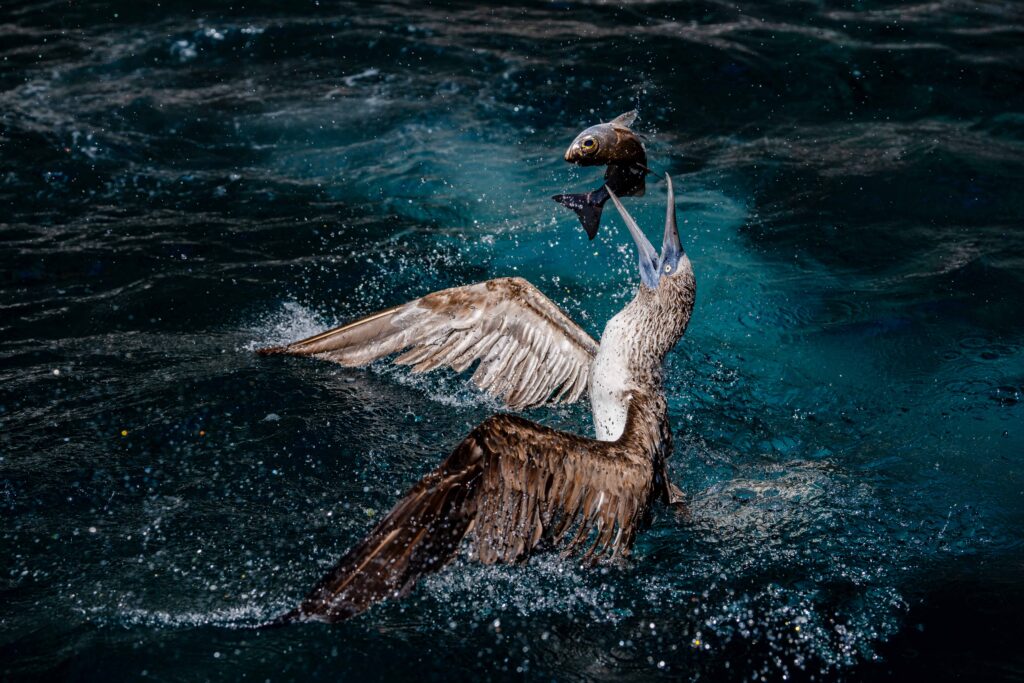
The Art of Survival by Rickie Andrés Ballesteros Guerrero
Follow Andrés on Instagram

A blue-footed booby from the Galapagos Islands breaks the ocean's surface in a swift and precise flight. With its wings spread and eyes focused, it catches a gleaming fish in its beak. The water splashes around it in a fleeting but powerful scene of the natural balance between predator and prey.

From the Photographer:
“A blue-footed booby from the Galapagos Islands breaks the ocean’s surface in a swift and precise flight. With its wings spread and eyes focused, it catches a gleaming fish in its beak. The water splashes around it in a fleeting but powerful scene of the natural balance between predator and prey.”

What our Judges had to say:
“A moment frozen in time – this one stopped me in my tracks. A brief beat in the natural world, captured spectacularly.” – Pier Nirandara, 2025 Ocean Conservancy Photo Contest Judge

“An excellent photo of feeding and fighting for survival. The composition, light and action are perfectly captured. A great job by the photographer who patiently waited for the right moment to shoot. Great work.” –  Mariano Rodríguez, 2025 Ocean Conservancy Photo Contest Judge

“This is a standout capture of a decisive moment. The image is sharp, emotional and dynamic. You can feel the energy of the hunt. It’s the kind of photo that brings nature’s raw beauty front and center—and reminds us of the power and grace within every species.” –  Angela J. Farmer, 2025 Ocean Conservancy Photo Contest Judge

“A fantastic shot. He shot fast enough to freeze the exact moment. Lighting is good and also post processing. Love it.” – Joaquín Fregoni, 2025 Ocean Conservancy Photo Contest Judge

See more wonderful ocean animals!


Staff Choice Winner

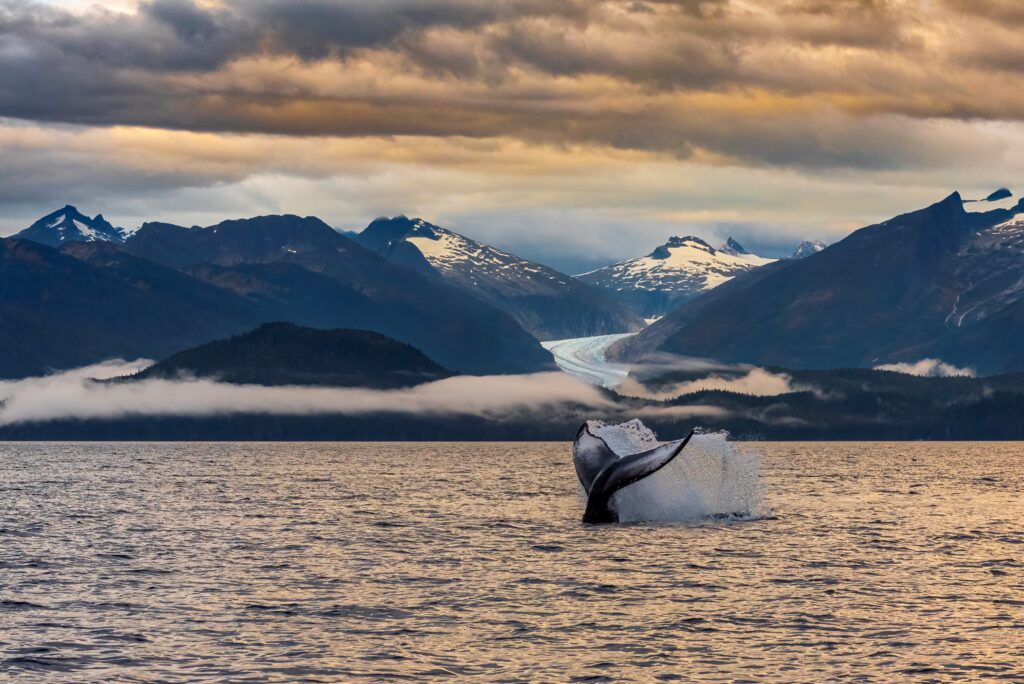
Sunset Whale Tail in Front of Eagle Glacier by Harvey Hergett
Follow Harvey on Instagram

On the last whale watching trip of the summer with Jayleen's Alaska, as the sun was setting on a perfect September day in Alaska, she positioned the boat perfectly in front of Eagle Glacier to capture this humpback whale who was playfully tail and fin slapping.

From the Photographer:
“On the last whale watching trip of the summer with Jayleen’s Alaska, as the sun was setting on a perfect September day in Alaska, she positioned the boat perfectly in front of Eagle Glacier to capture this humpback whale who was playfully tail and fin slapping.“

What our staff had to say:
“I recognized this beautiful spot outside of Juneau right away! One of the things I love about Alaska is that there is always magic if you know where and how to look for it. Thank you for sharing this little slice of my home.” – Mike Levine, Senior Director, Alaska Programs


People’s Choice Winner

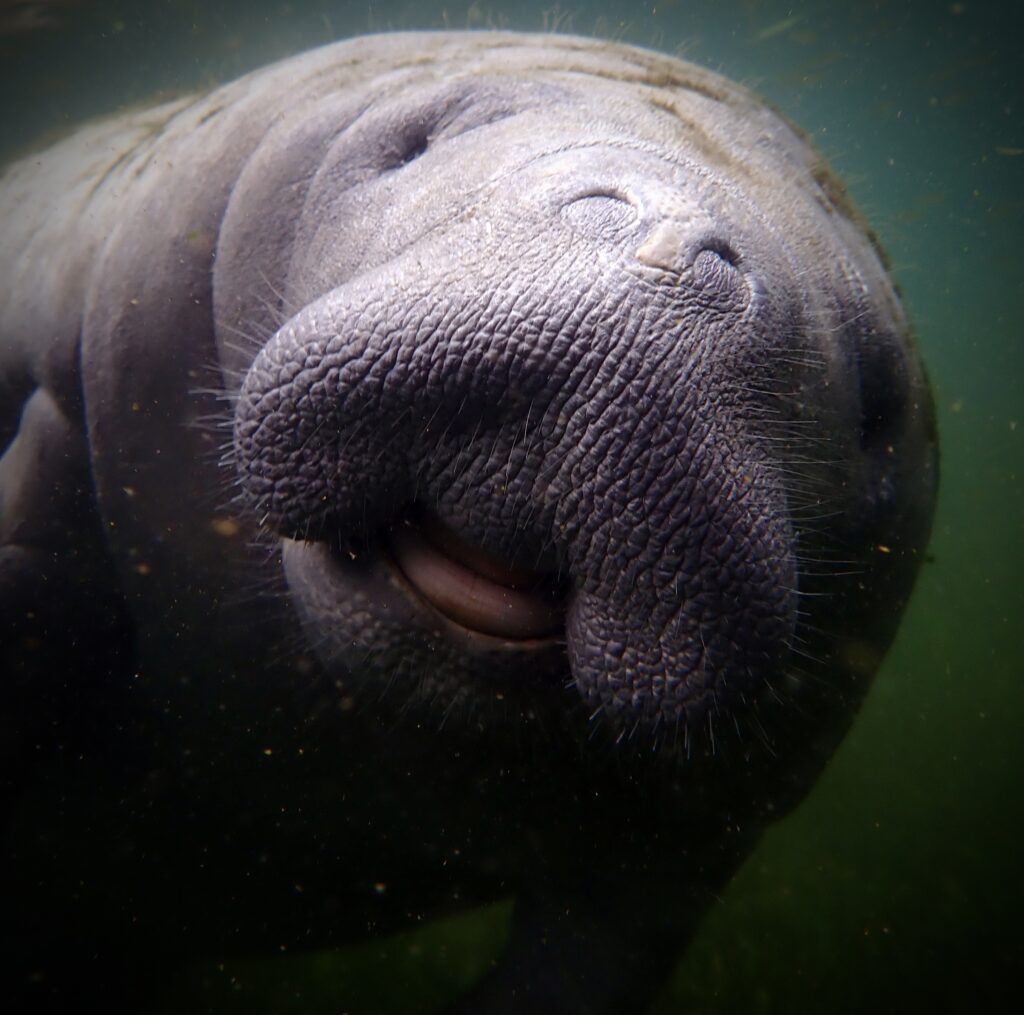
Manatee Love! by Paige Taggart

This was taken in Crystal River, Florida when a curious juvenile manatee was investigating me while I was snorkeling the springs.

From the Photographer:
“This was taken in Crystal River, Florida when a curious juvenile manatee was investigating me while I was snorkeling the springs.”

What our staff had to say:
“Manatees have a special place in every Floridian’s heart, and anybody who’s ever visited the Sunshine State and seen these gentle giants up close and personally can attest to their awesomeness. With their round bodies and curious personalities, they perfectly embody the uniqueness of the Floridian environment and remind us of how important it is to protect our special and beloved ocean and coasts.” – J.P. Brooker, Director, Florida Conservation

We’d like to extend our deepest thanks to all who participated, voted, shared and submitted photos—you truly made this year’s contest a success. And a very special thank you to our judges: Angela J. Farmer, Joaquín Fregoni, Pier Nirandara and Mariano Rodríguez for lending their expert eyes to evaluating our finalists and determining our grand prize winner. Learn more about our judges here.

Congratulations to ALL our entrants, and we hope to see you next year.

The post Introducing Ocean Conservancy’s 2025 Photo Contest Winners appeared first on Ocean Conservancy.


from Ocean Conservancy https://ift.tt/uPG05Ur https://ift.tt/5aDm6Fq

Monday, 23 June 2025

Learning From Indigenous Ocean Knowledge

 “Blow. Above Peninsula, by the smaller piece of floating ice.

Got it. Ready … mark!

We are standing on a 25-foot block of ice a mile off the coast of Utqiaġvik, Alaska, counting bowhead whales. Three of us are on duty: One is just looking for whales and calling out directions (e.g., “Peninsula” is a feature of the ice edge in front of us); one is using a theodolite, a surveying instrument, to get a precise location (e.g., “Mark!” indicates the precise time that the theodolite was brought to bear on the whale as it surfaced); and the third one is recording data in pencil (because of the temperature) on all-weather paper (no risk of electronic mishap).This was my first job in the Arctic 37 springs ago, and not much has changed in the technique of counting whales. It’s nice to be back with bowhead and beluga whales, king and common eiders, ringed and bearded seals and the whites, blues and browns of sea ice and snow above a dark blue sea.

I am not here for fun, though, or at least not only for that. The North Slope Borough, the county-like government for a Minnesota-sized area of northern Alaska, has been conducting a bowhead whale census occasionally since the early 1980s. At that time, there was much concern about the size of the bowhead population, which was decimated by commercial whaling from 1848 through the early 1900s. But counting whales amid sea ice and fog, in cold and sometimes hazardous conditions, was no simple task, and the population estimates remained low.

See more wonderful ocean animals!

The Iñupiat, Alaska Natives living with whales, ice and more in northern Alaska, begged to differ. They had seen a steady increase in the number of whales migrating past each spring. They also had several specific ideas for improving the ways the whales were counted. Fortunately, a few biologists were willing to listen and started incorporating the Iñupiat’s insights into their methods. The result was a more reliable—and considerably higher—population estimate, reducing concern about the bowheads and raising the profile of Indigenous knowledge.

The bowhead population has continued to grow at a few percent per year, a remarkable trend in an animal that can live for 150 years or more and does not start reproducing until age 20 or so. Academically trained scientists have continued to listen to the Iñupiat, confirming what local experts have long known. Bowheads have a good sense of smell, which biologists had long dismissed until they looked more closely. Bowheads also pause their growth when young, essentially losing their baby fat and growing denser bones before their length and girth begin to increase again. The bowhead whale is now one of the best-studied large whales in the world, thanks in large part to the support and cooperation of the Iñupiat and their St. Lawrence Island Yupik cousins farther down the coast in the northern Bering Sea.

On the edges of this success story, however, there are still reasons for concern. The ice I was standing on this spring looked, even to my inexpert eye, vastly different than the thicker, sturdier ice I had encountered in 1988. What further changes are in store, and what those changes mean for bowhead whales and their fellow inhabitants of Arctic and northern waters, remains to be seen. Increased shipping in Arctic waters, especially critical chokepoints such as the Bering Strait, adds another risk from ships running into whales or, far worse for the population and the environment, causing an oil spill. Many bowheads also carry scars from entangling in derelict fishing gear.

Both narratives resonate with Ocean Conservancy’s Arctic & Northern Waters program. Respecting and harnessing the knowledge of the Iñupiat and their counterparts around Alaska and beyond is essential to the understanding needed for effective conservation. Recognizing and acting on emerging threats to the environment is also necessary for preventing problems rather than reacting after potential risks have become actual harm.

Learn more about Ocean Conservancy’s work to keep Arctic and northern waters a place of abundance and cooperation and how you can get involved from wherever you are.

The post Learning From Indigenous Ocean Knowledge appeared first on Ocean Conservancy.


from Ocean Conservancy https://ift.tt/IjH5led

The Annual Migration to Clean Up Our Coasts

Annually, seasonally and sometimes even daily, amazing oceanic migrations are taking place. Humpback whales migrate thousands of miles to b...