This blog is best read with musical accompaniment. May we suggest, Barracuda by Heart? You’ll be glad you listened while you read.
The great barracuda, Sphyraena barracuda, has a reputation for being fast, aggressive and a fish you should avoid. Their sharp teeth and speed make them especially good predators. Let’s dive in and learn more about the great barracuda.
Never miss an update
Enter your email and never miss an update
...loading
Thanks for signing up for Ocean Conservancy emails.
Dive down deep, now, save my head
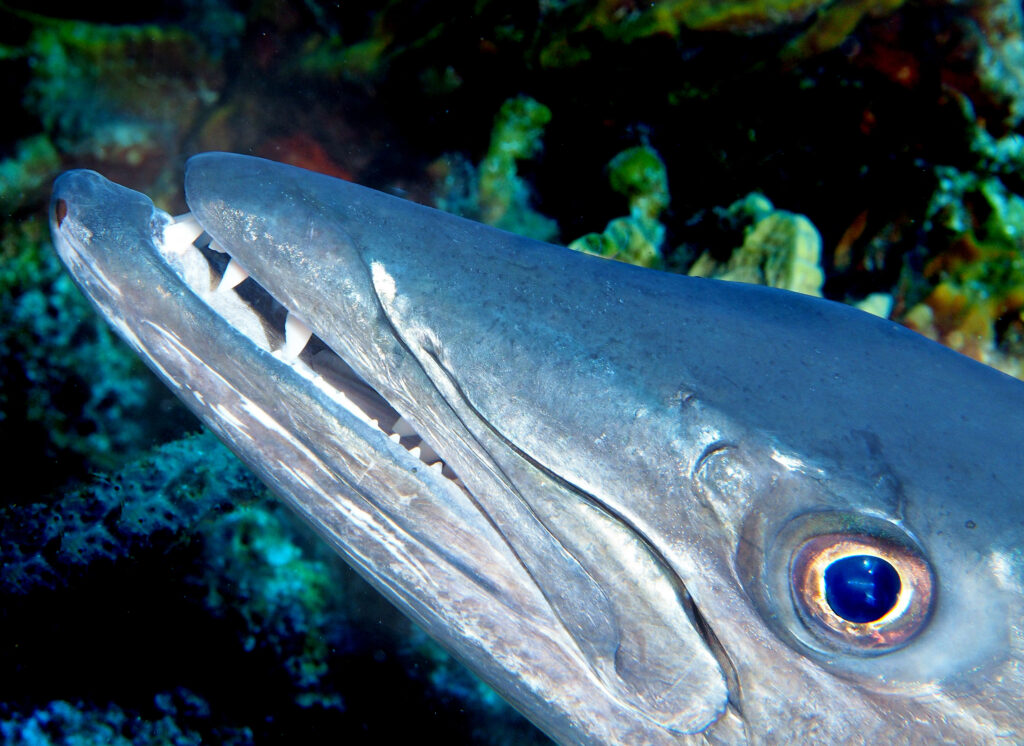
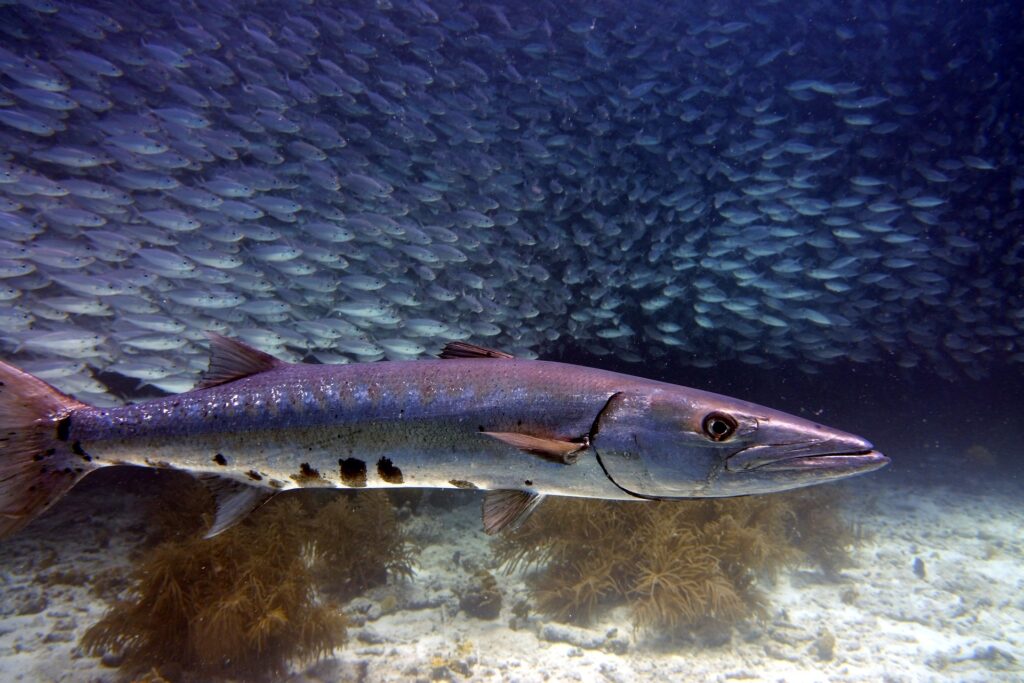
The great barracuda is a well-known fish that is easily recognizable. The physical appearance of the barracuda is long and slender with a streamlined body. Their color is blueish gray on the top and greenish-white on the bottom. The lower jaw of their mouth extends out further than their top jaw which is lined with razor-sharp teeth. Great barracuda can weigh up to 106 pounds and grow to a length of more than five feet!
It isn’t a great idea to consume great barracudas. It’s been documented that eating great barracudas may cause ciguatera poisoning—a foodborne illness caused by the build up of a specific toxin in certain tropical marine fish.
I bet you’re going to ambush me
The diet of the great barracuda is vast—they eat a wide variety of ocean critters, including fishes, cephalopods and sometimes shrimp. Their hunting style is to attack with one fast and ferocious strike. They can swim up to 35 mph. They’ve been known to swim with their mouths open, speeding through the water towards their prey—and then attack by slicing their meal clean in half with this one strike.
The great barracuda is a daytime hunter and an opportunistic predator, finding food throughout the water column. Great barracudas are not commercially fished but they are a favorite of recreational fishermen since they are known to put up a good fight. They rarely attack humans, but they have accidentally attacked shiny objects or fish caught on spears.
Reproduction of the great barracuda is not well documented. Scientists believe that spawning takes place in deeper, offshore waters. During spawning events, eggs are released and fertilized in open waters and travel through the ocean by the currents. Newly hatched larvae find refuge in shallow estuaries among the vegetation as a way to stay safe from hungry predators.
You lying so low in the weeds
The great barracuda’s habitat is typically at or near the surface of the ocean. However, young fish live among mangroves, estuaries and shallow reefs. The great barracuda is a solitary fish, preferring its own company most of the time, but they can sometimes be found in small groups.
The great barracuda is part of the ocean ecosystem and integral to a healthy food chain. It’s up to all of us to help protect the great barracuda and all the animals living in the sea. Ocean Conservancy is working with you to protect the ocean from today’s greatest global challenges. Together, we create evidence-based solutions for a healthy ocean and the wildlife and communities that depend on it.
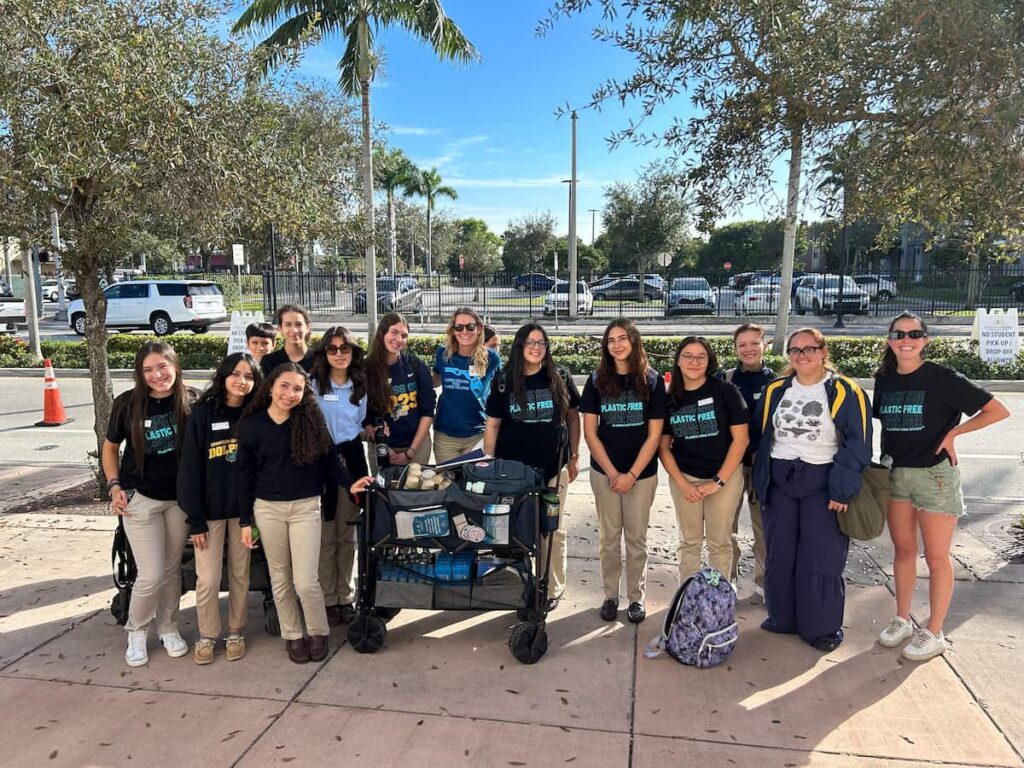
This blog was co-written by Natalia De Prisco. Natalia is an 11th grade student in Doral, Florida, who participated in Plastic Free Cities during the Fall 2023 semester. She aspires to pursue a career in business, speaks four languages and is passionate about ways to prevent plastic from entering our ocean.
Plastic Free Cities is an Ocean Conservancy initiative in collaboration with partners in South Florida, Debris Free Oceans and Big Blue & You, funded by the National Oceanic and Atmospheric Administration (NOAA). Now in its second year, Plastic Free Cities empowers high school students to work with local businesses to eliminate single-use plastics such as cups, plates and utensils, often replacing them with reusable or backyard compostable products. Once high school students participate in five interactive training sessions with Plastic Free Cities, they become Youth Sustainability Consultants and lead business visits, providing tailored recommendations to help reduce use of plastic products while also saving them money. Ultimately, students in the program aim to reduce the amount of plastic litter in their communities and prevent it from making its way to the ocean. Their efforts are particularly impactful in Miami-Dade County, where residents generate an average of eight pounds of waste per person per day, which is higher than the national average of five pounds per person per day, all while neighboring critical coral reefs, sea turtle nesting sites and other essential ocean ecosystems are severely impacted by plastic pollution.
Never miss an update
Enter your email and never miss an update
...loading
Thanks for signing up for Ocean Conservancy emails.
While the Plastic Free Cities program has been effective in educating businesses and highlighting opportunities for them to eliminate plastic, the passion and leadership of Plastic Free Cities students has been the most inspiring part of the program.
Natalia De Prisco, a Plastic Free Cities student from Doral, Florida, shared her experience with the program in the Fall of 2023:
“My experience in Plastic Free Cities has been phenomenal. I joined this program with the intention of learning more information and ways to heavily reduce plastic in my community, but I never expected it to be so great, interactive and fun. Everyone who was part of the program gave their energy, time and effort to work together and learn ways to stop these huge issues. When I first joined, I was very shy and wasn’t motivated to do public speaking. Although I was nervous, I still made the effort to learn and practice the skills. Now, I dominate public speaking because of my experiences in this program. Public speaking is such an important skill that can help show your confidence and dominance in your area of expertise and the chance to grow and reach the next level of your goals. When canvassing businesses, I used the ‘elevator pitch’ technique that I developed in the Plastic Free Cities trainings, which allowed me to talk with businesses about alternatives to single-use plastics to help them succeed even more in their businesses. While speaking with these businesses, I realized how much I have grown. I am now able to confidently go to businesses and discuss!
“As for my PFC peers, there has been tremendous growth. In my cohort in Doral, 80 students participated in training and 16 of these students attended canvassing, meaning they talked with businesses about single-plastic use alternatives. During canvassing, we visited 29 businesses, six businesses signed up for Plastic Free 305, and 13 other businesses were interested in making similar changes! By our Doral students and community taking a huge initiative to change the way plastic is used in businesses, a great amount of plastic was prevented from harming our community. As a current Plastic Free Cities Mentor, I am continuing to work with businesses and incoming Plastic Free Cities students at other schools. My experience in the program has been extraordinary and inspiring, and I wish to be part of and continue this amazing cause and help address this world problem.”
In its first year, 137 high school students from four inland schools across Miami-Dade County have participated in the program. These students visited 54 businesses to learn about their plastic usage, educate owners and managers about the impacts of single-use plastics, and recommend programs and products to help them eliminate plastics. Businesses that voluntarily eliminate plastic also had the option to join Plastic Free 305, the county’s recognition program that acknowledges and promotes plastic-free businesses. Plastic Free Cities students also hosted cleanups, sustainable markets and marine debris art workshops to bring together their communities, spread awareness of plastic pollution, and engage with media and journalists. So far, Plastic Free Cities students have prevented an estimated 581,000 single-use plastic items from being purchased annually.
Students who participated in Plastic Free Cities, including Natalia, will continue to work with businesses across Miami-Dade County through a Summer Mentorship Program. Summer Mentors will participate in the final canvassing push for the year, revisiting businesses that initially expressed interest in reducing plastic but needed more time and visiting a few new candidates for the Plastic Free 305 program. Upon conclusion of the Miami-Dade Plastic Free Cities program in the fall, Ocean Conservancy aims to build upon the success of the program by expanding the Plastic Free Cities model to new areas across the state, including economically and ecologically significant regions such as Orlando and Tampa. By fostering a new generation of ocean leaders and providing businesses with tangible resources for plastic reduction, we can turn the tide for Florida and create cleaner, healthier Plastic Free Cities.
“Sea pickles,” “sea worms,” “fire bodies”— these are just a few of the wacky nicknames for one of our ocean’s most mysterious creatures: pyrosomes. Pyrosomes (Family Pyrosomatidae) may look like bizarre jellyfish at first glance, but these quirky critters are uniquely beautiful and play an important role in our ocean’s ecosystems and food web.
Thanks for signing up for Ocean Conservancy emails.
Structure
Pyrosomes are actually a collection of hundreds (sometimes thousands) of much smaller animals called zooids. While individual zooids can be only a few millimeters long, they are bound together by shared tissue and a notochord—a nerve connection that resembles a spinal cord. This colony of zooids are packed so tightly they form a gelatinous, bag-like structure called a pyrosome. Pyrosomes typically range in size from an inch to two feet in length. However, some pyrosomes, such as the giant pyrosome, have been recorded at lengths of up to 60 feet.
Feeding
Pyrosomes are primarily free-floating filter feeders that consume other plankton. Each zooid within a pyrosome pumps water from one end of the organism’s body through its plankton filtration system, expelling the filtered water on the other side. While pyrosomes spend most of their time drifting, this feeding mechanism allows them to propel themselves in different directions.
Reproduction
Zooids reproduce asexually by cloning. As hermaphrodites, zooids can fertilize their own eggs, producing genetically identical copies of themselves. This cloning ability also enables pyrosomes to regenerate injured parts of their structure or grow new colonies altogether.
Habitat
Pyrosomes are often found in large clusters of colonies called blooms, which are critical parts of our ocean’s ecosystem and food web. Pyrosomes serve as prey for various marine animals, from birds to turtles and fish. When pyrosomes die, they sink to the seafloor and become essential food for bottom dwellers.
To help achieve this vision, Ocean Conservancy promotes sustainable ocean-based climate solutions, works with all levels of government to implement these solutions and helps build demand for climate action. We’re bringing the power of the ocean to the global fight against climate change. But we can’t do it without the help of grassroots supporters like you. Take action now to help Ocean Conservancy confront the climate crisis.
With more than 90% of global trade moving by ocean transport, maritime shipping is a major driver of the world economy. However, shipping has a serious pollution problem that threatens our climate, communities and the marine environment. If we are to avert climate catastrophe, the shipping sector must immediately begin to eliminate the 1 billion-plus metric tons of greenhouse gases it emits every year.
In response, the International Maritime Organization (IMO)—the United Nations body that governs global shipping—passed a new strategy to eliminate the sector’s greenhouse gas emissions in July 2023. The 2023 strategy is more ambitious than the earlier one it replaces and covers full life cycle (also known as well-to-wake or WtW) emissions of all greenhouse gases (GHG), not just those from burning fuel onboard and not just carbon dioxide (CO2). The ultimate goal is to reach net-zero emissions by 2050 through emission reductions of 30% by 2030 and 80% by 2040. To reach these targets, a massive energy transition from dirty conventional marine fuels to zero-emission energy (like wind-assisted propulsion) and fuels is imperative. There is no time to waste on false climate solutions like Liquified Natural Gas (LNG)—a fossil fuel with serious global warming and public health implications.
Never miss an update
Enter your email and never miss an update
...loading
Thanks for signing up for Ocean Conservancy emails.
Unfortunately, international shipping has been increasing its investments in LNG. What is behind the industry’s embrace of LNG, and what are the potential implications on efforts to reduce shipping’s GHG emissions? A new report from Ocean Conservancy and Energy and Environment Research Associates, “Analysis of Liquified Natural Gas as a Marine Fuel in the United States,” takes a comprehensive look at the full life cycle (i.e., extraction, production, transport, storage and use) of LNG to answer these questions.
What is LNG?
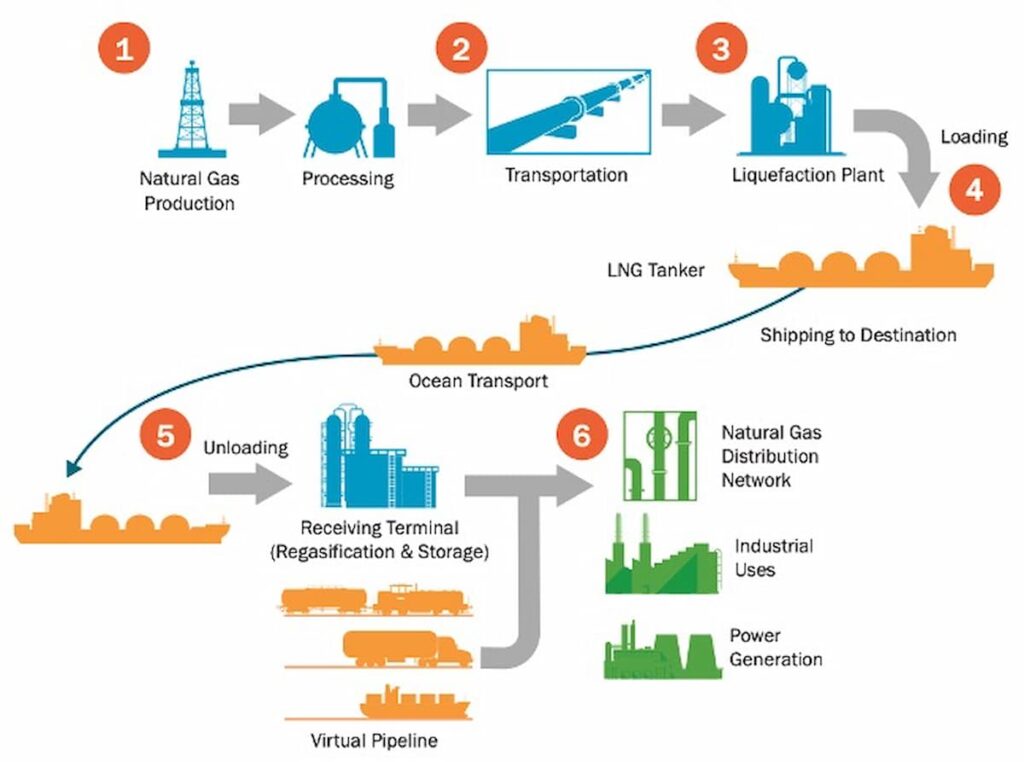
Liquified natural gas is not exactly “natural”. To produce LNG, natural gas, more than 80% of which comes from hydraulic fracturing (“fracking”) in the United States, is liquified by cooling it to -162o Celsius (-260oFarenheit). After this liquefaction process, LNG is transported via truck, rail or ship to receiving terminals, where it is regasified and stored before distribution to end-users.
The LNG Value Chain
LNG is a risky but growing maritime fuel choice
Given the intensifying focus on mitigating global shipping’s climate impact, the drift toward LNG may be baffling to many. Several regulatory and market drivers can help explain this conundrum. LNG has negligible sulfur content that supports low sulfur oxide (SOx) emissions. When the IMO’s regulation to cut SOx emissions went into effect in 2020, LNG became a growing alternative fuel choice for marine transportation. When combusted, LNG also has lower CO2 emissions and so was seen as a “transition” fuel for the sector when the initial IMO greenhouse gas strategy focused only on CO2emissions from burning fuels on vessels. These factors, along with LNG’s increasing availability and lower price compared to emerging zero-emission fuels, are behind much, if not all, of the shift to LNG.
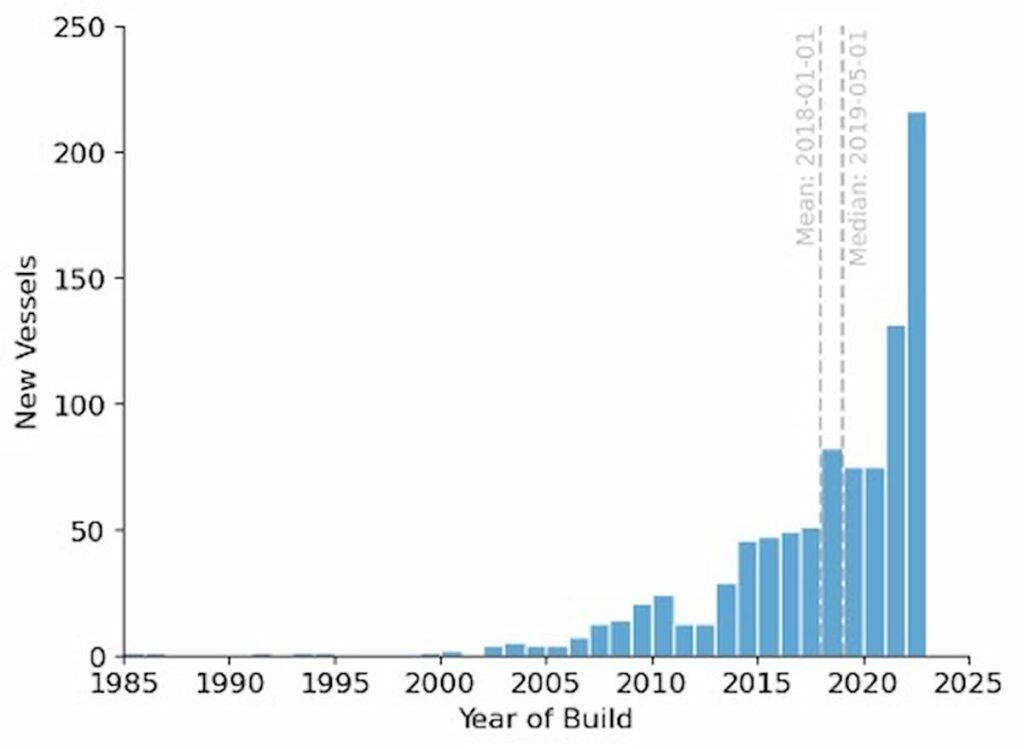
Growth in the LNG Fleet
However, LNG is not a low greenhouse gas fuel and has serious climate implications. It is composed almost entirely of methane, which is 27-30 times more potent than CO2 as a greenhouse gas over a 100-year timeframe and is 82.5 times more potent than CO2 over the near term. Methane emissions from international shipping increased by approximately 150% between 2012-2018, primarily attributed to the increase in use of LNG as a propulsion fuel with LNG accounting for around 3.8 – 4.6% of energy consumed by international shipping per GHG4.
These are just the “tank-to-wake” onboard methane emissions of LNG. Methane leaks or slips and intentional venting of uncombusted methane for routine maintenance or maintaining storage pressures actually occur all along the LNG value chain.
The life cycle methane emissions of LNG matter. Our report presents evidence that in addition to their global warming implications, these emissions from increased LNG consumption also have impacts on human health and environmental justice.
Methane emissions, which can result from the production and consumption of LNG, are linked to significant impacts on air quality by influencing concentrations of ground-level ozone. Ozone exposure causes and exacerbates respiratory issues, including asthma, and has been linked to cardiovascular disease and premature death. Additionally, harmful pollutants are released during natural gas extraction, processing and liquefaction, potentially impacting the air and water quality of nearby communities.
The combustion of LNG generally has globally distributed risks, whereas the upstream (well-to-tank) emissions from processes to produce LNG can have a more localized effect. Communities near LNG production facilities may face health consequences resulting from exposure to pollutants, economic impacts due to fluctuations in property values, and socio-economic and cultural changes arising from their proximity to emerging natural gas projects. Our report documents links between LNG production and instances of environmental injustices tied to ethnicity, culture, gender and income.
For the maritime sector, policy decisions and implementation timelines can shape choices in engine, fuel and exhaust after-treatment and guide infrastructure development. We can see this in the growth in uptake of LNG in order to comply with earlier regulations. The IMO’s 2023 strategy marks a turning point toward mitigating all greenhouse gas emissions along the entire maritime fuel and energy value chain. The process is now underway to design and adopt the technical and economic policies to drive the maritime energy transition. Given the questions over the costs and feasibility of retrofitting LNG-fueled vessels and supporting infrastructure that is presented in the report, this growing inclusion of methane in regulatory frameworks will play a pivotal role in deterring LNG use.
It’s abundantly clear that LNG use as a marine fuel does not meet stated climate goals and can perpetuate environmental injustices. Political intervention, not only to better regulate methane but also to improve the economic viability of near-zero and zero-greenhouse gas fuels, is imperative to meet 2030, 2040 and 2050 climate timelines. This could take form in penalties to polluters through emissions pricing, or subsidies to support production of energy alternatives—or a combination of both. To reach zero-emission shipping, we need to bypass false fossil solutions like LNG and focus on maximizing efficiency to reduce fuel use and invest resources in true zero-emission solutions.
In its efforts to identify and advance ocean-based climate solutions, Ocean Conservancy is leading a global, multiyear campaign to completely eliminate the gigaton of GHG pollution that the maritime shipping sector emits each year. As a rapid transition to zero-emission marine fuels is essential, Ocean Conservancy partnered with Energy and Environment Research Associates to analyze the arguments that LNG is the best option for a “bridge” fuel. The report is the latest contribution to Ocean Conservancy’s growing body of research that is informing and advancing the maritime energy transition.
The LNG landscape—from fuel production and bunkering to vessel operations and environmental considerations—is rapidly evolving. This report covers all aspects of LNG as a marine fuel, including discussion of policies and regulations; LNG engine technologies and emissions; the global and U.S. LNG vessel fleets; production, import and export of LNG; and the health and equity implications of LNG. The main chapters are supported by additional detail in the Supplemental Information sections found at the end of the report.
Bookmark the report: you may not read through from start to finish, but you’ll want easy access to this resource when questions about LNG arise.
This blog was co-written by Vincent Leggett, the Admiral of the Chesapeake and founder and president of Blacks of the Chesapeake Foundation, and Deedee Strum, the chief administrative officer of Blacks of the Chesapeake Foundation, in collaboration with Ocean Conservancy.
The Chesapeake Bay is a thriving region of diverse ecosystems and communities. Home to charismatic species such as the horseshoe crab, blue crab and the osprey, this bay is the largest estuary in the United States and third largest in the world. The Chesapeake watershed spans six states and Washington, D.C, and is recognized as the ancestral lands of the Piscataway, Anacostan, Monacan and other Indigenous peoples. The region is also home to historically Black communities that have shaped fishing, aquaculture and maritime industries for centuries.
Today, pollution from fertilizer runoff, wastewater overflows, and coastal development makes its way into the Bay and reduces the Bay’s ecosystem productivity and impacts surrounding communities. This situation has forced many Black families away from the coast and out of maritime livelihoods.
Stay current
Enter your email and never miss an update
...loading
Thanks for signing up for Ocean Conservancy emails.
One of the most notable groups leading the preservation of the Chesapeake Bay region’s maritime and aquaculture relationship to African American culture and generational knowledge and stewardship practices is Blacks of the Chesapeake Foundation (BoCF). BoCF is dedicated to sharing the Black maritime experience within the Chesapeake Bay watershed by providing a broad range of historical and experiential learning activities through quality research and culturally diverse programs to inform and inspire all people.
One of the pillars of Blacks of the Chesapeake Foundation is cultivating the next generation of stewards and leaders starting with their own backyard. In a collaborative project between Blacks of the Chesapeake Foundation and Ocean Conservancy called “Bay to Sea,” BoCF created and led a poster competition in partnership with Edmund Burke High School to elevate local conservation actions that reflect the importance of youth leadership in conservation and in mitigating climate change.
At Ocean Conservancy, our advocacy for the global ocean is predicated on our commitment to ocean justice—which we define as “the fair and equitable distribution of both the benefits of the ocean’s bounty and the burdens of its complex care.” This is an essential component of our vision: “A healthier ocean protected by a more just world.”
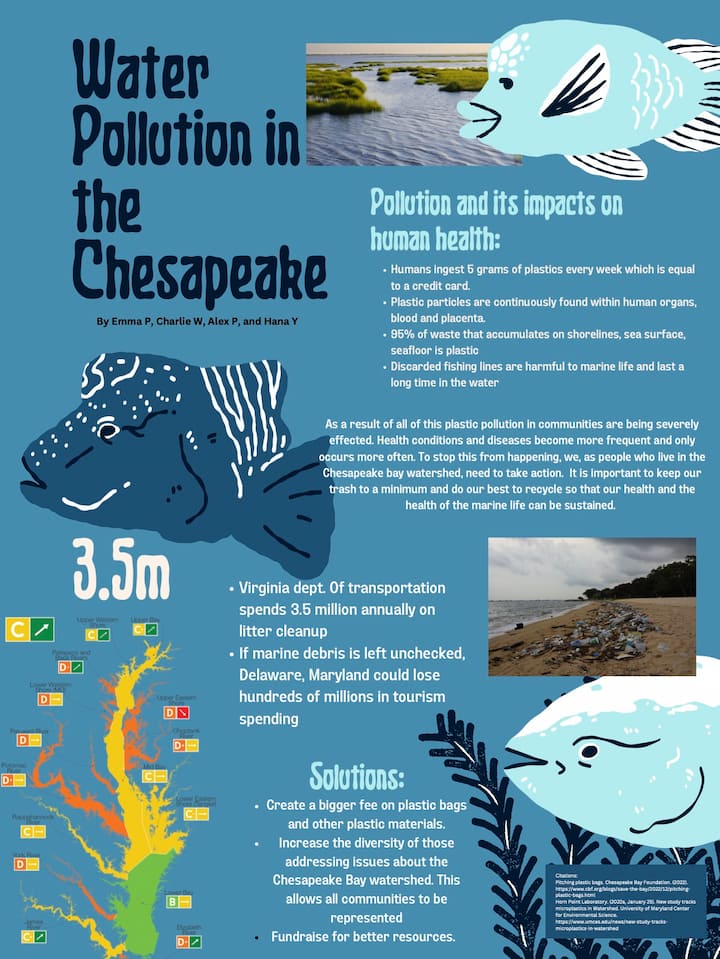
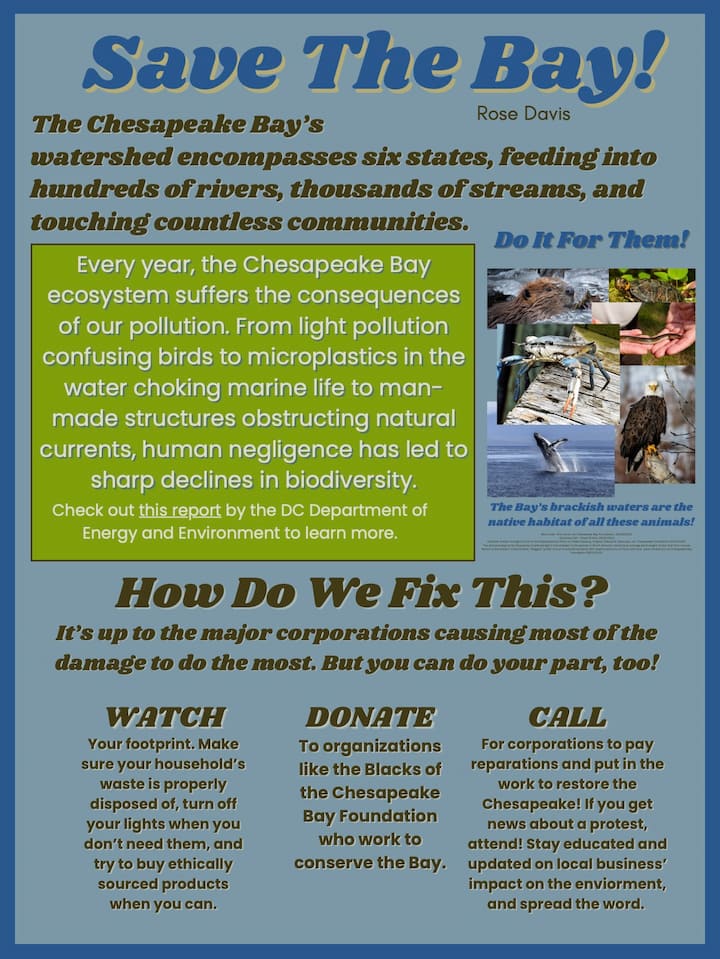
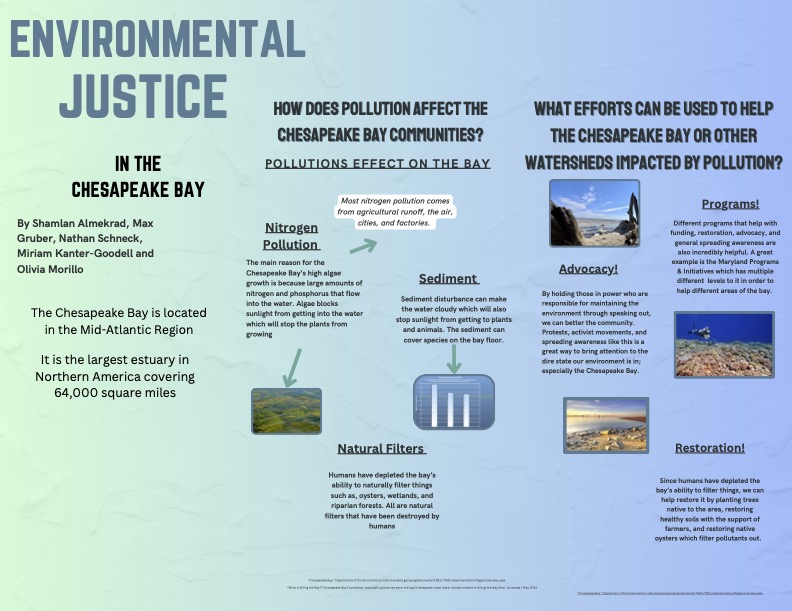
At Edmund Burke High School each grade level had a year-long theme that was embedded in their curriculum. For the 11th grade class, the theme was environmental justice. For this inaugural poster competition, the students were asked to illustrate themes of environmental justice and saving the Chesapeake Bay. The winners of this competition capture the disproportionate negative environmental impacts on lower-income communities and communities of color in the Chesapeake region from degraded water quality and plastic pollution. Drawing attention to this connection between justice and environmental degradation is critical to protecting communities and the Bay.
The posters included in the joint competition reflect the skills and attitudes that are needed to solve environmental issues like water pollution, injustice, and the ongoing climate crisis. The Chesapeake Bay is a regional local icon; it should serve as an example globally of environmental justice and solutions to environmental issues like climate change and ocean pollution. By providing local context and stories through posters and other resources, educators and advocates can better inform approaches in the Bay and other local, national and international fora to address these problems.
The Bay-to-Sea Poster Awards:
1st place winner: Water Pollution in the Chesapeake2nd place winner: Save the Bay!3rd place winner: Environmental Justice in the Chesapeake Bay
The Bay-to-Sea Poster Competition is an example of effective collaboration to identify the problems affecting the ocean and showcase their solutions. The competition demonstrates how trust between conservation stewards and organizations are working at different scales, local to international, can co-produce projects, spread awareness and create solutions to coastal-ocean problems that have more impact than working alone. As partners, we share a commitment to coastal communities, healthy waterways and ocean justice. We are stronger when we work together.
Want to know more about Blacks of the Chesapeake? Learn more here. Follow on LinkedIn.
We are officially within the 2024 Atlantic hurricane season here in the United States, and just a couple weeks ago, the National Oceanic and Atmospheric Administration (NOAA) released its forecast for this year’s season. The outlook will blow you away.
NOAA, which houses the National Weather Service and the National Hurricane Center, predicts there is an 85% chance the 2024 season will be “above normal,” thanks to near-record-high ocean temperatures and the onset of La Niña. This dire forecast has serious implications for communities living in hurricane-prone areas like Florida.
Never miss an update
Enter your email and never miss an update
...loading
Thanks for signing up for Ocean Conservancy emails.
Experts are predicting this season could bring:
Between 17 and 25 named storms (storms with winds of at least 39 mph).
Between 8 and 13 of these will be hurricanes (storms with winds of at least 79 mph).
Between 4 and 7 of these will be major hurricanes (categories 3, 4 and 5 storms).
For context, the 2023 Atlantic hurricane season, which was the fourth most active on record, experienced 20 named storms, seven hurricanes and three major hurricanes.
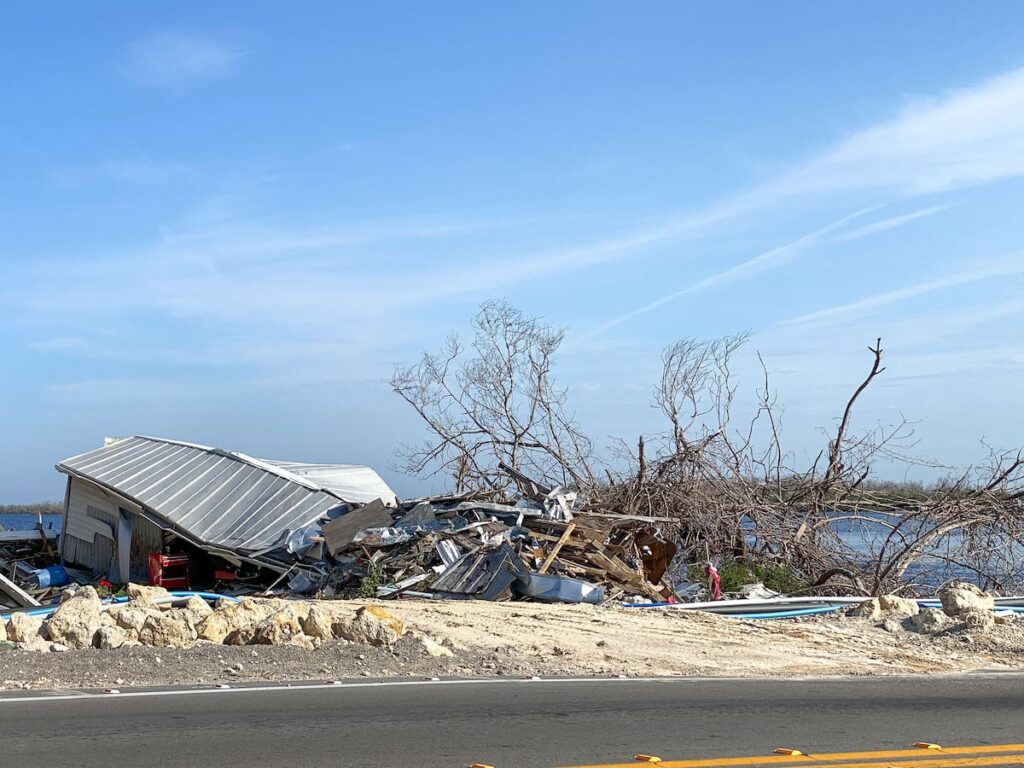
For me and my community here in the Tampa Bay region of Florida, these numbers are sobering. Due to our location, Florida is the state most vulnerable to hurricanes and tropical storms. We’ve been hit by twice as many storms as the second-place state, Texas. Florida’s residents are no strangers to hurricanes, and we are innately aware of the harm they cause us. Just last year, Category 4 Hurricane Idalia brought record storm surge, flooding and nearly $3.5 billion worth of damages to Florida’s Big Bend region, the strongest storm to hit the area since 1950.
In 2022, the catastrophic Hurricane Ian made landfall on the Gulf coast of Florida. It would become the second deadliest hurricane of the 21st century (after Katrina) and the costliest hurricane in Florida’s history. As these recent events and NOAA’s 2024 forecast confirm, our storms are getting worse. They are more likely to become major hurricanes and intensify quickly, giving us less time to prepare and evacuate. Warmer oceans result in more precipitation and more coastal flooding, and that is a scary thought for Florida residents like me.
These monster storms are no mystery, though. Temperatures in tropical waters across the Atlantic are through the roof this year, with over 90% of the area’s sea surface experiencing record or near-record warmth. Warm water is like rocket fuel to hurricanes, providing the perfect set of meteorological factors to produce strong storms that can rapidly intensify and wreak serious havoc. As climate change continues to heat our ocean, we can expect warmer water to power more and more dangerous storms in addition to some other serious marine challenges.
The good news is that we at Ocean Conservancy know what is causing climate change, so we know how to lessen its worst impacts such as warming oceans. We need to transition away from fossil fuels to cleaner sources of energy as quickly as possible and restore coastal ecosystems which absorb storm surge and protect communities. These things are the first steps to sparing places like Florida from a stormy future. Please join us in this important work, and, together, we can turn the tide on weather challenges to Florida.
Dunes constitute a very important part of a thriving beach environment—both for the animals and the people who live in coastal ecosystems. They provide food and shelter for animals, reduce sand erosion from beaches, reduce coastal flooding and protect structures from storm surge. And—not to mention—they’re a stunning backdrop for any photos you take on the beach!
What animals live in the dunes?
Beach mice
You might not associate mice with the beach, but dunes are a perfect hiding spot for these little rodents. Beach mice dig burrows in the dune to rest, hide food and protect their offspring. Often they will stay protected during the hot daytime hours, emerging at night to snack on seeds. There are a few species and subspecies of beach mice, including the critically endangered Perdido Key beach mouse and endangered St. Andrew beach mouse. Even if mice aren’t your cup of tea, here is a fun fact about these small rodents—they are often monogamous and mate for life, an unusual trait among mammals.
Plovers
Plovers are a staple around waterways in North America and beyond. These shorebirds are small with short beaks and search for worms and other invertebrates by wading into shallow water. Many species can be found in the United States, including the snowy plover, semipalmated plover and Wilson’s plover. The United States is also home to the piping plover—and my only reason for calling out the piping plover specifically is that it’s my favorite bird. Although the piping plover was common in the 1800s, their numbers fell drastically due to egg collection and habitat loss. Now, their numbers are growing again, and they are considered Near Threatened rather than endangered.
Ghost crabs
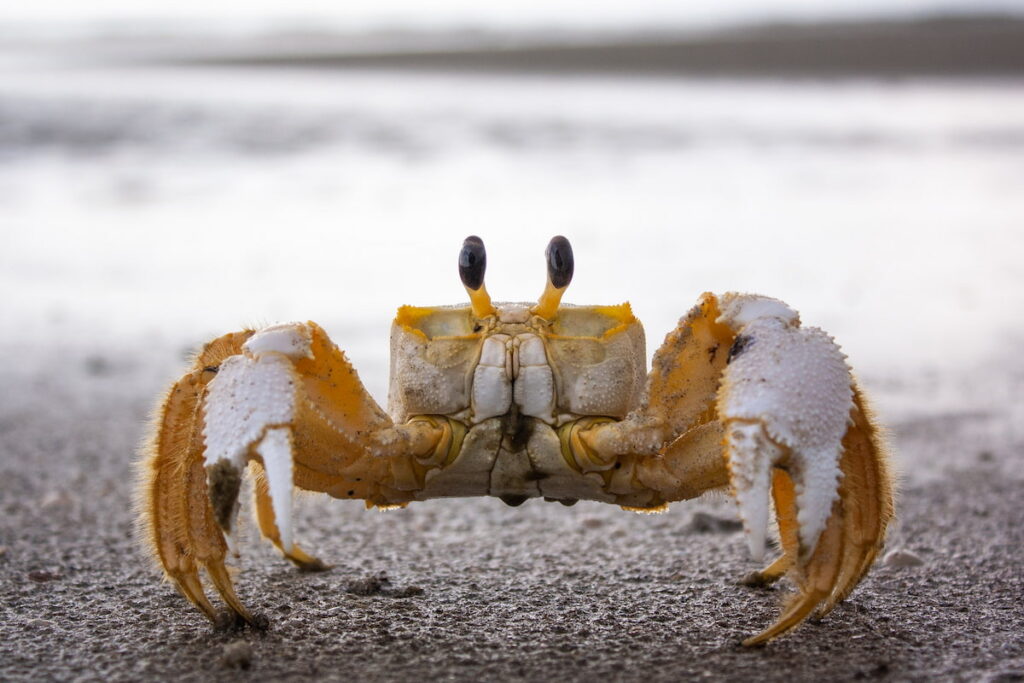
Take a nighttime walk on the beach and you’ll likely see a ghost crab or two (or ten) skittering on the ends of your flashlight beams. Their ghostly color (hence the name) also helps them blend into the sand. These speed demons can run up to ten miles per hour—a handy skill when it comes to outrunning predators on their way back to their burrows. They dig deep burrows that can stretch a few feet below the surface for protection from predators and the hot midday sun. If you spot a hole on the beach, it might be a ghost crab—or it could be another burrowing sand dweller.
Terns
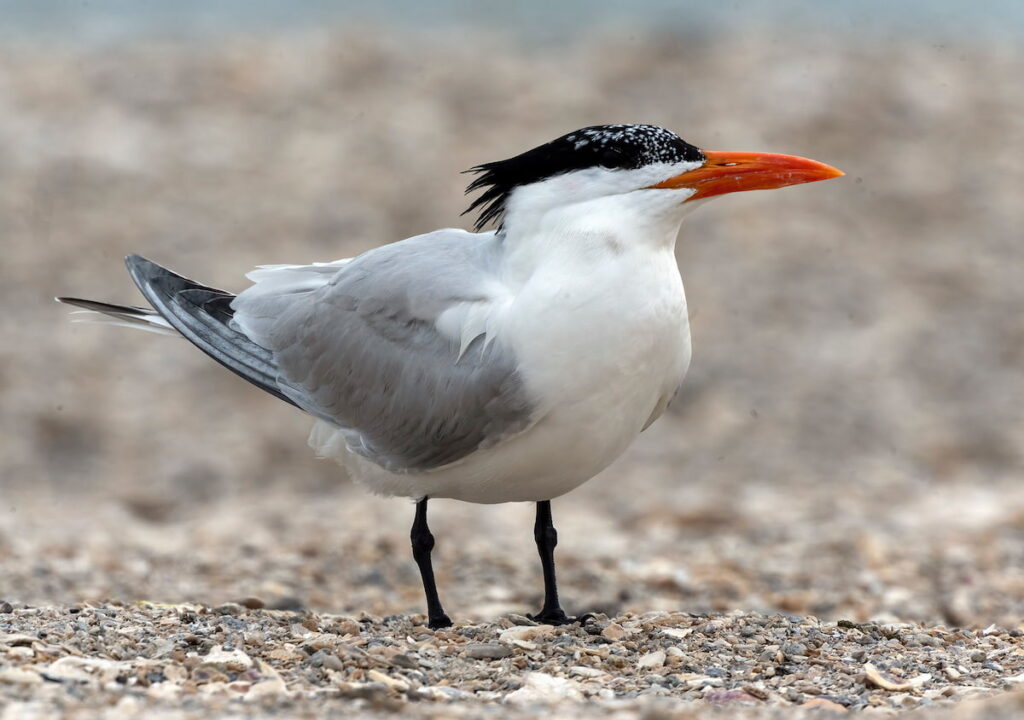
The tern is another seabird that relies on dunes. The dune grasses are perfect for terns to hide their nests, although they need to be careful of crabs, rodents and other predators that are interested in their eggs. Several species of tern may be found at the beach, including royal terns, common terns and least terns. Although many species, like the common tern, have healthy populations, it’s important to be a good steward of their habitat—avoid walking on dunes and don’t let your dogs run off leash in nesting areas.
Help protect dunes and other coastal habitats
In addition to not walking on or disturbing dunes, you can also help keep dunes free of trash and litter. Here at Ocean Conservancy, we lead the International Coastal Cleanup®, the world’s largest annual beach and waterway cleanup effort. This year, please join the nearly 17 million volunteers from 153 countries who have worked together to collect more than 350 million pounds of plastic and debris.
 Dive down deep, now, save my head