Friday, 10 September 2021

What is the Flamingo Tongue Snail?

The flamingo tongue snail (Cyphoma gibbosum) is a strange-looking little critter with an even stranger name. Whether you’ve seen a flamingo tongue in person or have never heard of it in your life, here are some fun facts about this brightly-colored invertebrate.

What does a flamingo tongue snail look like?

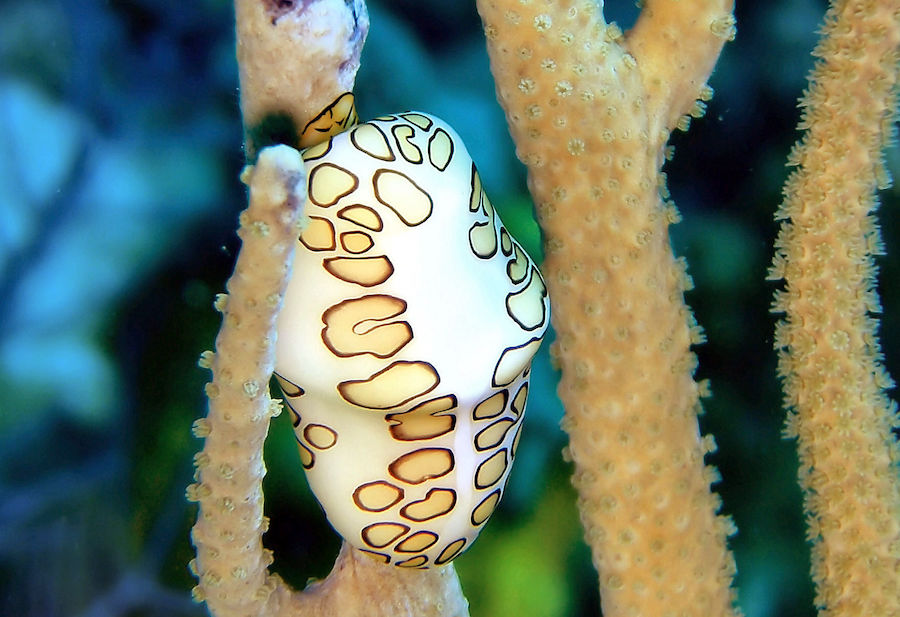
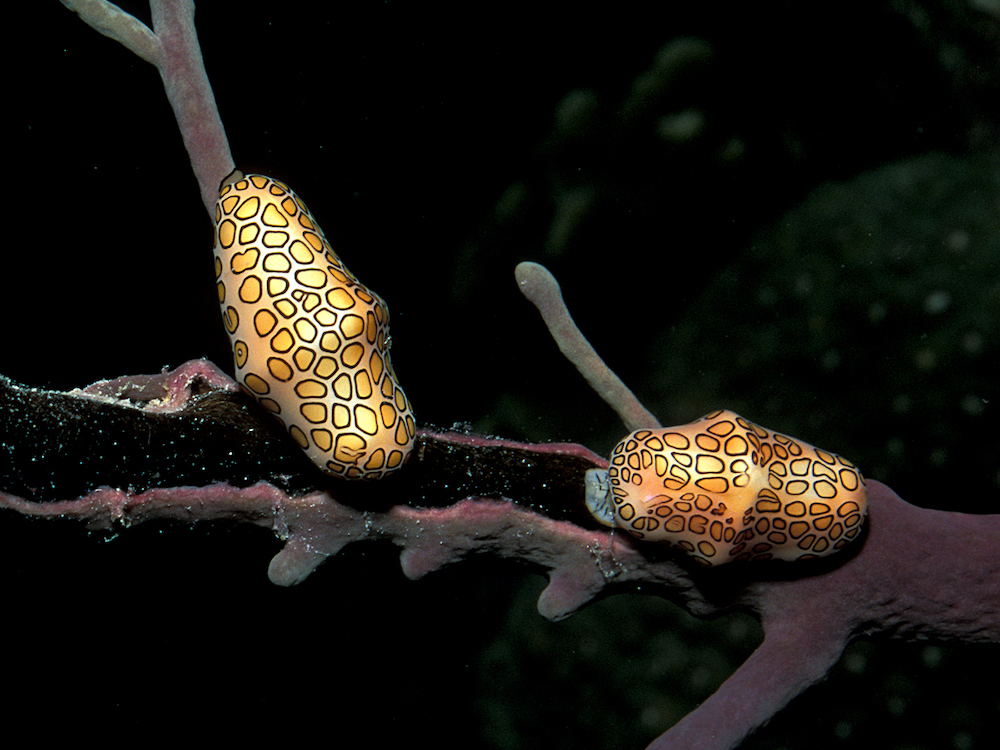
Flamingo tongues are small—only growing about an inch long—so if you swim by too quickly you might miss them. Although they’re tiny, their coloring makes a big statement. Flamingo tongues have vibrant orange and yellow coloring with thin black rings covering their bodies. It’s almost like they were inspired by leopard spots and added their own invertebrate flair. Under their colorful exteriors, they have a white or tan colored shell.

Flamingo Tongue Snail
© Rachel Schreck

Where is the flamingo tongue snail found?

Flamingo tongue snails are a relatively common sight on reefs in the western Atlantic and Caribbean from just below the surface to about 100 feet deep. They like to eat the polyps of soft corals like sea fans, sea whips and other gorgonians. They use a special appendage called a radula to scrape away soft tissues of the coral. The radula, which resembles a long ribbon with teeth, is exclusively found in all mollusks except for bivalves like clams. Although they eat live coral, do not fear—flamingo tongues won’t graze too much on one coral colony, and the polyps regrow after they leave.

Flamingo Tongue Snail
© Kristian Taylor

Who eats the flamingo tongue snail?

Flamingo tongue snails have a number of predators on the reef, including larger reef fish and lobsters. They protect themselves by absorbing toxins consumed from soft corals and becoming toxic themselves. Like many animals (looking at you, nudibranchs!) flamingo tongues’ bright colors warn other predators to stay away. Healthy predator populations are part of a well-balanced reef: a 2007 study used cages to keep large fish and invertebrates off parts of the Florida Keys reefs. When there were no predators, the amount of flamingo tongue snails increased 19-fold! More flamingo tongues meant increased munching on the soft corals, resulting in eight times the amount of damage on gorgonian corals.

Flamingo Tongue Snail
© Laszlo Ilyesl

If you’re headed to the Western Atlantic of Caribbean reefs anytime soon, keep a look out for these bright and captivating invertebrates. They’re an important part of a healthy, balanced coral reef ecosystem.

The post What is the Flamingo Tongue Snail? appeared first on Ocean Conservancy.


from Ocean Conservancy https://ift.tt/3BYZ7hr https://ift.tt/eA8V8J

Thursday, 9 September 2021

Beyond Waste: The Results are In for Urban Ocean’s First Batch of City Plastics Studies

For many of us, the story of trash ends when we put our trash out on the curb on pickup days. For Urban Ocean and the cities they partner with, it is just the beginning. Many cities around the world struggle to create systems to manage their waste, and that can sometimes mean that trash ends up as pollution in our ocean. The Urban Ocean program works with cities to find opportunities to better manage their trash and new solutions to ensure trash isn’t created to begin with.

In June 2020 Ocean Conservancy and our partners, The Circulate Initiative and Resilient Cities Network, announced the first cohort of learning cities to participate in our Urban Ocean program: Can Tho, Vietnam; Melaka, Malaysia; Semarang, Indonesia; Pune, India; and Panama City, Panama. These cities are connected to a vast network of community leaders, academics, and business leaders who are taking action to prevent plastic pollution from entering our ocean. This collaboration helps cities tackle ocean plastic pollution while advancing other city priorities like public health and job creation.

Urban Ocean has worked with all of these cities to conduct a series of assessments to build a snapshot of the trash and plastics in each city. This is called the Circularity Assessment Protocol (CAP) and was developed by Dr. Jenna Jambeck and her team at the University of Georgia (UGA)’s Circularity Informatics Lab. It explores questions like what items are commonly purchased in the city and how are they packaged? Where and how are these items used? What plastic alternatives are available and how widespread are they? What ends up as litter or trash and why?

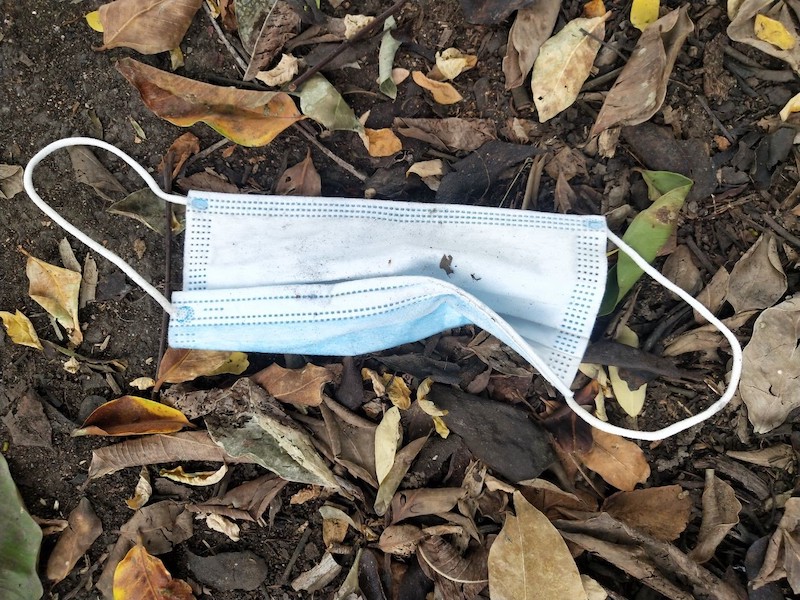
A mask becomes a piece of trash on the ground
© Universiti Kebangsaan Malaysia

Getting answers to these questions was no easy feat during the pandemic. Travel restrictions meant that UGA’s team was unable to conduct their research in person and instead had to find and remotely train local partners to conduct it. The process of sampling and conducting interviews was difficult because many shops and restaurants were closed. Nonetheless, we managed to complete all five CAPs, thanks to the incredible work and perseverance of our partners.

Urban Ocean released the results in a webinar last week. Some of the most interesting findings were:

  • Consistently, the most common littered items were tobacco products (mainly cigarettes) or food packaging products like food wrappers, straws, utensils and to-go containers. Notably, this reflects data collected by volunteers with Ocean Conservancy’s annual International Coastal Cleanup™, or ICC. Cigarette butts have topped the list of items found on beaches and waterways worldwide almost every single year since its founding in 1986 . That changed in 2019 when they were displaced for the first time ever by food wrappers.
  • Interviewees are interested in community-awareness campaigns about how to properly sort and handle waste in their city.
  • Several of the cities have small but enthusiastic groups that support refill and reuse stations, bulk stores, alternative delivery of products and the like, which should be cultivated and invested in to avoid more waste.

Students gathering trash data
© Initiatives for Regional Development and Environmental Management, Diponegoro University
  • There is demand for programs that attract young and tech-savvy locals into the waste sector, as well as demand for new technology that can support the recycling and trash collection. For example, at the CAP launch event Pune proudly showcased its “sustainathon” as a way to crowdsource innovative ideas from college students.
  • There is a consistent need to increase and optimize infrastructure to maximize collection, transport, sorting and disposal of waste. This can take many forms, including purchasing additional waste collections vehicles or establishing storage space for waste workers to properly sort materials.

But of course the devil—as well as the opportunity!—is in the details. For instance, in Panama City, 68% of top grocery and convenience store items were packaged in some type of plastic film, which is both extremely difficult to recycle and deadly to sea creatures, and just 1% of take-out containers were made of recyclable plastics. In Can Tho, a comparable 83% of all top products from a representative sample of convenience stores were packaged in plastic film, but most to-go products from vendors and restaurants were recyclable .

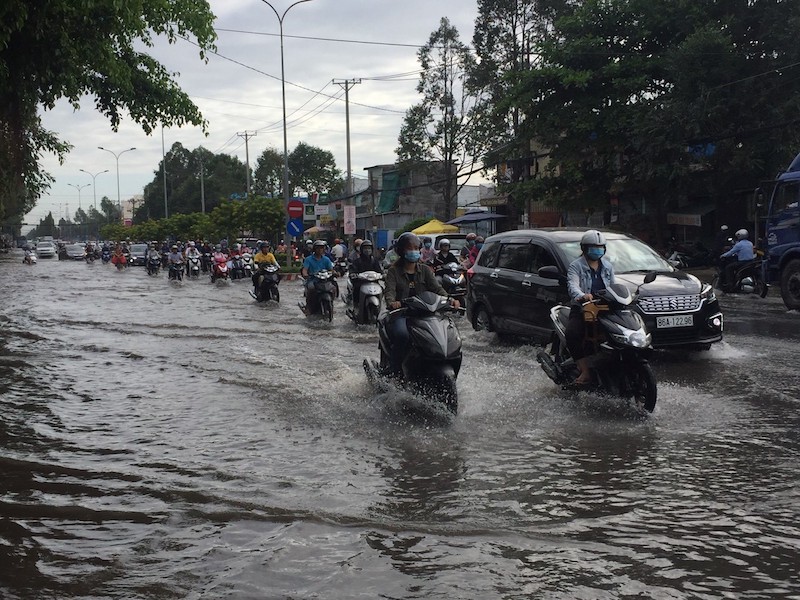
City flooding
© DRAGON Institute, Can Tho University

Understanding the strengths, weakeness and differences among waste management practices in these cities is just the first step. You can learn more about the findings for each specific city here. Next, cities will take these findings and develop plans to improve how they manage plastics and waste. One tool they’ll use is the Opportunity Assessment Tool (OAT) developed by Resilient Cities Network. This will help them identify and develop strategies to address their most pressing needs.

Urban Ocean is also supporting these cities by sharing best practices from around the world. Through support from National Oceanic and Atmospheric Administration (NOAA) and the Trash Free Seas Alliance® and others, Ocean Conservancy and its Urban Ocean partners have developed a “toolkit” to help these five citiesimprove the way they handle plastics and waste. The toolkit combines all the resources that have been developed this past year, as well as other helpful tools to support municipalities around the globe in their fight to build clean, healthy cities for clean, healthy seas.

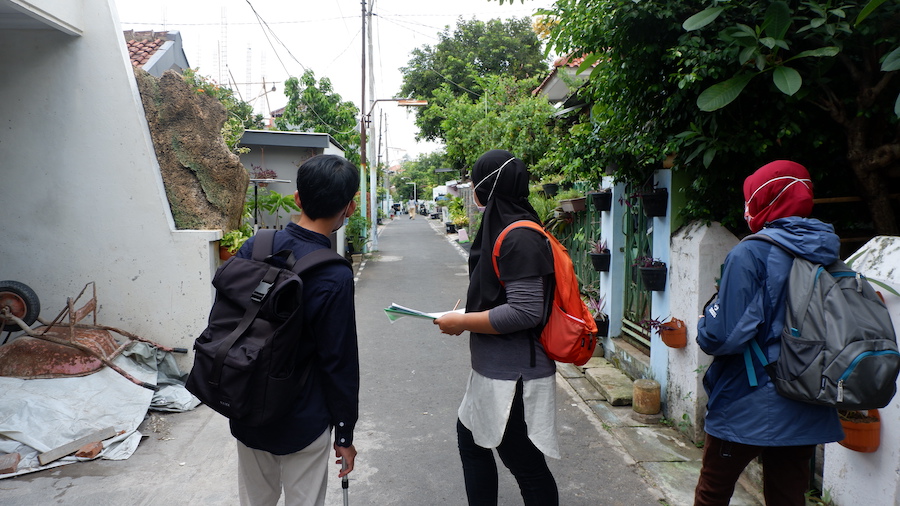
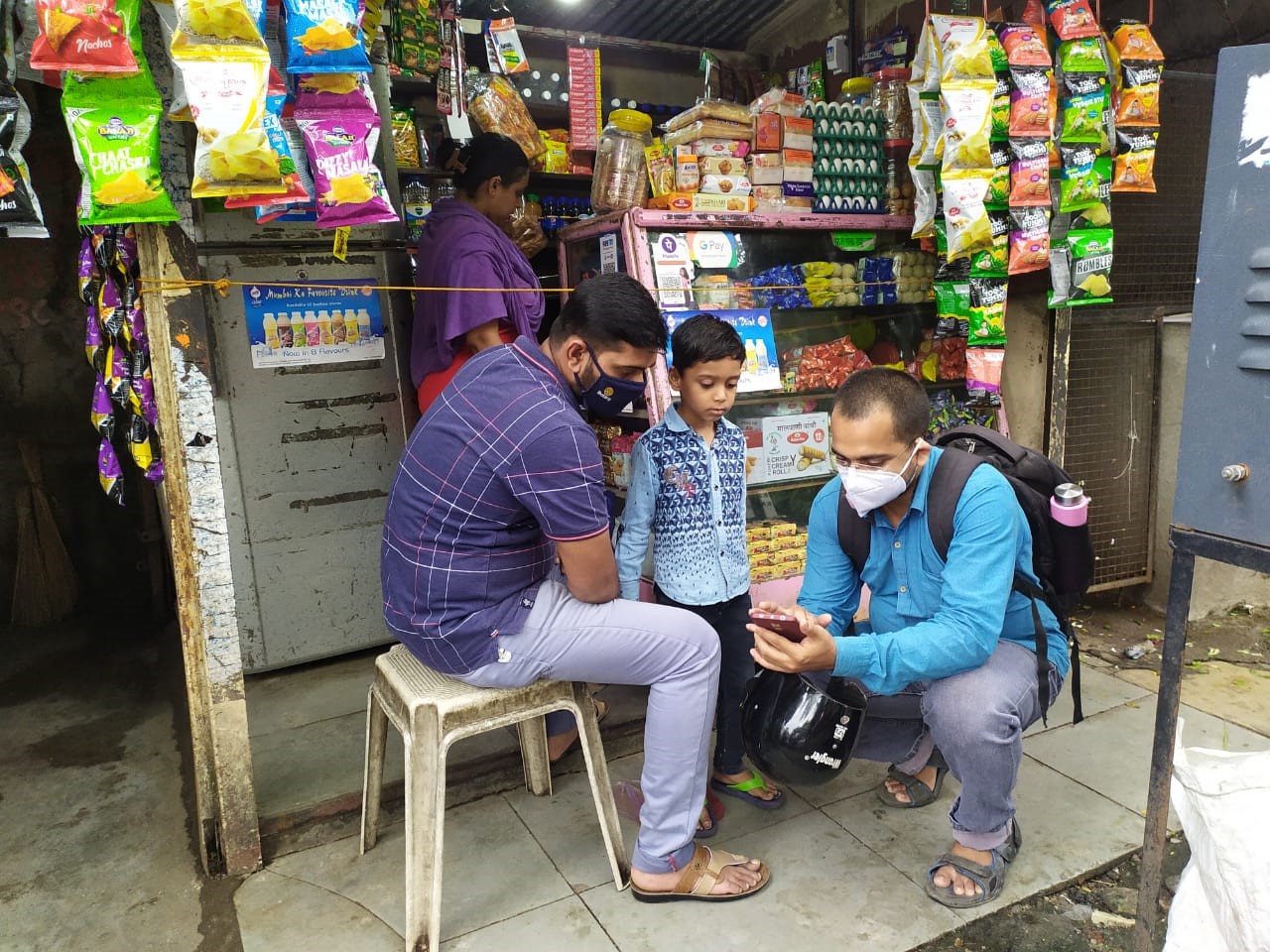
Collecting data in the city
© Center for Environment Education

Cities have a powerful role to play in creating a trash-and plastics-free future for our ocean. The results of the CAP Assessment show that there is much work to do, but also many solutions and opportunities for action. By improving infrastructure, fueling innovation, and empowering citizens, our Urban Ocean cities are leading the way to a healthier future for all the people who live there and for the ocean.

The post Beyond Waste: The Results are In for Urban Ocean’s First Batch of City Plastics Studies appeared first on Ocean Conservancy.


from Ocean Conservancy https://ift.tt/3lcdBnl https://ift.tt/2V55QXf

Tuesday, 7 September 2021

49 Years of Advocating for Our Ocean

Today we’re celebrating our 49th anniversary. That’s almost five decades of working towards a clean, healthy, sustainable ocean.

I am humbled when I think about all Ocean Conservancy has seen and accomplished since 1972.

We’ve celebrated incredible ocean victories like establishing fishery catch limits to prevent overfishing in the Magnuson-Stevens Reauthorization Act in 2006 and the first International Coastal Cleanup™ in 1986. We’ve witnessed mind-blowing ocean discoveries, like new bioluminescent sharks and ancient fossils that illustrate what the ocean looked like eons ago.

We’ve also seen great challenges facing our ocean, like the increasing effects of climate change, the infamous BP oil spill in 2010 and a rapidly changing Arctic ecosystem. To be honest, it’s easy to let the challenges facing our ocean feel overwhelming. But in those moments, I am inspired by our dedicated staff, partners and supporters like you—I know that together, we can achieve our dream of a healthy ocean.

One thing that has become very clear in the last 49 years: ocean conservation is about so much more than our ocean.

It’s about protecting the air we breathe and the food we eat. It’s about dismantling systemic racism and pushing for climate justice in the face of a rapidly changing planet. It’s about standing up for the democratic process and rights of all people regardless of which political party is in office.

But despite our challenges, I’ve never been more hopeful for the future of our ocean. More and more people are advocating for their governments, employers and the private sector to take immediate climate action to protect each other and our ocean. We’re having critically important conversations about the importance of diverse voices and viewpoints in conservation. And we are witness to a generation of young people who seek to live in a sustainable, just and equitable world.

I couldn’t talk about our future—or our past—without talking about YOU.

Our dedicated supporters are joined by a love of our ocean, and we could not do our work without you. It’s because of you that we can look ahead with confidence and excitement.

I’m proud of all we’ve accomplished in 49 years. And I can’t wait to see what the next 49 bring.

The post 49 Years of Advocating for Our Ocean appeared first on Ocean Conservancy.


from Ocean Conservancy https://ift.tt/3yRq5pm https://ift.tt/2V55QXf

Monday, 6 September 2021

Tackling Plastic Pollution in California

It’s not hard to fall in love with the ocean in California. You can drive for 600+ miles with endless ocean vistas on the Pacific Coast Highway or wake up early in the morning to explore tidepools teaming with life. You can see elephant seals and sea otters enjoying the same coastal habitats you return to again and again. It’s not surprising that most Californians are concerned about plastics polluting the beaches and ocean they love.

Luckily, the state is making big strides this year to tackle plastic pollution in our ocean. We have been excitedly tracking four bills in the Golden State that will reduce waste and reform recycling. Passage of each bill would represent a big win for our ocean and the incredible natural wonders within the state.

Curbing Recycling Exports

Plastic waste generated in the U.S., particularly California, frequently gets shipped overseas for disposal. While this waste often is intended to be recycled, too often it is landfilled, incinerated or sometimes simply (and illegally) dumped. Yet, here in California and throughout the U.S., exported plastic waste is frequently categorized as having been recycled. This practice leads to a lot of mismanaged plastic waste ending up in our ocean, yet it gets counted as if it was recycled.

Last year Ocean Conservancy released a study that showed how much the U.S. is outsourcing our massive “plastic footprint” to developing countries.

A new bill in California on recycling exports (AB 881) would ensure that only plastics that can actually be recycled by the importing country would constitute “recycling” and count towards California’s waste diversion goals. All other exported plastic wastes would be considered “disposal.”

Ensuring Truth in Recycling

Figuring out what should end up in trash cans and what should end up in recycling bins is no easy task. Many of us rely on the “chasing arrows” label on our packaging to help us make those decisions. However, many of the products that feature this symbol aren’t recyclable in our local communities. That can lead to a lot of waste ending up in our recycling bins that can confuse and contaminate our recycling systems, which ultimately makes recycling more expensive and less efficient. This also makes it harder for items that are readily recyclable to get a new life as another product.

A new bill focused on recycling labeling (SB 343) prohibits the use of the word “recyclable” on unrecyclable products and the use of the “chasing arrows” symbol or any other suggestion that a material is recyclable. In most California municipalities, this bill will reduce contamination in the recycling system, lower costs for local governments and ratepayers and empower consumers to make informed purchasing choices based on product recyclability. This will encourage producers to make sustainable packaging choices and support companies looking for a steady supply of material to invest in recycling and reprocessing facilities in California.

Reducing Food Ware Waste

If you’re like me, you ordered a lot more takeout this past year. Along with the delicious food delivered to our homes often comes unwanted utensils, straws and condiment packages that end up in the trash. Plastic utensils, straws and takeout containers are often seen littering our beaches and neighborhoods and are among the most common items collected at Ocean Conservancy’s International Coastal Cleanup™ each year. It’s a growing issue that is impacting our ocean.

In California, a bill on single-use food ware(AB 1276) will significantly reduce the amount of food service waste in the state. It will require single-use food ware like cutlery and straws to be available only by request at restaurants or on delivery apps. That will ensure that you are getting only the food ware you need and reduces plastic waste generated from takeout. It also might eliminate the need for that extra drawer in your kitchen that’s filled with sauce packets and plastic knives you know you’ll never use but simply cannot toss into the waste bin.

Do Not Flush

Disposable wipes are not flushable. Instead, when flushed, these wipes shed countless numbers of microfibers that pollute our waterways and ocean while simultaneously wreaking havoc on our sewer systems. This results in a gross phenomenon known as “fatbergs.” These balls of grease and wipes can block sewer pipes  and result in sewage overflows that pollute waterways and our ocean. A new bill addressing disposable wipes (AB 818) would label these wipes with “do not flush” and ensure that there is no advertising on the package that promotes disposing them in the toilet. This will help educate consumers and alleviate serious problems that can arise when these wipes end up in our sewage system.

We’re excited about California’s continued commitment to reduce plastic pollution and protect our ocean, and we appreciate this commitment. We’ll be tracking these bills and voicing our support to push them over the finish line. If you live in California, you can help by encouraging your representatives to vote “yes” on this very promising legislation. With each bill that passes in California and beyond, we get one step closer to a truly circular economy that eliminates the concept of plastic waste.

The post Tackling Plastic Pollution in California appeared first on Ocean Conservancy.


from Ocean Conservancy https://ift.tt/3zOuWsF https://ift.tt/2V55QXf

Friday, 3 September 2021

Disney Gamers Provide Big Win For Our Ocean

During World Ocean Month this past June, when ocean and animal lovers around the globe were celebrating our ocean with wonder and awe, a very special group was using its passion for games to raise money for Ocean Conservancy.

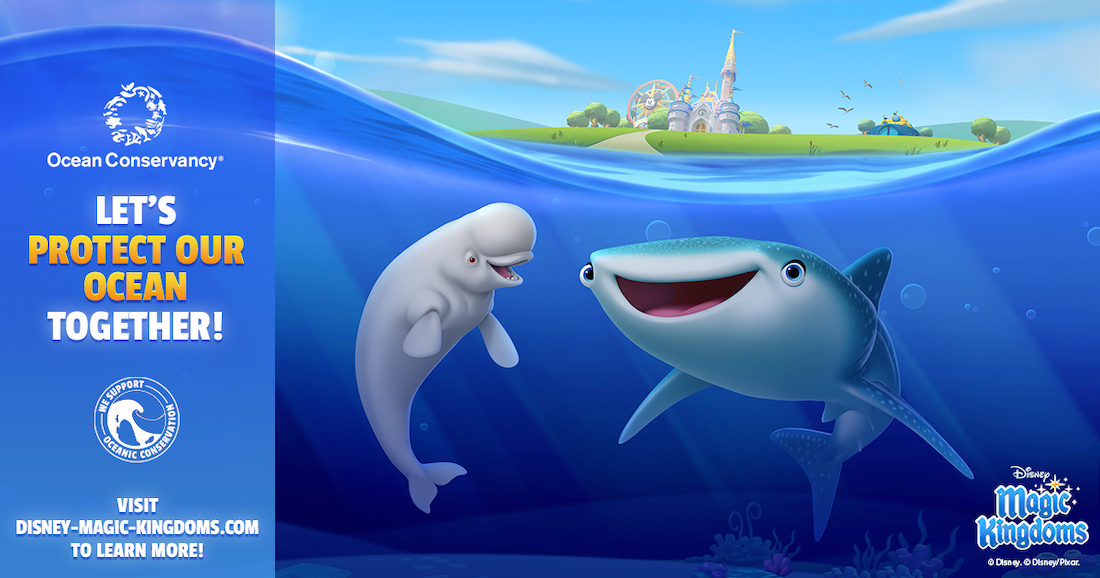
Gameloft ocean animals in ocean graphic
© Gameloft

The group I am talking about is the gaming community of Disney Magic Kingdoms, a mobile and computer experience where users create the Disney Park of their dreams and fill it with more than 200 characters they know and love from Disney, Pixar and Star Wars. The game, which has received over 100 million downloads worldwide, was developed by the French company Gameloft (parent company Vivendi SE). Together with Disney, the company launched a fundraising campaign benefiting Ocean Conservancy in celebration of their new Finding Dory event.

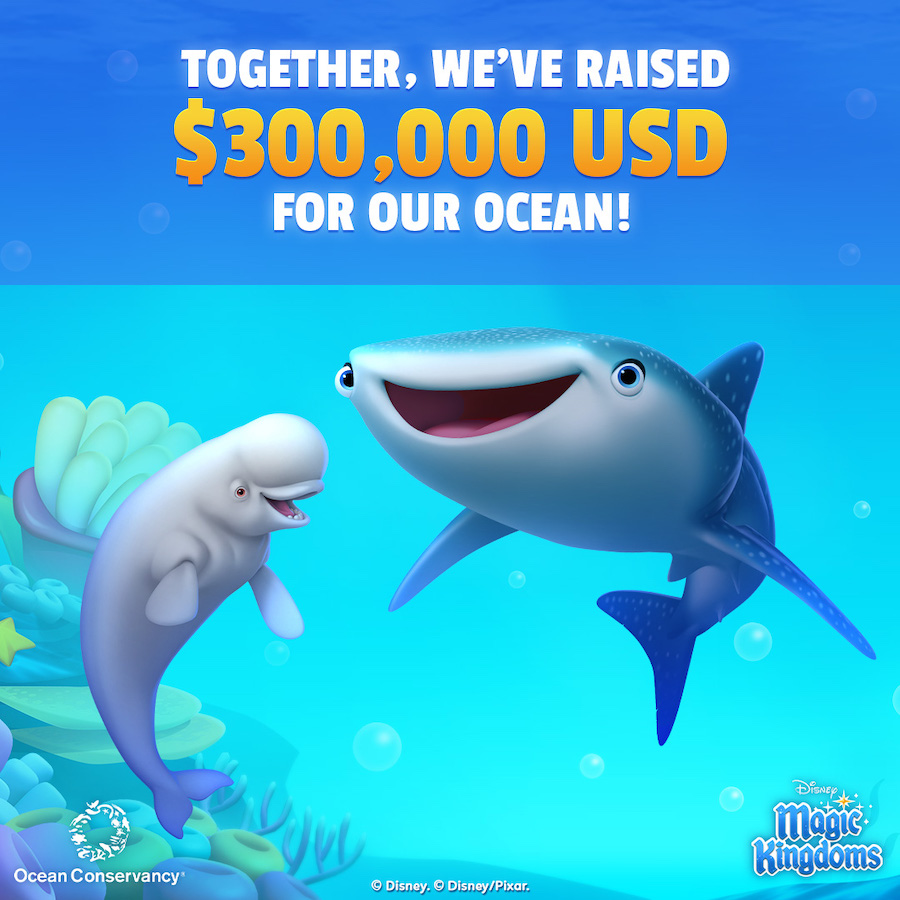
Gameloft ocean animals in the ocean graphic
© Gameloft

From June 3-18 the gamers playing Disney Magic Kingdoms were taken on an ocean voyage with Destiny the whale shark and Bailey the beluga whale, learning fun ocean and animal facts while playing their favorite game. As part of this virtual event, the gamers were able to purchase an exclusive “Destiny the Whale Shark” bundle where each purchase provided a donation of $5.59 to Ocean Conservancy from Gameloft. In total, the gamers raised more than $284,000 in the two-week timeframe, and Gameloft contributed an additional amount to round up the total donation to $300,000! Wow—what a terrifically great ocean win!

As Jennifer Gale, Game Manager of Disney Magic Kingdoms for Gameloft, put it:

“We are so excited to be able to contribute such a robust amount to Ocean Conservancy. In a year of stress and ongoing struggles worldwide, we are heartened to see our players play a part in making the ocean, crucial to our planet’s health, a little bit better. We can’t wait to see what Ocean Conservancy does and continues to do.”

You can read more about the success of our partnership with Gameloft here, and join in the fun with the Disney Magic Kingdoms community here. If you love the idea of being able to donate while playing a game, urge your favorite gaming company to give back to the environment by partnering with a nonprofit organization like Ocean Conservancy.

The post Disney Gamers Provide Big Win For Our Ocean appeared first on Ocean Conservancy.


from Ocean Conservancy https://ift.tt/3zI7n4T https://ift.tt/eA8V8J

Thursday, 2 September 2021

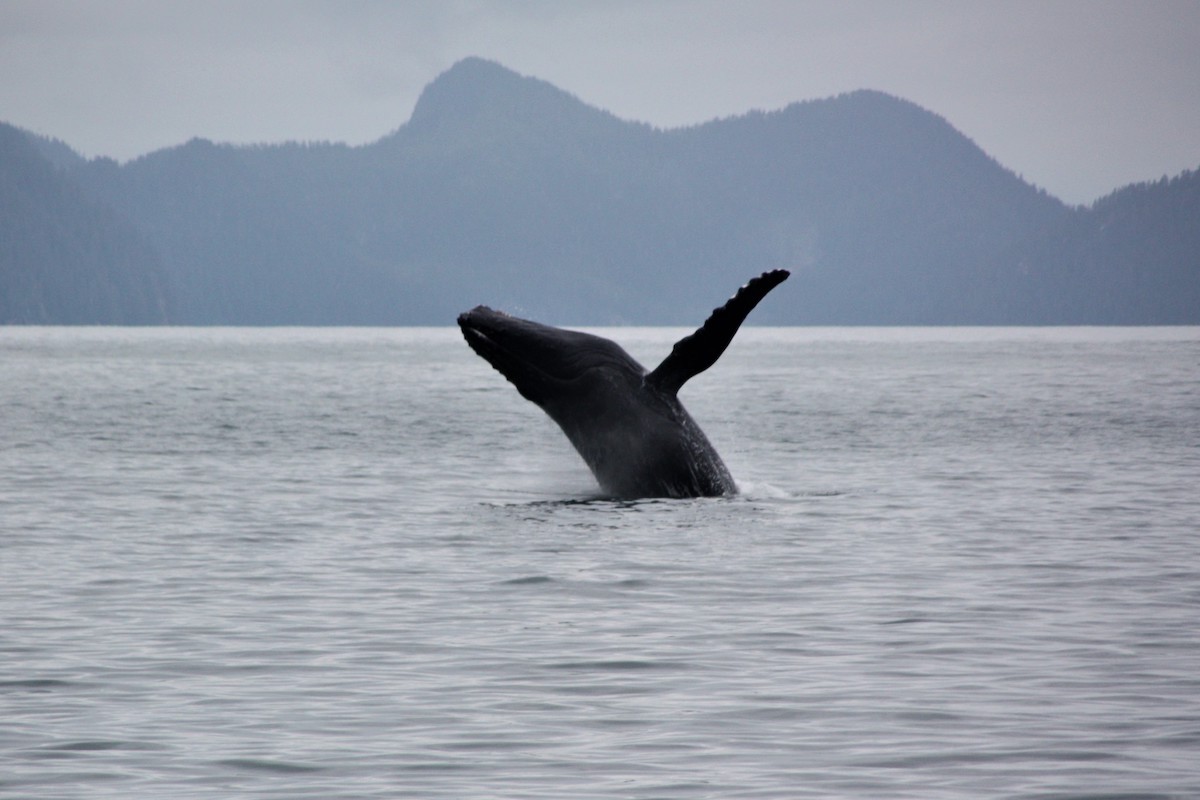
Witnessing Climate Change Effects in Alaska

Like many Americans, my family hoped for some normalcy after our COVID vaccinations. For us, that meant finally traveling to Alaska and taking in a small slice of the remarkable state. Yet in between the seeing humpback and killer whales, sea lions and Denali, it was hard for me to avoid the challenges climate change poses for people and wildlife across the planet. Shortly after we returned, the Intergovernmental Panel on Climate Change’s (IPCC’s) 6th report came out, adding some stark context to what we saw across Alaska.

Let’s take a moment to talk about that report. The IPCC reports collate the best available science on the state of the climate. For IPCC 6, the results confirm, in greater detail than ever before, the impact that fossil fuels have on our climate. The report also draws a sharper link between greenhouse gasses and extreme weather events that are becoming more common every year. As our own Sarah Cooley put it, “The IPCC’s new report confirms that human fingerprints are all over many of the changes we see today in our climate and across the globe.” If there’s one place we can see human fingerprints clearly, it’s Alaska.

For the past 50 years, Alaska has warmed at least twice the national rate. Nowhere is that clearer than at Glacier Bay National Park, where winters are at least five degrees Fahrenheit warmer. Most tourists visit Glacier Bay to witness the iconic tidewater glaciers—massive ice sheets hundreds of feet high that extend into the bay itself. In the 1980s, my parents saw Muir Glacier, but by 2021 the glacier has retreated so far that it no longer reaches the water. That’s a common story. Roughly 98% of the glaciers in the park are in full retreat. While some glacial movement is normal, the IPCC’s report confirms that glacial retreat since the 1990s is explicitly linked to climate change and increasing temperatures. The Grand Pacific Glacier, which once stretched to the end of the Bay and pushed the Tlingit peoples from their ancestral homes in the 18th century, is now at the opposite end of the park—nowhere near the water’s edge. What’s left behind is barren earth.

Whale in the ocean
© Daniel Hubbell

That’s bad news for much of Glacier Bay’s marine wildlife, like the sea otter. After being hunted to local extinction for their fur, sea otters were reintroduced to Southeast Alaska from California in the 1960s. Their reintroduction is a remarkable conservation success, so much so that more than one frustrated fisherman told me they are now a source of competition due to their ‘shellfish’ eating habits. Glacier Bay hosts the densest concentration of sea otters in the state. It’s a heartening recovery story that we saw firsthand on our trip as we spotted hundreds of these adorable marine mammals. But the otters also depend on cold water kelp forests, a habitat that’s disappearing across their entire range as the ocean warms. As a keystone species, sea otters help keep urchin populations in check, which allows kelp to grow and thrive. When otters’ habitat disappears, their ability to contain sea urchin populations decreases as well, setting off just one of many chain reactions across the entire ecosystem.

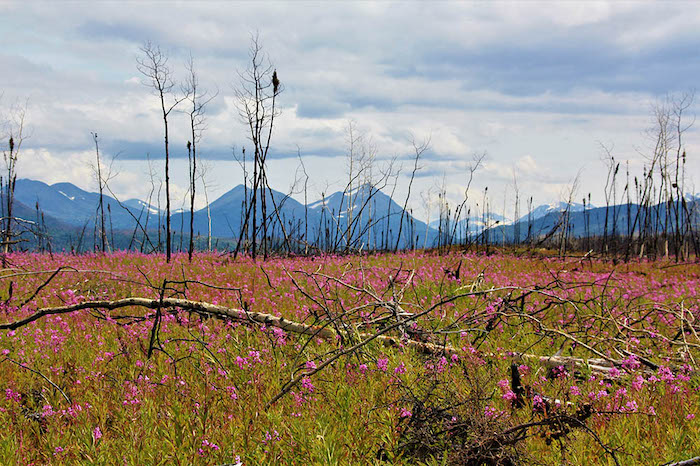
Other stops across the region offered their own warnings. In the Kenai Peninsula we stopped in the Kenai National Wildlife Refuge, site of the 2019 Swan Lake Fire. The fire burned down almost 12% of the wildlife refuge, or over 170,000 acres. That’s larger than the island of Manhattan and Washington D.C. combined. Swan Lake was sparked by a lightning strike, and while some wildfires are natural, the prime driver for intense wildfires is temperature. Anticipating the results of more frequent, more intense wildfires is the challenge ahead.

Fire weeds
© Daniel Hubbell

These are just a few examples from a brief trip to Alaska, but hopefully this illustrates some of the stark warnings the IPCC has issued. I had the rare privilege of visiting the state, but I do not live there. I do not face the challenges that indigenous communities from the Inuit of the North Slope to the Tlingit and Haida peoples of the Southeast grapple with every day. Climate change threatens food security, ancestral and archeological sites and could potentially force entire communities to relocate.

If I can leave you on a positive note, it’s that change is still possible. The IPCC report does indicate that we can limit warming to 1.5 Celsius, the aspirational target of the landmark Paris Agreement. Action on climate, from all sectors including shipping, must happen as fast as possible for us to reach that future. You can take action right now by telling the Biden administration to invest in green shipping and ports and reduce shipping emissions—it’s going to take all of us to ensure a healthy, sustainable Alaska.

The post Witnessing Climate Change Effects in Alaska appeared first on Ocean Conservancy.


from Ocean Conservancy https://ift.tt/2WMgwek https://ift.tt/eA8V8J

Wednesday, 1 September 2021

Meet 3 Future Leaders in Ocean Conservation

Our ocean faces a diverse range of threats, and it takes a diverse community of advocates to protect it. We cannot talk about conservation efforts without discussing how diversity, inclusion and equity fit into the mix.

Ocean Conservancy is committed to being open, inclusive, fair and representative of all the people who love and rely on the ocean. This is just one of the reasons why we helped establish the Roger Arliner Young Fellowship Program—a paid fellowship for recent college undergraduates that focuses on increasing opportunities for historically underrepresented communities. We’re honored to be one of many partner organizations, including Pew Charitable Trusts, the Natural Resources Defense Council, the Nature Conservancy and the American Council for an Energy-Efficient Economy. The fellowship is currently hosted by the Environmental Leadership Program, who provides support for fellows through mentor matches, lecture series and leadership training.

Roger Arliner Young was the first African-American woman to achieve a PhD in Zoology. She was a researcher and an activist who fought her entire career to overcome racism, sexism and classism. This fellowship in her honor aims to increase opportunities for people of color in the U.S. conservation sector, which has historically been overwhelmingly white.

We’ve been fortunate to host six classes of RAY Marine Conservation Diversity Fellows who are emerging leaders in the field. Our RAY fellows have delved into an incredible range of ocean issues, including researching microplastics in Vietnam, interviewing oyster farmers about the importance of NOAA research and sharing stories of women of color working to restore the Gulf of Mexico. After their tenure at Ocean Conservancy, they’ve gone on to work for environmental nonprofits, large media outlets and more.

While we miss our RAY fellows once they have moved on to their next experiences, we are always excited to welcome new fellows to the organization. Together, the current and former RAY Fellows are taking the environmental conservation field by storm.

Now, we’re delighted to introduce Ocean Conservancy’s current fellows, who represent the fifth and sixth cohort of RAY fellows. We can’t wait to see what they accomplish during their time here with us, and beyond.

Zavia Jenkins, Florida Conservation Program

Zavia grew up along the salt marsh in Nassau County, Florida, within the Gullah/Geechee Nation. Growing up surrounded by the Spartina grass and teeming wetlands, Zavia developed a deep interest and love for the marine environment surrounding her, and went on to study aquatic and marine biology at Stetson University in DeLand, Florida. After graduating, Zavia worked as an archivist for the Gullah/Geechee Nation and completed the Climate Reality Leadership Corps Training, then worked as a Faithful Climate Action Fellow and a Thriving Earth Community Science Fellow. As a RAY Diversity Florida Policy Fellow, Zavia intends to continue drawing on her cultural foundation while amplifying the voices of those communities often left unheard. Zavia will focus on helping the Florida program develop policy positions on issues related to Floridian water quality and abundance, sea level rise, and marine wildlife and habitat.

Olivia Lopez, Confronting Climate Change Program

Olivia is from Milwaukee, Wisconsin, where she spent her summers exploring the shores of Lake Michigan. She went on to study Conservation Biology, Environmental Studies and Afro-American Studies at the University of Wisconsin-Madison. Her studies, rooted in environmentalism and Afro-American history, helped Olivia recognize her passion for environmental justice. She has also engaged in a variety research opportunities, including studying tropical soil ecology in the MarĂ­n-Spiotta BiogeoLab, investigating Indigenous community-based tourism in Panama and conducting a project focused on water quality in the Chesapeake Bay with Maryland Sea Grant, an opportunity which further brought out her excitement for marine conservation. Ultimately, she hopes to apply lessons learned from these diverse experiences while working to address the climate crisis. More specifically, Olivia hopes to contribute to solutions that advance climate justice for marginalized coastal populations in the U.S. and abroad.

Alliyah Lusuegro, Fish Conservation Program

Alliyah’s first home is in metro Manila, Philippines. At an early age, she formed a deep attachment to the environment, especially the ocean, every time she visited the Pacific waters and drove along mountainsides on family trips. Alliyah has since then migrated to the United States, where she graduated from Swarthmore College (Lenape territory) with a B.A. in Environmental Studies and a double minor in Biology and Gender and Sexuality Studies. At Swarthmore, Alliyah co-led the Green Advisors in the Office of Sustainability, a group of students who promote sustainable practices on campus. Alliyah cares deeply about environmental, social and immigrant rights, believing that everyone, particularly Black and Brown folks, has the right to a happy and healthy home. She plans apply her interests in storytelling and policy as a member of the Fish Conservation Program.

Join us in welcoming our three new fellows! And watch this space, as our fellows take to the Ocean Conservancy blog to share what they are working on this year.

You can read more about all of the RAY Fellows here.

The post Meet 3 Future Leaders in Ocean Conservation appeared first on Ocean Conservancy.


from Ocean Conservancy https://ift.tt/2V5I0e6 https://ift.tt/eA8V8J
How Orlando Communities are Tackling Plastic Pollution

The city of Orlando is known above all else for its world-class amusement parks. In fact, hundreds of thousands of people visit the city ev...