Friday, 16 July 2021

Meet Our Ocean’s Zebra Sharks

You’ve heard of great whites. You’ve heard of hammerheads. And you’ve probably heard of makos, whale sharks and bull sharks. But have you heard … of zebra sharks?

Move over, tiger sharks—there’s a new wildly-named elasmobranch species in town, and they’re here to show their stripes (sort of). Today, I’m here to walk you through seven sea-riously wild facts about this curious carpet shark species.

Where do zebra sharks get their name?

While tiger sharks claim their name from the trademark “tiger stripes,” zebra sharks are named specifically after their appearance as juveniles. As pups, zebra sharks bear bands of dark and light brownish-yellow, which eventually disperse into spots as a young shark reaches adulthood. These stripes don’t just go away for no reason, though; they’re actually quite the defense mechanism when it comes to keeping pups safe from prey. Shedd Aquarium explains that, upon first glance, predators may mistake a baby zebra shark’s striped tail for dangerous sea snakes, so these stripes serve a very sneaky but also very protective purpose.

Zebra sharks are much smaller as babies, and once they reach their full size as adults, the need for this mimicry tool is lessened.  Their spottier appearance assists them in camouflaging themselves against the sandy seafloor.

If they’re spotted as adults, why aren’t they called leopard sharks?

Well, the answer to this question really depends on whom you’re asking. There’s another species of shark (Triakis semifasciata) that is commonly referred to as a leopard shark here in the United States. In Australia, however, Stegostoma fasciatum (the species this blog is all about) is most commonly referred to as a leopard shark (not a zebra shark). All in all, you could technically not be incorrect if you were to call either of these species a zebra shark or a leopard shark … but if you’re really trying to be careful with specifics with species, scientific names are here to save the day.

Where do zebra sharks live?

These sharks are primarily found in Indo-Pacific waters, but they have also been known to be found in the Red Sea. They love sandy seafloors and are most commonly found on or near coral reefs where many of their favorite foods are known to thrive.

How big can these sharks grow to be?

Most sources note that zebra sharks tend to average between seven and nine feet in length, with the largest reported to be close to 12 feet long. One of the most interesting stats about their size, however, is that they have incredibly lengthy, powerful tails—which sometimes can make up nearly half their entire body length.
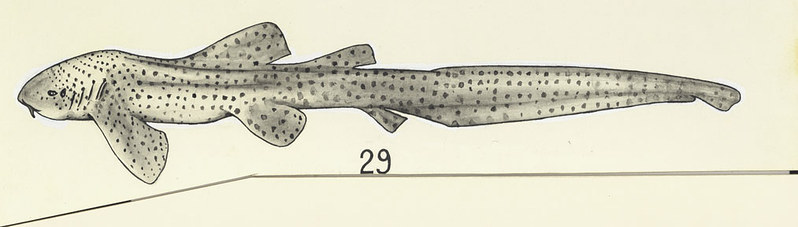
A drawing of a Zebra Shark representing its length
© Queensland State Archives

 Why do they appear to stay still for so long?

If you’ve ever seen a zebra shark (or footage/photos of one) during the daytime, the shark was more than likely either staying very still or moving very slowly. This is because zebra sharks are nocturnal, becoming the most active at night when they hunt. During the daytime, they are pretty chill creatures, resting on the sandy seafloor. This visual can actually be a pretty peculiar one to witness, as these sharks sometimes “stand” on their pectoral fins, resting with their mouths open while facing the direction of the current. Don’t worry, though; there’s a method to the zebra shark madness. Unlike many other sharks that have to continuously swim through the water to breathe, zebra sharks have special openings called spiracles that make it possible for them to actually pump the water over their gills themselves.

What do they eat?

A few favorite foods of zebra sharks include crunchy crustaceans and succulent shellfish, such as crabs, shrimp, snails and other benthic invertebrates. They are also known to eat some small fishes. With streamlined, flexible bodies and incredibly strong teeth, the zebra shark is known for its ability to wiggle and writhe into small, tight spaces where many of these prey normally reside. They also have two handy feelers at the bottom front of their snouts that enable them to easily feel around for snacks in the dark.
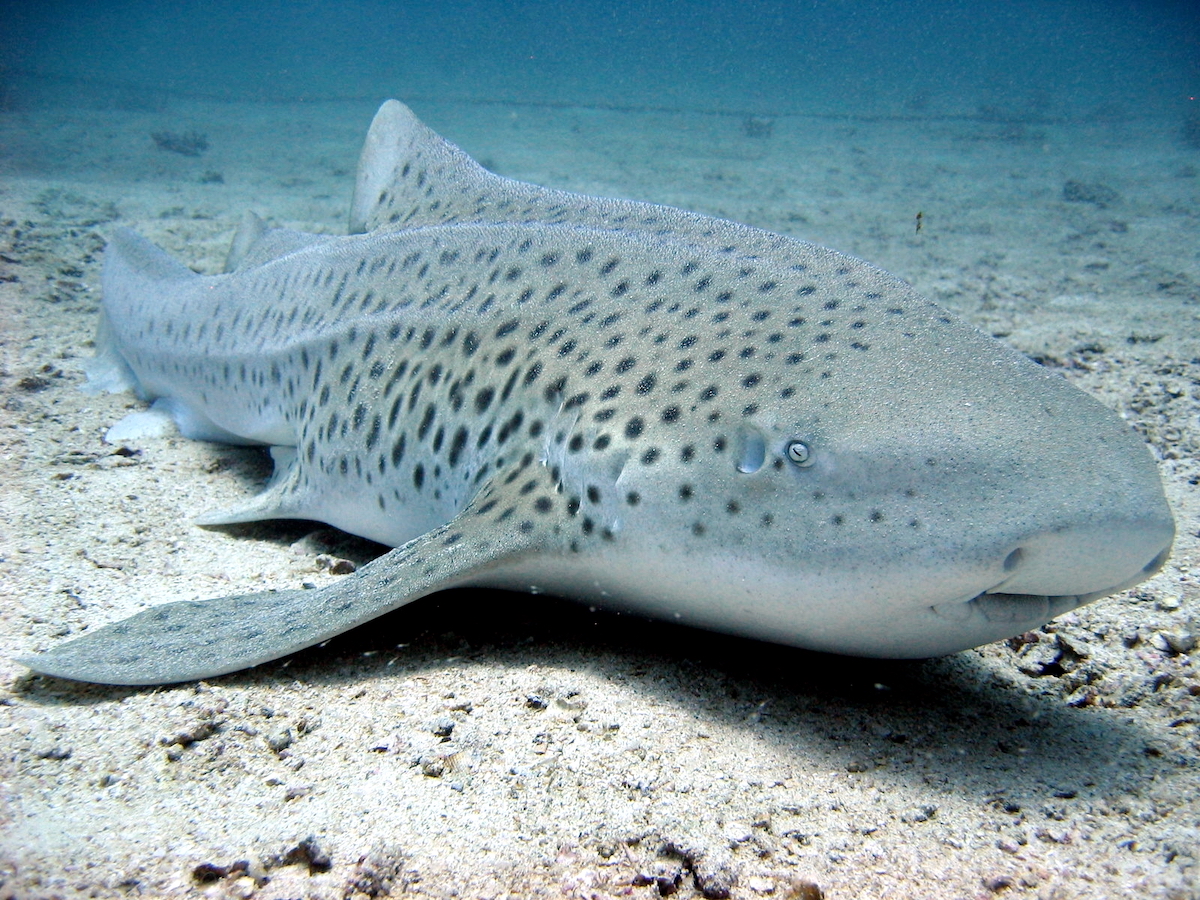
A Zebra Shark swims along the sea floor
© Sigmund Kyrre

Do zebra sharks lay eggs?

They sure do! Zebra sharks are in the approximate 40% of sharks that are oviparous (meaning they lay eggs). After a zebra shark’s eggs are fertilized, she lays them in tough, sturdy capsules. These casings have strong fibers that attach to the seafloor, keeping them secure until they hatch.

As you can see, zebra sharks represent a truly captivating shark species. Unfortunately, the International Union for Conservation of Nature (IUCN) currently lists them as endangered. Here at Ocean Conservancy, we’re working with scientists, policy-makers and advocates like you to fight against climate change and ocean acidification, which are two major issues threatening both the health of reef-dwelling sharks as well as their habitat. Today, you can help support critical marine conservation projects that help our oceans’ sharks and their reef habitats with a donation. Join us today, and let’s help sharks like zebra sharks see a better tomorrow !

Then, be sure to visit SharkWeek.com for even more fin-credible shark content.

The post Meet Our Ocean’s Zebra Sharks appeared first on Ocean Conservancy.


from Ocean Conservancy https://ift.tt/3ri13xn https://ift.tt/eA8V8J

Thursday, 15 July 2021

The Glass Octopus is See-Through and Spectacular

Need a reminder that our ocean is full of unusual animals? Look no further than the glass octopus.

The glass octopus (Vitreledonella richardi) is a very rarely seen cephalopod found in tropical and subtropical waters around the world. The species gets its name from its nearly-transparent body—you can see straight through to the optic nerve, eyes and digestive tract. These octopuses mostly live in the aphotic zone, meaning deep waters where sunlight doesn’t reach, at around 3,000 feet. They can grow to about 1.5 long and are estimated to live about 2-5 years.

The glass octopus lives in deep, hard-to-reach places, so there is much we don’t know about this translucent and luminescent cephalopod. So far, there have only been a few sightings and a few specimens recovered from the gut contents of their predators.

We now have new close-up footage of a glass octopus in the wild, thanks to a recent expedition in the U.S. Pacific Remote Islands Marine National Monument. The Schmidt Ocean Institute led the 34-day trip that brought scientists together from around the world to document sea creatures on deep seamounts. They also used high-resolution mapping tools to map more than 11,500 square miles of sea floor.

Using a remotely operated vehicle (ROV) named SuBastian, scientists observed not one but two glass octopuses, adding greatly to our knowledge of the behavior of this elusive species. “Looking into these deep-sea communities has altered the way we think about how organisms live and interact on seamounts and how they maintain diversity of life in the deep ocean,” said Dr. Tim Shank, a biologist at Woods Hole Oceanographic Institution, in a statement regarding the mission.

The glass octopus is considered one of the least studied cephalopods in our ocean. Each additional sighting or specimen helps us better understand this elusive species and how they might respond to a changing ocean.

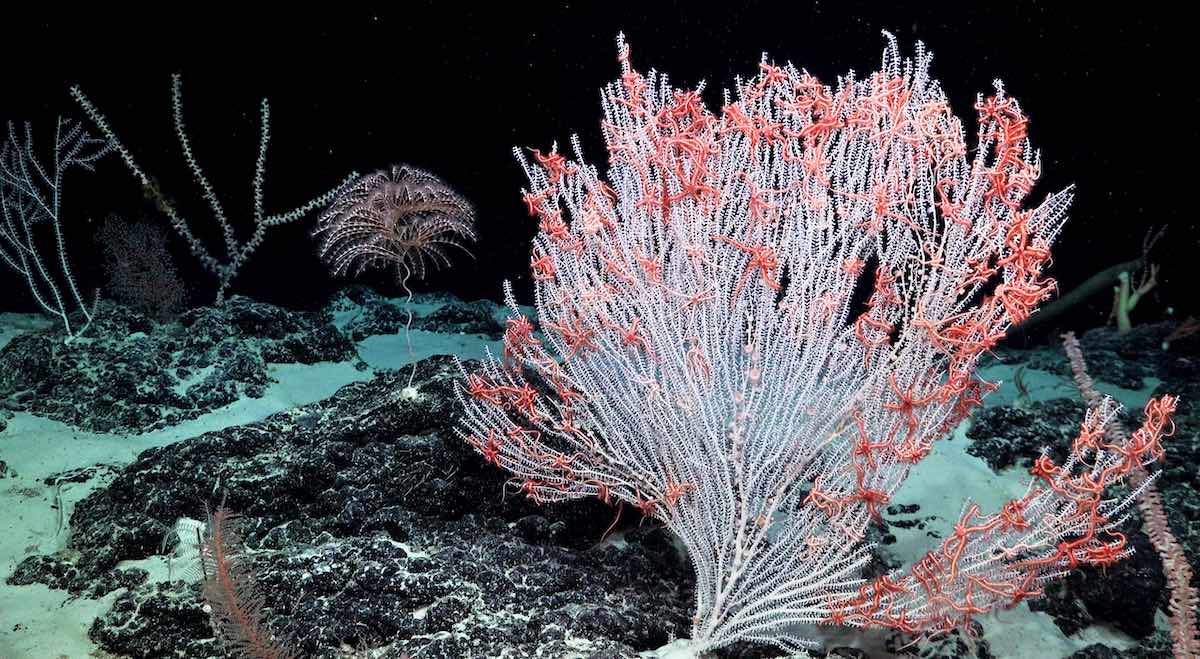
Glass octopuses weren’t the only star of the mission, however! Scientists also captured footage of whale sharks stealing food from each other, documented deep-sea coral predators and collected samples that might help us understand adaptive immunity, which could have applications to cancer therapy and drug delivery.

This recent expedition is a reminder of how much we have left to discover. Read more about the mission here.

Brittle starts on deep sea coral
© Schmidt Ocean Institute

The post The Glass Octopus is See-Through and Spectacular appeared first on Ocean Conservancy.


from Ocean Conservancy https://ift.tt/3B6P8ak https://ift.tt/eA8V8J

Monday, 12 July 2021

3 Unexpected Places to Find Sharks

How many species of sharks can you name off the top of your head? We know the big ones like great white sharks, great hammerheads and tiger sharks. But there are hundreds of species of sharks out there, some of which are found in places you might not expect.

Any time of the year is a good time to celebrate sharks, but in honor of Shark Week, we’re sharing some weird and wonderful sharks from all over the world.

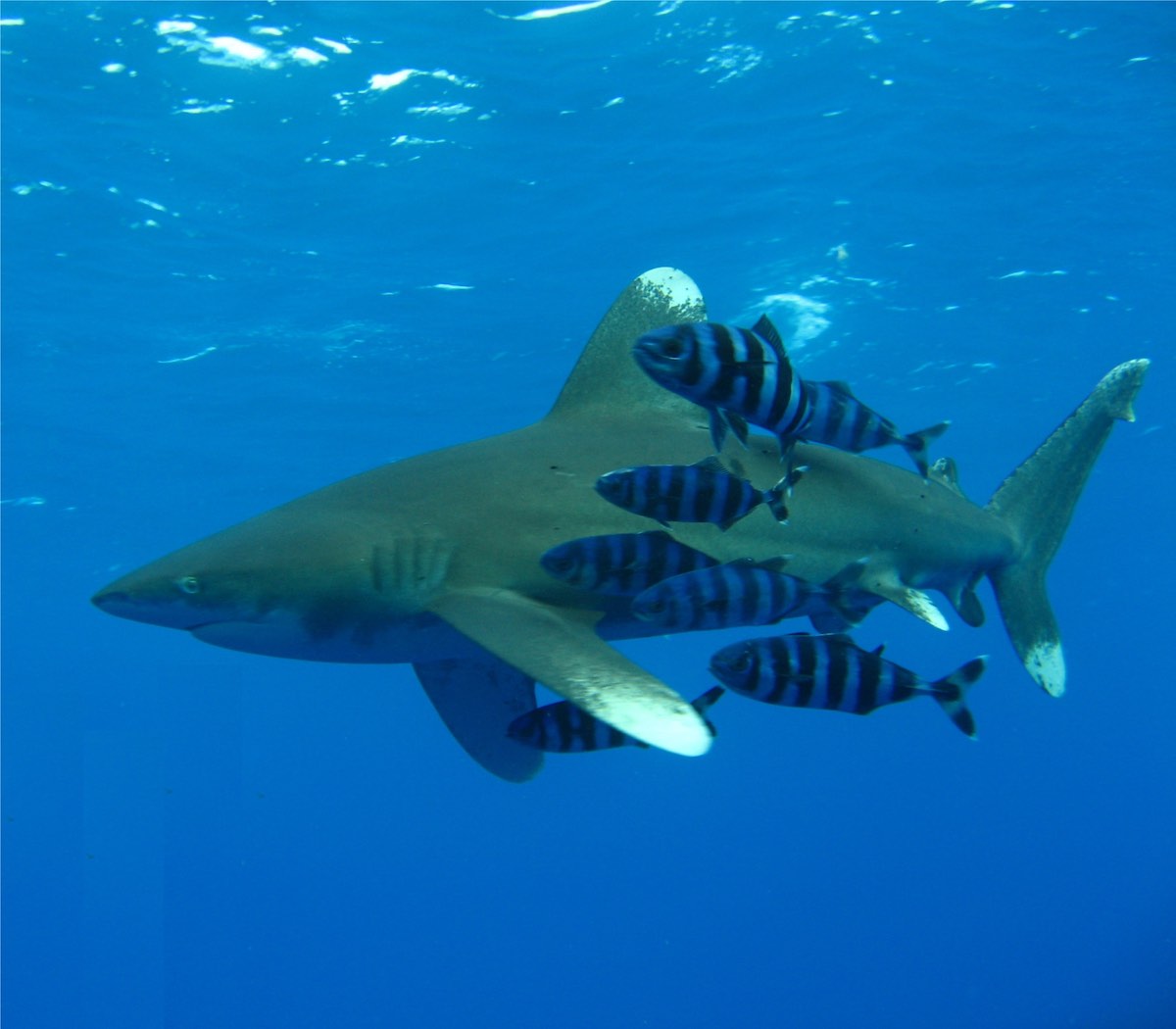
oceanic whitetip shark swimming with fish
© Johan Lantz, Malmö SWEDEN

Open ocean: Most of the sharks we know are the ones we encounter along the coast, like blacktips, bulls and bonnetheads. But there is a whole group of oceanic species who live all or part of their lives away from the coast, although some come closer to shore to eat or reproduce. Oceanic species include the bigeye thresher shark, whose tail can measure up to half its body length, and oceanic whitetip sharks, who (unsurprisingly) have white tips on their fins. Learn more about oceanic sharks with our fact sheets >>

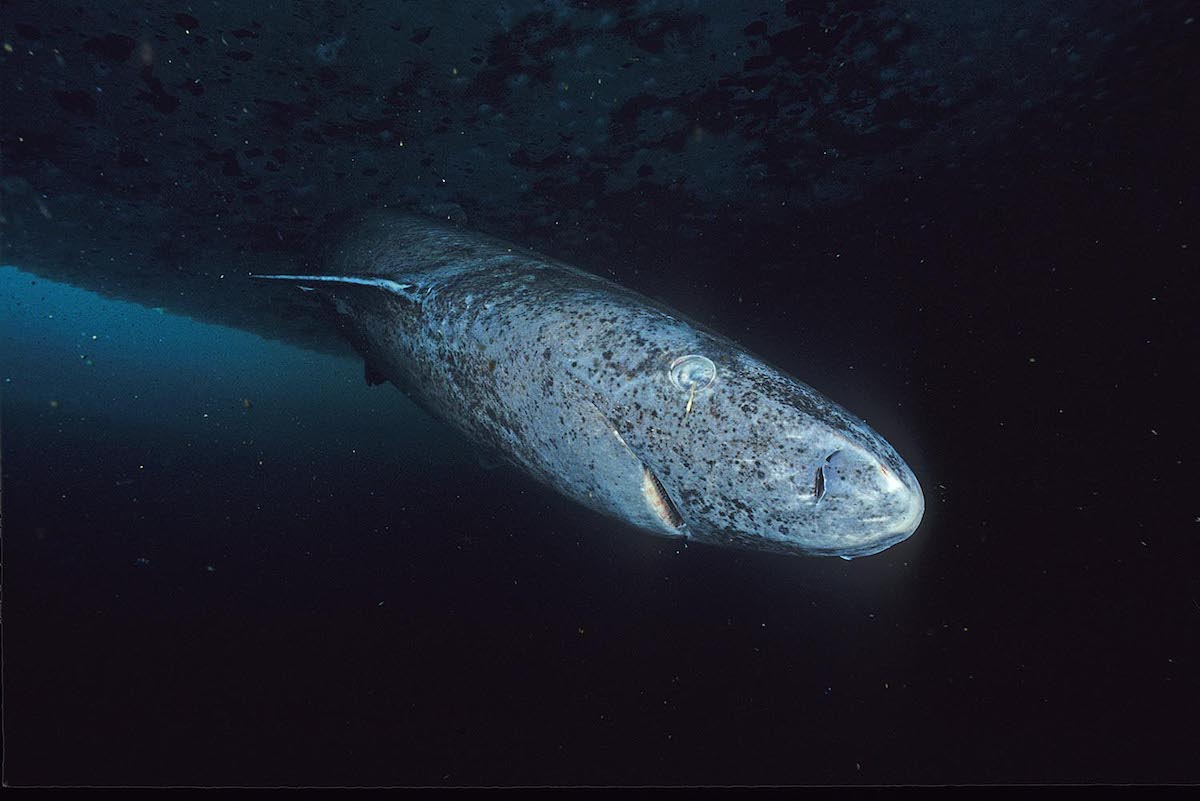
Greenland shark swimming
© Wikimedia Commons

Arctic: Icy cold waters might not seem like the ideal habitat for sharks, but some species are specially adapted to thrive in the Arctic. Although most sharks are cold-blooded, or ectothermic, some species like the porbeagle and salmon sharks have evolved special blood vessels that help keep their muscles warmer than the surrounding waters. Also found in the Arctic are Greenland sharks, which can live as long as 400 years. Learn more about sharks in the Arctic >>

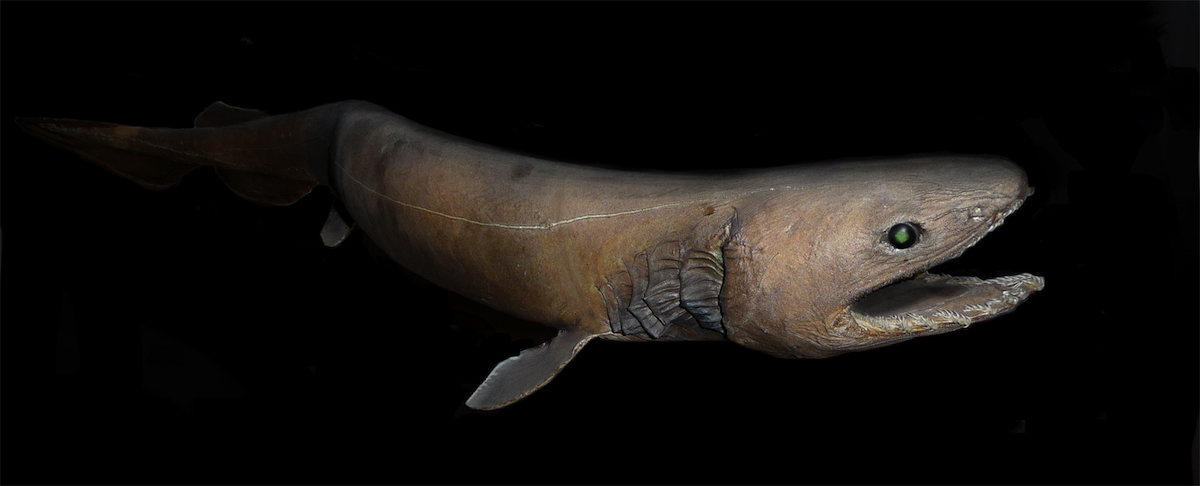
Deep Sea Frilled shark in the ocean
© Citron / CC-BY-SA-3.0

Deep sea: The deep sea isn’t for everyone—it’s cold, dark and under a lot of pressure (literally). But the deep sea is home to some particularly strange-looking sharks, like the frilled shark that looks more like an eel than a traditional shark and can be found 5,000 feet below the surface. It’s also home to the ninja lanternsharks that are bioluminescent, meaning they glow in the dark. Learn about other sharks that glow in the dark >> 

Can’t get enough fishy facts? Be sure to check out our Wildlife Fact sheets for more fun trivia about sharks, birds and other marine animals.

Stay sharky, everyone!

The post 3 Unexpected Places to Find Sharks appeared first on Ocean Conservancy.


from Ocean Conservancy https://ift.tt/3k6x9L1 https://ift.tt/eA8V8J

Thursday, 8 July 2021

So You Want to Work in Marine Conservation

If you want to work in the field of marine conservation, it can be difficult to know where to start. Fortunately, there are lots of ways to get involved, from conducting hands-on research to managing grant funds to meeting with policy makers. Here are three things to keep in mind as you dive into marine conservation.

Just a note—these are based on my own experiences and advice from incredible colleagues in the non-profit and academic space. Everyone’s path to and through this field is different!

There are a lot of ways to get involved

When I was in high school, I thought the only way to work on the ocean was to become a marine biologist. Although that is one path, it’s not the only path! Our ocean is complex, and it takes a complex array of skills to protect it.

You could apply almost any interest to ocean conservation, whether that is science, marketing, writing, law, policy, graphic design, project management, communications, web and app design or public speaking. There are countless jobs that intersect with ocean conservation, from doing scientific research at a university to being a producer on a television show that raises awareness about ocean issues. Think about what you enjoy and what you’re good at—odds are you can translate that to working in government, business or the non-profit sector.

Keep an open mind and look at job boards like SEVENSEAS and Schmidt Marine to see the range of positions available. Remember that even if you hated high school biology, you can still work on the ocean (I can’t tell you how many undergrads I meet who think this, but that is a rant for another time!)

If you want to go back to school, know your options

Some jobs in marine conservation require advanced degrees. Not all of them do, so make sure to do your research by reviewing requirements on job postings and chatting with people in the field first. Don’t be afraid to shoot an email to someone asking for an informational interview, but come prepared with good questions.

If you decide you do need to go to graduate school, you have a few options. There are professional degrees that can be applied to marine conservation, like a Master’s in Business Administration (MBA, or business degree) and a Juris Doctorate (JD, or law degree). But there are also degrees tailored specifically to marine science and policy.

Some master’s degrees are primarily classroom based, where you have a full schedule of classes for a year or two. Other master’s and doctoral degrees are more research-based, where you have fewer classes but need to write a formal thesis or dissertation to graduate. Each has their advantages, but in many research-based degrees you get a tuition waiver, meaning your tuition is paid for, and make a stipend or salary by teaching or conducting funded research. Research-based degrees often require you to contact potential advisors before applying, and they need to commit to working with you for you to get accepted by the university. Also, not all marine science programs are focused on conservation, so be clear with your research interests when interviewing.

If that all sounds confusing, it’s because it is. If you don’t know someone who has gone through the process before, it can be hard to know where to start. There are many resources online (try here, here and here).

Remember, grad school is a BIG investment—make sure it’s the best fit for your job aspirations! Also, you can also decide to do it down the road—it’s never too late to go back for a grad program. Better to make sure it’s the right choice than jump in too soon.

Three women moving marine debris on a beach
© Andy Sullivanhaskins / Hawaii Department of Lands and Natural Resources

Be passionate, but know it’s a job

It is a luxury to work on a topic you’re truly passionate about. Passion in the field of marine conservation is important—it keeps you going through the tough days when it seems like we’re fighting an uphill battle against all the threats facing our ocean. But it can be easy to let your passion overshadow the fact that it is a job, and you should get paid for your work.

Although the field is better at offering paid internships and opportunities than it was even five years ago, there are still a lot of unpaid gigs out there. I am not condemning anyone who took an unpaid internship, but those who offer such opportunities need to realize that offering unpaid “jobs” is inherently exclusionary and keeps passionate, driven and smart people out of the field—especially people of color, people new to the country and those from low-income communities.

For job-seekers: If you’re interested in a job posting and they don’t disclose compensation, ask. Be especially wary of anyone who suggests that if you really love the work, you’ll do it for free—this is not at all the case. Of course, there are lots of great reasons to volunteer your time (beach cleanups, mentoring early career folks, etc.) but be prepared to draw the line.

At the end of the day, marine conservation is a rewarding field that requires a diverse range of voices and skills. Are there additional questions you want us to tackle about the field? Let us know on Twitter @OurOcean.

The post So You Want to Work in Marine Conservation appeared first on Ocean Conservancy.


from Ocean Conservancy https://ift.tt/36rzVSY https://ift.tt/eA8V8J

Wednesday, 7 July 2021

How Does Underwater Noise Impact Our Ocean?

Every day, we see countless threats endanger the environmental integrity of our ocean, like oil spills and marine debris. Yet have you thought about the threats that are easier heard than seen?

Many animals, including whales and dolphins, rely on sound to navigate, find prey, hide from predators and communicate with each other. But noise from commercial shipping, seismic surveys, oil exploration and military sonar can make it harder for them to hear, which can affect their ability to survive in a variety of ways. For example, noise causes disruption of feeding, resting and breeding behaviors; it can lead to hearing loss and physical injury and can even lead to chronic stress.

Imagine if you were sitting at a cafĂ© trying to chat with a friend or quietly work, but a person with a loud speaker was shouting right into your ear. You’d tell this person to go away, or you’d have to get up and leave. You’d do anything to get away from this obnoxious noise.

Unlike us, ocean animals can’t ask to turn down the noise. At best, they can attempt to flee the noise.

When the world came to a halt last year around COVID-19, international shipping declined 20% in just a few months, resulting in about a 25% decrease in noise in our seas. Due to this decrease, we’re seeing in real time how animals can prosper in quieter seas. One study in Alaska found humpback whales socializing, feeding and even napping in once-busy channels. Orcas in Scotland and Canada have been found closer to shore.

Luckily, some organizations have recognized noise as a threat to our ocean and have taken important steps to address the problem. Five years ago, NOAA released its Ocean Noise Strategy Roadmap, a ten-year plan to ensure NOAA comprehensively addresses noise impacts on aquatic species and their habitats. The Protection of the Arctic Marine Environment committee of the Arctic Council is researching the impacts of noise on Arctic waters. And most recently, in June, the International Maritime Organization (the United Nations’ agency that regulates international shipping) approved a new work item to review its noise reduction guidelines for ships and make them more effective.

As the world opens up more and more, it’s up to us to make sure we keep the ocean quiet so its animals can thrive. You can help do this by supporting organizations addressing this issue and taking actions like joining us in asking NOAA to continue to implement noise reduction policies. 

The post How Does Underwater Noise Impact Our Ocean? appeared first on Ocean Conservancy.


from Ocean Conservancy https://ift.tt/3yrkaHG https://ift.tt/eA8V8J

Tuesday, 6 July 2021

How Can Governments Stop the Deadliest Form of Ocean Plastic?

From implementing extended producer responsibility schemes to banning harmful single-use plastic items, governments at all levels have the ability to make a big difference on all forms of ocean plastic pollution.

This is particularly true on the issue of abandoned, lost or discarded fishing gear—also known as ghost gear. Ghost gear is the single deadliest form of marine debris to sea life, as it continues to catch and kill animals long after it has been lost or discarded. It is also a major threat to healthy fisheries and those that depend on them for food and livelihoods: Globally, an estimated 90% of species caught in lost gear have commercial value. Gear loss occurs wherever fishing takes place, often due to rough weather, snags beneath the surface and marine traffic running it over and cutting it loose.

Since the launch of the Global Ghost Gear Initiative (GGGI) in 2015, 18 national governments have joined this global alliance, signaling a real desire from countries to address ghost gear in their national jurisdictions. Even still, there’s a lot of work to be done.

That’s why Ocean Conservancy’s Global Ghost Gear Initiative, in partnership with World Wildlife Fund (WWF) and Ocean Outcomes has released a new “Ghost Gear Legislation Analysis” report. Using expert interviews and a quantitative survey, the report examines existing government legislation and policies used to tackle ghost gear and provides recommendations for more effective action.

A survey of 34 ghost gear stakeholders—including 16 government actors—across 24 different countries found that most methods for preventing gear loss outlined in the GGGI’s Best Practice Framework are not being used, with 67% of respondents reporting that existing policies and legislation in their area are ineffective. The most common type of gear prevention policy used was gear marking, with roughly half of respondents reporting that this technique is used in their country; while the least commonly used policies were mandatory lost gear retrieval and national ghost gear action plans.

Notably, the top priority for additional action on ghost gear was enforcement of existing rules. Other highly-ranked strategies include passing new or amended legislation, developing governmental plans of action, developing fishery plans of action and passing new fishery regulations. However, the spread between the ranked effectiveness of each strategy was minimal, meaning that respondents believed that all of the policies were relatively important.

Like all aspects of plastic pollution, there is no one-size-fits-all approach that will solve the ghost gear problem. The findings of this report reinforce what all of us in the GGGI have long suspected: Government action on ghost gear, as it exists now, is not enough. To effectively take on ghost gear, we need a suite of locally viable solutions and we need them to be implemented now.

Taking these options in their stride, member governments of the GGGI have taken significant action on ghost gear and have benefitted from dedicated workshops, presentations and capacity building activities. The report showcases model practices through case studies, including the laws for shellfish pots in Washington state in the United States, the Marine Living Resources Act in Norway, the Common Fisheries Policy in the European Union and the Ghost Gear Fund in Canada. But as we all know, our ocean has no borders. Tackling ghost gear requires a coordinated cross-border approach and we need more countries to step up their game.

Find out more about what governments can do to stop ghost gear by reading the full report here.

The post How Can Governments Stop the Deadliest Form of Ocean Plastic? appeared first on Ocean Conservancy.


from Ocean Conservancy https://ift.tt/3hEB2UD https://ift.tt/eA8V8J

Thursday, 1 July 2021

Running Aground – The U.S. Fisheries Management System is Headed for the Rocks

Ocean ecosystems, Indigenous cultures, commercial and recreational fishing, and coastal livelihoods and economies—all of these rely on abundant fish populations. That means there is a lot at stake to ensure we manage fishing activity sustainably.

It’s never been an easy task, but the progress to end overfishing and rebuild fish stocks has been steady—until recently. This year, NOAA Fisheries, the federal agency responsible for sustainably managing our fisheries, released its annual report on how our marine fish populations are doing. It’s clear that in many ways, progress has stalled or even started to reverse entirely:

  • Since 2017, the number of overfished stocks has jumped from 35 to 49. This increase is really concerning—it means that 20% of fish stocks where we are able to estimate the abundance are at unhealthy levels and need serious management intervention to rebuild. Overfished stocks are challenging to manage, are less resilient, and require rebuilding plans that reduce fishing in order to bring them back to healthy stock sizes.
  • No fish stocks were rebuilt in the last year. Since 2000, 47 fish stocks have been successfully rebuilt, but the pace of progress has slowed. Since 2016, we’ve rebuilt 8 stocks, but in the five years before that, 18 stocks were rebuilt. 
  • Stocks that were previously rebuilt are back to being overfished. Unfortunately, eight of the 47 stocks declared rebuilt have since become overfished once again. This shows that management was not responsive enough to keep stocks above that overfished threshold.
  • While overfishing remains near historic lows, our progress toward ending unsustainable fishing has stalled. In 2020, 8% of stocks were subject to overfishing, which is similar to levels over the last several years. More worrisome is the length of time that stocks continue to be fished at rates that are driving their populations downward. Some of our most iconic stocks, like cod in the Gulf of Maine, experience overfishing every year.

These trends show that our fishery management is struggling to keep up with today’s challenges. When management works as intended, fish stocks are fished at sustainable rates and stay at healthy sizes that can continue to support fisheries for the long term. When a stock becomes overfished, a rebuilding plan should bring it back to its targeted healthy population size. What we are seeing now is more stocks being fished unsustainably, more stocks that need rebuilding, fewer stocks successfully rebuilding, and stocks that have rebuilt sliding back into needing rebuilding once again.

In short, the progress U.S. fisheries has made is laudable, but it is also slowly eroding. Now is the time to reverse these trends because management challenges are continuing to grow. Climate change presents a challenge to every part of the management system, from collecting data, to scientifically assessing the size of fish stocks, to managing within sustainable limits. The impacts of climate change typically make it more difficult for overfished stocks to rebuild. At the same time, the need to rebuild is more critical than ever, as abundant fish populations are more resilient to the warming, acidification, habitat degradation and food web disruptions that are occurring. Leaving stocks at unhealthy levels as we head into an era of increasing impacts from climate change puts Tribes, fishing communities, businesses and ecosystems at risk.

Work remains to be done to ensure that U.S. fisheries are truly sustainable across the board and for the long haul. Solving these challenges will take renewed collaborative effort done in a manner that is inclusive and equitable. Tribes, fishermen, managers, scientists, environmentalists and lawmakers must again come together to build adaptive approaches to ensure sustainable fishing for the long term. To fail to do so would sacrifice the progress we’ve made together—and send us unprepared into a hotter, more uncertain fisheries future.

The post Running Aground – The U.S. Fisheries Management System is Headed for the Rocks appeared first on Ocean Conservancy.


from Ocean Conservancy https://ift.tt/3wgAx8Q https://ift.tt/eA8V8J

How Orlando Communities are Tackling Plastic Pollution

The city of Orlando is known above all else for its world-class amusement parks. In fact, hundreds of thousands of people visit the city ev...