Friday, 9 April 2021

Biden Administration Releases Historic NOAA Budget Proposal

Earlier today, the Biden administration released their topline budget numbers for agencies across the federal government, and if you’re a fan of taking action on climate change, supporting our local ocean, coastal and Great Lakes communities and businesses, or if you just love marine mammals, this budget is as good as it gets. Under the Biden Budget Blueprint, the Biden administration is proposing to increase the budget for the National Oceanic and Atmospheric Administration (NOAA) to a record-setting $6.9 billion dollars for the fiscal year 2022.

In his first months in office, President Biden has made climate change a central component of his agenda, working to make sure America transitions to a clean energy economy, that our coastal communities can build resiliency to sea-level rise and increased severe weather events and that we prioritize ocean-based climate solutions for the communities, businesses and wildlife that depend on our ocean and coasts. The budget proposal for NOAA, as well as other federal agencies throughout our government, shows that the administration is serious when it comes to addressing the challenges that we are facing today.

NOAA is front and center as we work to make sure our local communities have the data and resources they need to understand climate change and take action to protect themselves and the species that call our ocean and coasts home. And this includes providing critical services to communities in every part of the country. In Utqiagvik, Alaska, NOAA researchers facilitated a shoreline community monitoring effort to help the community better prepare for flooding and storm events. On the East Coast, NOAA partnered with the Gulf of Maine Research Institute to provide tools for vulnerability evaluations of fishing communities to climate change. In Gary, Indiana, NOAA worked with the city to launch a pilot program that evaluates the vulnerability of infrastructure to weather and climate impacts. This project was so successful that the model is being expanded to 110 cities across the Great Lakes region.

NOAA also provides the essential daily services that all our communities rely upon. When you listen to the weather forecast for the week, NOAA was involved with the data collection, processing and modeling that is needed for accurate and timely weather forecasts. If you ever wondered when high tide was at your local beach, or if you ever enjoyed seafood for dinner, NOAA was involved. From weather forecasts to tidal measurements, to sustainable fisheries management, NOAA provides the data, services, expertise and resources to manage our ocean and coasts sustainably.

All of these vital services that NOAA provides require funding, however, and that’s why increasing NOAA’s budget to $6.9 billion would be an incredible victory for our ocean, coastal and Great Lakes communities. It would also be a great victory for our ocean and the wildlife that depend on it. More funding for NOAA means more funding for local organizations, like the Clearwater Aquarium, to protect sea turtles for future generations. Increased funding would also help us better understand, manage and protect our most wild ocean habitats, like the Florida Keys National Marine Sanctuary and Papahānaumokuākea.

While the President’s budget is a great step forward for our ocean, coasts and Great Lakes, Congress is ultimately the decider of how much funding our agencies receive. It is now Congress that has the opportunity to show the same level of ambition as the Biden administration. And that’s where we need your help. Congress needs to hear from you that NOAA and the service they provide for our ocean, coasts, and Great Lakes are too important to pass up. Tell Congress to fund NOAA at the historic levels proposed by the Biden administration!

The post Biden Administration Releases Historic NOAA Budget Proposal appeared first on Ocean Conservancy.


from Ocean Conservancy https://ift.tt/39UekVp https://ift.tt/eA8V8J

Thursday, 8 April 2021

8 Dazzling Coral Reef Photos to Brighten Your Day

Let’s face it: we all need a little something extra to brighten our day sometimes. Perhaps there’s something that has you stressed at work or maybe it’s just a gloomier day than usual outside. Whatever the case may be, there’s one thing that never fails to bring a burst of joy and wonder to my day: our ocean.

However, sometimes it’s not easy for us to get close to the ocean, to breathe in the salty air and to hear the calming, gentle crash of the waves. But no matter where you are in the world, there are still countless photographs of some of our blue planet’s most lush and beautiful corners that can bring us the next best thing to experiencing the sea in person.

That’s where talented photographers of our ocean’s coral reefs come in. Jump in with me and virtually explore eight of these vibrant ocean areas that never cease in their ability to leave us in wonder.

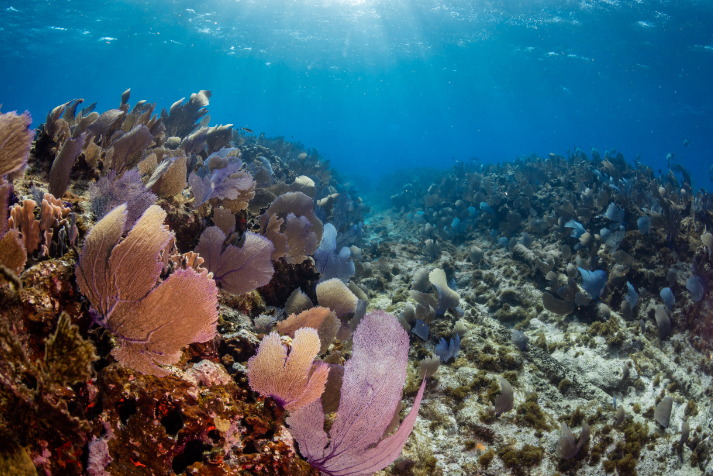
Banco Chinchorro, Mexico

Photographer: Philip Hamilton

Mexico Coral Reef
© Philip Hamilton/Coral Reef Image Bank

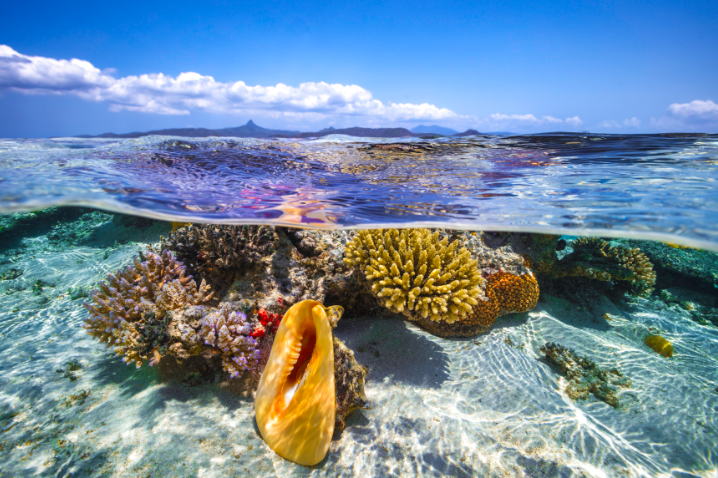
Mayotte, Indian Ocean

Photographer: Gabriel Barathieu

Mayotte Reef
© Gabriel Barathieu/Coral Reef Image Bank

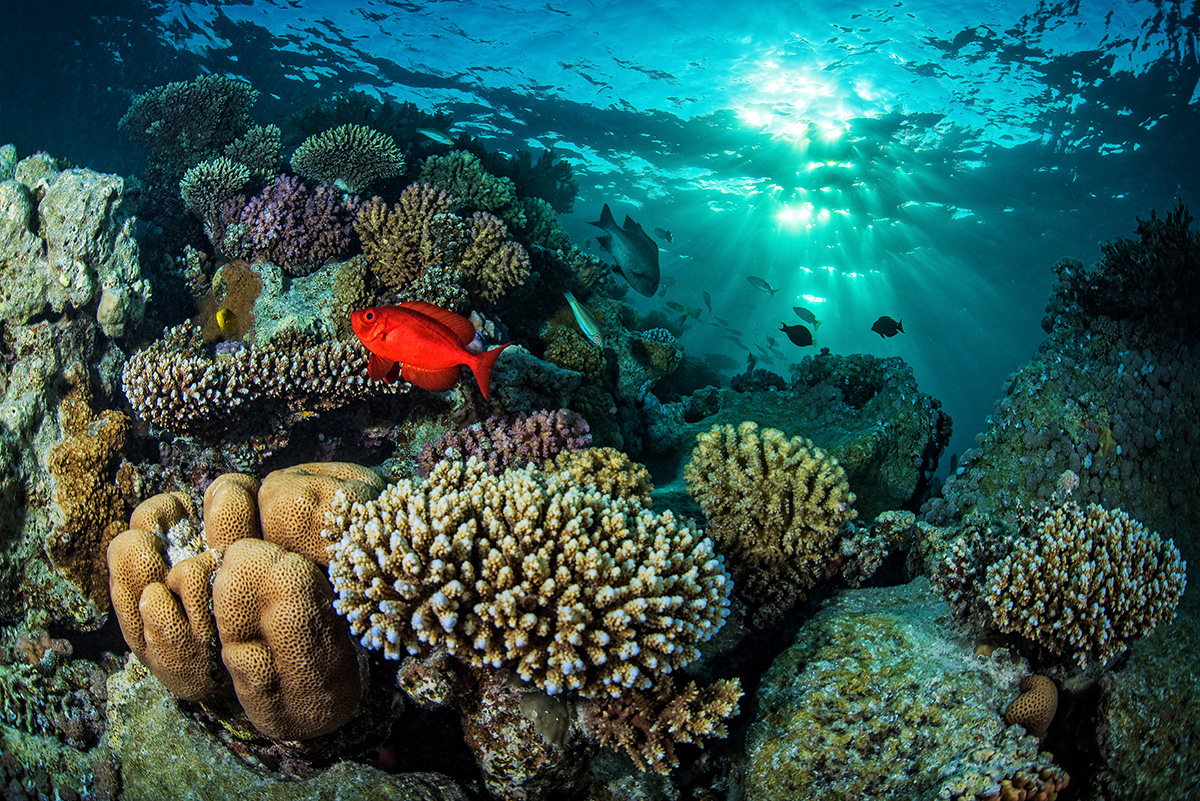
Red Sea

Photographer: Brook Peterson

Red Sea Reef
© Brook Peterson/Coral Reef Image Bank

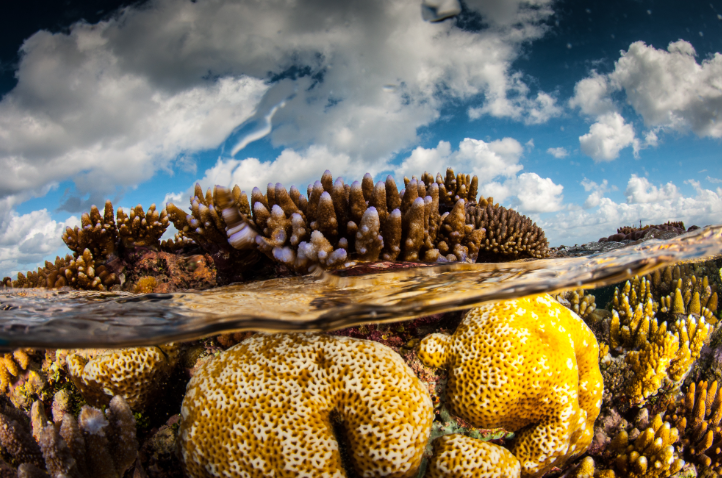
Ribbon Reefs, Australia

Photographer: Matt Curnock

Ribbon Reefs
© Matt Curnock/Coral Reef Image Bank

Raja Ampat, Indonesia

Photographer: Jayne Jenkins

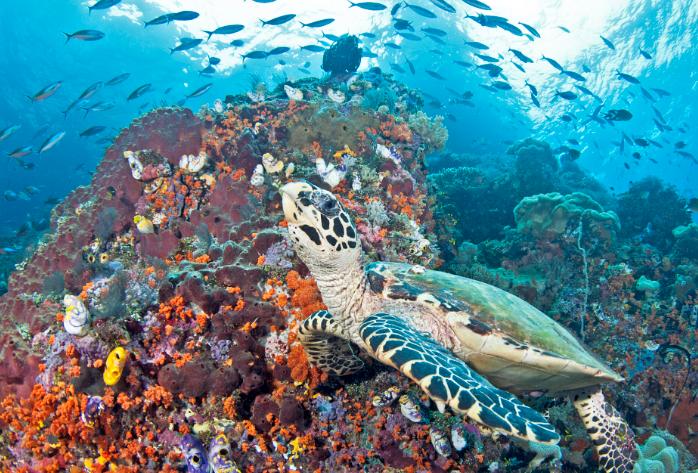
Raja Ampat Turtle
© Jayne Jenkins/Coral Reef Image Bank

Kimbe Bay, Papua New Guinea

Photographer: Morgan Bennett-Smith

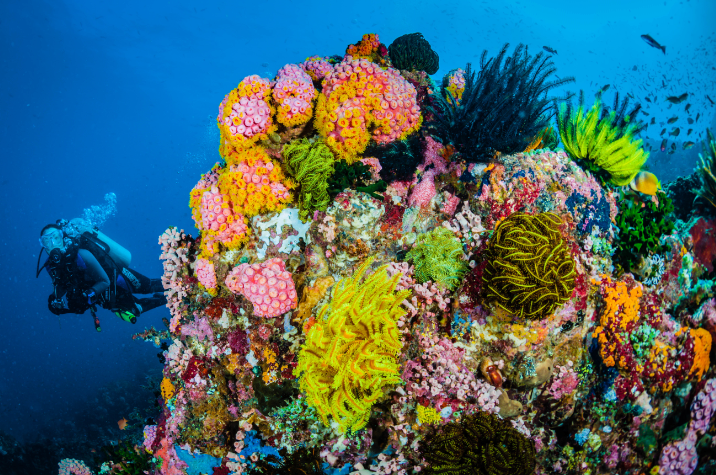
Kimba Bay Reef
© Morgan Bennett-Smith/Coral Reef Image Bank

Sombrero Islands, Philippines

Photographer: Jett Britnell

sombrero islands
© Jett Britnell/Coral Reef Image Bank

Ha’apai, Tonga

Photographer: Grant Thomas

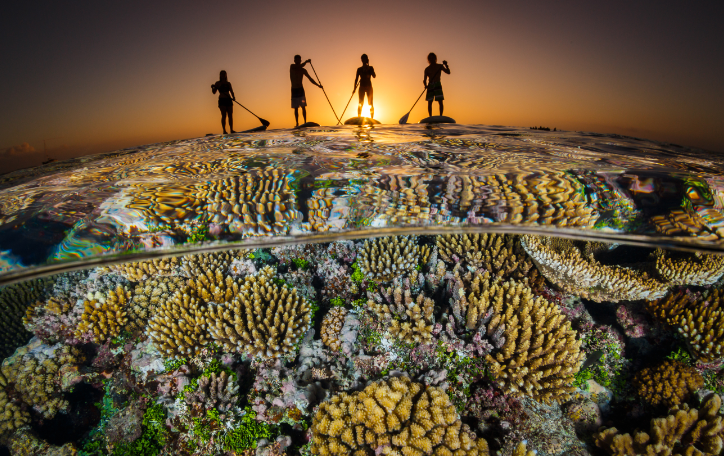
Grant Thomas Sunset Tonga
© Grant Thomas/Coral Reef Image Bank

The post 8 Dazzling Coral Reef Photos to Brighten Your Day appeared first on Ocean Conservancy.


from Ocean Conservancy https://ift.tt/3urWeSK https://ift.tt/eA8V8J
Tuesday, 6 April 2021

Reflecting on Global Ghost Gear Initiative’s Conservation Wins in 2020

Ghost gear is a problem that never stops: every minute of every day, one metric ton of abandoned, lost or discarded fishing gear enters our ocean. And once it’s there, it wreaks havoc; harming valuable fish populations, aquatic life and ecosystems.

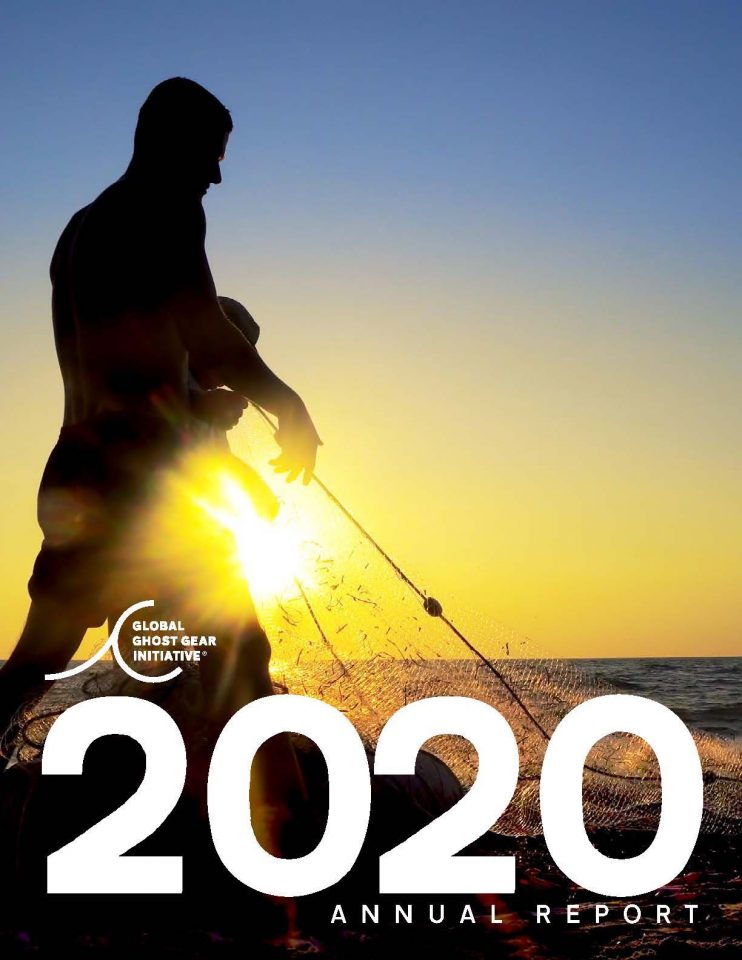
2020 didn’t go the way any of us expected but it didn’t stop the Global Ghost Gear Initiative (GGGI) from making progress to tackle this threat. Though we were unable to travel or gather in person, our critical work to protect our ocean and aquatic environments from ghost gear continued. Last week, with support from the government of Canada’s ghost gear fund, we released our 2020 annual report, detailing our achievements from the last year. From facilitating prevention and retrieval projects across the globe to welcoming more than 20 new members and two new governments, we managed to stay busier than ever.

03302021_GGGI2020AnnualReport_cover

Here are some of my personal highlights from the past year in ghost gear:

1. We welcomed Mexico and the United States into the GGGI.

In July 2020, the United States officially signed on to the GGGI, marking a major milestone moment for the initiative. The United States is the world’s largest economy and is one of the top seven capture fishery producers globally, making up 6% of the world’s total catch production and accounting for 19% of the world’s total seafood consumption. Mexico followed suit in November with the full backing of several federal Ministries, paving the way for increased data gathering and project work in Mexico and allowing for additional opportunities for collaboration across North America.

2. We developed corporate engagement tools and ran a peer-to-peer best practices webinar series.

In collaboration with Chronos Sustainability, the GGGI created a suite of virtual and interactive tools designed for GGGI members directly involved in the seafood supply chain on how to implement the GGGI Best Practice Framework (BPF) in their businesses. We taught our members how to use these tools at a series of webinars, managing to stay connected across the globe.

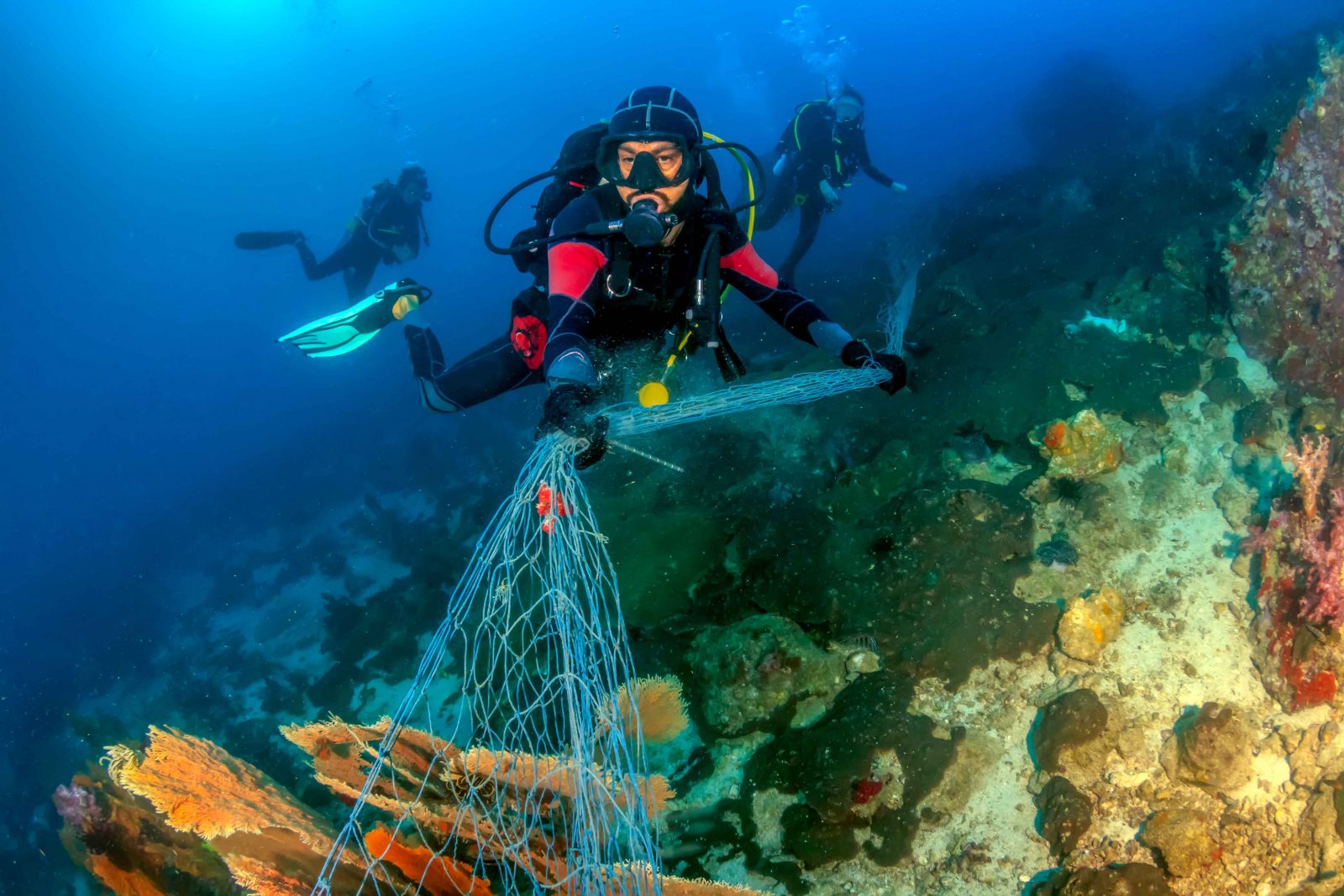
SCUBA divers attempting to remove a huge ghost fishing net tangl
SCUBA divers attempting to remove a huge ghost fishing net tangled over a large area of a tropical coral reef © Adobe Stock

3. We scaled up our work in Indonesia.

With support from the Bumble Bee Seafood Company and the Indonesian government, we focused our attention on trialing and implementing gear marking at a manufacturer level, supporting the development of fishing gear recycling infrastructure, and removing lost or discarded fishing gear from marine ecosystems.

4. We continued the legacy of GGGI co-founder Joanna Toole.

In 2020, we worked with our first round of Joanna Toole award recipients, the Stand Out for Environment Restoration Initiative and the International Pole and Line Foundation (IPLNF). We also welcomed our first Joanna Toole intern, Jenna Schwerzmann, who worked with the GGGI team at Ocean Conservancy for three months.

Read more about GGGI’s accomplishments in 2020 in their annual report.

The post Reflecting on Global Ghost Gear Initiative’s Conservation Wins in 2020 appeared first on Ocean Conservancy.


from Ocean Conservancy https://ift.tt/3wvlpFR https://ift.tt/eA8V8J
Monday, 5 April 2021

Building Partnerships to Protect Arctic Marine Wildlife From an Oil Spill

Buddy Custard is the President and Chief Executive Officer of the Alaska Chadux̂ Network (ACN). He possesses extensive knowledge and expertise working maritime operations from both the public and private sectors. Buddy served with the U.S. Coast Guard for more than 30 years, attaining the rank of Captain.

The Arctic region as defined by the U.S. Arctic Research and Policy Act of 1984 includes the “Great Circle Route.” This route is transited by thousands of large ocean-going vessels annually along the Aleutian Archipelago and supports billions of dollars in essential trade and commerce to and from the United States. This region further includes the Alaska Maritime National Wildlife Refuge, covering some 3.4 million acres, with a mission to conserve, protect and restore the diverse lands, waters, wildlife and cultural resources of the traditional homelands of Alaskans. Over the years, vessel traffic to the northern Arctic region has drastically increased as the ice recesses and shipping channels remain ice-free for longer periods throughout the year.

This increased vessel traffic creates an increased risk of spills. Alaska Chadux̂ Network (ACN) has continuously pioneered and refined solutions to reduce the risk of marine oil spills. Preventing oil spills before they happen is always the best approach. At the same time, we’re doing all we can to ensure we are prepared to respond effectively if there is a spill.

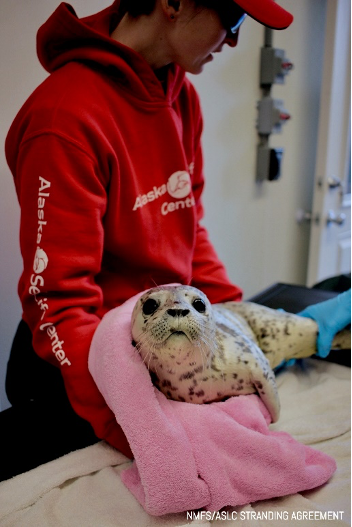
In protecting the marine wildlife that inhabit this pristine marine and coastal ecosystem from a potential vessel oil spill,  ACN and the Alaska SeaLife Center (ASLC) have recently established an agreement to implement a program that would respond to an oil spill impacting marine mammals—like sea otters, seals and sea lions—throughout Western Alaska, the U.S. Arctic and Prince William Sound. The Agreement includes funding from ACN, an Alaska-based oil spill response organization, so ASLC can further develop oiled marine mammal response protocols and acquire specialized response resources. In addition, the new program involves opportunities to train, exercise and drill with ACN responders, including ACN partners in local communities, and to support remote ASLC specialized veterinarians and technicians in the oil spill response environment.

ASLCACN Agreement
© NMFS/ASLC Stranding Agreement

The new program will include the development of a targeted Oiled Marine Mammal Program that outlines how best to rapidly mobilize, assess, treat and stabilize marine mammals impacted by an oil spill in the remote areas of Alaska. Unique solutions to logistical and treatment obstacles will be identified through pre-response assessments, which will address the unique challenges of operating where lack of infrastructure and support facilities are common. The result will be a pre-planned system that can be rapidly mobilized to reinforce oil spill operations that require the support of specialized marine mammal veterinarians, animal care professionals and support equipment.

In addition to ACN partnering with the Alaska SeaLife Center, ACN also has a long-standing partnership with International Bird Rescue (IBR). IBR assisted ACN in developing a response trailer designed for rapid mobilization and care of injured birds and small mammals. Like ASLC, IBR also provides bird care professionals and support equipment to assist in the rehabilitation of oiled wildlife.

Building response capacity and capabilities through partnerships with wildlife professional organizations, such as the Alaska SeaLife Center and International Bird Rescue, is the most effective way to sustain a unique response system designed to rehabilitate oil-injured wildlife.

ACN’s history is rooted in Western Alaska. Through the commitment of the maritime industry and dedicated Alaskans, ACN continues to leverage its experience to provide communities and residents the oil spill response system they rightly deserve to protect our marine ecosystem and wildlife.

The post Building Partnerships to Protect Arctic Marine Wildlife From an Oil Spill appeared first on Ocean Conservancy.


from Ocean Conservancy https://ift.tt/39ICcv7 https://ift.tt/eA8V8J
Sunday, 4 April 2021

Florida Water Emergency: The Piney Point Phosphogypsum Crisis Unfolding Before Our Eyes

Bone Valley is a rich geological region of Florida, where you can find ancient dugong bones, prehistoric horse teeth, and massive megalodon teeth in the meandering Peace River and its tributaries. The fossils extend all the way offshore, and Caspersen Beach in Venice, Florida has become famous for collecting shark teeth on its black sand beach, which is because it is within the Bone Valley Formation.

But those ancient bones are more than just interesting artifacts for specimen seekers—they are also floating within a geological matrix that includes phosphate, an important element in the creation of agricultural fertilizer. Bone Valley is one of the most significant deposits of phosphate on the planet, and mining companies have been targeting it in Florida for over a hundred years—their exploits turned the ports along Tampa Bay into some of the busiest in the country by tonnage, as phosphate carriers have taken the mineral to overseas ports for refining into fertilizer.

As with most any mining operation, there are substantial waste byproducts in phosphate mining that need handling once the phosphate has been extracted. The waste is a slurry that is filled with heavy metals like cadmium and chromium, nutrients such as phosphorus and nitrogen, and can be slightly radioactive due naturally occurring uranium, is kept in massive elevated lagoons called phosphogypsum stacks.

Anybody who has driven south from Tampa on the Tamiami Trail has seen these towering formations rising up a hundred feet or more, and probably weren’t aware that they contained a huge lake of nutrient rich, potentially radioactive waste within. There are around two dozen phosphogypsum stacks in the region, mostly located adjacent to Tampa Bay.

The trouble for our ocean starts when a phosophogypsum stack is breached, which sadly has happened on numerous occasions, and the wastewater dumps into nearby terrestrial, freshwater and marine ecosystems. Hurricanes in particular are a significant threat to phosphogypsum stacks—breaches have occurred due to heavy rains, spilling the nutrient rich materials into neighboring ecosystems which include the bay itself, as well as mangrove forests, salt marsh and upland freshwater ecosystems. The slurry impacts wildlife, including fish and crabs, and destroys habitat, including seagrass beds, and is like pouring gasoline on a fire when it comes to fueling harmful algal blooms, including red tide.

The stacks can fail for other reasons, including because of aging, design flaws and maintenance issues.

That brings us to where we are with the tragedy that is currently unfolding at the Piney Point phosphogypsum stack in Manatee County, on the south side of Tampa Bay. A breach of the stack is imminent—the stack operators noticed a pending failure during an inspection and immediately evacuated the area—and is poised to spill 400 million gallons of toxic mining byproducts into Tampa Bay.

The Piney Point stack has spilled wastewater into the bay before. In 2001 Tropical Storm Gabrielle brought heavy rains that forced the state to release 10 million gallons of wastewater into the bay, in order to prevent an even larger spill from a breach. That waste went straight into Bishop Harbor, a beautiful maze of mangroves teeming with speckled trout and redfish. Heavy rains in 2003 triggered a similar release, and in 2011 the stack operator punctured the liner on the stack by accident and ended up spilling 170 million gallons of contaminated water into the bay.

Mac Stone
© Mac Stone

Florida Secretary of the Department of Environmental Protection Noah Valenstein is on the scene, as is the new Chief Science Officer for Florida, Dr. Mark Rains. Local advocacy groups like Tampa Bay Waterkeeper and Suncoast Waterkeeper are pulling out all the stops to shed light on this issue. This is an all hands on deck moment where Floridians and people from across the country need to speak up for the ocean and coastal resources that we all love, and highlight the threats that they are facing. Sadly, it really feels like this is a wait and see event—the spill is imminent.

In Florida, we need a formal, public investigation and inventory of the two dozen phosphogypsum stacks in the region, and a review needs to be done on a regular basis to prevent the threats to our ocean and coastal environment from future breaches. The FDEP is a strong regulatory authority that needs to be even further empowered on the issues of phosphogypsum stack regulation in order to prevent operators from spilling these hazardous materials into the bay, whether from excessive rainfall or failures due to accidents or errors on behalf of the operator.

The phosphate mining industry creates significant threats to our environment, and to our coastwide economy. And the threats keep coming—currently a Texas oil company has submitted an application to drill for oil in Big Cypress National Preserve, which is a key ecosystem in the Western Everglades. An oil spill or failure of oil drilling equipment in the Everglades would be as tragic as what is unfolding in Piney Point, and we as Floridians can’t afford to stand by and idly watch as our iconic environment is under threat.

The post Florida Water Emergency: The Piney Point Phosphogypsum Crisis Unfolding Before Our Eyes appeared first on Ocean Conservancy.


from Ocean Conservancy https://ift.tt/3wBIYgi https://ift.tt/eA8V8J

Friday, 2 April 2021

What Are the Smallest Animals in the Ocean?

It’s finally springtime for us up in the northern hemisphere and the animal kingdom seems to be waking up after a looong winter’s nap, especially those chirping birds outside my bedroom window! The earth is softening, tiny buds are popping up on all the trees and little critters everywhere are “twitterpated,” from deer and rabbits to the tiniest frogs and worms.

As with most things, this got me wondering about the ocean and its critters. What are our favorite ocean animals up to in springtime? What are the biggest animals in the ocean? And what are the tiniest animals in the ocean? Dive in with me…

Zooplankton

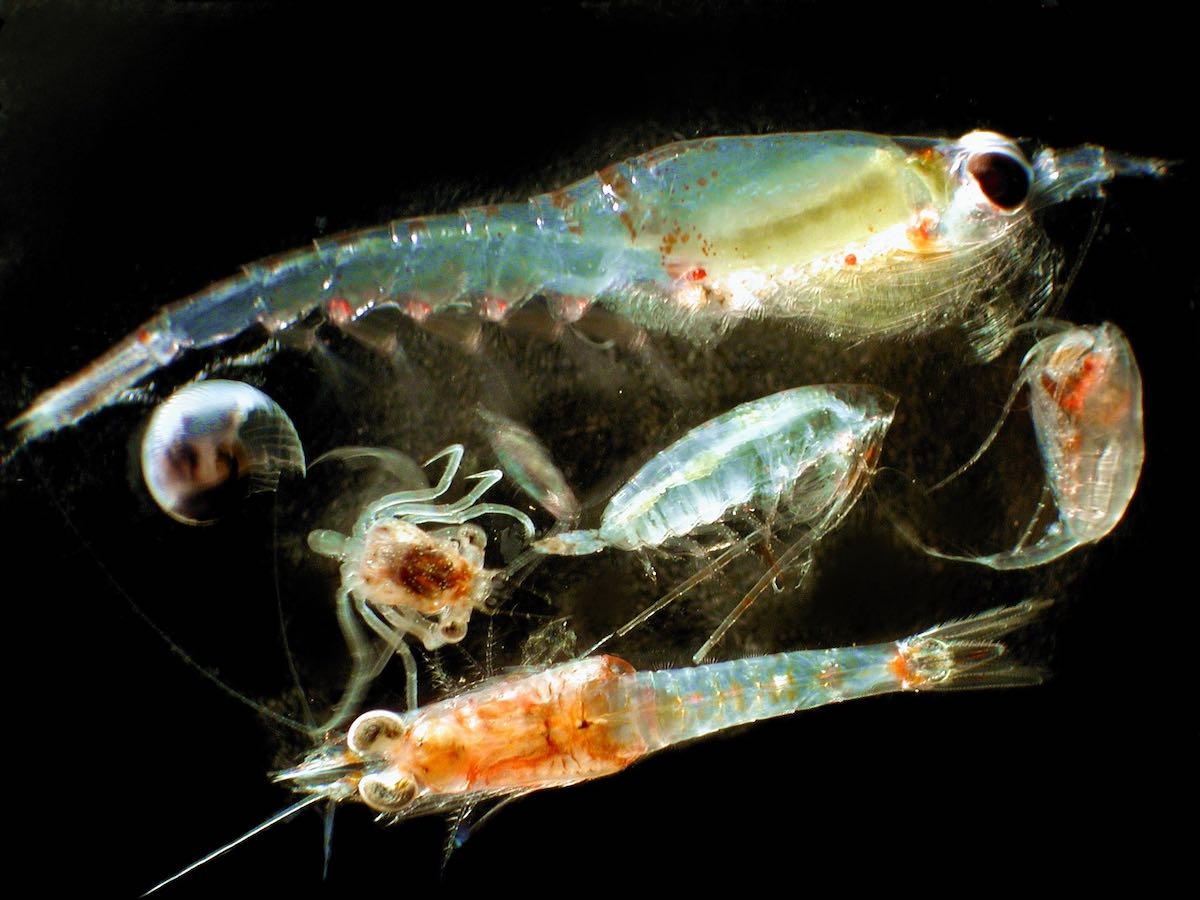
Zooplankton may very well be the smallest type of animal in the ocean and encompass a variety of species, from single-celled protozoa to some jellyfish and crustaceans like krill. Not to be confused with phytoplankton (which are plants), these little critters are typically less than one inch in length and some are so small you need a microscope to observe them. But don’t mistake their size for their importance. Zooplankton may be at the bottom of the food chain but they are critical in supporting both marine and freshwater food webs.

2048px-Zooplanktonsm
© Matt Wilson/Jay Clark, NOAA NMFS AFSC

Irukandji jellyfish

Found in tropical regions including the Caribbean and the Indo Pacific, the Irukandji jellyfish are quite possibly the smallest, and most venomous, jellyfish in the world. At just 0.06 cubic inches, the Irukandji are unique for more than just their size. While most sea jellies have stingers (or nematocysts) only on their tentacles, the Irukandji have stingers on their bell as well. Their venom has been described as “100 times as potent as that of a cobra and 1,000 times stronger than a tarantula’s.” Yikes! Reactions to their venom have been so severe that these tiny jellies have an entire syndrome named after them.

Sexy shrimp

That’s right, the sexy shrimp—also known as squat shrimp or Thor amboinensis—comes in around 0.5 inches. These itty-bitty flirtatious shrimp get their name from the cute little dance they do with their bodies. A popular species for home aquariums, sexy shrimp are most commonly found in the Atlantic and Indo-Pacific and live in corals and anemones.

Pygmy Seahorse

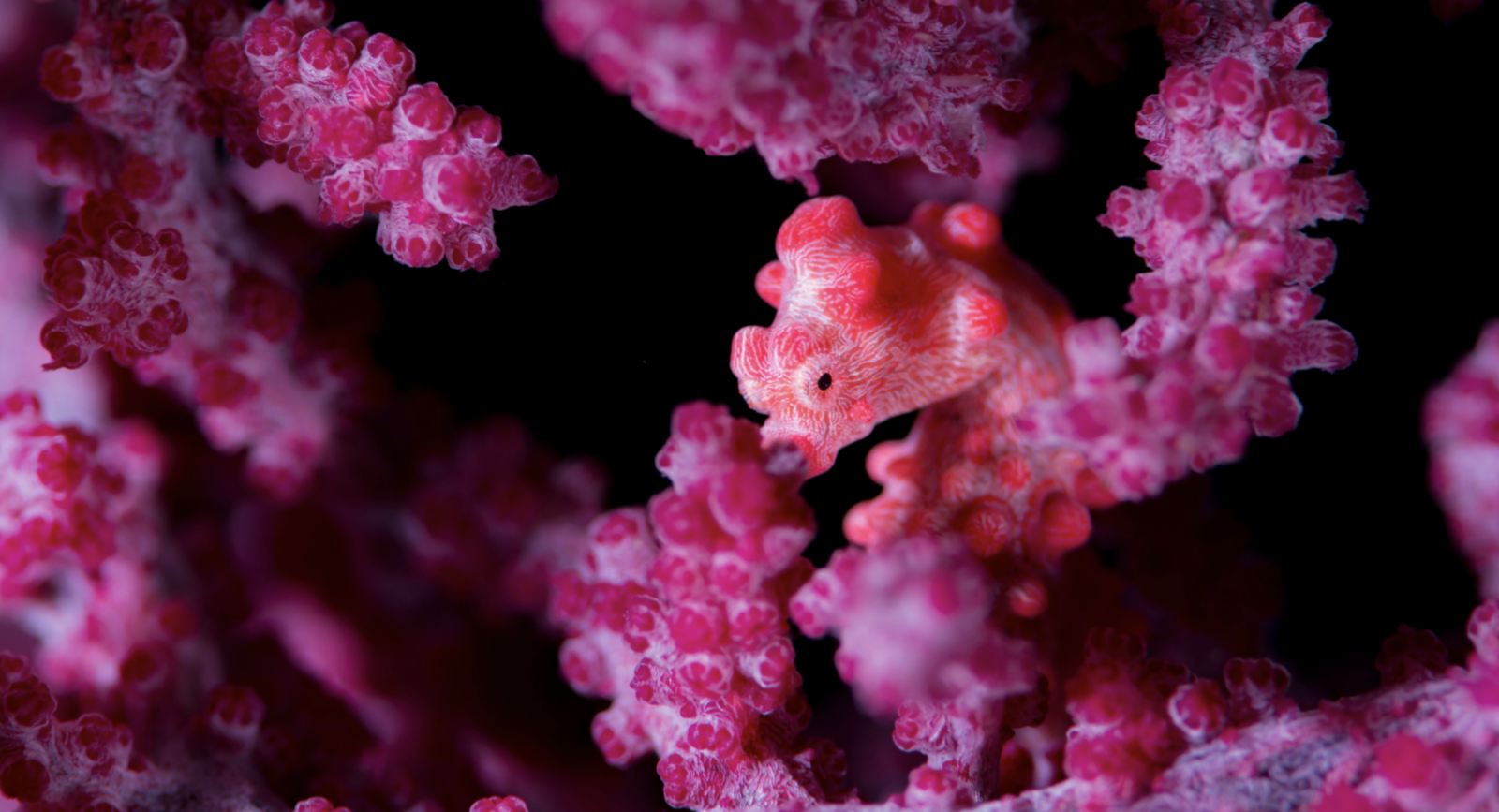
The pygmy seahorse is both itty-bitty and a master of disguise! Ranging from 0.5 to one inch long, there are several types of pygmy seahorses and they all blend in well with seagrasses and soft corals. They are so good at camouflage, in fact, that the first little one was discovered only when its coral home was being observed in a lab!

Pygmy Seahorse
© Inusuke via Canva.com

Nudibranchs

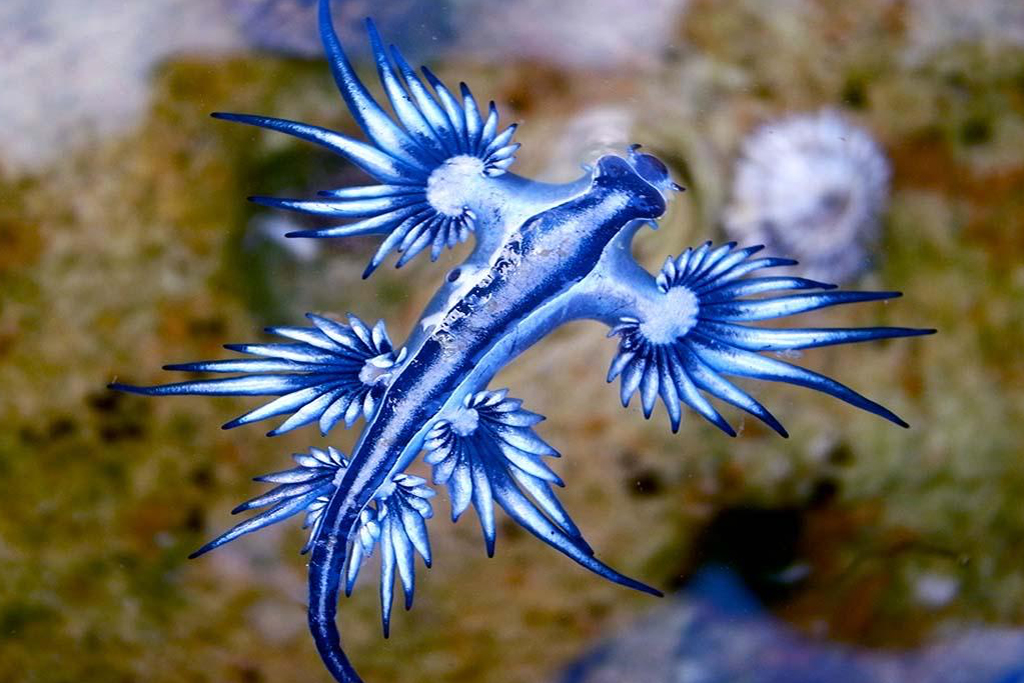
Shockingly enough, these lovely sea slugs don’t really belong on this list! Some of our favorite nudibranchs can actually grow to be up to 12 inches long. However, the smallest only grow to about ¼ inch, so we’ll keep them here as an honorable mention. Did you know there are more than 2,000 species of nudibranch? And that’s just those we know about today.

Beautiful blue dragon nudibranch
© S. Rohrlach

Dwarf Lanternshark

While they’re not the smallest animal in the ocean either, the world’s smallest shark is the dwarf lanternshark and can literally fit in your hand, reaching a maximum of 7.9 inches. Like other lantern sharks, this little buddy has light-generating organs called photophores along its stomach to attract prey and hide from predators. A native to the Atlantic and Caribbean Sea, this member of the dogfish shark family feeds on krill, our other tiny planktonic crustacean friends.

What are your favorite microscopic ocean critters?

The post What Are the Smallest Animals in the Ocean? appeared first on Ocean Conservancy.


from Ocean Conservancy https://ift.tt/3ds3W8n https://ift.tt/eA8V8J

Thursday, 1 April 2021

10 Ocean Facts That Are Stranger Than Fiction

It’s April Fools Day and while everyone is unleashing their carefully planned pranks, we thought we should remind you that Mother Nature is the greatest prankster of them all. The ocean is full of creatures that seem too weird to be true. While this all might seem like a bit of fiction, I assure you that the ocean is no joke.

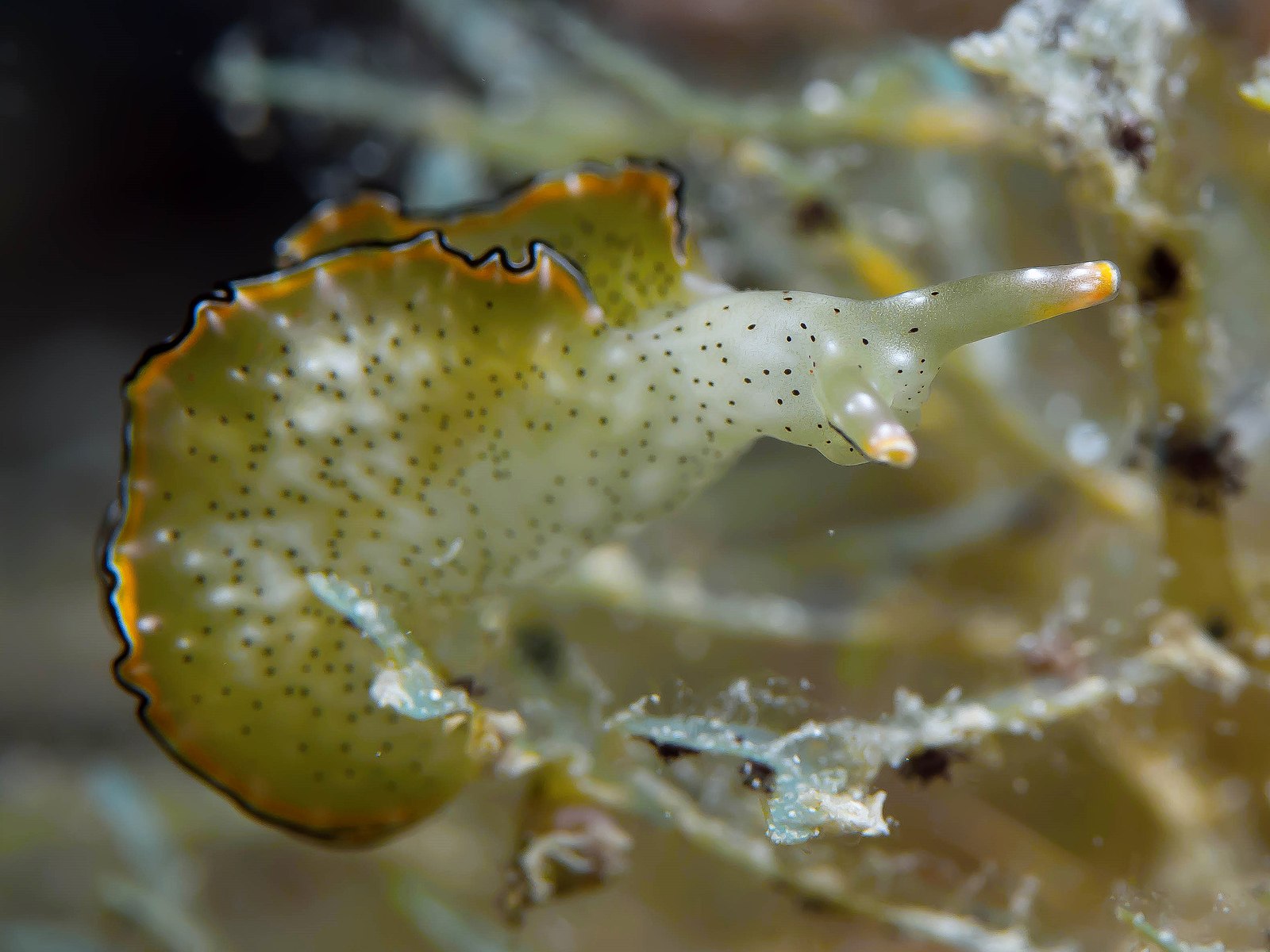
1. Sea Slugs Decapitate Themselves

Sea slug - Elysia marginata
© Rickard Zerpe/Wikimedia Commons

These little marine Marie Antionettes were guillotining themselves so that they could regrow their bodies—becoming even more powerful queens of the ocean. Yeah, you’re going to want to read the full story here.

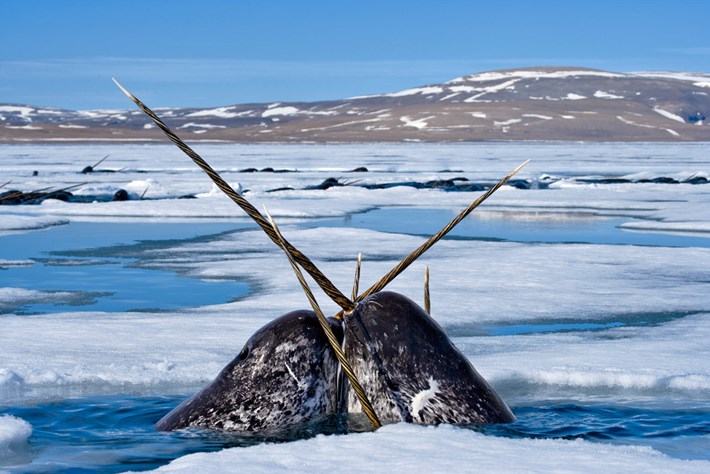
 2. A Narwhal Tusk is Just One Big Tooth

narwhal-duel_2015_03_10
© Paul Nicklen/NGS Image Collection

All a narwhal wants for Christmas is their two front teeth, because two teeth is all they have. You know that big horn that makes narwhals the magical unicorns of the sea that they are? Well, that’s a super large, super-sensitive tooth that can help stun their prey. That’s right—a narwhal’s horn is literally STUNNING! Uncover the mysteries of the narwhal here.

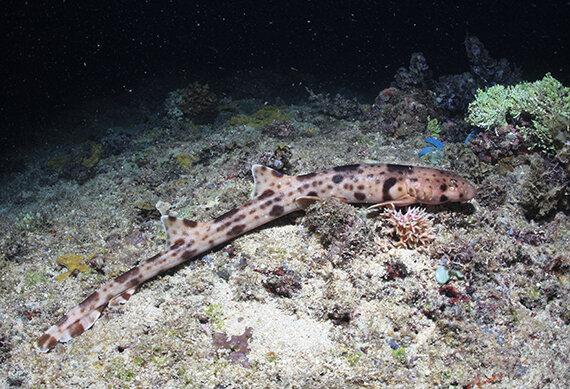
3. Sharks Can Walk

walking-shark
© University of Queensland

Let me tell you about this next incredible fact in the form of a parody to Stayin’ Alive. Cue the disco beat!

You can tell by the way they use their walk … They’re a walking shark, eating prey under rocks

Life is good but the coral reefs are warm … So they keep evolving where they were born

They’ve got strong pelvic fins, it’s okay … Their pectoral fins help them strut away

We can try to understand … These walking sharks who can pop on land 

Nine million years the sharks evolved so they could … Walk and survive, walk and survive

There’s nine species of epaulette sharks that can … Walk and survive, walk and survive

Ah, ha, ha, ha, walk and survive, walk and survive … Ah, ha, ha, ha, walk and survive

Now it’s time for a dance break and to find out more about these amazing sharks here.

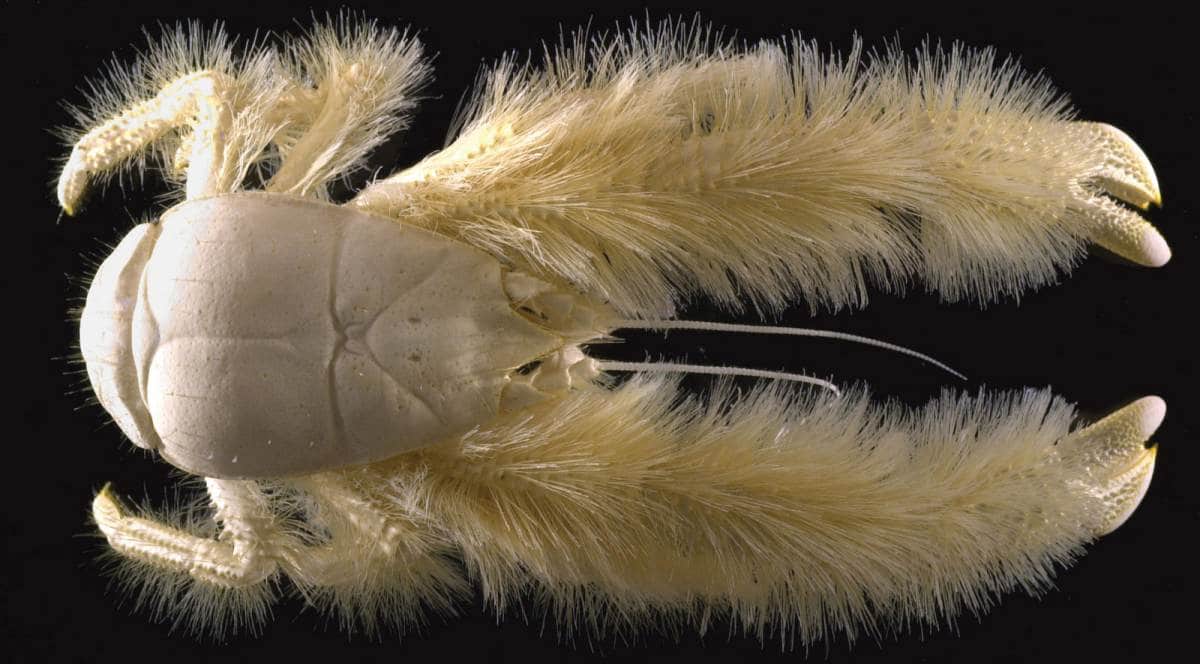
4. There’s a Crab with Fur Lined Claws

A deep sea, yellow crab with
This "Yeti crab," Kiwa hirsuta, was collected during the March 2005 Easter Microplate expedition at a hydrothermal vent about 2200 meters below the sea surface, near Easter Island. © Ifremer/A. Fifis

Some crabs want to be SHINY, but the Yeti Crab prefers to be cute and fluffy. You can find these furry friends near thermal vents in some of the coldest parts of the ocean. There, they live in a precarious position: move too close to the vents and they will instantly fry; move too far and they can die of hypothermia. Their “fur” is actually blonde setae, bristles that enable them to harvest their main source of food: bacteria. They dance around, waving their claws through the water to get a constant flow of oxygen and grow the bacteria they subsist on. Read more about these chic crustaceans.

5. Octopus Occasionally Punch Fish for No Reason

Extra! Extra! Read all about it. We’ve got eight-legged fisticuffs on the ocean floor. Researchers have found that octopuses occasionally punch the fish that join them in underwater hunting parties. Sometimes the octopus wanted the fish to get away from its prey or needed to redirect the fish. Other times … well, no one knows why the octopus did except the grumpy cephalopod himself, and he’s keeping his secrets. Delve into the minds of these sourpusses here.

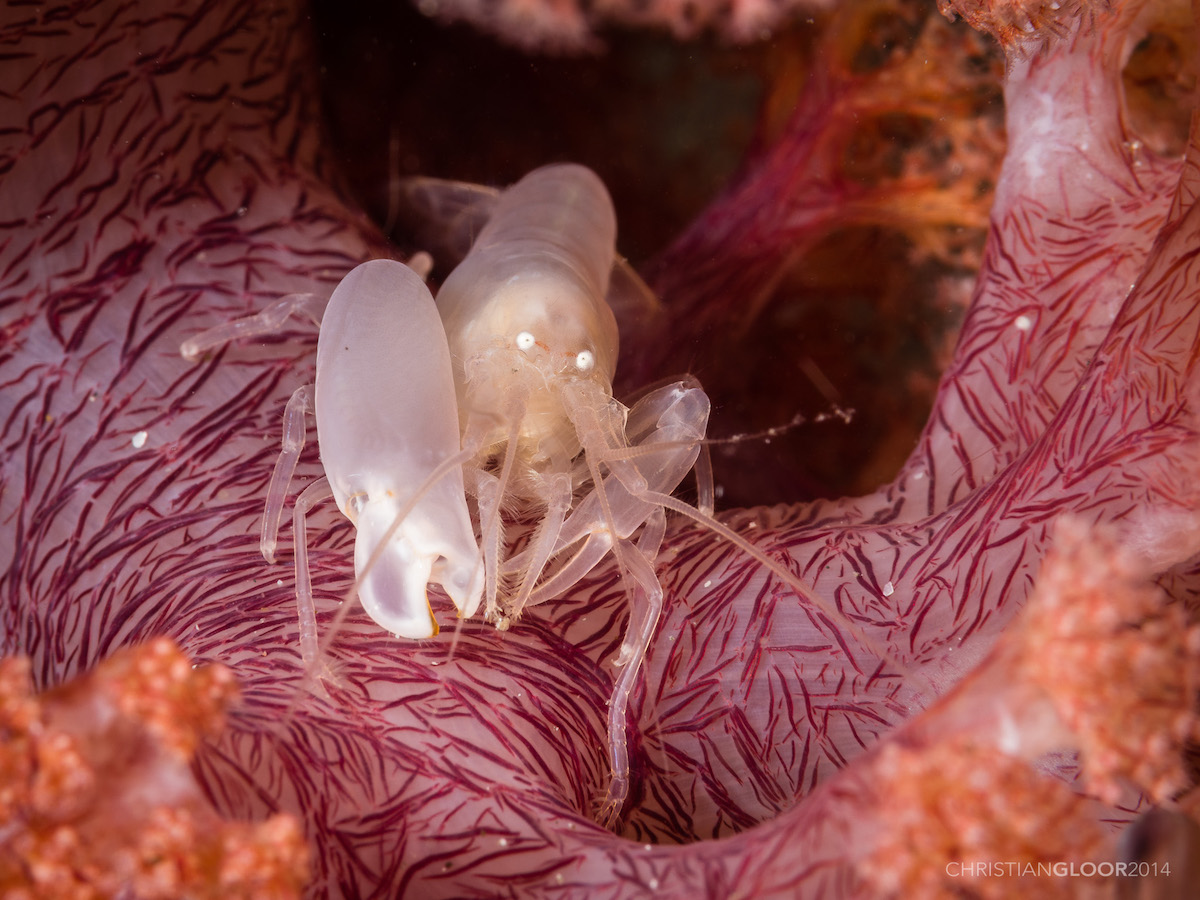
6.  Pistol Shrimp Can Pop Bubbles That Sound Louder Than a Gunshot

15813868816_0d19e97f7c_k
© Christian Gloor

Imagine you’re in an underwater saloon. A jellyfish is playing a lovely tune on the piano. You’re sharing some fine saltwater after a long day of wrangling wrasses. The saloon doors burst open and everyone stops as they gaze upon the greatest gunslinger of the western waters: the Pistol Shrimp. This shrimp can use its claw to create bubbles that can fly out at 60 miles per hour, fast enough to kill or stun their prey. When these bubbles pop they can reach 210 decibels. An actual gunshot is only around 140-175 decibels. The pistol shrimp is a foe (or friend) to be reckoned with. Find out more about these sassy snapping shrimp.

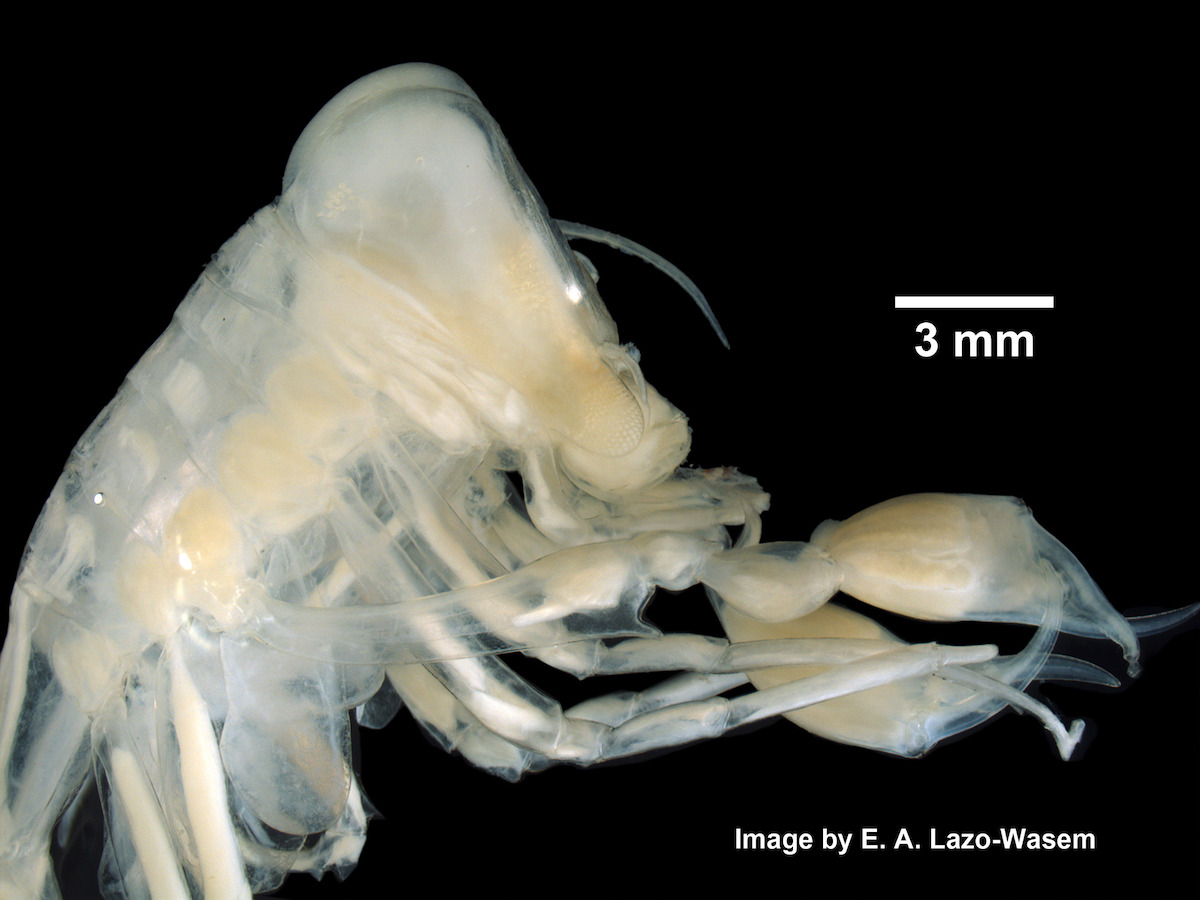
7. Phronima Live In the Corpse of Their Prey

A small, white insect-like crustacean against a black background.
© Eric A. Lazo-Wasem

Phronima are the worst kind of house guest. They barrel in, never leave, raise their children inside of you and ride your corpse on the ocean waves. Yeah, I know—they’re the worst and they probably would also destroy your favorite throw pillow during their visit. Their gross habits haunt my dreams and also happened to inspire the Facehuggers in Alien. Learn what other fictional aliens were inspired by real-life ocean dwellers.

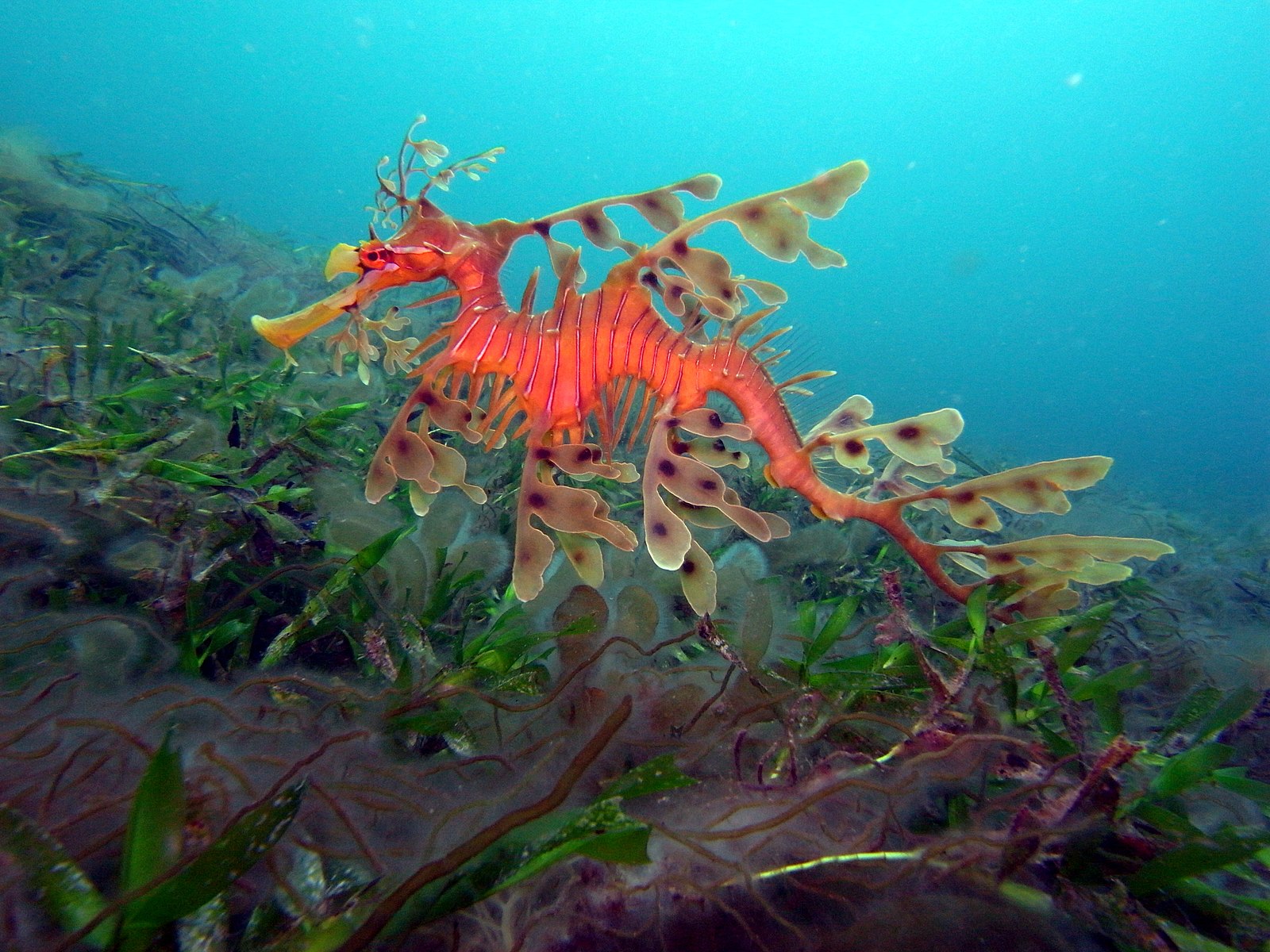
8. Thar Be Dragons in the Ocean

Sylke Rohrlach
© Sylke Rohrlach

Sea dragons, that is! They might not want to fight knights or fall in love with donkeys but they are majestic in their own way. Their leafy appendages help them camouflage into the lush forests they call home. But don’t trust that delicate exterior—these dragons come with their own coat of armor in the form of bony plates that cover their body. Here’s proof that sea dragons really do exist.

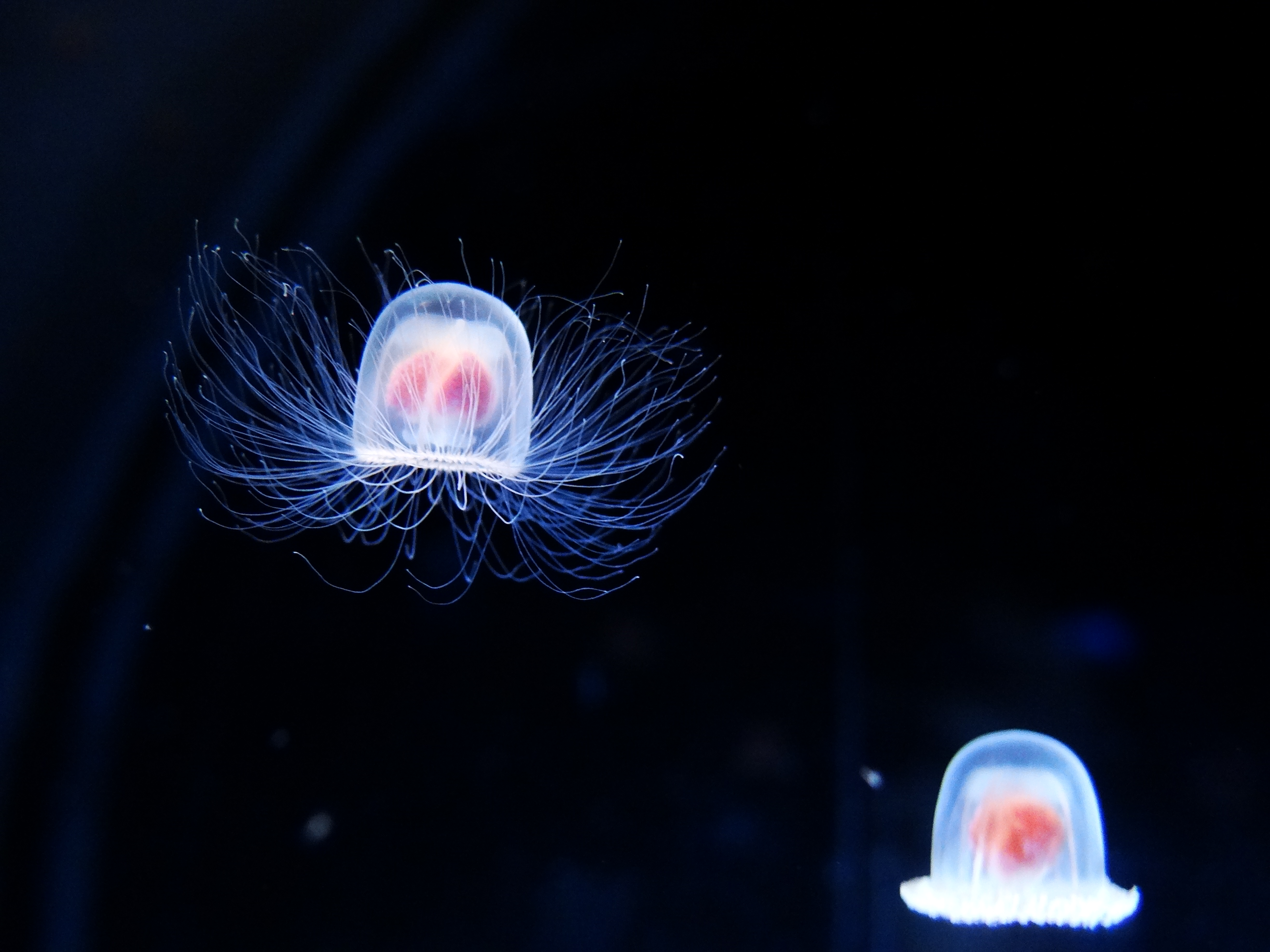
9. Jellyfish Can Reverse Their Aging Process

muzina_shanghai
© muzina_shanghai/Flickr

Cher famously once wished that she could turn back time and somewhere a jellyfish heard the tune and said, “watch me.” That’s not the real origin story of this jellyfish’s unique power but it’s the one I like to imagine. The jellyfish called Turritopsis dohrnii has been dubbed the immortal jellyfish because it can revert to a younger polyp form after reaching its fully-grown state. Imagine any time you were injured being able to turn back the clock and revert to your more youthful existence! Read a jellyfish’s guide to living life forever young.

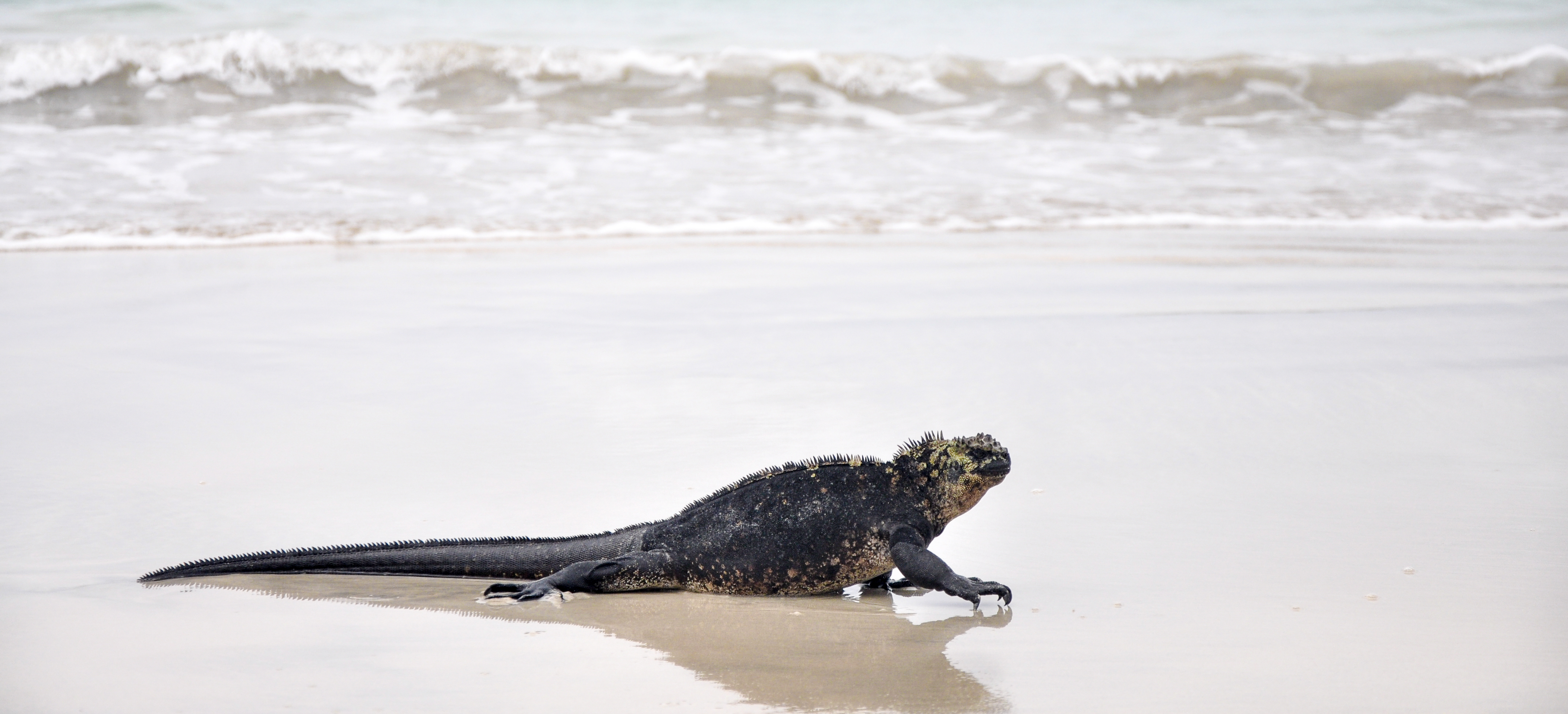
10. Marine Iguanas Sneeze Salt

165-Long Walks on the Beach
© Allison Brown

Sharks can’t sneeze … but marine iguanas can! These cool beachy lizards have too much salt in their diet. so evolution came up with a weird and wacky solution: shoot it out in snot rockets. These seaside sweethearts sneeze so much they can often be seen with faces and heads caked in a crust of salt from their own nose goo. All hail the true Salt Bae.

The post 10 Ocean Facts That Are Stranger Than Fiction appeared first on Ocean Conservancy.


from Ocean Conservancy https://ift.tt/3cEdoGy https://ift.tt/3c7qSuI

The Annual Migration to Clean Up Our Coasts

Annually, seasonally and sometimes even daily, amazing oceanic migrations are taking place. Humpback whales migrate thousands of miles to b...