Wednesday, 17 February 2021

How Can Governments and Economies Prevent Ghost Gear?

Like all of the threats that face our ocean, ghost gear is a problem that does not recognize borders. A piece of fishing gear that snags on a ship in Canada can travel hundreds of miles before finding its way to a reef in Mexico, where it can “ghost fish” for decades on end.

Ghost gear, or abandoned, lost, or otherwise discarded fishing gear, is one of the most prevalent forms of ocean plastic and is the single most harmful to aquatic life. It can also have a hugely damaging impact on people’s livelihoods: in some places, ghost gear can reduce fish stocks by as much as 30%.

It’s a problem that impacts everyone, and we need everyone—from national governments and international forums to individual fishers—to help solve it. Luckily, that’s the Global Ghost Gear Initiative’s (or GGGI) strong suit.

The GGGI works to tackle this threat by bringing together more than 100 groups, including 17 governments, non-governmental organizations (NGOs) and corporations, to develop systemic solutions to the ghost gear problem. We help to strategically remove gear that’s already the water, recycle end-of-life gear, and—perhaps most critically—prevent it from ever being lost in the first place. To achieve this, we developed the Best Practice Framework for the Management of Fishing Gear (BPF). The BPF is the only global comprehensive guidance document for all stakeholders along the seafood supply chain and is a valuable tool not only for fishing and seafood companies but also for governments that want to take on this problem. Together with the UN FAO’s Voluntary Guidelines for the Marking of Fishing Gear (VGMFG), which were developed with technical input from the GGGI, they form the foundation of preventative, mitigative and remediating strategies to address ghost gear.

We have already seen governments implement the principles of the BPF into national policy with great success. In 2019, Panama participated in a ghost gear best practices workshop hosted by FAO and GGGI, and has developed a national implementation plan to tackle ghost gear, dedicated resources to ghost gear removal, and passed innovative legislation to prevent gear loss.  Australia has developed a threat abatement plan for the impacts of marine debris, including ghost gear, and is now looking at a large-scale effort to implement this plan through awareness-raising, research, gear removal and gear marking in a major hotspot area. Norway provides one of the most progressive implementation measures for gear tracking and marking in the world, with all fishing gear electronically monitored in real-time in collaboration with the fishing industry, leading to high compliance rates.

Global Ghost Gear Initiative and APEC MAP
© Global Ghost Gear Initiative

Recently, we’ve seen governments signal further action on ghost gear. At last week’s UN FAO Committee of Fisheries Meeting, many countries recognized the importance of addressing ghost gear. In particular, New Zealand, Canada, the United Kingdom and the United States all called for continued collaboration on the issue, and highlighted some of the steps they have taken to address this problem internally and domestically.

Two men on a boat untangling fish gear.
Like all of the threats that face our ocean, ghost gear is a problem that does not recognize borders. © World Animal Protection

Now, the GGGI is scaling up our efforts to include entire regions of the world.  The GGGI is working with the Asia-Pacific Economic Cooperation’s (APEC) Ocean and Fisheries Working Group (OFWG) to develop ghost gear prevention strategies in APEC economies. Originally proposed by the United States, and sponsored by the United States, Malaysia and Thailand, this project marks a major victory in collaboration across international forums on the ghost gear issue.

APEC is a trade agreement of 21 economies, including recent GGGI members Mexico and the United States, located along the Pacific Ocean. Collectively, APEC economies make up 41.8% of the habitable area of the world and 38% of the world population. Eight of the 10 biggest fishing economies in the world are part of APEC, and together, they harvest nearly 134 million metric tons of seafood each year. By working with this collective, we can make a huge impact on stopping ghost gear.

The GGGI will work with APEC to develop a best practice framework for the region building on the BPF, the VGMFG and lessons outlined in our recent Effective Ghost Gear Solutions report. We will also help to produce a gear marking compendium to help facilitate the implementation of the VGMFG in the region.

The threat of ghost gear may not recognize borders—but now, neither does the solution.


The post How Can Governments and Economies Prevent Ghost Gear? appeared first on Ocean Conservancy.


from Ocean Conservancy https://ift.tt/3qwzlMr https://ift.tt/eA8V8J

Is It Possible to Forever Rid the World of Single-Use Plastic Bags?

In the spring of 2020, Ocean Conservancy joined Closed Loop Partners’ Beyond the Bag Initiative, a bold new effort bringing together some of the world’s biggest retailers to find alternative materials, models and technologies to replace the ubiquitous, predominantly fossil fuel-based single-use plastic bag.

Our job? To bring the ocean to the table, and help evaluate the potential environmental impacts of the more than 450 submissions they received from innovators the world over.

Of course, we were thrilled to participate. Single-use plastic bags are one of the most common, most insidious forms of ocean plastic pollution. They are consistently among the top 10 items found on beaches and waterways every year during Ocean Conservancy’s International Coastal Cleanup and are among the deadliest forms of marine debris to ocean animals like sea birds and turtles.

And while cleanups are a critical part of the solution, we need to work upstream to reduce and prevent plastic items from entering the environment in the first place. This is why Ocean Conservancy founded the Trash Free Seas Alliance (TFSA) in 2012—the first forum of its kind bringing together companies and conservation organizations to collaborate on solutions to ocean plastic pollution. (In fact, two TFSA members—CVS Health and Conservation International—are also a part of the Consortium to Reinvent the Retail Bag, which launched the Beyond the Bag Initiative, alongside Target, Walmart, Kroger, DICK’S, Dollar General, Albertsons Cos., Hy-Vee, Meijer, Walgreens and IDEO.)

Over the course of several months, our team reviewed dozens of shortlisted ideas across three buckets: innovative materials (which we’ll talk about below), reusable models (like reusable bag kiosks or shopping carts that fold neatly into cars) and enabling technologies (for example, adding microchips that autoload coupons to reusable shopping bags to incentivize shoppers to bring them to the store). Here are four takeaways from our Ocean Conservancy team as we reviewed potential solutions:

1. Every material has a trade-off.

Seaweed, algae, cassava, agricultural waste and even the exoskeletons of beetles… These were some of the more exotic materials proposed to replace fossil fuel-derived plastics. Other options included upcycled outerwear, old camping gear, various other plant-based options and more. In considering these materials, we had to acknowledge that there may be unintended consequences—and more questions than answers. We asked: Where will this material be sourced? How far will it need to be transported in light of emissions issues? Is it grown on land that would normally be used to grow food crops? If it’s grown in the ocean, what side effects might it have if grown at scale, on the broader marine ecosystem?

2. Nature (as usual) is a great source of inspiration for the circular economy.

The solutions that really thought about harmonizing with nature were some of the more fascinating ones. Could a “bag” be planted in the ground when it was no longer useful (ripped, for example) and bloom into flowers because it included seeds in its material makeup? Could a bag truly dissolve in water without leaching any harmful chemicals? Could carbon be sequestered by growing more seaweed or algae and then embedding it in a reusable bag? These nature-based solutions, while they often led to more questions, made it clear that it is possible to create a bag with fewer synthetic inputs.

3. End-of-life remains a critical question for all materials.

While the source of a material is of the utmost importance, we must also assess what’s likely to happen to it once it’s been used (“end-of-life”). Within the context of the Beyond the Bag Initiative, we were constantly asking ourselves: What is the likeliest end-of-life scenario for this material within our current (United States) waste system? And—given the far reach of the retail bag—do other countries have systems in place to manage this material? Many new materials rely on composting systems that do not exist at scale in the United States or elsewhere. Overall, this exercise highlighted that we must think about this issue holistically.

4. We need better labeling and clearer definitions around “green” buzz words.

Several submissions claimed their materials were 100% biodegradable, compostable, marine biodegradable, green, recyclable, eco-friendly, nature-based, etc. Some of these claims were verified through the evidence provided by the innovator because they are technical and some can even be certified through a third-party. However, some claims are simply that—claims or buzzwords. And more broadly, the average consumer does not (and probably should not be expected to) understand what each of these terms means. Labeling will be an important part of improving global waste systems in the future, so it’s important that the labels contain accurate information on sourcing and on the best end-of-life scenario for the environment. Ideally, a product is first reusable then repairable, then recyclable or compostable.

Now, the Consortium has chosen nine promising solutions to enter the next phase of the initiative: testing the viability of the designs to scale as long-term solutions. During this phase, the economic, environmental and social impacts of the winning solutions will be further explored and tested, with the Consortium working closely with winning solutions throughout 2021, supporting prototyping, mentoring and iterative developments toward piloting select solutions in-market.

It’s clear that one solution will not fit all, but we look forward to seeing where these nine innovations go, and whether they can contribute to reducing the number of plastic bags that end up in the ocean.

With this collaborative effort underway with many of the largest retailers in the United States, we are getting one step closer to the day when the fossil-fuel-based single-use plastic bag is no more.

With thanks to fellow Ocean Conservancy teammates for their thoughtful and dedicated input throughout the past several months: Chever Voltmer, Dr. Luis Estévez-Salmerón and Dr. Britta Baechler.

The post Is It Possible to Forever Rid the World of Single-Use Plastic Bags? appeared first on Ocean Conservancy.


from Ocean Conservancy https://ift.tt/3qwnrlz https://ift.tt/eA8V8J

Tuesday, 16 February 2021

New Government Role to Serve as Advocate for Water Health

Biscayne Bay is one of those iconic Floridian waterways; it’s so iconic that it practically defines the entire character and identity of Miami-Dade County. It’s where people fish, swim, sail and just simply relax. It’s the aquatic heartbeat of the region, and it’s also the centerpiece of one of the most significant economic areas of the country.

And, sadly, after decades of growth and development around Biscayne Bay, water quality and wildlife have suffered from increasingly common environmental issues we are seeing throughout Florida: fish kills, seagrass die-offs and increased litter and marine debris have become the norm in the Bay.

But now we have a Super-Hero for the Bay. Irela Bagué, a longtime powerhouse in Florida conservation, has been named the inaugural Chief Bay Officer by Miami-Dade County Mayor Daniella Levine Cava. Ocean Conservancy collaborated with Bagué when she was a critical organizer on the Steering Committee of the Biscayne Bay Marine Health Summit, and we are so happy that she has been able to take up this incredibly important new mantle.

We were delighted to have a chance to find out what makes the new Chief Bay Officer feel inspired as she strives to protect the water she loves.


J.P. Brooker: What makes Biscayne Bay special? What is it about this water that needs protection?

Irela Bagué: Biscayne Bay is of local, regional, national and international importance. The Bay is a sub-tropical shallow estuary home to two state aquatic preserves, a critical wildlife area, a national park and a national marine sanctuary. Due to its unique habitat, Biscayne Bay is designated an underwater park and conservation area by Miami-Dade County. The Bay is cradled by the mainland to the west and barrier islands to the east; its 428 square miles continue to be a source of sustenance and economic vitality while also providing countless recreational opportunities enjoyed by residents and visitors alike. Biscayne Bay is Miami-Dade County’s most vital quality of life asset and the mainstay of our economy.

4OCBSQG2TJDNFKGF2SRDFJDU7I
© Irela Bagué

Brooker: What is your vision for Biscayne Bay and what will it take to achieve that vision?

Bagué: I hope to create a unified and collaborative approach, working with multiple jurisdictions, agencies and stakeholders, including Ocean Conservancy. The Biscayne Bay Task Force recommended creating a permanent governing to provide the coordination and needed oversight of the Bay watershed. To act as the mechanism for addressing the short and long-term issues that lie ahead. Making Biscayne Bay’s health a priority now and providing additional staff, resources and expertise will also help bolster our economy and increase the long-term resilience of Miami-Dade County.

Brooker: You’re the first Chief Bay Officer (CBO) in the country, and likely the first chief executive of any body of water. Why is it important for this position to be created now? Should other local governments follow suit?

Bagué: The position of a Chief Bay Officer stemmed from a recommendation in the Biscayne Bay Task Force report. The task force recognized that the Bay needed an advocate and someone who could serve as an advisor to the Mayor and County Commission. The CBO also works as a liaison between County departments, County boards, external agencies, stakeholder groups and local, state and federal governments to improve the overall health of Biscayne Bay.

We hope the position can serve as a model for other governments to consider. Some of my priorities are to help move projects forward in areas that show the highest nutrient pollution levels. Biscayne Bay suffers from various sources of pollution. I hope we can focus on septic to sewer conversion, replace aging infrastructure, implement innovative solutions to our stormwater systems and restore coastal habitats. It is important to highlight that these infrastructure improvements will help restore the watershed and provide a path toward economic recovery and help us get back to work post-pandemic.

Brooker: You call yourself the “water princess.” Can you tell us about your passion for protecting water resources, and advocating for coastal and ocean environments, and why you have dedicated your career to water?

Bagué: I want to be clear; I did not name myself “the water princess,” it was a term of endearment given to me many years ago when I served on the Governing Board of the South Florida Water Management District. I am proud of my time serving the state and being part of kicking off the Comprehensive Everglades Restoration Plan, including Biscayne Bay Coastal Wetlands, chairing the Miami River Commission during the Miami River dredging project. I guess you can say that I have earned my crown after all.

everglades pixabay
© pixel2013 via Unsplash

I have become passionate about our water resources from my first trip to the Everglades in the seventh grade. I remember my teacher saying that we were lucky to have one of the most unique and amazing National Parks in the world, and the park ranger explaining that his job was to protect and maintain the park’s natural resources and educate the public.

I was raised in Miami’s Little Havana area and had no idea then that these careers existed and that inspired me. It was also the day I learned that the River of Grass was the source of our drinking water, essentially our most valuable resource. It was an A-ha moment!


The appointment of Irela Bagué into this new role is a strong symbol of the commitments being made in South Florida to fight for the water that is the lifeblood of the region. As the Chief Bay Officer, Irela Bagué will be a powerful voice that we are confident will make a difference for the region.

The post New Government Role to Serve as Advocate for Water Health appeared first on Ocean Conservancy.


from Ocean Conservancy https://ift.tt/37gh2DB https://ift.tt/eA8V8J

An Ocean-Powered Recovery for Our Economy

While the ocean is appreciated for many reasons such as its natural beauty, raw power, healing abilities and the cool animals that call it home, we often forget an additional impressive ocean attribute. I’m talking about the livelihoods and jobs it creates. I grew up near Santa Monica, California and volunteered at an aquarium underneath its world-famous pier (yes, this one), so I get that tourism is a big industry, but that just touches the surface of what the ocean provides. Fishing, shipping and renewable energy are just a few of the other engines that power coastal economies.

Through those sectors and activities, the ocean can address some of today’s biggest global issues: the economic impacts of the pandemic and the environmental impacts of climate change. In 2018 alone, the ocean provided the United States with $373 billion in goods and services and 2.3 million jobs. At the same time, protecting and restoring just the coastal wetlands, mangroves and other “blue carbon” ecosystems in the United States over the next thirty years would be the equivalent to taking 3.5 million cars off the road. Let’s lean into that. Right now we can conserve and restore coastal ecosystems to protect our communities from climate change damages such as rising sea levels and ocean acidification. These investments also help spur more economic growth for our ocean and coastal communities.

NOAA wetlands oysters coast
© NOAA

This wouldn’t be the first time the United States has made these investments either. Here’s an oyster reef restoration project located in Florida’s St. Lucie estuary that was funded the last time the United States government facilitated an economic recovery in 2009. Not only did projects like these provide fish habitat, improve water quality and protect the coast from erosion, they also created jobs and helped our blue economy! And people really wanted them. When $167 million was made available for coastal restoration projects like these, more than $3 billion worth of proposals came rolling in. Of the projects that did get funded, we saw more than 2,000 jobs created and $260 million in economic benefits. Right now is a critical time for even more projects like these.

We should also invest in clean, zero-emission shipping and port technologies that combat climate change, strengthen our economy and reduce the air pollution and negative health impacts on port-side communities, often populated by people of color. If global shipping was its own country, it would be the sixth-worst greenhouse gas emitter, topping all of Germany! As we build back our coastal communities, now is the time to invest in cleaner shipping and port infrastructure so we can address climate change and build healthier coastal communities and a healthier ocean.

Estuary restoration
© NOAA

So while we’re all hoping for a “return to normal” sometime soon, I hope that we get to something better, where there will be more wetlands and mangroves to protect our coasts and store carbon as well as more ports powered with clean electricity instead of fossil fuels which have been polluting neglected neighboring communities.

To help us get there, and faster, you can take action here. We are just starting, but with so much attention turning towards climate change and justice, I am confident we can make things better for everyone.

The post An Ocean-Powered Recovery for Our Economy appeared first on Ocean Conservancy.


from Ocean Conservancy https://ift.tt/3k1Ken2 https://ift.tt/eA8V8J

Friday, 12 February 2021

Florida Needs to Permanently Prioritize Climate Resilience

This article originally appeared in the Tampa Bay Times on February 11, 2021.

Governor Ron DeSantis’ proposed $1 billion Resilient Florida program is grounded in common sense and gets the ball rolling on big investments in infrastructure—but we need more.

Florida also needs empowered leadership dedicated to preparing our homes and communities for the inevitable impacts of climate change. DeSantis’ proposal is a good-faith effort and one that the Florida Legislature should build on to make resilience a priority for the state forever, regardless of who holds power in Tallahassee.

This session, state lawmakers should permanently establish and fund a statewide Office of Resilience, led by a dedicated chief resilience officer responsible for creating a long-term strategy for protecting our state from rising seas and other climate impacts. Floridians know that our cultural identity and economic prosperity are intimately tied to what happens on the ocean and on our beaches, which are already being deeply affected by climate change. I can see it; you can see it. The evidence is incontrovertible virtually anywhere you look in Florida.

Right now, no single state entity is responsible for thinking about resilience 24/7. Responsibility spans multiple state agencies and local governments; it’s a hodgepodge of policies and projects with no coordination for addressing core resilience problems our communities are facing. It’s not enough to throw money at the problem—we must ensure expenditures are tailored to meet the scope and scale of the existential climate threat.

I watched the initial attempt to create a permanent Floridian resilience executive with interest. The appointment of Julia Nesheiwat as the first chief resilience officer in the early days of the DeSantis administration was appreciated. Since her departure, Department of Environmental Protection Secretary Noah Valenstein, who’s currently serving as interim chief resilience officer, has done an admirable job.

But now it’s clear that we need a systematic, long-term approach for protecting Florida from inevitable climate change-related threats like sea-level rise, increasingly frequent and severe tropical weather, saltwater intrusion as the ocean inundates the aquifer and harm to critically important commercial and recreational fish stocks that are subject to more numerous and brutal harmful algal blooms and dramatic salinity fluctuations. These are issues that infrastructure investment most certainly can help with, but we also need holistic and efficient treatment with strong direction and purpose.

Senator Ray Rodrigues, R-Estero, and Representative Chip LaMarca, R-Lighthouse Point, have introduced legislation to establish a permanent Office of Resilience. House Speaker Chris Sprowls, R-Palm Harbor, and Senate President Wilton Simpson, R-Trilby, should prioritize passage of this legislation that would ensure resiliency isn’t just an afterthought, but at the core of statewide infrastructure, land-use and growth decision making. If we accomplish this, Florida will be in better fighting shape to handle the large scale environmental and economic storms on the horizon.

The post Florida Needs to Permanently Prioritize Climate Resilience appeared first on Ocean Conservancy.


from Ocean Conservancy https://ift.tt/3b08jX9 https://ift.tt/eA8V8J

Thursday, 11 February 2021

The Unsung Heroes of Vietnam’s Waste Management Sector

Headshot of Mrs. Thao Ly
Mrs. Thao Ly, Deputy Director of CECR © Courtesy of Mrs. Thao Ly

Mrs. Thao Ly is the Deputy Director of the Center for Environment and Community Research (CECR). She leads CECR’s network of NGOs led by women in promoting gender equity in climate policy National Determine Commitment (NDC) and National Adaptation Plan (NAP) in Vietnam as well as CECR’s major efforts in studies on the role of informal waste collectors in solid waste management. Mrs. Thao Ly received her Master of Arts in Gender and Peace Building from University for Peace in Costa Rica, Master of Arts in Political Science from Ateneo de Manila University and Bachelor’s degree in Chinese Trade in Hanoi University of Business and Technology.

Municipal solid waste management might not seem flashy, but it is crucial to keeping plastics out of our ocean. Without it, litter and waste would go uncollected, piling up on sidewalks and washing into waterways through storm drains. In the United States, we are used to putting our trash out on the curb and expect our local municipal waste collectors to pick it up for us. Yet, in many places around the world, the majority of plastic waste collection and sorting is done by individual waste collectors (sometimes also called “waste pickers” or “rag pickers”) that make up what’s known as the “informal waste sector.” Informal waste collectors are the frontline heroes in the fight against ocean plastic pollution. And yet, as described in our recent report, Exploring Solutions to Ocean Plastics: Supporting Southeast Asia’s Informal Waste Sector, informal waste sector workers are often part of vulnerable communities who occupy the lowest rung of the socioeconomic ladder. Often, they lack access to basic necessities like housing, healthcare and education. They are also often the most at risk of financial exclusion—operating without access to financial institutions, bank accounts, payment cards, mobile money or insurance.

This is certainly true in Vietnam, which is one of the countries most impacted by plastic pollution. Even though the informal waste sector contributes greatly to the waste management process and the economy, their work is not recognized and they face many obstacles. Informal waste workers, especially women workers, face many stereotypes and obstacles. Waste collection is not considered a desirable job in Vietnam, so they are often stigmatized and face discrimination within their own communities and families. There is no law to support health care for informal waste collectors and they often work in unsafe and unhygienic conditions. Not having access to healthcare makes them very vulnerable.

What motivates them to keep working such difficult jobs? Most workers come from poor backgrounds and collecting trash is their only option to make a living and support their families. Many are mothers who dream for their children to have access to better education and jobs. Others work to pay back debt.

The Center for Environment and Community Research (CECR) is a local nonprofit in Vietnam dedicated to the long-term protection, restoration and management of all aquatic resources in the country. Currently, CECR strives to highlight the stories and contributions of women in the informal waste sector.

Local Stories in Vietnam:

Waste pickers in Trung Van village, Ha Noi city and Female street collector in Da Nang city
(Left) Waste pickers in Trung Van village, Ha Noi city. (Right) Female street collector in Da Nang city. © Center for Environment and Community Research

Mrs. Vo Thi Hoa migrated from the rural area of a nearby province to Da Nang city to start her job more than 10 years ago. Her day begins at 6 a.m. and ends at 12 p.m. She collects recyclable waste from households and from collection points on streets to sell to junk shops. She chose to stay in this job because it is her only way to support her family at home.

z1181722212035_dfa6a0b981c8c94ffc9ad75faa159435

“I work hard to get money to support my family and to help my children get a better education. I have two children. One is working for a company and one is in college. While this job is very difficult, I am glad that I was able to help my children and I am very proud of them.”

Ms. Vo Thi Hoa
Waste Collector in Da Nang City

Mrs. Duong Thi Hong Hoa has been working as a waste collector for more than 15 years. She collects and buys recyclable waste. She segregates, cleans and packs recyclable waste to sell to junkshops and small recycling facilities. Due to the pandemic, she had to go back home to her village, but after the first wave ended, she went back to Da Nang to work as a waste collector to pay some of her family’s debt.

Mrs Ly co-author pic

“It is more difficult to get recyclable waste because most restaurants and service were closed. In normal conditions, I earned around 150,000 VND (around USD6). But now I get only around 100,000 VND per day. Some days even less. I am very worried about COVID, because if lock down happens, I have to go back to my village and cannot have any job there. Our job is about waste so the conditions are pretty bad, a lot of odor. We need more and better gloves. We have only a bicycle [to transport materials] so we could buy small amount of recyclable waste. We need some capital so we do not have to borrow from junk shop and could negotiate for better price. Sometimes working at late hours is not safe.”

Mrs. Duong Thi Hong Hoa
Waste Collector in Da Nang City

CECR has found that women play a critical role in all stages of the plastic waste chain. In most urban areas, collecting waste from homes, sorting it and taking it to landfills, junkshops (informal recycling facilities) is all done by the informal waste sector, which is mainly made up of women.

Through CECR’s pilot project in Da Nang city called Ocean without plastic: Plastic recycling program for strong community and green city, CECR has helped connect 124 women waste collectors to the Women’s Union (a local Vietnamese organization that represents women’s issues to the national government) and households in Son Tra and Thanh Khe districts. CECR’s collaboration with the Women’s Union proved that gender equity and combatting plastic pollution go hand in hand. With the leadership of local women’s unions, families have started to separate trash at home to make recycling easier. Women waste collectors were engaged in collecting not only high-value recyclable waste but also low-value plastic waste such as single-use plastic bags and straws. Some women waste collectors said that engaging in the project has resulted in up to 10% greater incomes.

In Da Nang, about 1,000 women are working in collection and recycling. Through the Women’s Union, around 1,000 additional jobs were created, helping many women support their families and pay for their children’s education. These women workers not only reduce costs for urban waste management systems, but they also create jobs and help reduce the carbon footprint of their neighborhoods.

1

“My income has increased to 5.300.00 VND from 4.700.00 VND thanks to having access to more stable sorted waste resources.”

Ms. Nguyen Thi Bay
Waste Collector in Son Tra district, Da Nang City

These stories highlight that informal waste collectors are not only critical in preventing plastics from entering our ocean—they are integral contributors to their own communities’ economy and wellbeing. Our informal waste sector report highlights ways we can support these important workers:

  • Providing formal recognition to their work by promoting their role in recycling and managing waste. This will allow informal workers to gain job stability and access basic labor rights like health and safety in their workplace.
  • Supporting local NGOs and other institutions working toward the economic empowerment of women and eliminating the stigma and discrimination of informal women workers.
  • Providing financial and other support.
  • Supporting recovery and collection, as well as end markets for recycled content.

The findings of our report were shared with Ocean Conservancy’s Trash Free Seas Alliance® in Spring 2020 and have inspired conversations about how members can support informal waste collectors. We plan to share more about how these conversations have evolved on this blog in the coming months.

Vietnam has committed to combatting ocean plastic waste by developing the National Action Plan on Marine Plastic Debris Management (NAP). This showcases Vietnam’s leadership on the marine debris issues throughout the Southeast Asian region. However, as we continue to tackle our global plastic problem by improving waste management systems, we need to make sure that the informal waste sector’s contributions, particularly the essential role of women, are recognized and are placed high on our priority list. We need to make sure that their health and overall wellbeing in their workplace is guaranteed. The informal waste sector has and continues to be a key part of any solution to tackling ocean plastic solution.

The post The Unsung Heroes of Vietnam’s Waste Management Sector appeared first on Ocean Conservancy.


from Ocean Conservancy https://ift.tt/3aSrnGR https://ift.tt/eA8V8J

Wednesday, 10 February 2021

5 Lessons About Love From Marine Wildlife

When Valentine’s Day rolls around, there are a few things that come to mind: roses, love letters, boxes of chocolates and sweet treats galore … the list goes on and on. When it comes down to what this holiday is really all about though—love—there are many life lessons that can be learned in the most unexpected of places. One of those places? Our ocean, of course! Dive in and get a dose of adorable inspiration from these photos of a few of our ocean’s beyond loveable species, then be sure to send one of our complimentary Valentine’s Day e-Cards to the people who mean the most to you before February 14 arrives.

Throughout our lives, it may sometimes feel like it’s hard to keep up with the unpredictable waves and changing currents of life. But no matter where the current takes you, just remember: what really matters most is who’s by your side for the journey.

Species: Bottlenose dolphin

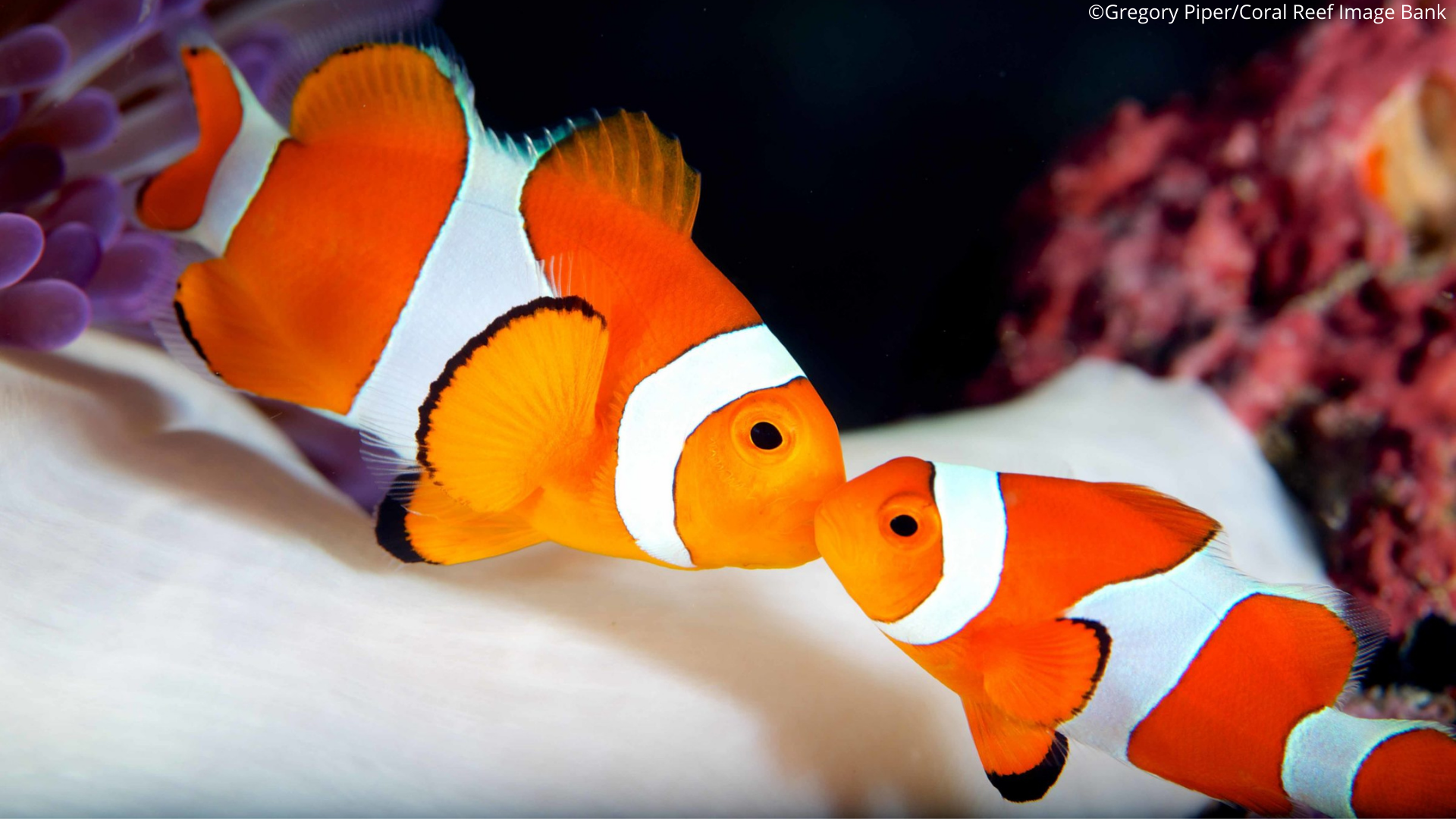
When it comes to commitment, you shouldn’t feel in a hurry to settle down … but at some point, when you finally meet the right person, you’ll not only know it’s time to quit clowning around—you’ll also feel way less hesitation!

Species: Clownfish

Clownfish valentine

When frustrations arise in relationships, it may feel easy to blame our partners or insist that we’re 100% right and they’re 100% in the wrong. Sometimes, though, compromise and open communication can be key to moving forward … and what better way to boost a mood and reconcile than with dancing your tail feathers off together?

Species: Blue-footed booby

Blue footed boobies

Among the ebbs and flows of our everyday lives, it can become easy to take our partners or loved ones for granted. Whether our current focus is on keeping up with our jobs, raising little ones or simply making sure our finances stay in order, we must remember that the people we love are there for us and deserve our time attention. Don’t be seal-y: show your love to them whenever you can, and remember how much they mean to you … not to mention how much you mean to them!

Species: Northern fur seal

Fur Seal

Still haven’t found your valentine yet? Don’t be crabby, ocean lover: oftentimes, the right person comes right along when we’re focused on bettering ourselves and aren’t out there searching for a partner. So, pick that chin up, make a list of things (or corals, if you’re this little one below) that make you happy and goals you want to achieve, and who knows … one day, you may look up and say “pinch me, I’m dreaming” because that person finally came along when you least expected it!

Species: Soft coral crab

soft coral crab jim van goh
© Jim Van Gogh

Now that you’ve got some sea-riously solid Valentine’s Day wisdom in your back pocket, head on over to our e-Card page and show the people who mean the most to you just how much you care about them this season. Whether you want to put a smile on your best friend’s face, show your partner how much you love them or remind a family member how much you care, these ocean-themed digital notes are the perfect way to brighten up anyone’s day with a dose of joy this February.

The post 5 Lessons About Love From Marine Wildlife appeared first on Ocean Conservancy.


from Ocean Conservancy https://ift.tt/373iEk1 https://ift.tt/eA8V8J

How Orlando Communities are Tackling Plastic Pollution

The city of Orlando is known above all else for its world-class amusement parks. In fact, hundreds of thousands of people visit the city ev...