Monday, 8 February 2021

Why Collaboration is Key in the Fight to Save the Arctic

When Cold War tensions were still high in October of 1988, three gray whales were found trapped in sea ice near Point Barrow, Alaska. Various efforts to clear a path to open water for them had failed. As hope seemed to ebb, the Soviet Union dispatched two icebreakers, the Vladimir Arseniev and the Admiral Makarov, to help. Somehow, the fate of whales in Arctic waters somehow spurred successful cooperation between rival superpowers.

In one sense, we should not be surprised that cooperation is a hallmark of life in the Arctic. It is among the core traditional values of Arctic Indigenous peoples. Life in this part of the world is not a solo venture, but a matter of sharing both the work and the results. Generosity and hospitality are both not only good manners—they’re also practical survival skills. The sad history of colonization tells us that these values have not always been adopted by more recent arrivals to the North. Nonetheless, the persistence of sharing and cooperation speaks to the importance of these traits if one is to thrive in a small community, especially when hardship is never far away.

Fortunately, cooperation can often be found in many Arctic endeavors. Traditional Indigenous hunting of large marine mammals requires cooperation and coordination. Hunters and fishers work together with visiting managers and scientists to understand and conserve our surroundings, including the species that have made human life possible in the Arctic for countless generations. Much of marine research in the Arctic involves international collaborations to overcome the costs and difficulties of operating in icy waters far from the home ports of research vessels. Institutions such as the Arctic Council bring countries and others together to promote the well-being of the region and the inhabitants that depend on it.

Such cooperation can easily be taken for granted, but it shouldn’t be. When it comes to international relations, the United States and Russia clash on many things, but collaborative work in the Arctic proves a bit different. The two nations still manage to work together on at least some aspects of Arctic affairs, including search and rescue missions along our maritime boundary. Similarly, China and Norway have historically sharply differed on human rights issues and related policies, but both are signatories to the recent agreement preventing fishing in the high seas of the Central Arctic Ocean until enough is known to manage such activities sustainably. Canada has disputed boundaries with both the United States and Greenland, but with so many other common interests, these disagreements remain friendly despite the potential fisheries and mineral resources at stake.
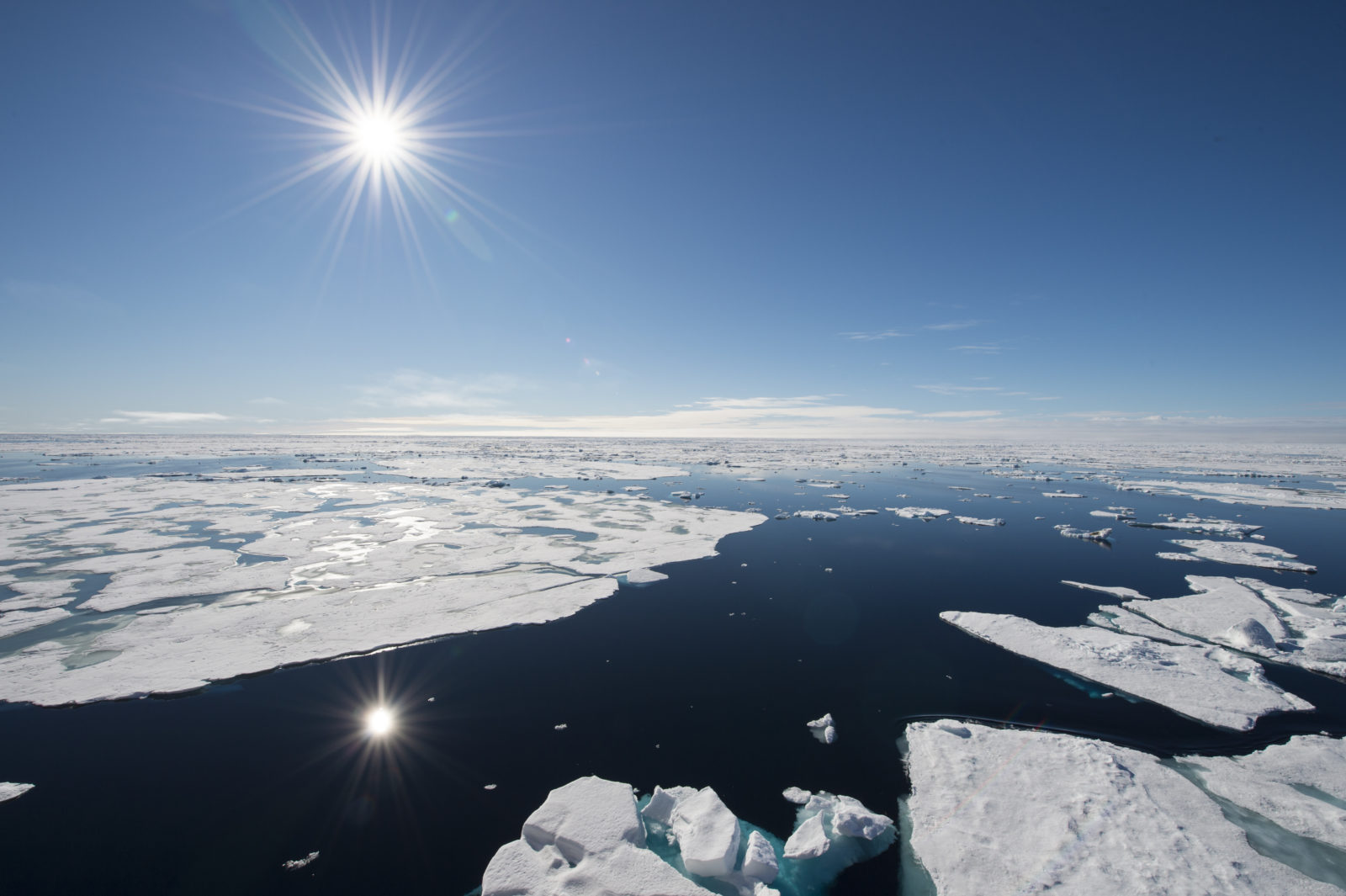
Arctic Sea Ice
© Silver / Adobe Stock

We also, of course, have lessons to learn from times when international cooperation did not succeed. In the 1980s, pollock were being overfished in the high seas of the Bering Sea. Perceptions of conflicting national interests prevented the countries involved from taking action until the fish stock was all but gone. A quarter of a century later, and fish stocks have yet to recover. Despite occasional diversions into positive engagements such as gray whale rescues, the Cold War still saw military outposts built all around the Arctic, leaving a legacy of pollution and disruption. Industrialization around the Arctic has enriched the lives of some, but it has also caused extensive social, cultural and environmental damage in pursuit of expedience over justice.

Not surprisingly, what follows is that competition continues to threaten cooperation … and with it, the well-being of the Arctic at large. Competition over resources, rivalry in regards to geopolitical strategy, contention in demonstrations of military might—the list goes on and on. Add onto this that these past, current and potential conflicts tend to grab hold of global news headlines, and the true gains achieved through cooperation are often obscured.

The United States has not been the only source of recent disruptions in Arctic affairs, but the last four years can definitely be highlighted as a low point for U.S. engagement in Arctic affairs both domestically and internationally. A return to a more cooperative and open approach that values opportunities for collaboration would be a welcome change as well as a solid measure of American commitment to a peaceful, sustainable and just Arctic future.

The post Why Collaboration is Key in the Fight to Save the Arctic appeared first on Ocean Conservancy.


from Ocean Conservancy https://ift.tt/39Z2OIO https://ift.tt/eA8V8J

Friday, 5 February 2021

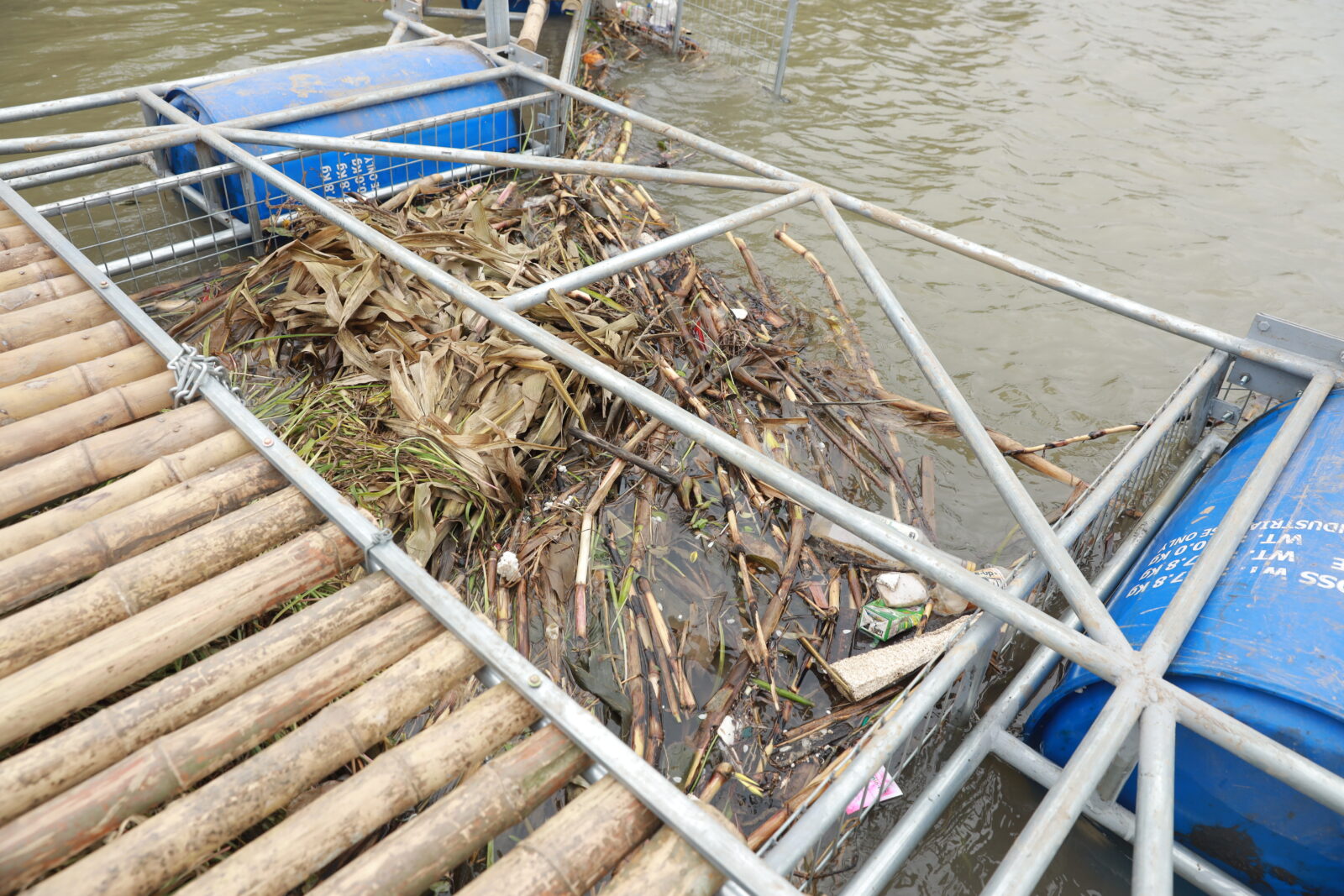
Meet Vietnam’s New Trash Trapper

At Ocean Conservancy, we have always been guided by the latest and best science in our efforts to combat marine plastic pollution. Recent research affirms that we need a suite of solutions to reduce the amount of trash in the ocean reducing the amount of plastic we use, better managing the plastic we do need and cleaning up the mess we’ve made.

Although we work on the reduction and management of marine debris, our roots are firmly in cleanup. For more than 35 years, Ocean Conservancy has led the International Coastal Cleanup with an amazing group of partners. In that time, we have collected 339,742,521 pounds of trash. While we are proud of those numbers, science is telling us that it’s not enough. We need to do more, including exploring new ways to keep plastic from reaching the ocean through trash traps.

While we understand their potential value, Ocean Conservancy has no experience with trash traps. That’s why we are so excited to begin our trash trap journey by deepening our collaboration with the Centre for Marine Life Conservation (MCD), a longtime International Coastal Cleanup partner. A leader in ocean protection in Vietnam, MCD created a cost-effective, locally-built trash trap specifically designed for their country’s many rivers. A prototype trap has been operating successfully in the Red River for the last year, collecting 18 tons of marine debris.

FANK5095
© Ocean Conservancy

We saw an opportunity to pair MCD’s pioneering efforts and deep knowledge of local context with Ocean Conservancy’s global reach and scientific expertise. Our goal: To build, test and install simple, effective, cheap and scalable trash capture devices. Through our partnership, MCD was able to improve and refine its original design. We took a big step forward last week when the first improved trash trap began operations on the Red River. This is just beginning. Together, we will install five trash traps in Vietnam through this collaboration.

Those devices will keep a lot of trash out of the ocean. We will also analyze what the traps are capturing to better understand more about the volume and types of trash in the river, seasonal variations, and other information that will help us engage communities to increase awareness and inform locally appropriate solutions.

We are also grateful to be conducting this work under the auspices of the Clean Currents Coalition. As part of this initiative, we are one of nine teams working in different places with different approaches around the world to stem the flow of plastic waste from rivers to the ocean. This means we are not limited to the experience we gain from our five trash traps in Vietnam. We will also be able to share and learn from the other members of the Clean Currents Coalition to collectively improve trash traps for all of us.

We will also take what we learn through this initial effort back to our own deep network of partners around the world, in the International Coastal Cleanup and elsewhere, and will look for new opportunities to support and empower them in our common goal of an ocean free of trash.

The post Meet Vietnam’s New Trash Trapper appeared first on Ocean Conservancy.


from Ocean Conservancy https://ift.tt/39WJexb https://ift.tt/eA8V8J
Why Sports are a Critical Ally for Conservation

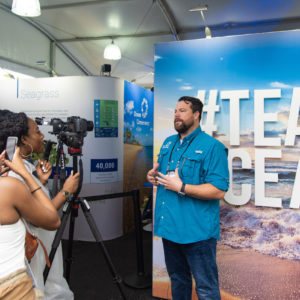
When the Kansas City Chiefs and the Tampa Bay Buccaneers take the field this Sunday for Super Bowl LV, Ocean Conservancy will be rooting for both sides. Why? Because our ocean needs every team—and every player—doing their part for a healthy and livable planet. No matter who wins on Sunday, we all win. Ocean Conservancy has seen first-hand what athletes, their teams and the sports world at large can do to help create change, both on and off the field. And now more than ever, the ocean and all our coastal communities need more of it.

Climate change is affecting all of us. The effects of society’s continued reliance on fossil fuels are fundamentally changing the planet, including the ocean. This matters because the ocean matters to us all. Covering two-thirds of the planet’s surface, the ocean is literally the life support system for the planet. A healthy ocean feeds us, produces oxygen needed for life and controls the weather from the tropics all the way to the poles. A healthy ocean is vital for all of us, whether we live on the coast in Tampa, Florida, or far from the ocean’s shore in Kansas City. It doesn’t matter whether you are a fan of Buccaneers Quarterback Tom Brady or Chiefs Quarterback Patrick Mahomes.

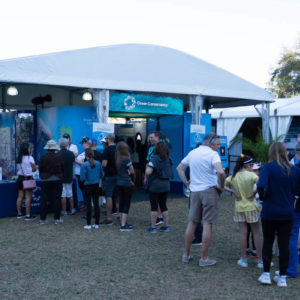
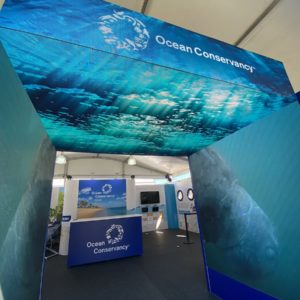
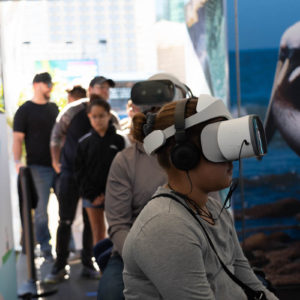
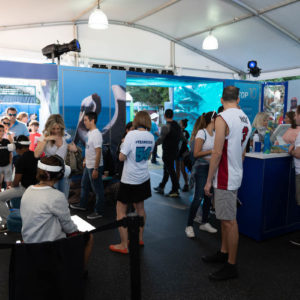
That’s why Ocean Conservancy is working hard to bring more people into the conversation about the importance of a healthy ocean. Last Super Bowl, we were in Miami as the ocean partner for Super Bowl LIV, where we first worked to bring the ocean to sports fans and local residents alike. We partnered with the City of Miami, the Miami Super Bowl Host Committee, NFL Green, the Miami Dolphins, Pepsi, Centerplate and others on a variety of environmental initiatives all centered on ocean health. Alongside Ocean Conservancy, these partners removed or diverted 54 tons of plastics and other debris from Florida’s coastline, reduced single-use plastics at the Hard Rock Stadium, entertained and educated nearly 100,000 fans at the Ocean Conservancy booth in the Environmental Village and reached more than 1 billion readers through media generated over the course of the year-long Super Bowl partnership.

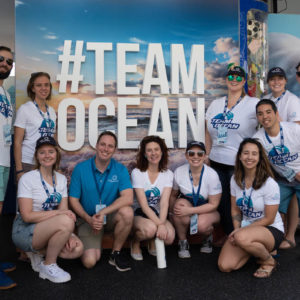
And last year’s big game was also where we launched #TeamOcean, a group of ocean enthusiasts that has only expanded over the last year. Arizona Cardinals running back Kenyan Drake shared his motivation for environmental causes with participants at our first Super Bowl week beach cleanup. Team Ocean has grown to become a group of professional athletes, teams, leagues, personalities and others that use their platforms to push for a healthy ocean and action on climate change. Ten NFL players, including D’Ernest Johnson of the Cleveland Browns and Khalid Kareem of the Cincinnati Bengals, joined TeamOcean through their affiliation with NFL’s My Cause My Cleats. Baseball is now joining the team, with Hunter Pence (formerly of the San Francisco Giants) highlighting his commitment to climate action by riding his scooter instead of driving to the ballpark on game day.

Ocean Conservancy is working to build a broader platform with sports teams that will benefit the ocean and our climate. We developed a “Blue Playbook” to guide sports teams on how they can make changes within their facilities and in their local communities to reduce carbon emissions, address single-use plastics, moderate freshwater run-off from the playing surface and advance racial justice and equity. We brought this message to the virtual 2020 Sport Positive Summit, where teams from the English Premier League to the Wimbledon Tennis Championships are working together to drive climate action and other sustainability initiatives throughout their organizations. Across all levels, from the athletes to the front office, sustainability is becoming part of sporting operations; the ocean has an important role to play in meeting these sustainability goals.

Ocean and climate leadership aren’t just the sole responsibility of the clubs themselves; many of their corporate partners that bring the games and concessions to the fans are playing a leading role too. Nike, one of the world’s largest sports brands, has joined Ocean Conservancy’s Arctic Corporate Shipping Pledge to help address emissions from the shipping sector. Sodexo was a critical partner in helping Hard Rock Stadium reduce its reliance on single-use plastics, and is putting resources to work across all of its sports and entertainment properties.

Ocean Conservancy is hoping for an action-packed, exciting Super Bowl this Sunday in Tampa. While the pandemic is forcing a radical change in how the game will be viewed, the virus can’t upend one fundamental truth: sports are part of our cultural DNA. But sports are bigger than just the “big game.” They have an unprecedented opportunity to play a major role in addressing climate change. Sports can bring new voices, new perspectives new communities, and new actions into the most pressing issue of our time—how to unite around humanity’s shared interest in a stable climate and a healthy ocean.

We welcome more players to #TeamOcean!

Join us!

The post Why Sports are a Critical Ally for Conservation appeared first on Ocean Conservancy.


from Ocean Conservancy https://ift.tt/3cIx4tm https://ift.tt/2YLgVuT

Thursday, 4 February 2021

Black History and Ocean History are Inexplicably Tied

In every year since 1976, February has been officially recognized as Black History Month. It was originally intended by President Gerald Ford to “honor the too-often neglected accomplishments of Black Americans in every area of endeavor throughout our history.” Although we should celebrate the achievements and endeavors of Black Americans all year long, February is the perfect opportunity to set aside some time to reflect on Black history and the future.

Countless stories of the Black experience in America are connected to the sea. In fact, you can’t tell the African American story without it—it was on transatlantic ships that the first African slaves were brought to the colonies. The ocean was a stage for horrific cruelty, where Africans were stolen and crammed into cargo holds, barely able to move. Many would not survive the journey—nearly 2 million of the 12 million people shipped in the transatlantic slave trade died before the ships ever reached North America.

There is much that remains unknown about the specific histories of slave vessels, and many of the stories of those transported below their decks have been lost to history. But thanks to dedicated historians, scientists and volunteers, we’re learning more about those who lived—and died—on those ships. Diving with a Purpose, a group founded in 2003 by members of the National Association of Black Scuba Divers, is committed to finding, documenting and protecting underwater archaeology sites, including sunken slave ships. Their work, alongside other dedicated groups like the Slave Wrecks Project, helps give voice to those who were lost, and reconstructs a painful and critically important part of our nation’s past. In interviews, divers have reflected on the anger, sorrow and pain that comes from exploring these sites, but also of the dedication to telling the stories of these lost slaves.

service-pnp-cph-3c30000-3c30000-3c30100-3c30188vsm
© Library of Congress Prints and Photographs Division

Just as the ocean is a critical part of the origin of Black Americans, it remains a part of the Black experience in America throughout history. From the segregation of beaches to the flooding of New Orleans after Hurricane Katrina that disproportionally affected Black residents, the ocean is an undeniable part of the Black American narrative. Throughout this history, the ocean has been both a source of great joy and deep sorrow.

In celebration of Black History Month, here are some stories that highlight the connection between our ocean and the experience of Black Americans.

19th Century Mariners

The 19th century brought a growing number of Black Americans involved in maritime industries. Working as sailors, fishers and crabbers allowed for upward mobility, and by the end of the century, the maritime industry represented the best employment opportunity for Black Americans. According to historian W. Jeffrey Bolster, about one of every five seamen in the United States during the 19th century was Black, with some in positions of leadership that were unmatched in other industries at the time. In some jobs, Black workers dominated the field—and in some counties, there were four times as many Black oystermen as white oystermen.

The Underground Railroad

Maritime routes played an important role in the Underground Railroad—a web of secret routes that allowed enslaved African Americans to escape to freedom. Some slaves impersonated crewmembers or were hidden by captains sailing from southern ports to northern cities. One ship in Boston was said to operate as a tourist boat in Boston Harbor but really made secret missions in the dead of night to take escaped slaves from cotton ships to shore. The Chesapeake Bay played an important role in transporting fugitives over the Mason-Dixon Line, and people would sneak onto docked vessels that would navigate them through the Bay’s rivers and tributaries.

Civil Rights Statement at the Beach

Last year, Historic Virginia Key Beach Park celebrated its 75th anniversary. It started with a group of Black Miami residents who staged a “wade-in” at a whites-only beach in 1945. It was reflective of lunch counter sit-ins and other forms of civil disobedience that arose during the Civil Rights Movement. Following their protest, the Virginia Key Beach Park was established—the first place in South Florida where Black families could enjoy the simple pleasure of a day at the beach. Now, the park is open to all who wish to enjoy its sandy shores and reflect on its important role in history. And every year, August 1 is celebrated as Historic Virginia Key Beach Park Day in the state of Florida.

Human history and the history of our ocean are inexplicably tied. This Black History Month, join me in celebrating the incredible legacy of Black people in America and reflecting on the great work that needs to be done to combat racial inequalities in this country.

Want to learn more about Black Americans and our ocean? Check out some of the blogs from our distinguished Roger Arliner Young fellows:

The post Black History and Ocean History are Inexplicably Tied appeared first on Ocean Conservancy.


from Ocean Conservancy https://ift.tt/3tr2N8d https://ift.tt/eA8V8J
Gratitude for the Coordinated Ocean Observations and Research Act

January is the month when I send the most thank-yous and notes of gratitude to wrap up the holidays and my birthday. After the past year, however, it’s a bit harder than usual to reflect with gratitude when so many are struggling. But writing notes to my family and friends reminded me of a bright moment for our ocean that I am truly grateful for professionally and personally.

After years of working on ocean acidification and being a carbon cycle scientist, I am truly thankful that just before the close of the 116th Congress in December 2020, the members of Congress passed a new law to help respond to the ongoing threat of ocean acidification. The Coordinated Ocean Observations and Research Act reauthorized the Integrated Coastal and Ocean Observation System (IOOS) and it also amended the Federal Ocean Acidification Research and Monitoring Act of 2009, the law that oversees the country’s response to ocean acidification. Specifically, the legislation asks for regular reports on coastal community vulnerability to ocean acidification that also identify gaps in monitoring and research. It also creates a mechanism to increase engagement and input on ocean acidification monitoring by stakeholders such as coastal resource managers and aquaculture industry members. It calls for further research by the National Science Foundation on ocean acidification impacts, technology and other ocean stresses, including hypoxia (when the ocean has too little oxygen) and harmful algal blooms.

This new law is especially meaningful to us at Ocean Conservancy because it incorporates elements of the Coastal Communities Ocean Acidification Act of 2019, the COAST Research Act of 2019 and the NEAR Act of 2019. Ocean Conservancy advocated for all of these bills (which passed the House of Representatives in June 2019) to support and expand ocean acidification research and to examine the effects of ocean acidification on coastal human communities and other coastal threats—particularly hypoxia and harmful algal blooms. This came as the result of a decade of building awareness and support in Congress to address ocean acidification. It’s wonderful to see this momentum continue and to see ocean acidification increasingly woven in among other ocean issues.

My gratitude also goes to the Biden-Harris administration—already, President Biden has rejoined the Paris Agreement and signed executive orders on climate change that include a lot of big wins for our ocean and focus on environmental justice. These are the right things to do for the planet and everyone who lives on it. Fulfilling the Paris Agreement goals and acting on climate change will go a long way toward curbing ocean acidification outright. The new administration is also returning scientific integrity to our federal agencies and filling them with genuine scientists and issue experts who represent the full diversity found in our country.

Last but not least, my gratitude goes to you all of you—Ocean Conservancy’s fantastic supporters. Without your steadfast support, we could not continue working so hard on behalf of our ocean and ocean-dependent communities, through bad times and good times. I am feeling more optimistic that although we have a lot of work to do to address climate change and heal the ocean, together we are up to the challenge.

The post Gratitude for the Coordinated Ocean Observations and Research Act appeared first on Ocean Conservancy.


from Ocean Conservancy https://ift.tt/3jp2hTJ https://ift.tt/eA8V8J
Tuesday, 2 February 2021

Ghost Gear Prevention in the Seafood Industry

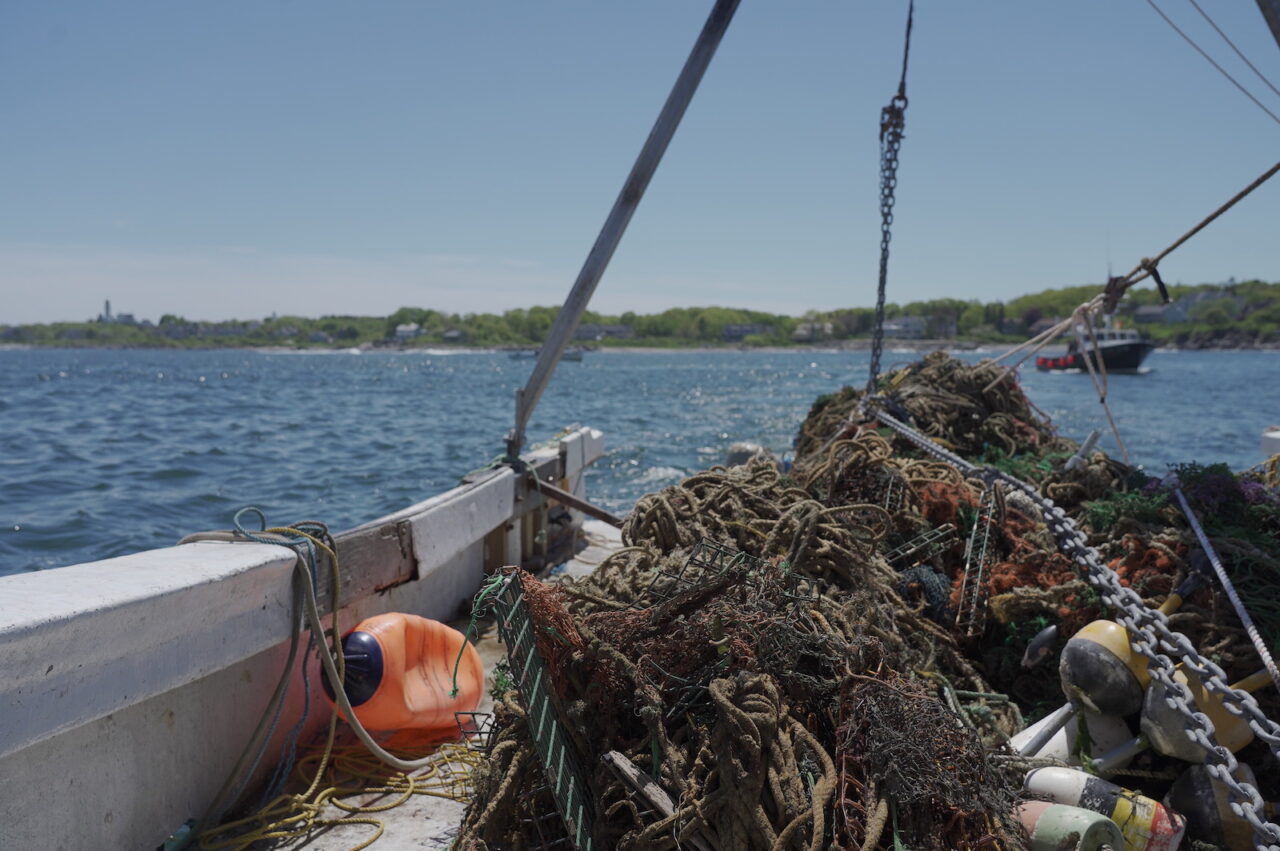
Abandoned, lost or discarded fishing gear—also known as ghost gear—is the deadliest form of plastic in our ocean impacting marine life and fish stock levels. However, through the Global Ghost Gear Initiative, we are investing in sustainable solutions addressing this problem and encouraging the uptake of innovative policies as detailed in our Best Practice Framework for the Management of Fishing Gear (BPF). The BPF is a practical guidance tool for all stakeholders across the seafood supply chain on how to prevent, mitigate and remediate ghost gear effectively. The GGGI works together with all stakeholders—from governments to academia, NGOs and corporate partners. In this post, we will go into more detail about how we work within various levels of the seafood industry to address the problem of ghost gear.

Ghost gear is being taken increasingly more seriously as a sustainability issue that seafood businesses must address as part of corporate social responsibility CSR and sourcing policies. For example, the Seafood Stewardship Index (SSI) hosted by the World Benchmarking Alliance is including more detailed indicators on ALDFG in the new index that will be published in 2022. At the same time, the BPF is becoming more widely used and implemented in corporate practice. Waitrose & Partners, for example, has made adherence to the GGGI BPF mandatory for all of its suppliers, while Young’s Seafood has used the BPF to conduct a risk assessment in its supply chain and Thai Union has developed a work plan to address ghost gear in Thailand based on recommendations in the BPF.

The BPF guidelines have also expanded into grocery stores. Friend of the Sea is a nonprofit organization that certifies sustainable seafood products and services. They are one of the certification groups that label a can of tuna or salmon fillet to verify which products in the seafood aisle are sustainable, and they have implemented language on ghost gear in their standard based on the BPF. Monterey Bay Aquarium’s Seafood Watch program also includes ghost gear as part of their evaluations. Most recently, the Global Seafood Assurances (GSA) released their Responsible Fishing Vessel Standard, which requires procedures that address ALDFG as standard criteria for their certification based on input from the GGGI.

Not all sustainable seafood labels consider ghost gear solutions in their certification process yet but the GGGI hopes that the BPF will be institutionalized even further. The Marine Stewardship Council (MSC), linked to the blue checkmark you might see on seafood products, is revising their standards to include more stringent ghost gear mitigation strategies. The GGGI has been actively engaged in the consultation process and is hoping to see stronger and quantifiable measures on ALDFG mitigation included. Some companies, like Thai Union, are already actively including ghost gear strategies in their Fishery Improvement Projects (FIPs) for fisheries they are hoping to certify further under MSC.

The GGGI aims to ensure that the adoption of the BPF by all stakeholders across the seafood supply chain is as easy as possible to achieve lasting preventative impact at scale. This is our motivation for adapting the document into an engaging online training tool as well as drafting a “companion guide,” which breaks down the BPF into five achievable goals. Both tools are available for GGGI private sector members and have been the topic of a four-part webinar series hosted in 2020 providing an interactive platform for discussion around how retailers and fishers can put the BPF into practice. In 2021, GGGI will also launch a refreshed version of the BPF including the latest science, developments and feedback gathered during these webinars and the regional capacity-building workshops, as well as a brand-new BPF for the aquaculture industry.

(C) Matthew Gilbert_Ocean Conservancy 4
© Matthew Gilbert

The recognition that best management practice for fishing gear and the suite of interventions detailed in the GGGI’s BPF are the key to tackling ghost gear is growing. There is no silver bullet answer when it comes to ghost gear but rather a need for each stakeholder to do its part along the fishing gear lifecycle. The BPF can be adapted and localized for each GGGI member’s needs, and members from across sectors can work together on prevention, mitigation and remediating actions to tackle ghost gear once and for all!

The post Ghost Gear Prevention in the Seafood Industry appeared first on Ocean Conservancy.


from Ocean Conservancy https://ift.tt/3oEaq7F https://ift.tt/eA8V8J
Monday, 1 February 2021

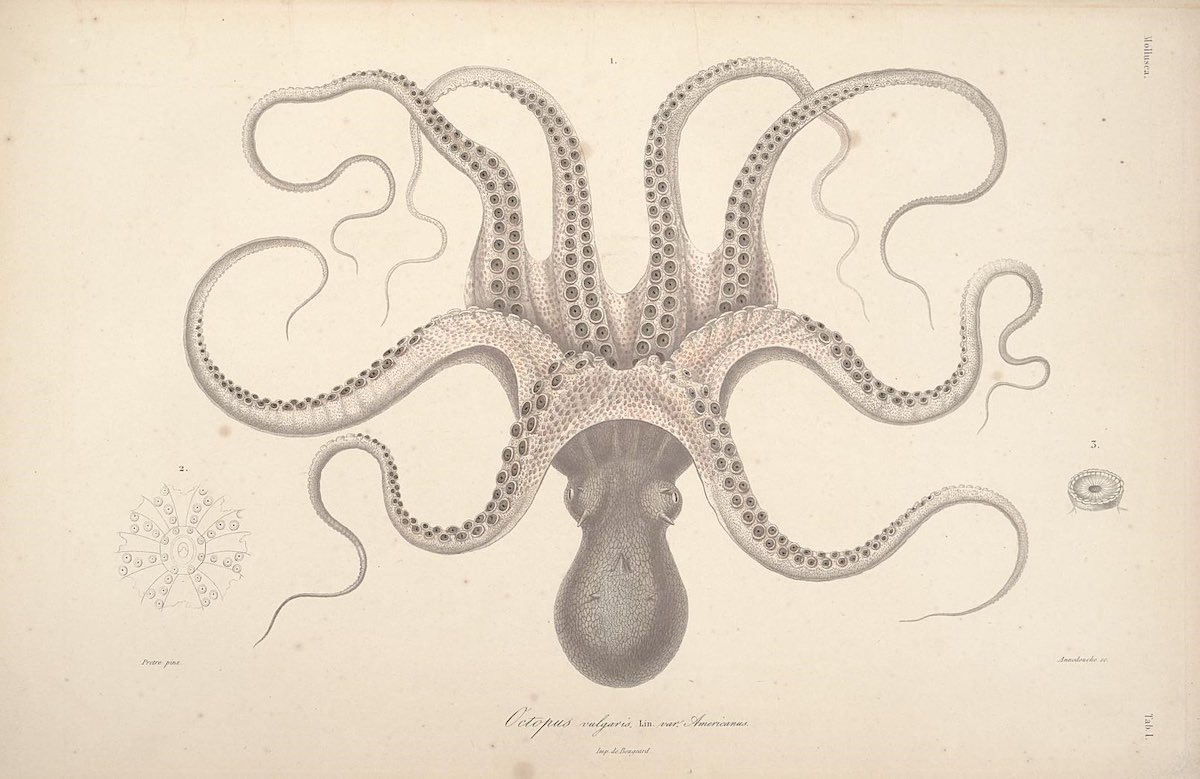
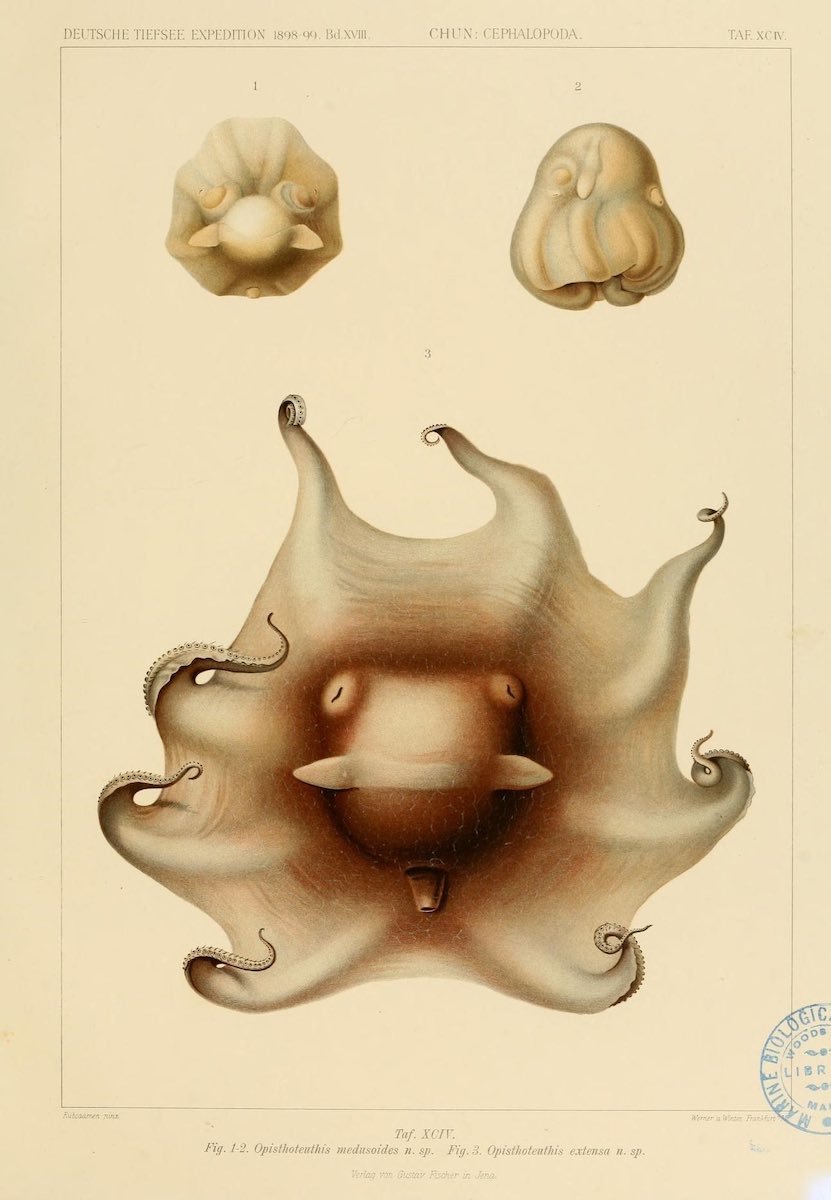
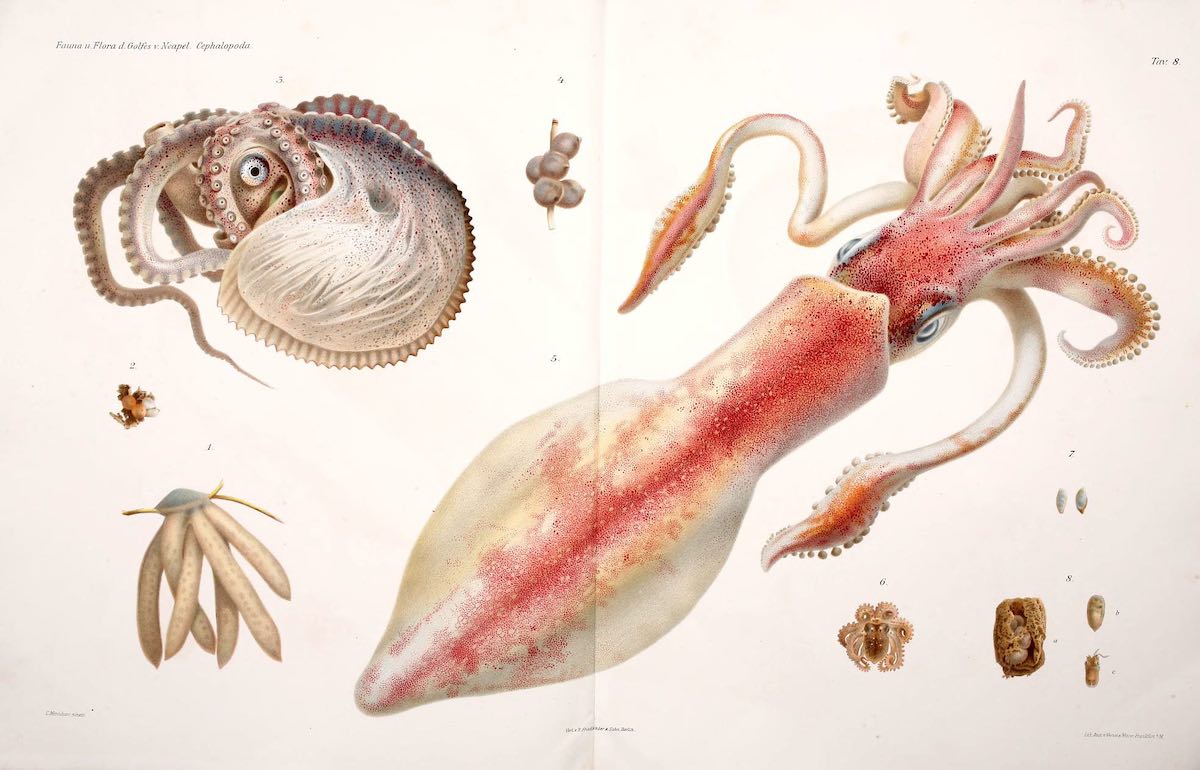
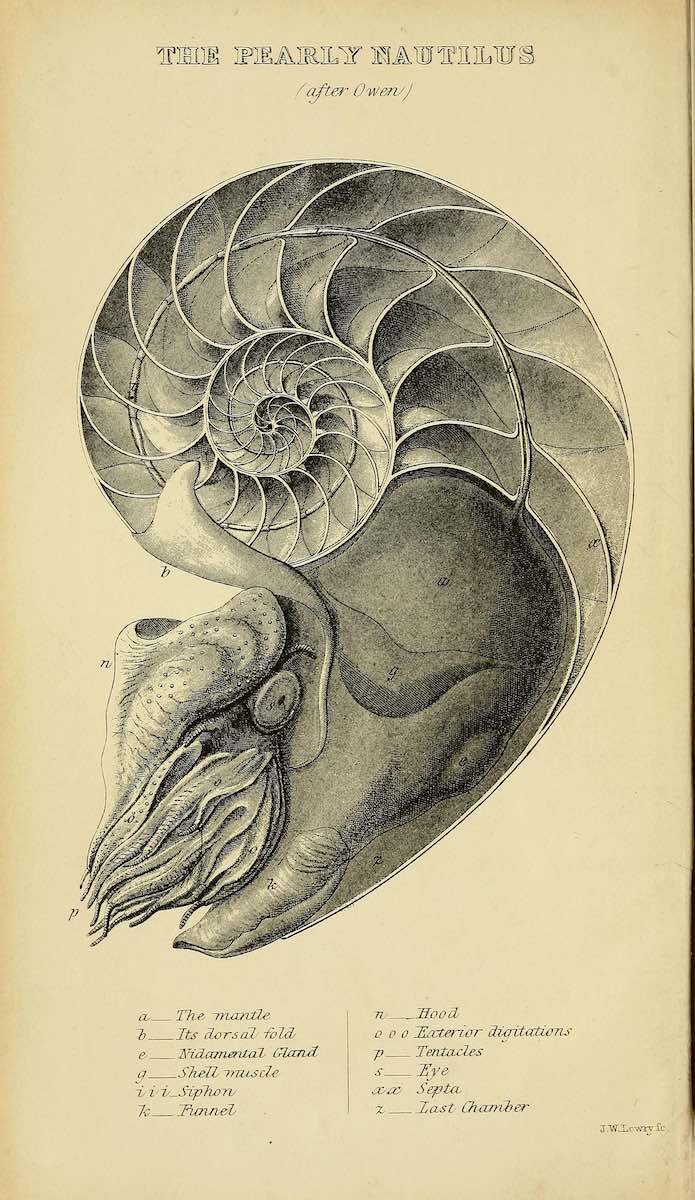
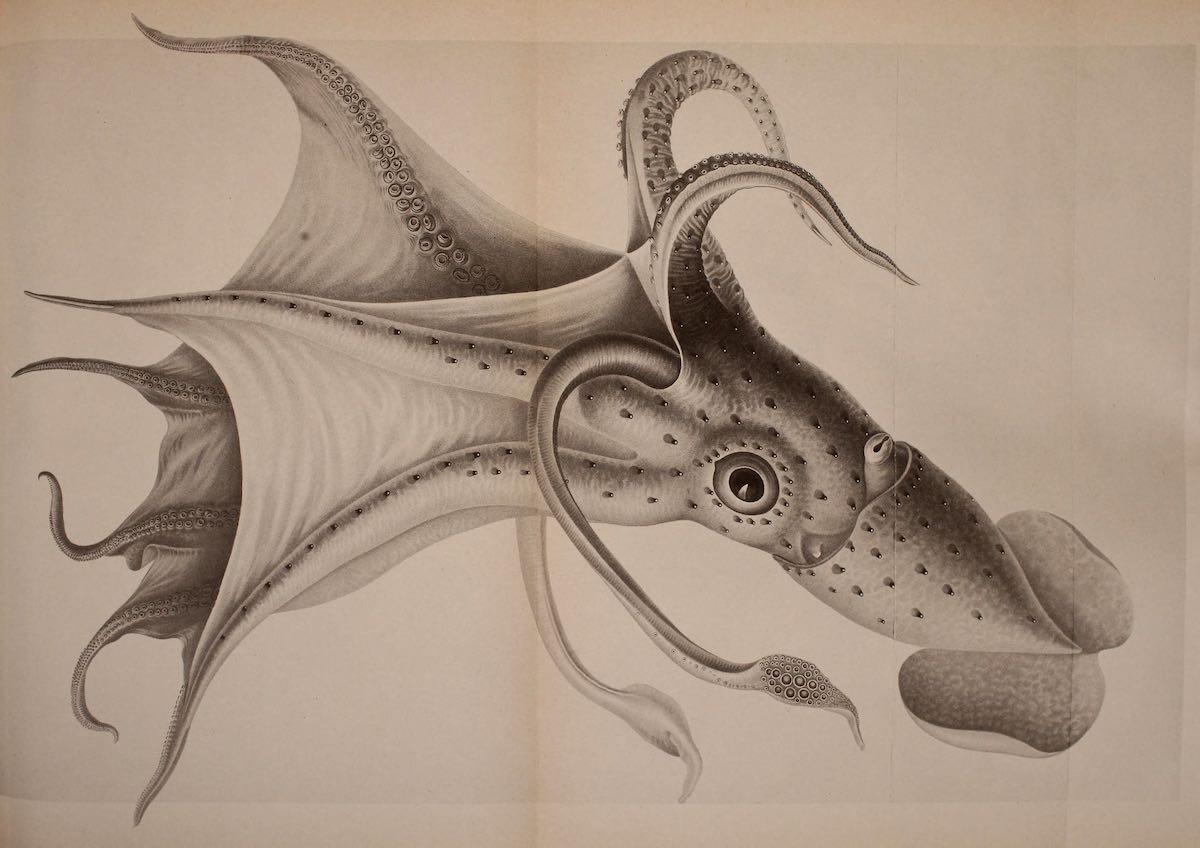
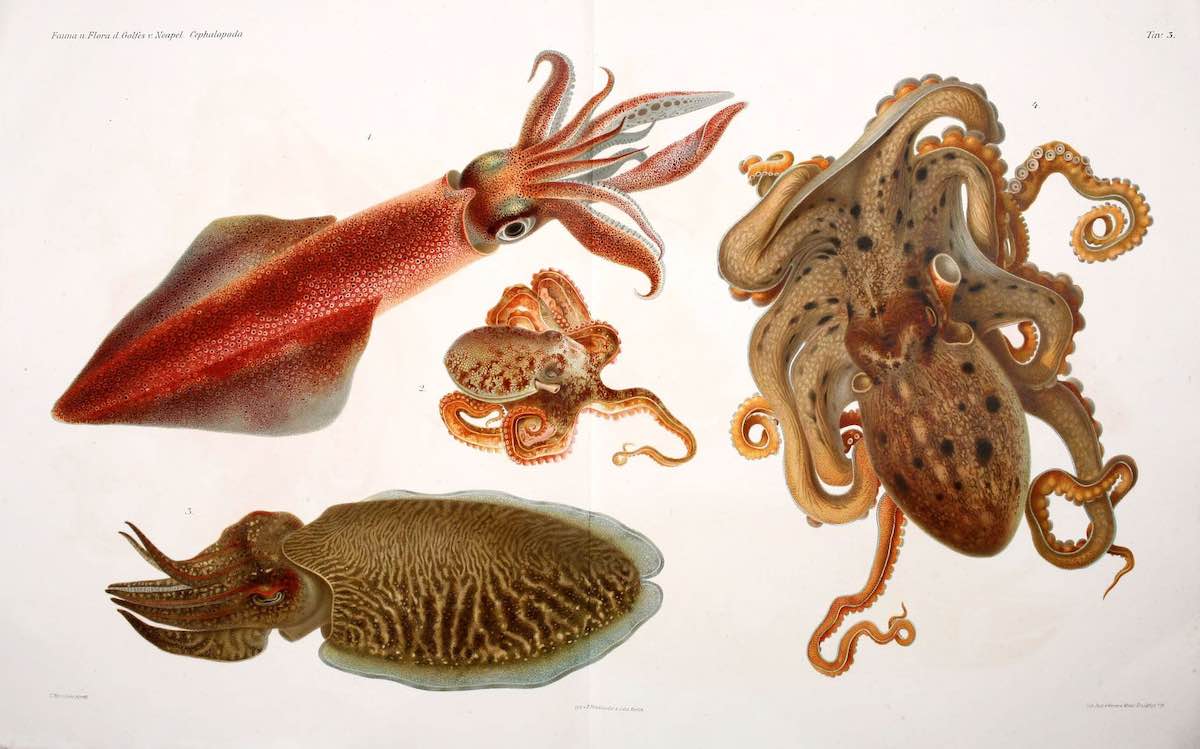
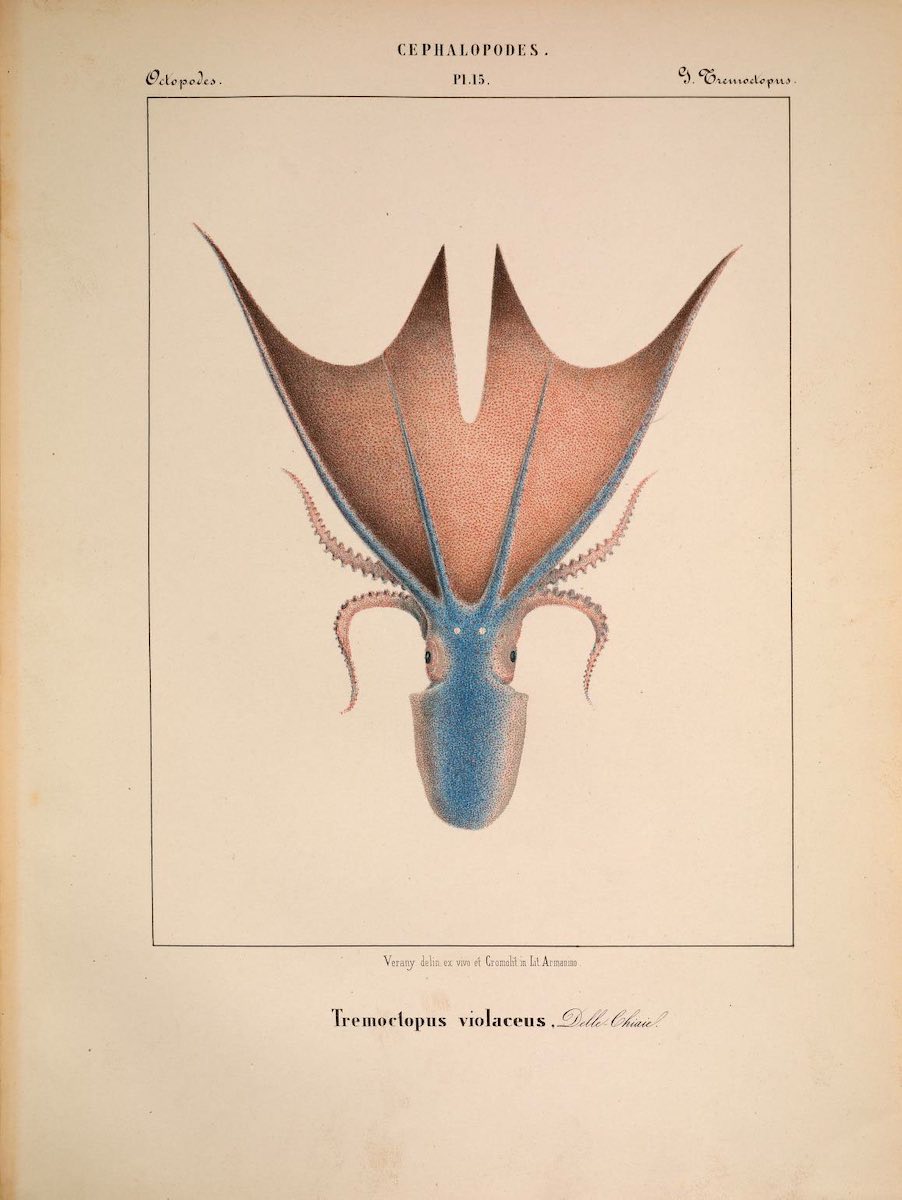
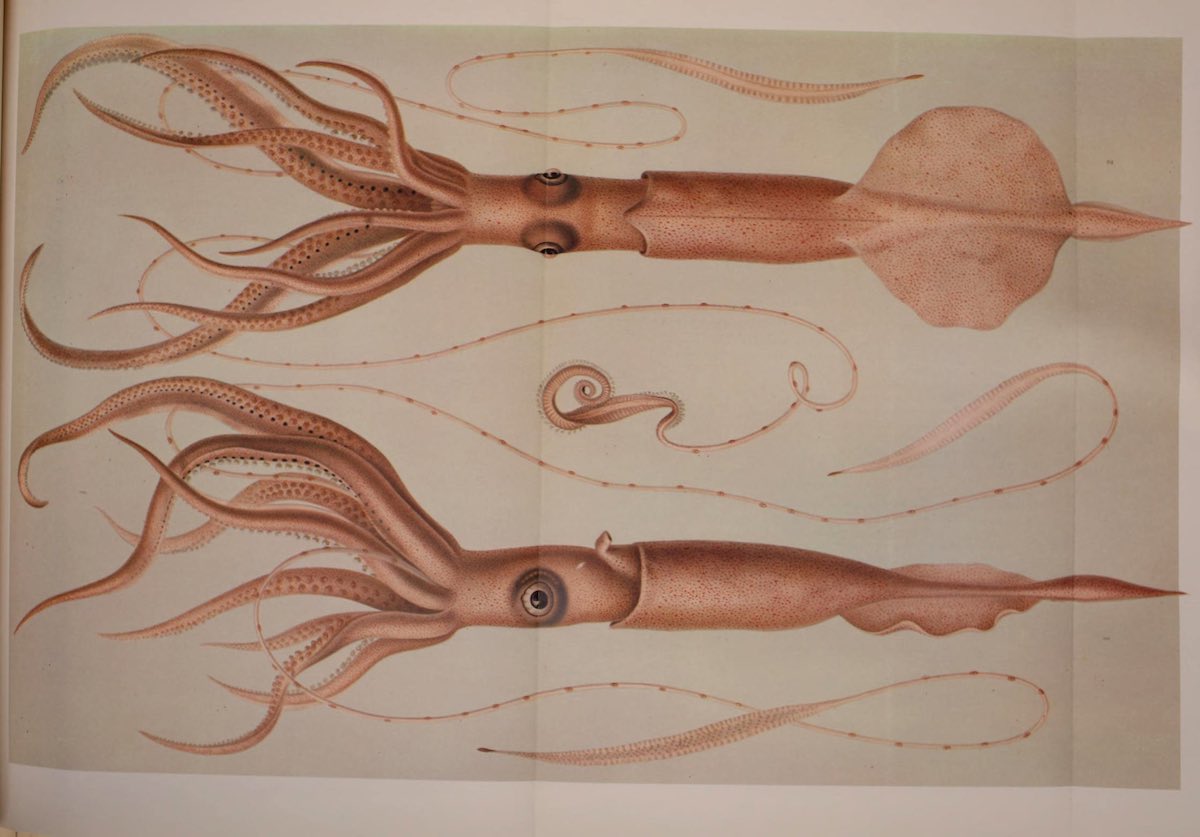
12 Historical Illustrations of Cephalopods

Cephalopods—the group of ocean animals that includes squid, octopus, cuttlefish and nautilus—have captivated people for thousands of years. Pliny the Elder, a philosopher in Ancient Rome, wrote, “no animal is more savage in causing the death of a man in the water,” and in Hawaiian mythology, the octopus is associated with the underworld. Cephalopods make an appearance in countless myths and stories from cultures around the world.

It’s no surprise then that philosophers, scientists and explorers continue to study and depict cephalopods up to modern times. Historical illustrations can give us a glimpse into the research of the past and help us understand how we learned all we know of these animals today.

Luckily, we can view thousands of historical illustrations of marine life thanks to the Biodiversity Heritage Library (BHL). The BHL is the largest open-access digital library for biodiversity archives. They work with libraries around the world to offer millions of books dating back to the 15th century for free. The library is not only an incredible source of data for scientists—it brings scientific art into the homes of people around the world.

Previously, we dug through the BHL archives to bring you some of our favorite ocean and shark illustrations from the 18th and 19th centuries. Now, to celebrate cephalopods, we’re bringing you our favorite squid, octopus, cuttlefish and nautilus illustrations from the BHL!

You can explore the BHL too, by visiting their website and Flickr page.

octopus_historical_02
From "Historia fisica, politica y natural de la isla de Cuba," 1838-1861 © COURTESY OF BIODIVERSITY HERITAGE LIBRARY
octopus_historical_03
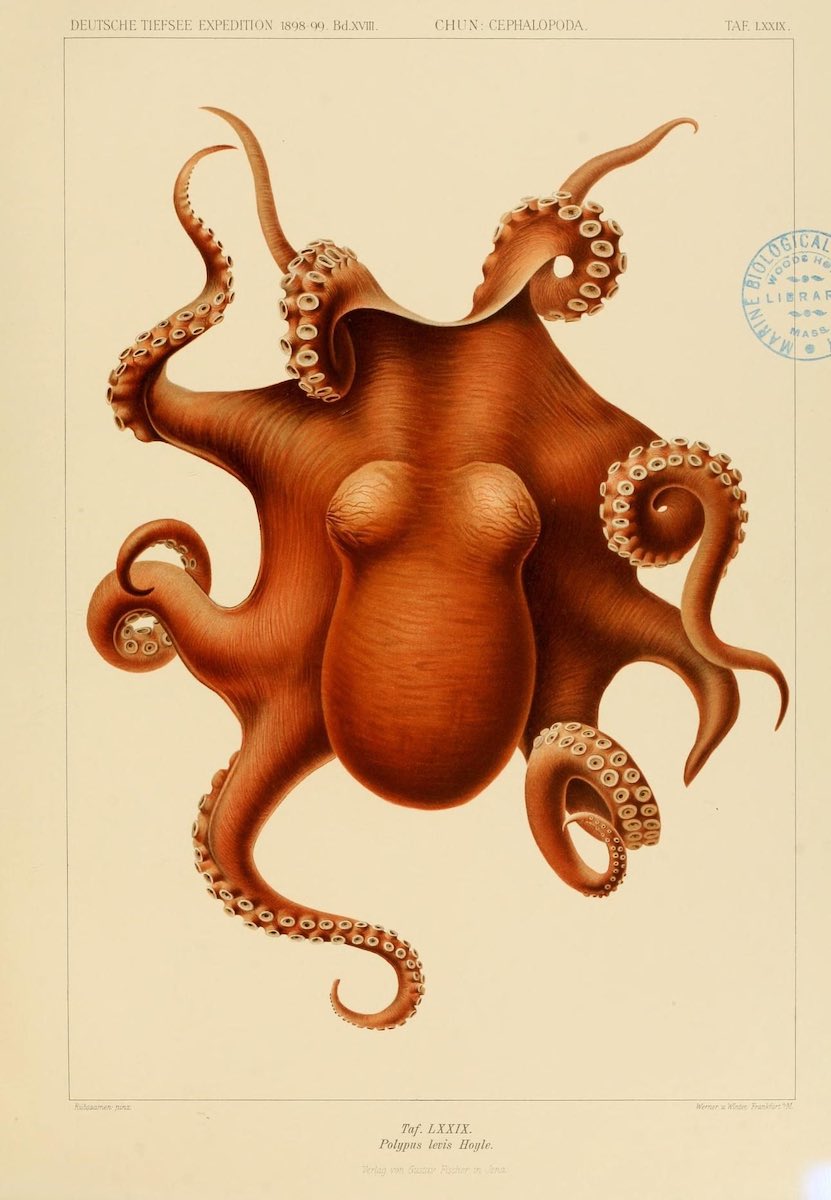
From "Die Cephalopoden," 1910-1915 © COURTESY OF BIODIVERSITY HERITAGE LIBRARY
octopus_historical_04
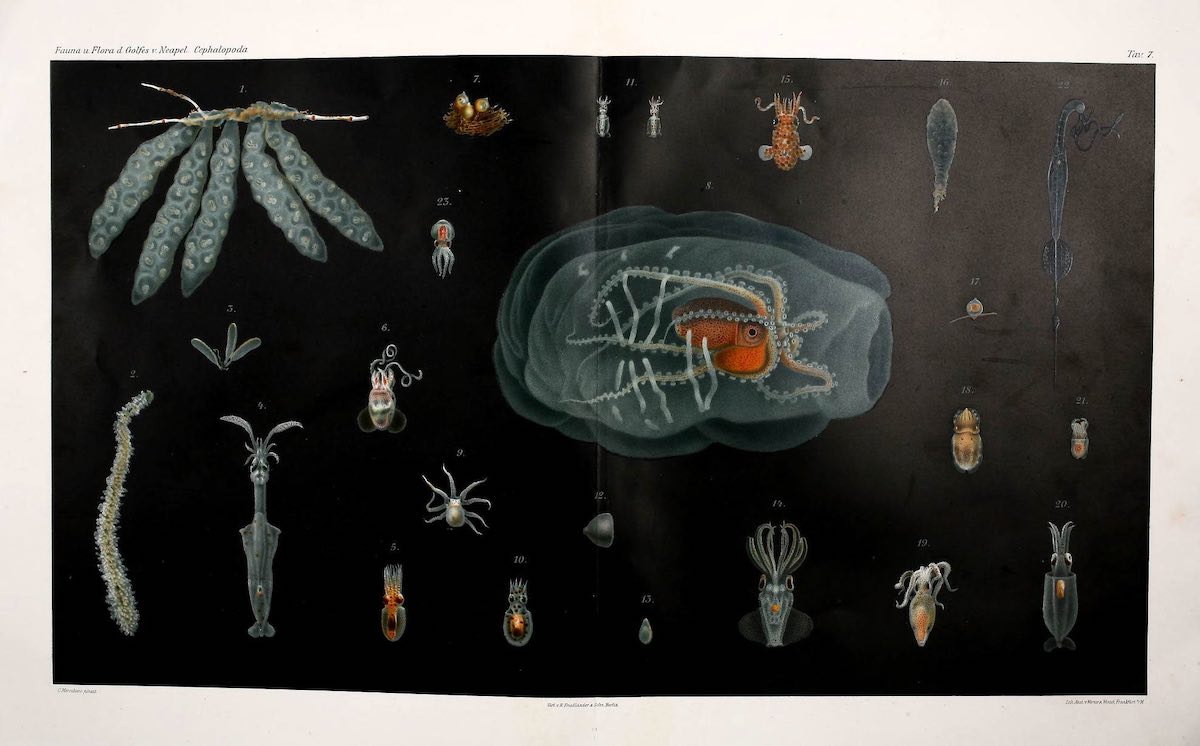
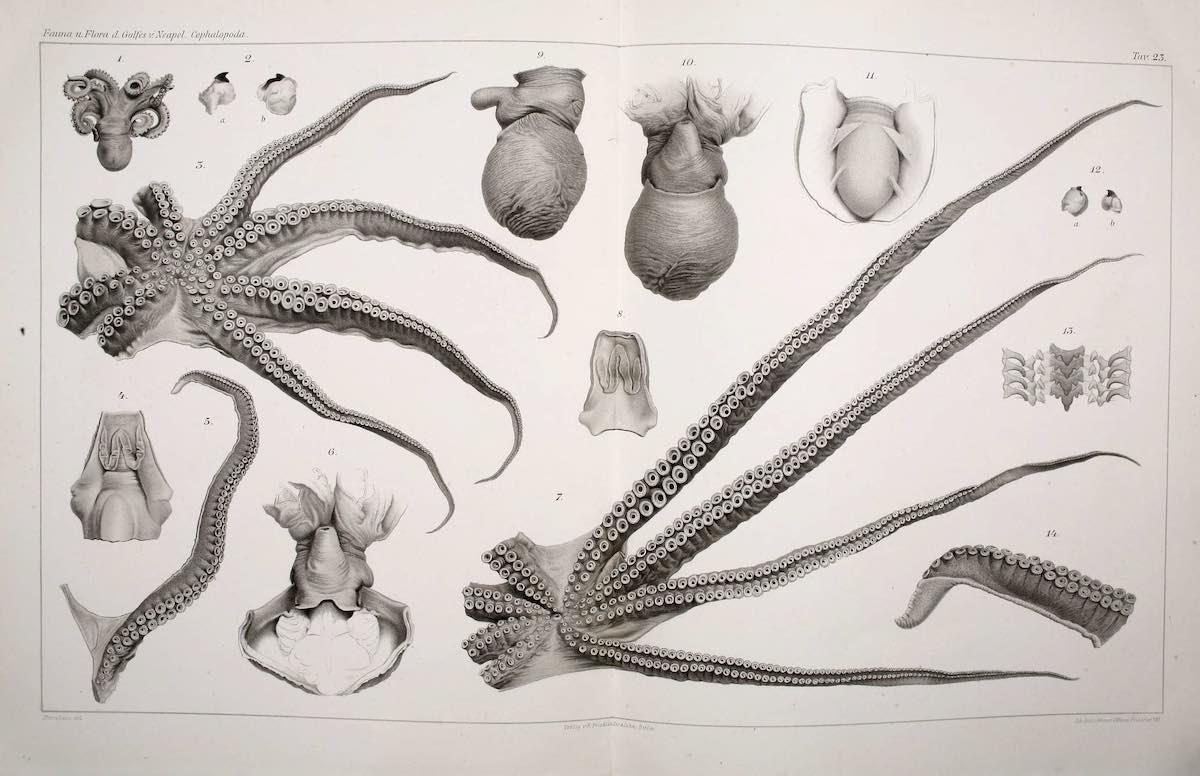
From "I Cefalopodi viventi nel Golfo di Napoli (sistematica)," 1896 © COURTESY OF BIODIVERSITY HERITAGE LIBRARY
octopus_historical_05
From "A manual of the Mollusca," 1868 © COURTESY OF BIODIVERSITY HERITAGE LIBRARY
octopus_historical_06
From "I Cefalopodi viventi nel Golfo di Napoli (sistematica)," 1896 © COURTESY OF BIODIVERSITY HERITAGE LIBRARY
octopus_historical_07
From "I Cefalopodi viventi nel Golfo di Napoli (sistematica)," 1896 © COURTESY OF BIODIVERSITY HERITAGE LIBRARY
octopus_historical_08
From "Die Cephalopoden," 1910-1915 © COURTESY OF BIODIVERSITY HERITAGE LIBRARY
octopus_historical_09
From "The Cephalopod. atlas," 1975 © COURTESY OF BIODIVERSITY HERITAGE LIBRARY
octopus_historical_10
From "I Cefalopodi viventi nel Golfo di Napoli (sistematica)," 1896 © COURTESY OF BIODIVERSITY HERITAGE LIBRARY
octopus_historical_11
From "Mollusques meÌditeraneÌens," 1851 © COURTESY OF BIODIVERSITY HERITAGE LIBRARY
octopus_historical_12
From "The Cephalopod. atlas," 1975 © COURTESY OF BIODIVERSITY HERITAGE LIBRARY

The post 12 Historical Illustrations of Cephalopods appeared first on Ocean Conservancy.


from Ocean Conservancy https://ift.tt/3cvYen6 https://ift.tt/eA8V8J
What are Tire Wear Particles?

What do you think about when you hear the words “microplastic pollution?” Your mind may immediately go to imagery of colorful fragmented pl...