Video.
from Web sites and blogs – Ocean acidification https://ift.tt/2TOv3T0 https://ift.tt/eA8V8J
Wednesday, 22 January 2020

Tuesday, 21 January 2020
5 Photos That Prove Seabirds and Shorebirds Make Amazing Moms
From the Atlantic to Pacific, a diverse set of seabird and shorebird species speckle our ocean’s coasts. From protecting their babies before they hatch to ensuring their hatchlings grow into healthy, thriving individuals, the level of commitment that seabird mothers show to their offspring is remarkable. Take a look at these spectacular photos of five marine bird species, and get ready to be inspired by these marvelous moms of sea and air!
Black-browed Albatross
(Thalassarche melanophris)
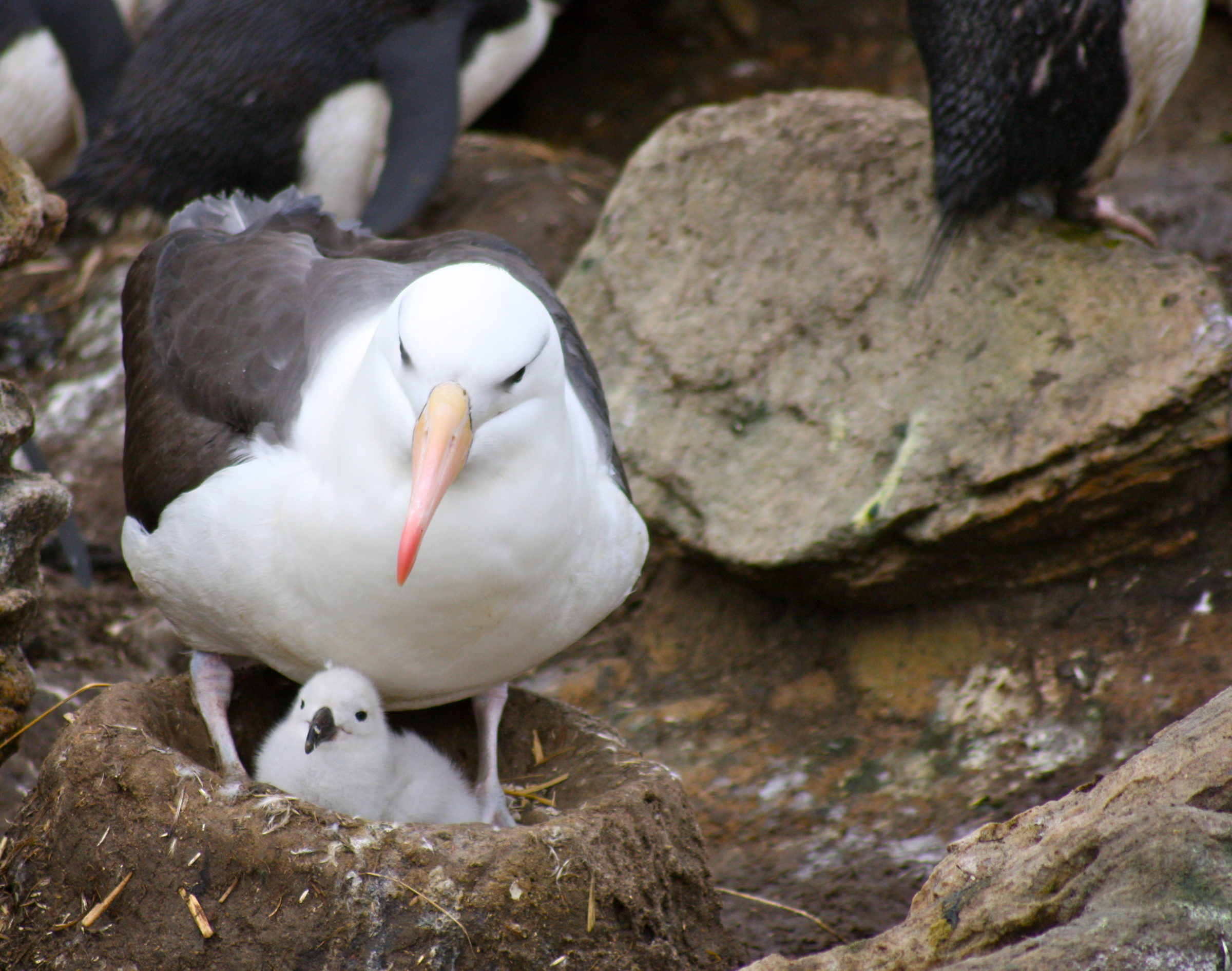
This albatross chick has a wide-open sky to explore one day.
For now, though, Mama knows it’s best to stay safe in their nest.
American Oystercatcher
(Haematopus palliatus)
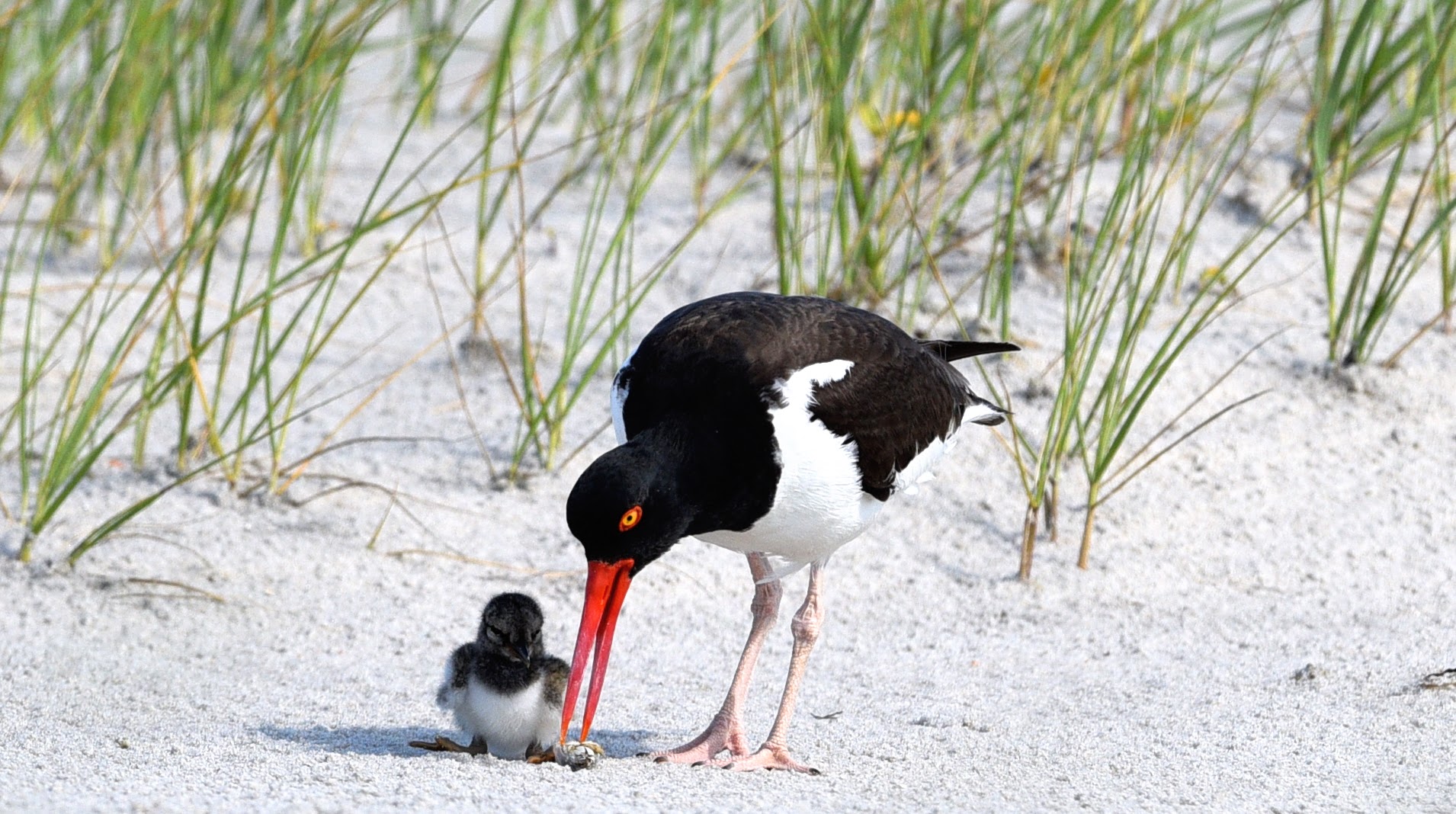
This American oystercatcher mother has recently done exactly what gave it its namesake: oyster catching!
While its little one has much to learn about oyster retrieval, mom is here to save the day in the meantime.
Blue-footed Booby
(Sula nebouxii)
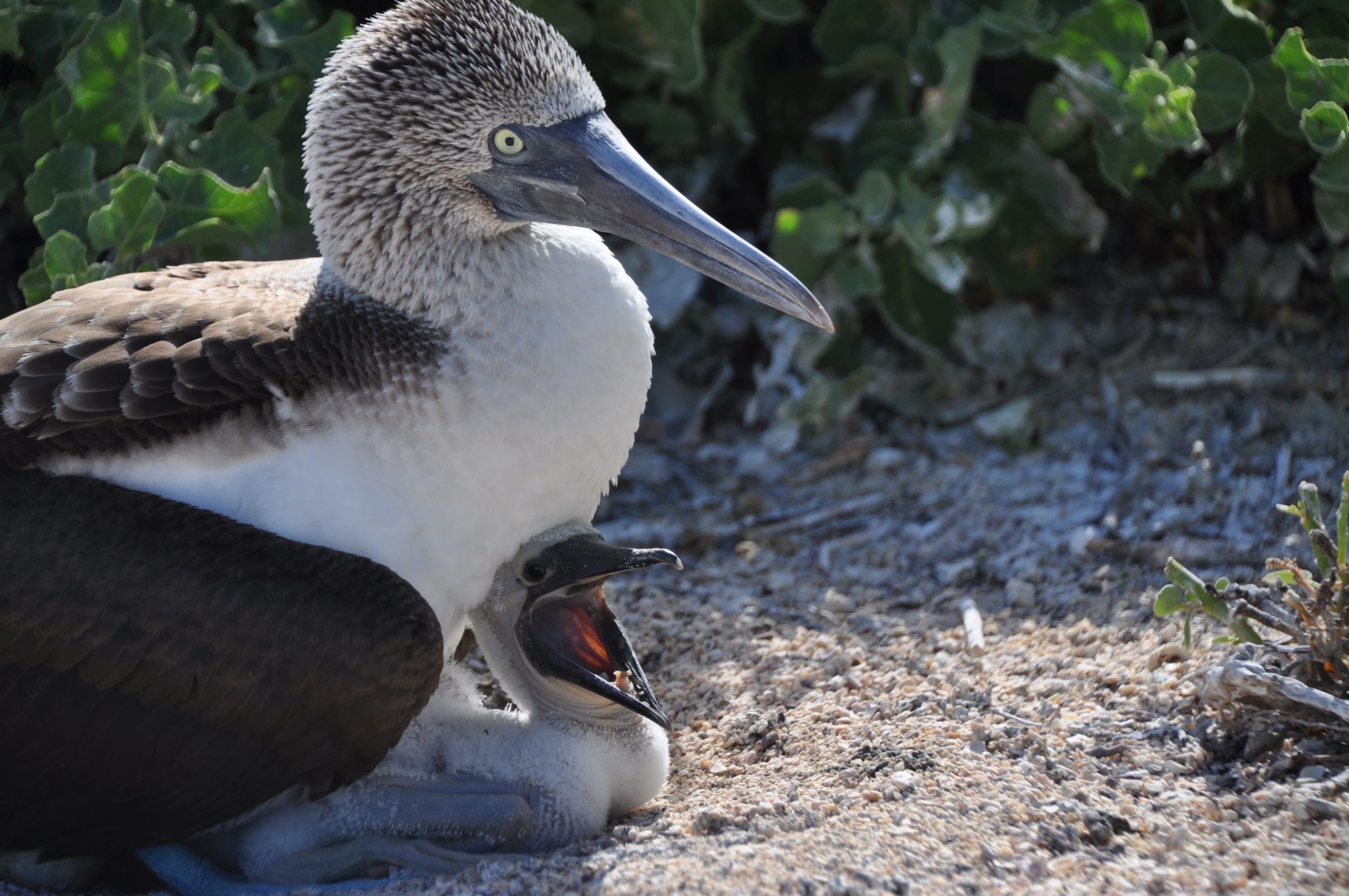
This blue-footed booby might feel like it’s ready to take on the world, but mom says not quite yet.
The chick will be off on its own in no time, and mom’s in no rush to say goodbye quite yet.
King Penguin
(Aptenodytes patagonicus)
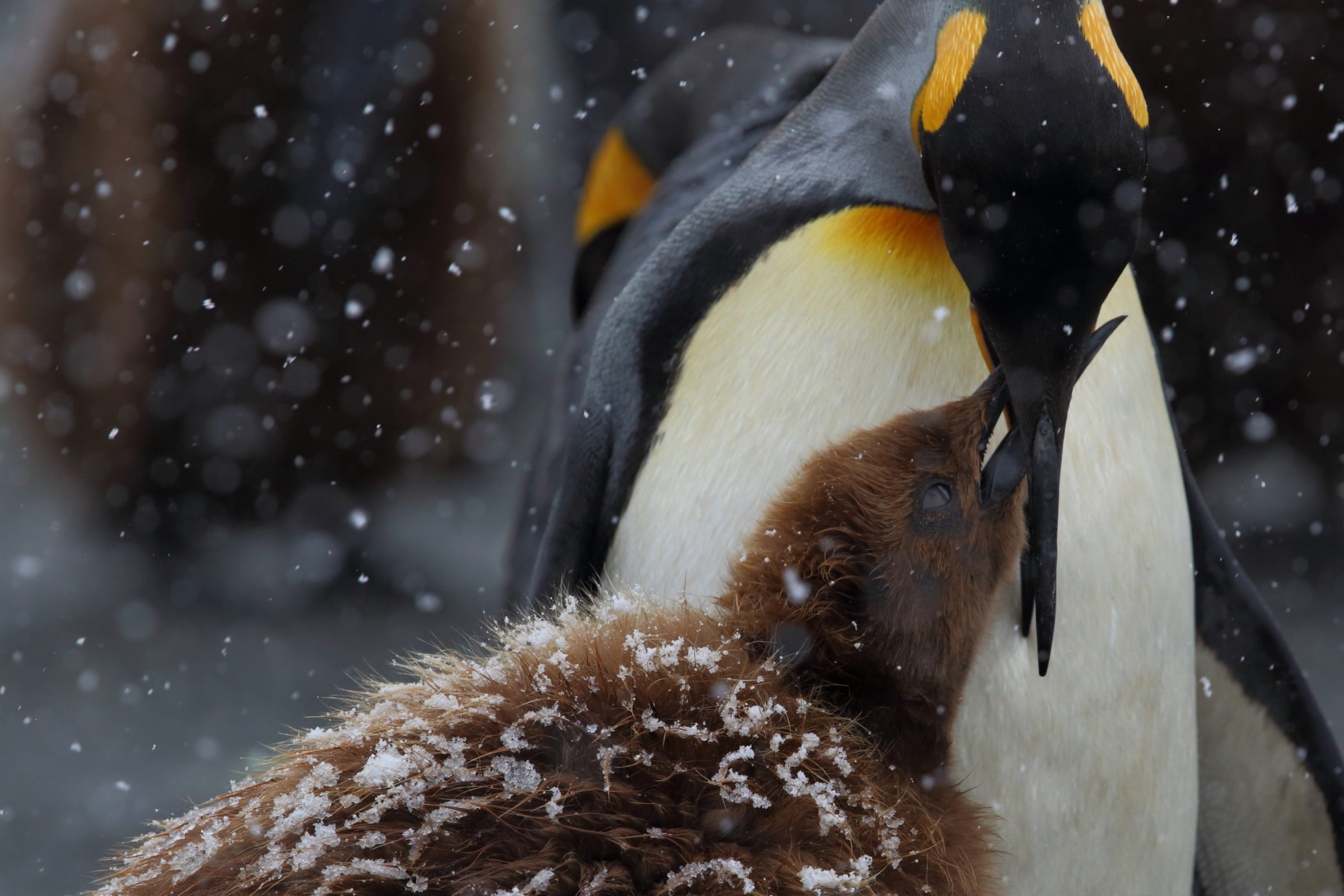
No matter the weather, this king penguin mother will always provide for her chick until it learns to thrive on its own.
Least Tern
(Sternula antillarum)
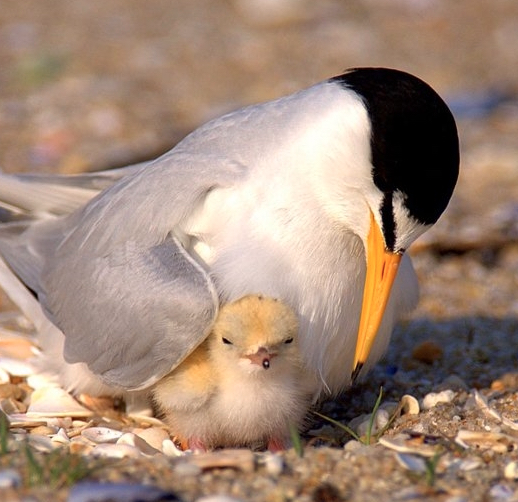
While this least tern hatchling may have big dreams about the world it will see one day, it also knows the best place to be right now is under its mother’s wing. Okay … maybe it’s not so sure, but this mother is determined to make sure her chick grows to be the healthiest little flyer around.
While all of these species are equally inspiring mothers, they also all face a multitude of modern-day threats. From marine debris to climate change and beyond, there are threats facing the birds of our blue planet’s coasts that they can’t face alone. They are all worth protecting, and we are the ones who can help make sure their future is one of a clean and healthy ocean. Add your name to our email list to stay updated on all the latest ways to help take action and support Ocean Conservancy’s conservation initiatives—together, we can work to keep these precious creatures safe today and in the years to come.
Sign up for our emails!
The post 5 Photos That Prove Seabirds and Shorebirds Make Amazing Moms appeared first on Ocean Conservancy.
from Ocean Conservancy https://ift.tt/38qGpk8 https://ift.tt/eA8V8J
Friday, 17 January 2020
How Do Gills Work?
All animals breathe. How they breathe, however, varies.
If you’re reading this, you’re probably a human. This means that you breathe by inhaling oxygen (which your body need to function) and exhaling carbon dioxide as waste. Air flows in through your nose or mouth and into your lungs where oxygen is transported through blood to the rest of your body. (Side note: are you breathing more heavily as you read this? Just me?)
In order for us to breathe, we need air. So, what does that mean for animals that live in the ocean?
Like us, fish also need to take in oxygen and expel carbon dioxide in order to survive. But instead of lungs, they use gills. Gills are branching organs located on the side of fish heads that have many, many small blood vessels called capillaries. As the fish opens its mouth, water runs over the gills, and blood in the capillaries picks up oxygen that’s dissolved in the water. Then the blood moves through the fish’s body to deliver the oxygen, just like in humans. All bony fish also have a bony plate called an operculum, which opens and closes to protect the gills.
Fish aren’t the only undersea organisms to use gills, however. Mollusks and crustaceans also have gills that operate the same way by pulling oxygen out of the water as it runs over the gills. Some animals even display their gills outside of the body: the name “nudibranch” (commonly known as sea slugs) comes from Greek and Latin words meaning “naked gills.” Nudibranchs often have feathery, brightly-colored ones that are exposed on their backs.
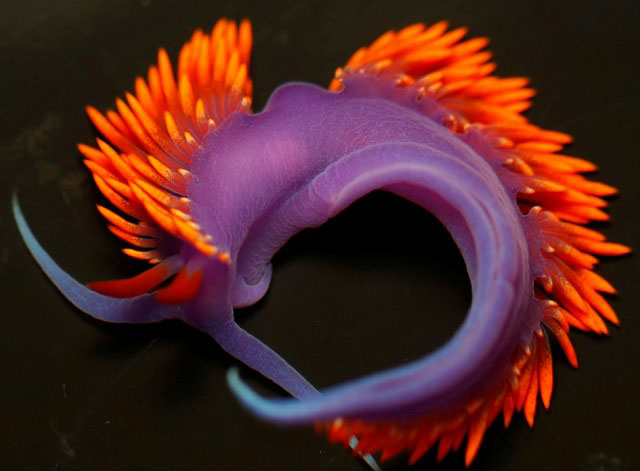
It’s hard work to breathe underwater. The air we breathe has an oxygen concentration of 200,000 parts per million. Water, on the other hand, only has a concentration of 4 to 8 parts per million. That means fish need to run a lot of water over their gills to get the amount of oxygen they need to survive. Also, gills are very efficient in extracting the oxygen the fish needs!
Breathing gets even harder when the oxygen concentration decreases. You may have heard of hypoxic zones, also known as “dead zones”, where low levels of oxygen make it impossible for animals to survive. Although they can occur naturally, hypoxic zones can also be created by human activity. When high-nutrient pollution, like farm runoff, enters the ocean, it can cause algal blooms that then die and decompose, causing low-oxygen zones. In 2019, runoff caused massive dead zones in the Gulf of Mexico.
Just like we need clean air to breathe, fish need clean water to breathe. We can help gilled organisms thrive by keeping their ocean habitat free of pollutants.
Sign up for our emails!
The post How Do Gills Work? appeared first on Ocean Conservancy.
from Ocean Conservancy https://ift.tt/2RrYTdi https://ift.tt/eA8V8J
Thursday, 16 January 2020
Nominate a deserving MPA for a 2020 Blue Park Award!
Featured Picture: 2019 Blue Park Awardees.
By Christina Hoenow, Blue Parks Intern
If you have followed our work here at Marine Conservation Institute, you will know that we are incredibly proud of our Blue Parks. You may have wondered how exactly these Blue Parks become Blue Parks.
What are the Blue Park Awards?
The Blue Park Awards are part of an initiative to safeguard marine biodiversity by assembling a strategic network of marine protected areas (MPAs) that represent all marine habitats in each biogeographic region. The awards serve as an incentive for governments, managers and partner organizations to ensure their MPAs meet science-based standards for effectiveness. Since 2017 we have awarded sixteen MPAs around the world. These Blue Parks include MPAs ranging from the massive and incredibly well known Reserva Marina de Galàpagos, which spans 138,000 km2, to the tiny Chumbe Island Coral Reef Sanctuary, which covers 0.7 km2.
Together, we can recognize all of the effective MPAs around the globe! To identify outstanding MPAs, we rely on nominations from MPA staff members, scientists who work within MPAs, partner NGOs and other individuals associated with MPAs. If you are involved with an MPA that you believe meets the Blue Park Award criteria, available here for review, then please think about nominating them for a 2020 Blue Park Award! Once an MPA is nominated, it is evaluated by the Blue Parks team, and an extensive evaluation report is drafted. Then, the evaluation report along with all supporting documents are assigned to the appropriate members of our Science Council – these experts from around the world make the award decisions.
How do I nominate an MPA?
The nomination process involves answering questions about the MPA, including questions about size, biodiversity value, management, regulations and enforcement. We also ask that you submit official documentation of the ecosystems, biodiversity, endangered and endemic species in the MPA, including maps, monitoring reports and scientific papers. Finally, we also need documentation of MPA regulations, management plans and enforcement plans. The nomination process should take approximately 30 minutes, if you have already gathered the management plans and any other documents to upload. We encourage you to review the nomination questions prior to starting the process. The 2020 nomination period is open until 31 January 2020; if you are ready, click here to nominate an MPA.
Without the nomination of deserving MPAs by individuals like you, we would not be able to carry out this important mission to set a high standard for MPAs and recognize those that are meeting the standard. We truly believe in the power of MPAs to safeguard life in the sea; we have seen the benefits they accrue for wildlife and the communities which are dependent on them.
If you have any questions regarding the nomination process please feel free to email Dr. Sarah Hameed at Sarah.Hameed@marine-conservation.org or refer to the Blue Parks webpage for more information.
The Global Ocean Refuge System- how to nominate a Blue Park!
Uploaded by Marine Conservation Institute on 2017-06-21.
from On the Tide https://ift.tt/3ai5QWP https://ift.tt/eA8V8J
Save Our Seas 2.0 Act Just Passed the Senate—Here’s Why It Matters
After months of deliberations, the United States Senate passed the bipartisan Save Our Seas 2.0 Act (SOS 2.0) on Thursday, January 9. The bill still has a long road ahead before it can become law, but this represents a win for our ocean! SOS 2.0 passed by unanimous consent, which means that not a single Senator—Democrat or Republican—objected to its passage.
What does Save Our Seas 2.0 do?
You might recall that the bill’s predecessor, the Save Our Seas Act, was signed into law in October 2018. SOS 2.0 is much more comprehensive and ambitious than its predecessor, in particular because the final, Senate-passed version of the bill places a greater emphasis on reducing plastic waste. With the added plastics reduction provisions, SOS 2.0 brings us several steps closer to the comprehensive, science-based approach that we need to tackle ocean plastic pollution.
Here are a few reasons that SOS 2.0 represents a win for our ocean:
- It proposes measures to bolster international engagement and cooperation to address marine debris, and directs the executive branch to prioritize ocean plastic pollution and take on a leadership role in international forums;
- It includes a comprehensive assessment of plastic waste in the United States, including opportunities to reduce the creation of plastic waste and an analysis of recycled content standards;
- The bill takes important steps to address critical recycling infrastructure needs by requiring an EPA strategy for improving domestic waste management and directing funding to waste management improvements through new grant programs; and
- The bill will help address several key knowledge gaps—ranging from plastic pollution data in the United States, to the effects of microplastics on food and drinking water, to the impacts of lost and derelict fishing gear. This in turn will help inform what policy interventions are needed beyond SOS 2.0.
By unanimously passing this bipartisan piece of legislation addressing ocean plastic pollution, the Senate has sent a clear signal that this is a long-term policy priority for the United States. Most notably, the bill sets up more ambitious action to come.
Ocean Conservancy is grateful to Sens. Whitehouse, Sullivan, and Menendez for their continued leadership, and to Sen. Udall for his important contributions to improving the bill.
What comes next?
Now that the bill has passed the Senate, it needs to be passed by the House of Representatives before it can be signed into law. We look forward to working with ocean champions in the House of Representatives to ensure that the momentum continues.
Let’s be clear: SOS 2.0 is certainly a step forward in several key areas, but it’s not a cure-all. With an estimated 8 million metric tons of plastic entering the ocean from land every year, plastic pollution affects all of us. It impacts more than 800 marine species, from the tiniest plankton to the largest blue whales, and is found everywhere from Arctic ice to deep ocean trenches. In this way, it is one of the most visible, most prolific threats facing our ocean, and it will take much more than one piece of legislation to turn the tide. Ocean Conservancy is working to move us towards the lasting solutions that we will need to tackle the ocean plastics crisis.
Stay current on ocean news!
Sign up for our emails.
The post Save Our Seas 2.0 Act Just Passed the Senate—Here’s Why It Matters appeared first on Ocean Conservancy.
from Ocean Conservancy https://ift.tt/3adGSI9 https://ift.tt/eA8V8J
Wednesday, 15 January 2020
Ghost Gear Reflections and Resolutions
This blog was written by Ingrid Giskes, the Director of the Global Ghost Gear Initiative (GGGI), where she works to tackle the most harmful form of marine debris in our ocean: lost and abandoned fishing gear. She has a background in international policy and has been working in this field for the last seven years. When she’s not traveling, Ingrid lives across from the ocean where the waves and ocean life inspire her every day to do more. Follow Ingrid and her team on Twitter at @Igiskes and @GGGInitiative and learn more about this Ocean Conservancy program on www.ghostgear.org.
Like so many others, I get reflective this time of year. Long after the clock strikes midnight on New Year’s Day, I find myself thinking back on the highs and lows of the past twelve months, and all of the things that I hope to achieve in the future.
2019 was an eventful year for the Global Ghost Gear Initiative (GGGI.) In the spirit of reflection and resolutions, here are eight things that I’m proud of the GGGI for achieving in 2019, and three things that we’re looking forward to accomplishing in 2020.
1. We found a permanent home with Ocean Conservancy.
It’s been a full year since Ocean Conservancy became the new host organization of the GGGI, and the transition could not have gone more smoothly. The GGGI is in great company alongside other collaborative initiatives under Ocean Conservancy’s Trash Free Seas® program, including the International Coastal Cleanup and the Trash Free Seas Alliance®.
2. We launched new initiatives in memory of our colleague Joanna Toole.
Joanna Toole, one of the co-founders of the GGGI, was tragically killed in the March 2019 Ethiopian Airlines crash. Joanna was a tireless advocate for the ocean and the creatures that depend on it, and we’ve sought to carry on her legacy. In October, Ocean Conservancy alongside OceanCare, the Center for Coastal Studies and the Joanna Toole Foundation launched the Joanna Toole Internship to support young women in ocean conservation. Additionally, alongside World Animal Protection and the Joanna Toole Foundation, we have launched the Joanna Toole Annual Ghost Gear Solutions Award, which will fund projects dedicated to tackling ghost gear.
3. More than a dozen new member organizations joined the GGGI.
Last year, the GGGI grew significantly, with organizations across many different sectors joining. Major corporations, including SeaBos, which represent 10 of the top seafood companies in the world, Red Lobster, Food Co-op UK, DSM and Darden Restaurants joined the GGGI and are looking to incorporate the Best Practice Framework (BPF) across their relevant corporate policies and supply chains. Five new NGOs joined, including Cape Breton Environmental Association, Blue Marine Foundation, Ocean Care, Blue Cycle and the Manta Caribbean Project, furthering our capacity to directly implement solutions on the ground around the world. Finally, the Government of Norway became the fifteenth national government to sign on to the GGGI.
4. We held a series of regional workshops in collaboration with UN FAO.
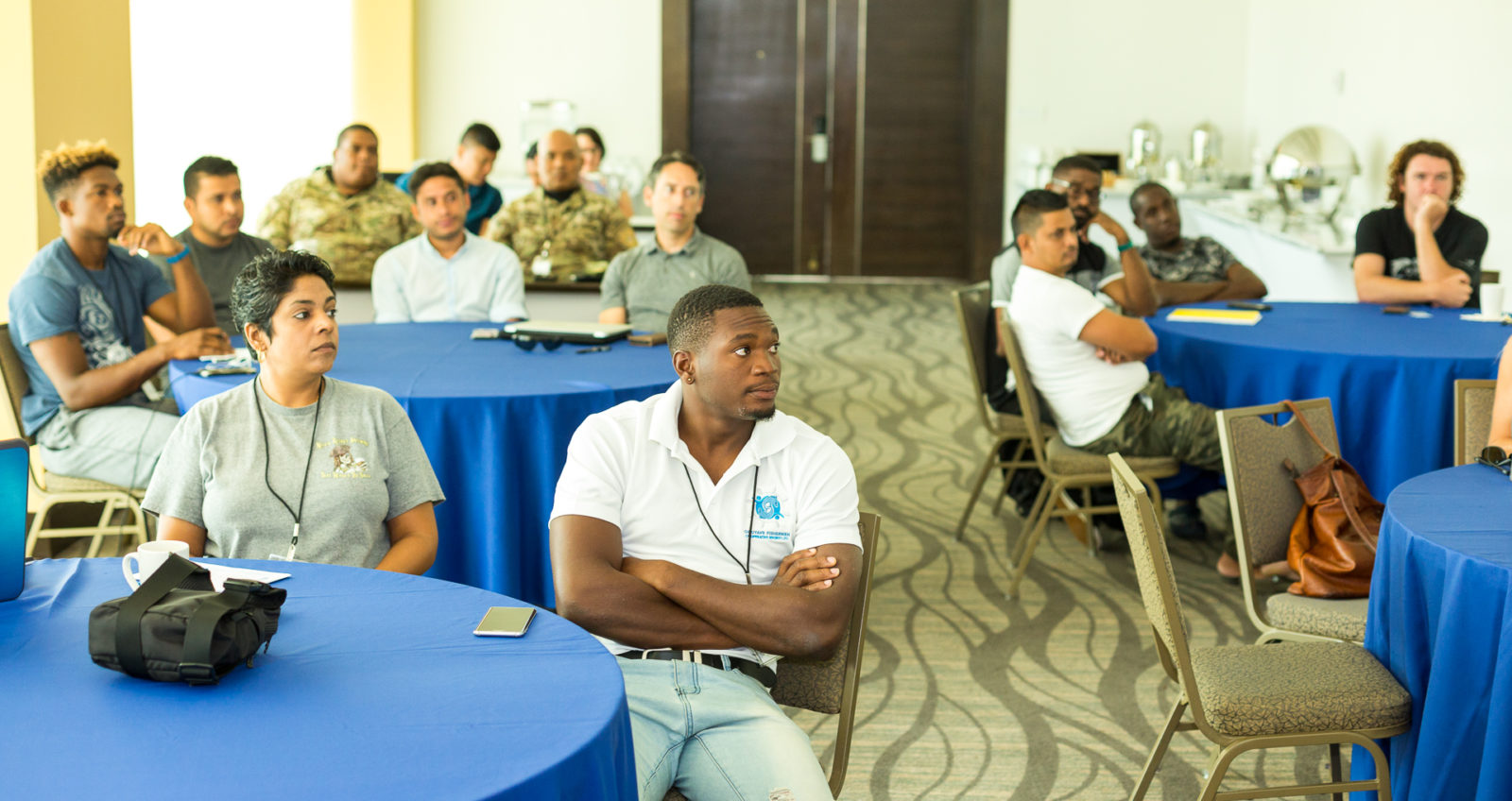
Alongside UN Fisheries and Agriculture Organization (FAO), the GGGI hosted workshops on the BPF and FAO’s Voluntary Guidelines for the Marking of Fishing Gear in Vanuatu, Indonesia, Senegal and Panama. It was invigorating to work with regional stakeholders and fishers to develop prevention strategies for ghost gear in their communities. In total, over 200 participants from 101 countries participated in these workshops, and we’re excited to build on this foundational work in 2020 with more local action planning and training opportunities.
5. We helped implement solutions on the ground.
In 2019, we were excited to help implement solution projects in Jamaica, Indonesia and Myanmar. In Myanmar, we initiated a ghost gear removal pilot effort, which was the first of its kind in the country. The project, funded by the National Geographic Society and World Animal Protection, focuses specifically on the Myeik Archipelago, one of the most remote and undisturbed island groups in the world. In Indonesia, we continued our work on the marking of fishing gear together with the Indonesian Government.
6. We facilitated gear removal across the world.
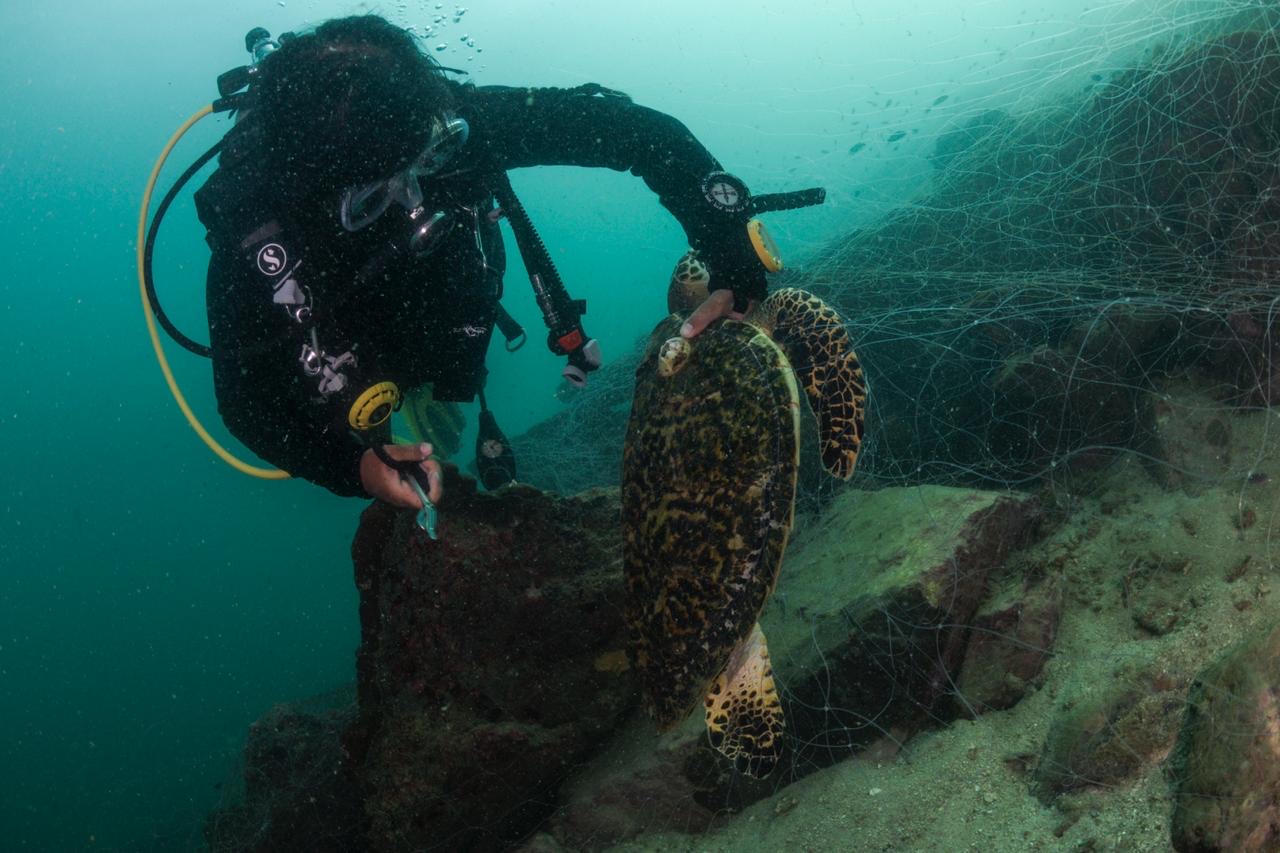
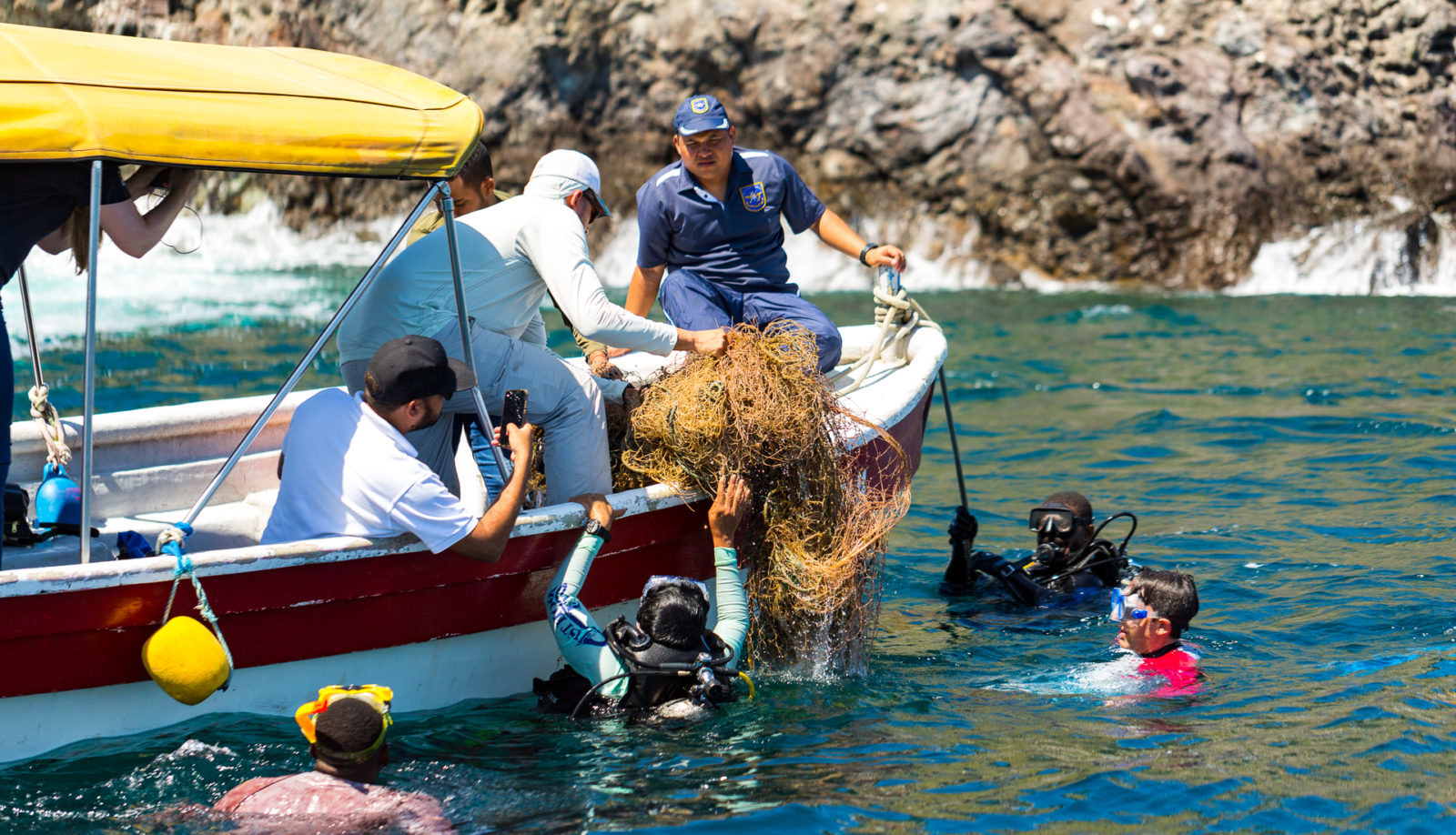
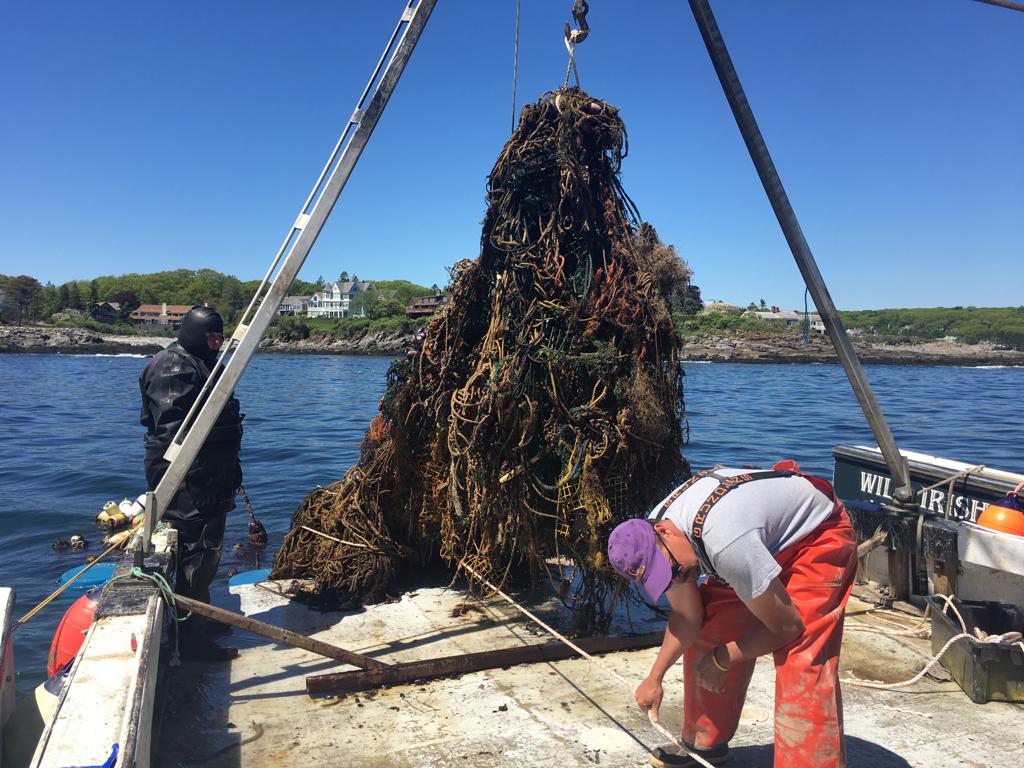
The GGGI helped remove abandoned fishing gear in Panama City, Vanuatu and the Gulf of Maine. Notably, the removal in Maine yielded our biggest find in a single retrieval effort ever: a gear ball weighing over 20,000 pounds (or nearly ten metric tons!) was collected and brought back to shore to be recycled.
7. We attended and spoke at a wide variety of high-profile conferences and forums.
The GGGI team had the opportunity to speak at conferences around the world and bring further attention to the ghost gear problem. From the APEC Oceans and Fisheries Working Group Meeting in Chile to the ASEAN Regional Forum and US State Department workshop in Vietnam, we were excited to help shape high level regional policies and share our knowledge of the effects of ghost gear on the ocean and those who depend on it. We spoke at numerous seafood shows and events alongside GGGI corporate partners, including the North Atlantic Seafood Forum, Seafood Expo North America, and SeaWeb Seafood Summit. We also attended other global policy fora, including the Our Ocean 2019 Conference in Oslo, Norway and the High-Level Panel for a Sustainable Ocean Economy, where we had the chance to connect with key figures in the battle against ocean plastic and for sustainable fisheries.
8. We watched awareness of ghost gear grow through global mainstream media coverage.
As the issue of ocean plastic more broadly garnered attention, 2019 saw an influx of public interest in the issue of ghost gear. The GGGI was featured in Forbes, while gear removals in Maine and Panama were covered by the Associated Press and France 24, respectively.
Despite the ups and downs of last year, I find myself optimistic about what 2020 holds for the GGGI. As a sneak preview, here are three of the things that I’m most excited about.
- We are planning updates to the data portal which will provide stakeholders with access to even more resources from our GGGI member organizations.
- We will participate in various policy fora, including the UN Ocean Conference, the Hallifax Gear Innovation Summit (Halifax, Canada), the International Symposium on Plastics in the Arctic (Reykjavik, Iceland), the International Conference on the African Marine Waste Network (Port Elizabeth, South Africa), and the UN FAO Committee of Fisheries (COFI) meeting where we will continue to advocate for policies that confront the ghost gear issue
- We will launch a best practice framework that deals specifically with the issue of aquaculture derived ghost gear.
I can’t wait to see what we can accomplish together in 2020 through this change-making initiative. Watch this space for updates throughout the year!
Sign up for our emails!
The post Ghost Gear Reflections and Resolutions appeared first on Ocean Conservancy.
from Ocean Conservancy https://ift.tt/2u1tFS6 https://ift.tt/eA8V8J
Tuesday, 14 January 2020
7 Ways Baby Sea Turtles Inspire Us to Live Life Bigger
Sometimes, things happen throughout the course of the day that don’t exactly make us feel extra motivated, driven, enthused to be our best selves. But if I’ve learned anything in life so far, it’s that there’s nothing quite as important to maintain during turbulent times than a focused perspective. That’s exactly why I’ve always loved baby sea turtles. While all of the animals that call our ocean’s waters home are spectacular, there’s something special about sea turtles’ journeys as babies from nest to ocean that has an unmatched capacity to us to inspire us to implement a refreshed perspective on life.
No matter what your biggest struggle or frustration is right now, here are seven ways sea turtle hatchlings can inspire you to live life a little bigger than you did yesterday.
On Self-Comparison

“A flower doesn’t think of competing with the flower next to it. It just blooms.”
-Zen Shin
When baby sea turtles hatch, they’re hatching with around 100 of their siblings at the same time. If every sea turtle were to stop and compare itself to how quick or strong one of their brothers and sisters were compared to themselves, their shot at survival would be negatively impacted. Be like a sea turtle: focus on your own goals and don’t compare your success to anyone else’s. Your achievements are your own.
On Family and Roots
“Families are like branches on a tree. We grow in different directions, yet our roots remain as one.”
-Unknown
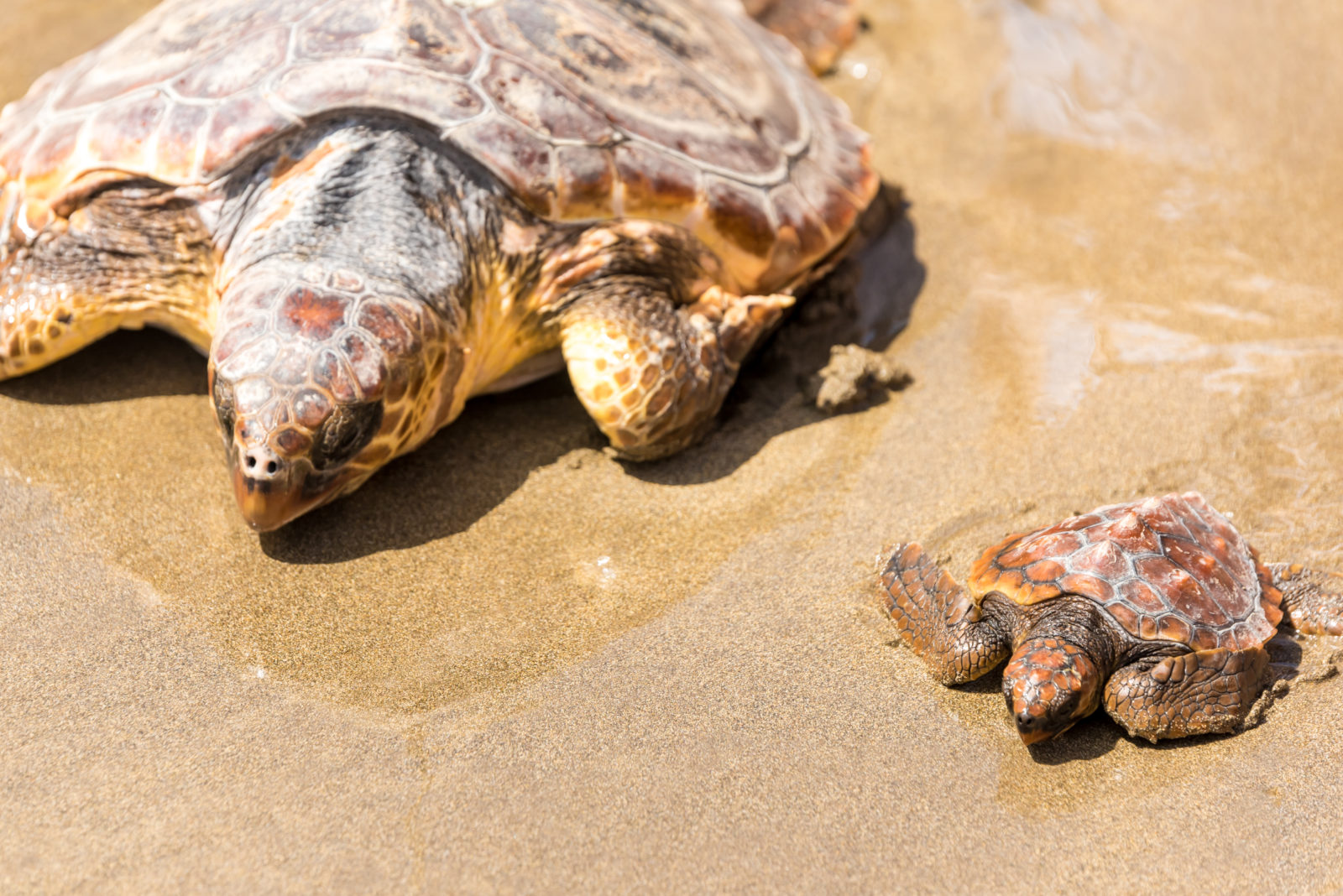
Did you know female sea turtles return to the same beach where they were born to lay their own eggs as adults? While these creatures will drift apart from their siblings as they enter the sea as babies, there’s an instinctive, natural programming that mother turtles have when it comes to knowing where to go to lay their own nests. While the mechanism behind this phenomenon is complex, the lesson we can learn from it is simple: go out into the world and make your own way, but don’t forget your way home when you need a familiar shore to rest on.
On Making Progress

“It doesn’t matter how slowly you go as long as you don’t stop.”
-Confucius
Have you ever seen a video of hatchlings traveling toward the sea that seemed like an easy trip? Probably not. A turtle’s fight for survival, especially early on in life, is anything but easy. From dodging hungry seabirds to avoiding entanglements with obstacles on the way to the water, this journey is one of the most difficult a turtle will ever encounter. With that, it can sometimes take them a while to reach their goal. But that’s what’s so magical about it. No matter how bumpy the road may seem at times, remember: if a sea turtle can keep on pushing toward the shoreline after hatching, we can all keep pushing until we reach our own goals.
On Courage
“Courage is not the absence of fear…but rather the judgment that something else is more important than fear.”
-Ambrose Redmoon
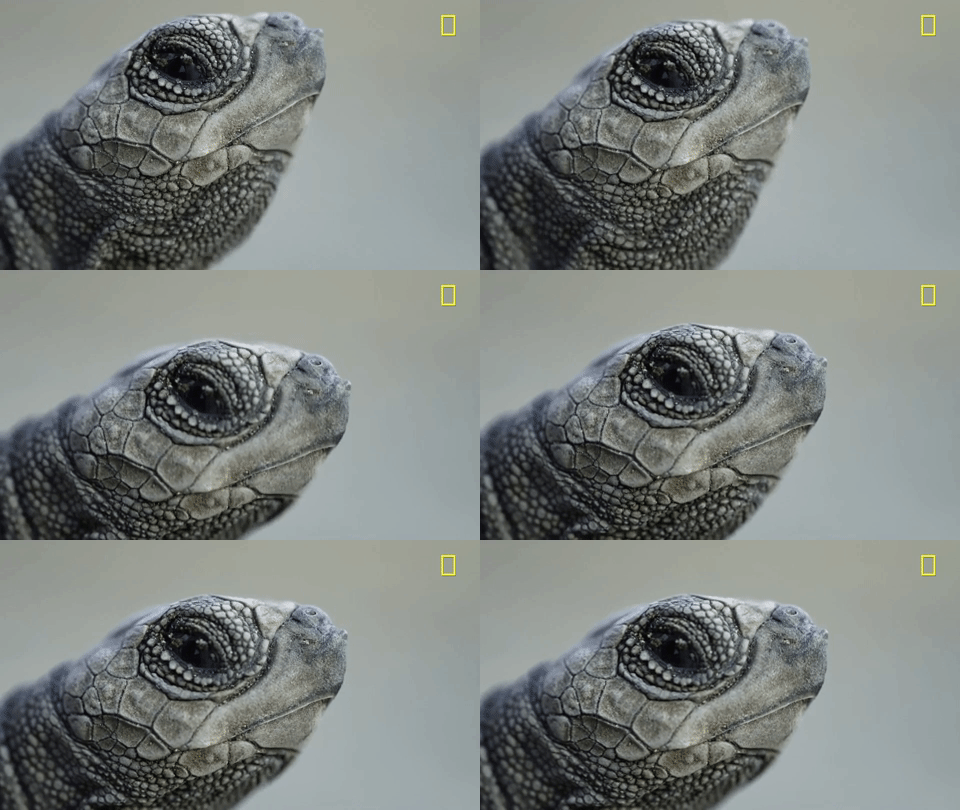
Speaking of a hatchling’s journey to the sea, did I mention how many obstacles they face on their way to the water? Before they can bask in that first taste of a saltwater swim, they have to make it past threats they can see and some they can’t. These creatures don’t let the fear of what might stand between them and the sea stop them from running toward the thing they know is their true home. If they can have the courage to move forward with uncertainty, we certainly can do the same.
On Taking the First Step
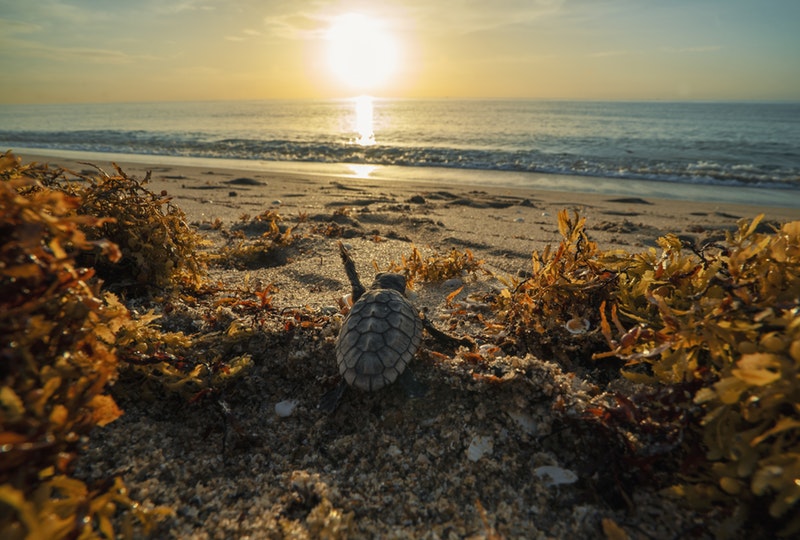
“…The first step, as you know, is always what matters most, particularly when we are dealing with those who are young … that is the time when they are taking shape and when any impression we choose to make leaves a permanent mark.”
-Plato
What comes with the courage to move forward? Taking the first step in the journey, of course. And that first step is probably the toughest of all for anyone experiencing anxiety or fear. Yet, if a sea turtle never took the first step because they never embraced their own instinct to have courage and move forward, they’d never survive. Nature intends for us to take heart and be brave, because without courage and bravery to put one foot in front of the other in the beginning of a journey, that journey wouldn’t ever exist in the first place.
On Keeping Your Head Up
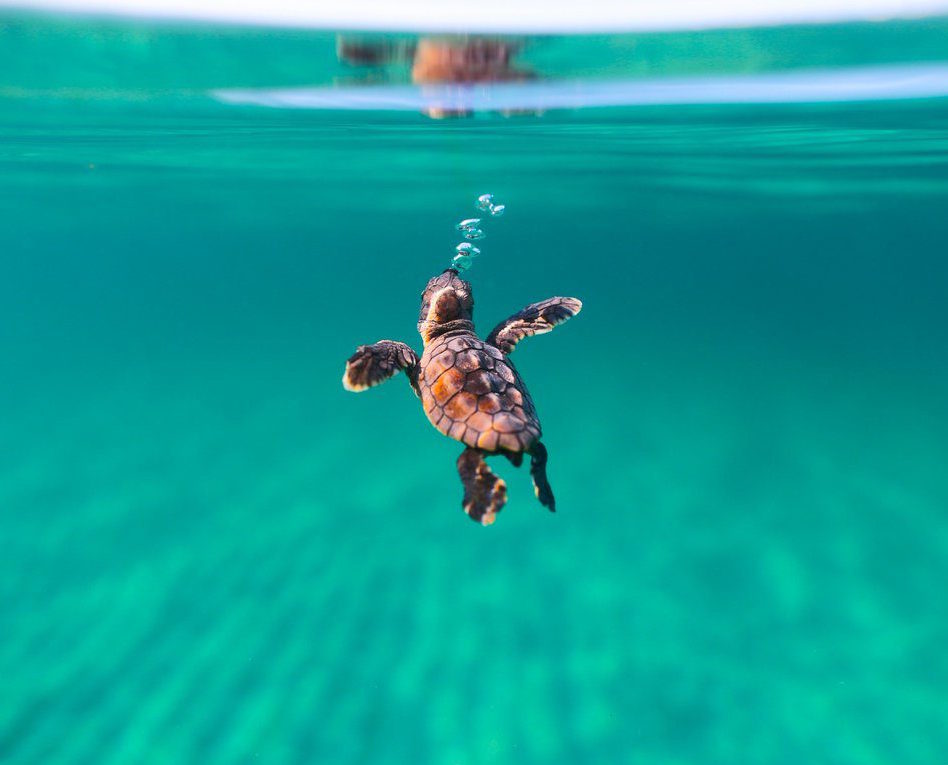
“Keep your head up, keep your heart strong.”
-Ben Howard
Once we take that first step into the great unknown, it would be unrealistic of us to never expect any difficulties or road bumps to greet us, and the same is true for sea turtles. As they enter uncharted waters and swim into the deep blue for the first time in their lives, they have to trust that no matter how difficult a first swim may be, any tribulations will make their triumphs that much stronger in the end.
On Change
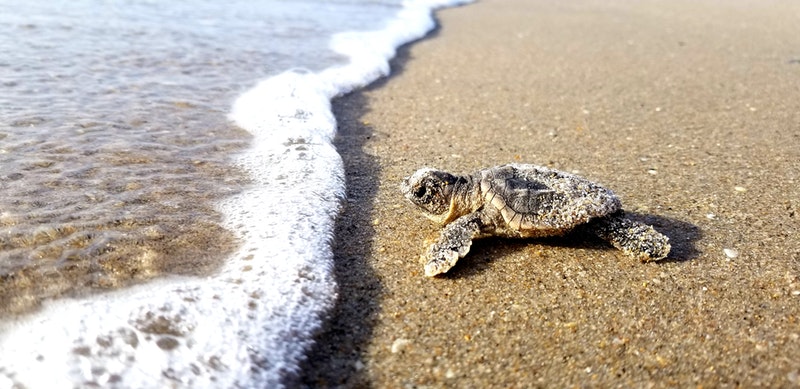
“The comfort zone is a psychological state in which one feels familiar, safe, at ease, and secure. If you always do what is easy and choose the path of least resistance, you never step outside your comfort zone. Great things don’t come from comfort zones.”
-Roy T. Bennett
And that reminds me … at the heart of all of this bravery and courage is something that makes sea turtles some of the most inspiring wildlife species to grace our planet. When they journey from nest to ocean, they’re crossing a critical threshold. They’re not only bridging the gap between the known and the unknown, they’re crossing between two completely separate entities: the land and the sea. This enormous change is without a doubt what I would call one of the purest illustrations of what it means to leave your comfort zone.
It’s once we step into those uncharted territories that we’re able to bloom into the person (or turtle) we were always meant to be.
When I look at sea turtle hatchlings, I remind myself not to think too hard about the hard times in life. It’s when we get too focused on the negatives, the difficulties and the rough spots that we lose sight of what really matters. That certainly includes our goals and aspirations, but it also includes the “why” behind what’s pushing us toward those dreams.
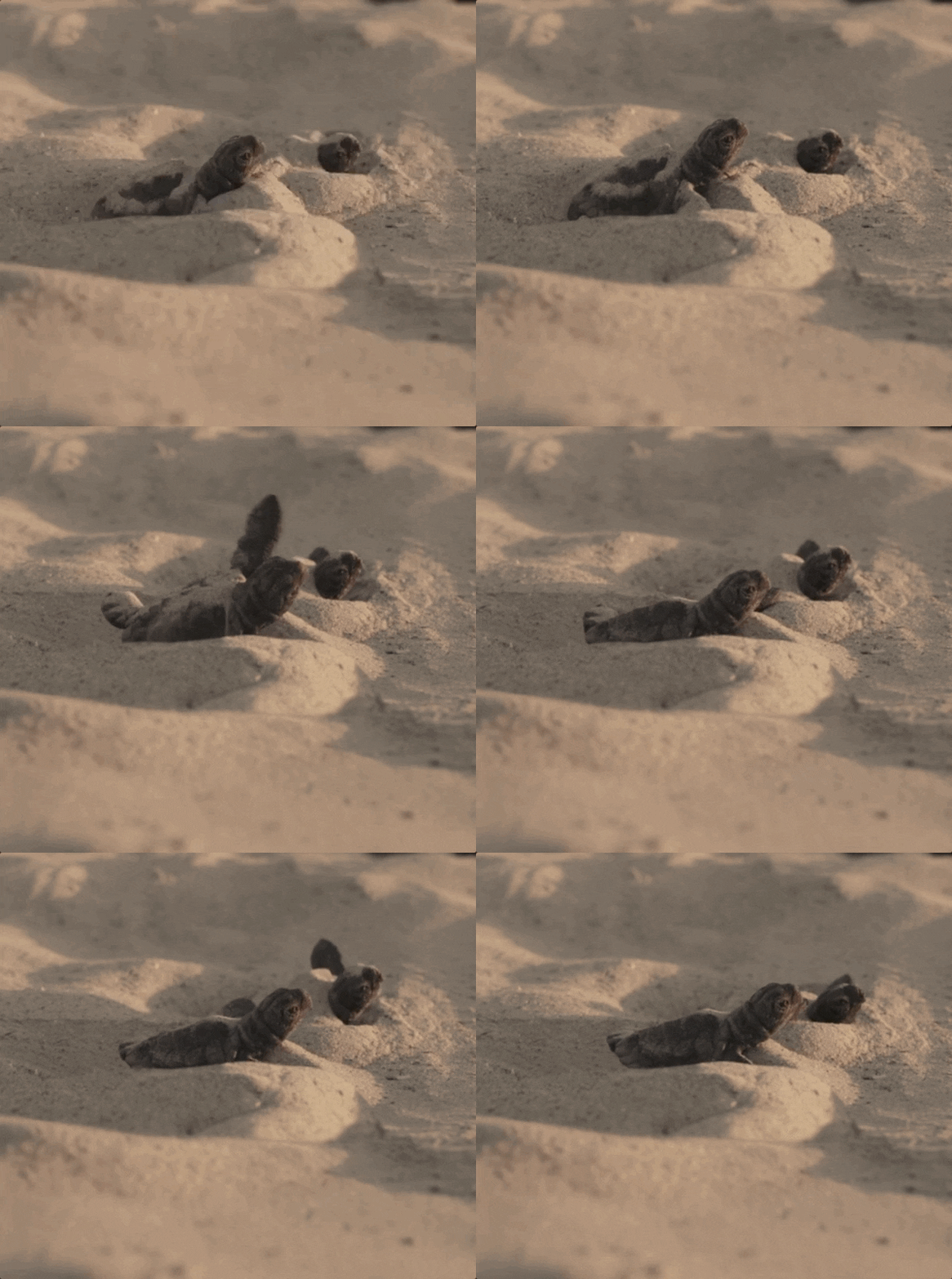
Baby sea turtles are born instinctively knowing they’re supposed to make it to the ocean, but they’re certainly not born knowing just how spectacular a sea is waiting just over the crest of that first wave. Likewise, if we never grabbed a hold of uncertainties, embraced the unfamiliar and found new motivation from our greatest downfalls and obstacles that were sprinkled throughout our journey … would we ever be able to fully appreciate the joy that comes with reaching the “destination” of growing into the people we were meant to be?
I like to think probably not.
Get more turtle joy delivered straight to your inbox
Sign up for our emails!
The post 7 Ways Baby Sea Turtles Inspire Us to Live Life Bigger appeared first on Ocean Conservancy.
from Ocean Conservancy https://ift.tt/2NseJ6u https://ift.tt/eA8V8J
Subscribe to:
Posts (Atom)