Wednesday, 8 January 2020

Could Orcas Love Their Grandmas as Much as We Do?

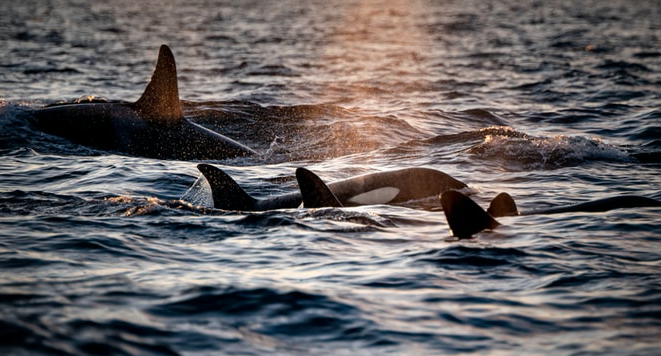
Grandmothers. The matriarchs of family units, our female elders are some of the most influential individuals in our lives, both as children and as we grow into our own in adulthood. Could this special dynamic be present in other species besides humans? This question became a prominent topic of discussion in the science community in early December, when a study published in the Proceedings of the National Academy of Sciences, specifically focused on a fascinating finding:

Data suggests the theory that orca grandmothers play a crucial role in helping their grandchildren survive.

Let’s dive into the highlights of the study, published just last month. While studying orca populations in the Pacific Northwest’s Salish Sea between Vancouver and Washington state over the course of 40 years, scientists found that the presence of grandmothers in orca pods is a key predictive component in determining the likely survival rate of juvenile orcas. Essentially, orcas with grandmothers around were noted to have better odds of surviving than those without grandmothers. Since orca communities are tight-knit and organizationally highly matriarchal, it can be deduced that older female orcas provide key survival knowledge (such as locations of plentiful food sources) that significantly boost their group’s chances of survival.
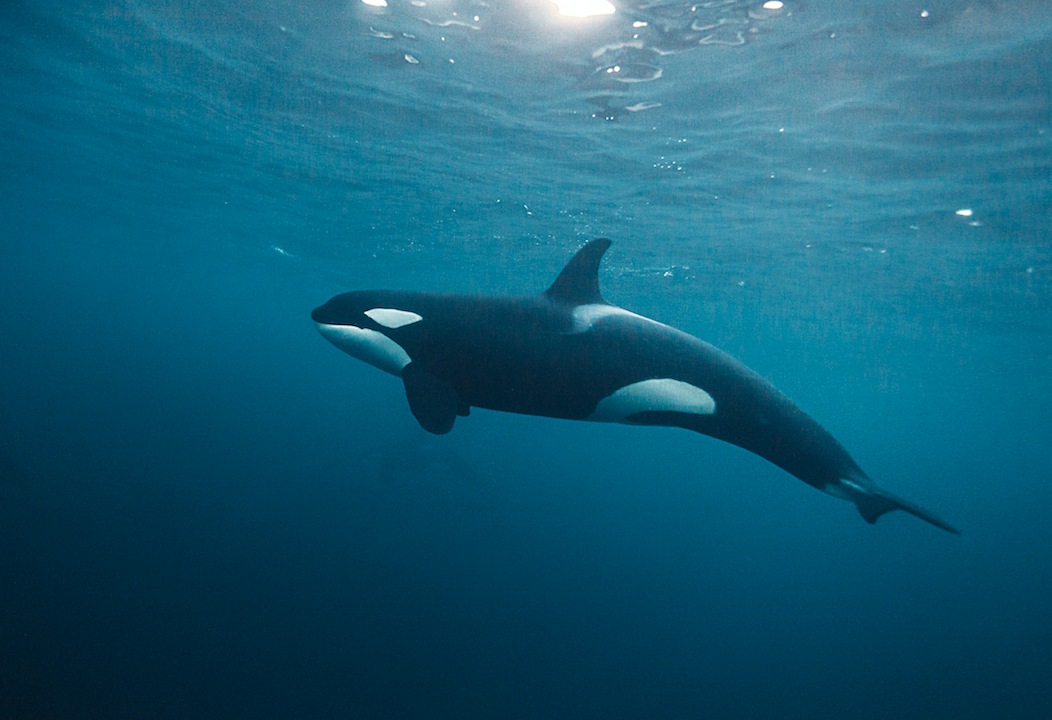
Screen Shot 2020-01-08 at 1.46.03 PM
© MIKE KOROSTELYOV

It’s important to remember that orca pods are big, but not huge: these animals thrive in close communities of up to 40 individuals and often engage in teamwork when hunting for prey. While both male and female orcas thrive in these groups, their survival rate and relevant reproductive trends are what prove most fascinating. As with most other mammals, male orcas don’t experience a “phase out” of their reproductive abilities. For the most part, they can produce offspring their entire lifespan, which for most of them is around 50 years old. Female orcas, however, have been reported to live up to the age of 90 years old. Here’s where things get interesting.

Orca ladies are one of only five species of mammals known to experience menopause.
The other four? Belugas, narwhals, short-finned pilot whales, and human beings

Menopause for orcas occurs around the age of 40, cutting their reproductive years down to only a portion of their actual lifespan. The eyebrow-raising question is clear—through an evolutionary lens, what positive role could older female orcas play once they’ve surpassed their reproductive years, let alone for another 40-50 additional years after that? One popular theory in the scientific community is what’s known as the “grandmother hypothesis.” Kristen Hawkes, an American anthropologist who studied modern hunter-gatherers in Africa, theorizes that human grandmothers play a crucial role in the survivorship of their grandchildren, specifically by providing a source of childcare and guiding the group to accessible food supply sources. Could a similar theory be applied to orca populations?
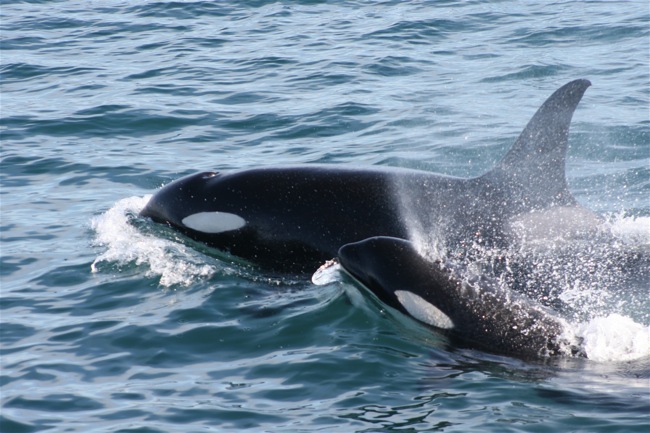
Bugsy:flikr Alaska
© Bugsy: Flickr

According to recent research, this may be likely. The study of Pacific Northwest orca populations showed that older female orcas who have gone through menopause are more likely to dedicate time to their grandchildren than females who haven’t yet gone through menopause, likely in part due to the fact that these individuals aren’t under pressure to care for their own offspring anymore. This increased accessibility also meant that the loss of a grandmother could impact orca families in a hugely negative way: in the same populations studied, the risk of death for juvenile orcas rose drastically in the years immediately following a grandmother’s death. This risk was especially intensified when food sources like Chinook salmon were less than plentiful, suggesting that the older female orcas are extra helpful to have around during times of higher stress due to lack of food availability. According to Daniel Franks, one of the senior authors of the orca study, the effect doesn’t just impact grandcalves as babies either—the loss of a grandmother can impact orcas even when the grandcalves reach adulthood.
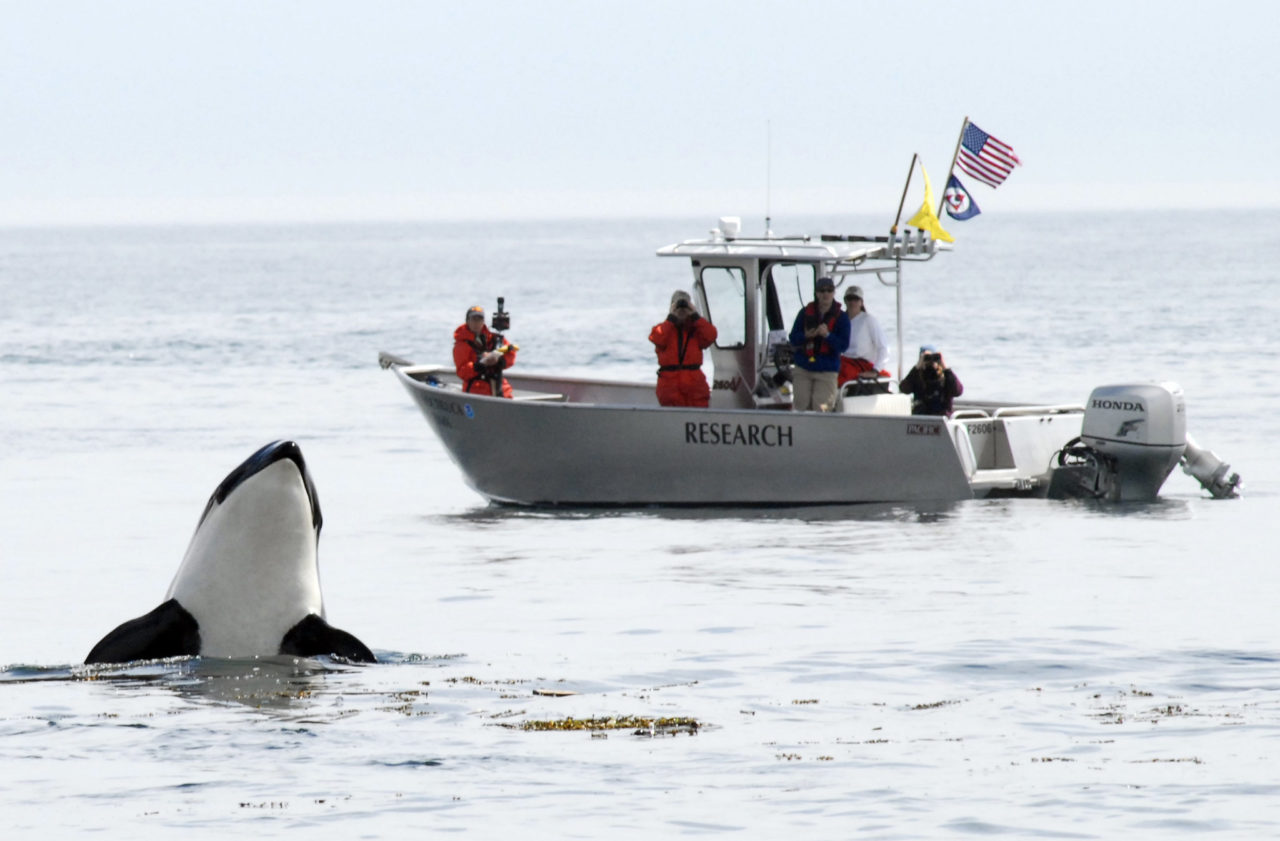
NOAA Orca
© NOAA

The “grandmother effect” theory seems to be an unexpected yet incredibly powerful evolutionary strategy. There’s much more research that’s needed to further understand the familial dynamics of these cetacean communities, and scientists believe findings like these could be key to understanding how best to help conserve and recover struggling orca populations. To better understand these family functions, however, we’ve got to protect the species at stake. Without them, the foundation of their communities and what makes them so special may forever remain a mystery.

I couldn’t help but think that even as adults, the loss of a grandmother can be incredibly difficult for orcas. It reminded me how much I, even as an adult, was hugely impacted by my own grandmother, who was one of my best friends. She was an essential figure in my life as long as I can remember, and when she passed away last year, it affected both myself and my entire family immensely. It’s without question that my grandmother filled an irreplaceable role in the structure of the family that raised me into the person I am today, and knowing that dynamic may be similar for orcas, my favorite animals, was mind-blowing for me.

Perhaps, in a world that seems overwhelmingly complex at times, the creatures we feel most different from aren’t so different from us after all. And where we can find similarities between our own experiences and those of wildlife, we may become more likely to feel connected to the natural world … and ultimately (I hope) much more driven to save it.
Screen Shot 2020-01-08 at 1.34.23 PM
Public Domain

The post Could Orcas Love Their Grandmas as Much as We Do? appeared first on Ocean Conservancy.


from Ocean Conservancy https://ift.tt/2QVonzv https://ift.tt/eA8V8J

Tiny, but effective

Gelatinous zooplankton makes an important contribution to marine carbon transportBarely visible to the naked eye, gelatinous zooplankton is an important part of the marine ecosystem. In addition, the small organisms also transport large quantities of carbon into deeper layers of the ocean, thus making an important contribution to marine carbon transport. This is underpinned by new studies by an international team of researchers re-cently published in the renowned journal Global Biogeochemical Cycles.

from "Future Ocean" – News https://ift.tt/2N8FkW5 https://ift.tt/eA8V8J

Tuesday, 7 January 2020

New Wave of Companies Pledge Not to Ship Through Arctic Ocean

Eight more companies agreed this week not to ship goods through the Arctic Ocean and signed the Arctic Corporate Shipping Pledge launched by Ocean Conservancy and Nike in October 2019. We’re pleased to announce that the new signatories include Ralph Lauren Corporation, Kuehne + Nagel, PUMA, International Direct Packaging, Allbirds, Aritzia, Hudson Shipping Lines and Bureo.

Study after study reveals the accelerating impact of climate change on the Arctic marine environment. In 2019, Arctic sea ice declined to its second-lowest summer extent on record, covering just 4.15 million square kilometers. Last month, the National Oceanic and Atmospheric Administration’s annual Arctic report card also found that the remaining sea ice is, on average, less than half the thickness of sea ice forty years ago. This thinner, younger sea ice is even more susceptible to melting in the future.

This same decline in sea ice has made the polar routes more appealing to shipping companies. But while these routes can shorten the times between major commercial markets, increasing vessel traffic is a risky prospect for the Arctic. Long periods of darkness, the remoteness of the routes and distance from infrastructure, as well as unpredictable and extreme weather conditions all pose their own dangers. In the event of an accident, stranding, or oil spill, the impacts on sensitive ecosystems could be immense and could do permanent harm to communities’ subsistence way of life.

While recognizing that local and regional shipping is vital to northern communities and indigenous communities, the Arctic Shipping Corporate Pledge invites companies to not intentionally route ships or send goods through the region as part of a potential new global trans-shipment route. These new signatories reflect a significant intention by consumer and logistics industries, including brands like Ralph Lauren Corporation, which operates more than 500 stores worldwide, and PUMA, which distributes products to more than 120 countries. Logistics giant Kuehne + Nagel alone shipped more than 4.7 million containers in 2018.

These companies join other previous signatories including Nike (co-founder of the pledge with Ocean Conservancy and the first signatory), Asos, Bestseller, Columbia, Gap Inc., H&M Group, Kering, Li & Fung, PVH Corp., and ocean carriers CMA CGM, Evergreen, Hapag-Lloyd and Mediterranean Shipping Company.

While these companies have committed to avoid sailing or sending their products through the Arctic’s trans-shipment routes, the signatories also recognize that precautionary policies are essential for the region. Signatories support enhancing the environmental and human safety of current and potential future Arctic shipping. Ocean Conservancy is working towards better rules and practices for the Arctic, including a ban on the use and carriage of heavy fuel oil in the region and addressing other impacts such as underwater noise or gray water pollution.

Ultimately, the best way to protect the Arctic will be to tackle climate change. On its own, shipping accounts for 3% of global greenhouse gas emissions and curbing the sector’s carbon footprint is essential. Accordingly, the pledge also states that signers will continue to explore ways to reduce emissions from global shipping.

Ocean Conservancy invites other consumer goods and shipping companies to join these signatories in preventing a problem before it starts.

The post New Wave of Companies Pledge Not to Ship Through Arctic Ocean appeared first on Ocean Conservancy.


from Ocean Conservancy https://ift.tt/2T4NCBZ https://ift.tt/eA8V8J

Monday, 6 January 2020

Guest Blog: Dream Internship

This guest blog is from French student Mateo Delclos, who recently took part in a two-week internship with our Marine Education team based at Four Seasons Resort Seychelles. Mateo really threw himself into the role and it is great to read how useful he found the experience too.

For my university formation in France, I had to make an internship in environmental sciences. I saw all my friends spent a lot of time in a chemistry laboratory (chemistry isn’t my passion) or on a desk to make some interns tasks. Definitely, I didn’t want to do that, I wanted something more exciting, with more adventures…

And what did I find? An awesome beach with a wonderful reef restoration project and a tremendous team who make me feel very welcome, and all of that in Seychelles! I had much luck… I can’t imagine a better situation.

So, I discovered the Reef Restoration Project and worked on. It was so exciting to dive in order to « plant » corals! And to try to keep it safe during wavy times too. When you work during like one hour in the coral nursery, fishes become familiar with you and they approach very closely, it was just magic!


And to work with your feet in the sand… What an incredible thing!

What I love in WiseOceans in Four Seasons Resort, is that activities are very varied. You can work and discuss a serious marine biology issue with the coral nursery for example in the morning, and communicate with guests and inspire them in the afternoon. Every single day is different and keep the job so exciting.

I can’t ever forget this experience which was so different from the others… Life in a fully English environment was also for me a real challenge, which makes the experience even more special and beneficial.

I just have to say thank you WiseOceans


Unfortunately, we don’t have any current vacancies for internships within WiseOceans right now – but have a look at our Volunteer / Internships & Expeditions page to find other fantastic opportunities.


from WiseOceans blog – WiseOceans https://ift.tt/2QWgnyi https://ift.tt/2Qr9O7y

Friday, 3 January 2020

7 Fish with Unusual Names

The ocean is full of weird animals, which have even weirder names. Here are 7 of the most unusual monikers the ocean has to offer!

Frogfish

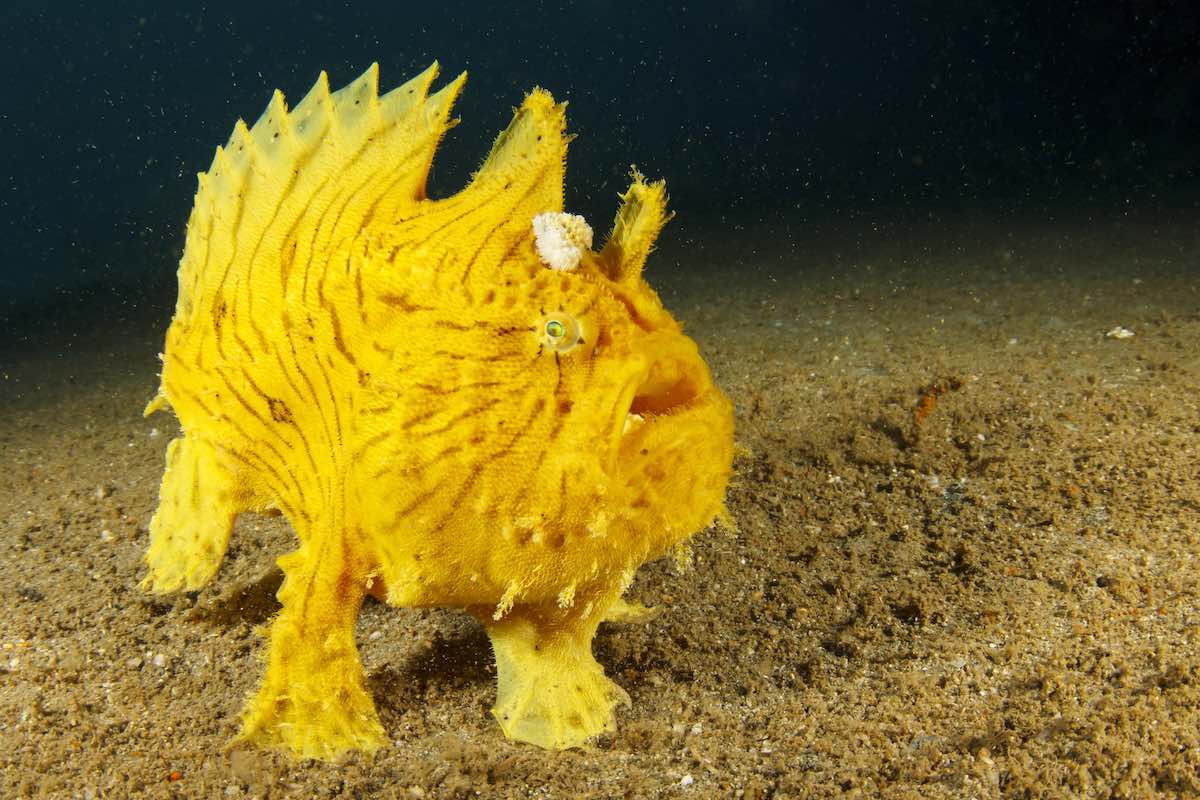
Shaggy Frogfish (Anglerfish)
© Richard Carey/Fotolia

If you’re looking to find one of the strangest fish in the sea, look no further than the frogfish.

Their leg-like fins, camouflaged skin and perpetual “oh no!” expressions make them an unusual sight on the sea floor. Frogfish are any members of the family Antennariidae, a type of anglerfish that includes about 50 species. They have modified pectoral fins that resemble legs, which allow them to “walk” along the ocean floor looking for prey. This makes them kind of resemble a frog—hence their name!

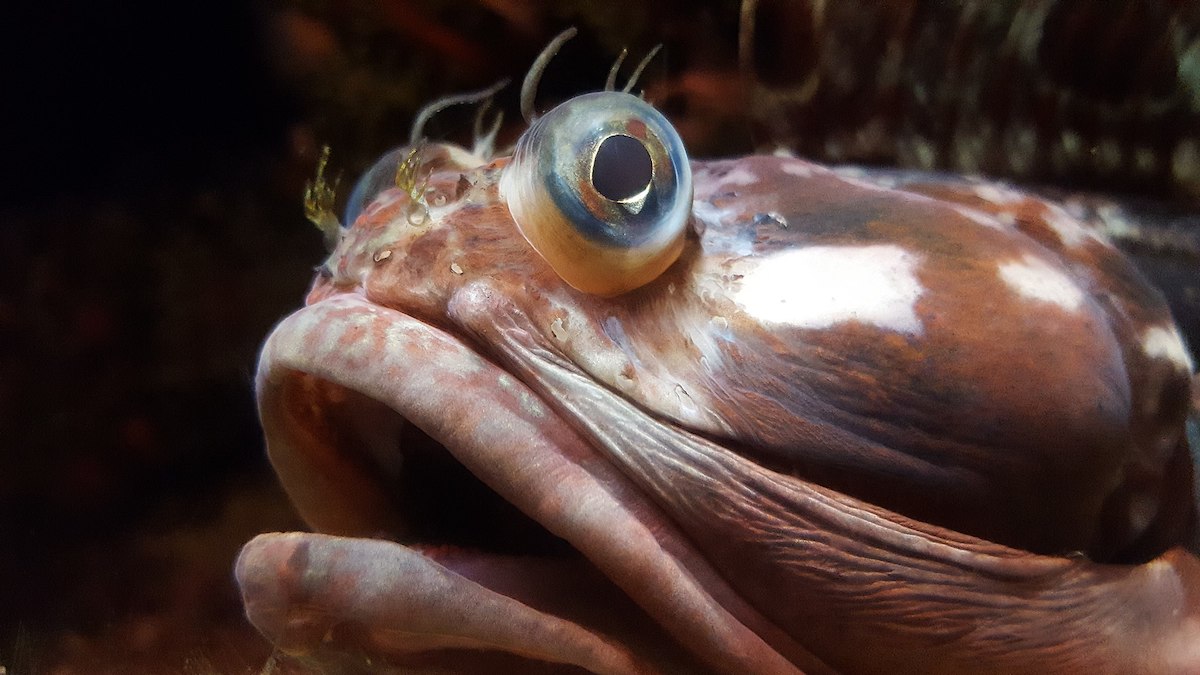
Sarcastic Fringehead

Sarcastic_Fringehead_(Neoclinus_blanchardi)_at_the_Monterey_Bay_Aquarium
Wikistudent348 / Wikimedia © Wikistudent348 / Wikimedia

The sarcastic fringehead is a type of blenny, recognizable by its brown-grey coloring with patches of red or green. While “sarcastic” is often used to describe one’s humor, the word originates from the Greek sarkasmós, which means to bite or tear. The first part of the name refers to the sarcastic fringehead’s series of needle-sharp teeth that it uses to bite into its prey (although maybe it has a biting sense of humor too, who knows?) “Fringehead” comes from the soft appendages that rise above its head. Together, they make one of the weirdest names in the ocean (whoever named this guy must have had fun).

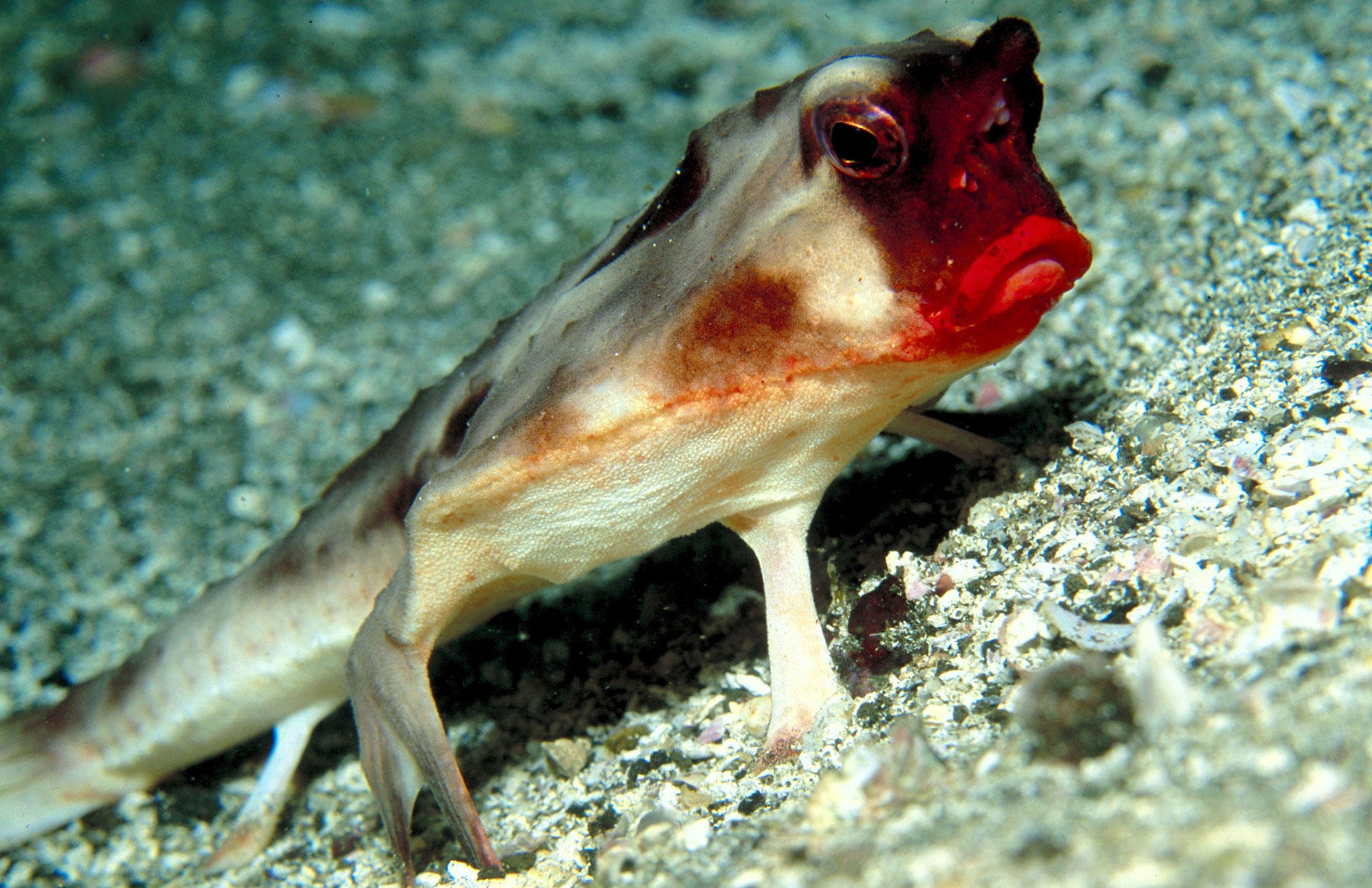
Red-Lipped Batfish

Batfish - Jupiter Images:thinkstock
© Jupiter Images / ThinkStock

With its frog-like “legs”, lipstick-red pout and dangling lure, the red-lipped batfish is truly unlike any other fish in the sea. The red-lipped batfish is one of about 60 species of batfish that have modified pectoral and pelvic fins that resemble legs. The red-lipped batfish’s most iconic feature is also its namesake. Some scientists think their luscious lips help attract mates, but more research is needed to be sure.

Fun fact—they’re not the only species of batfish that sports a red pout! The closely-related rosy-lipped batfish (Ogcocephalus porrectus) is found in the waters of Cocos Island off of Costa Rica.Those lucky enough to have seen it in person can confirm: the red-lipped batfish is one of a kind.

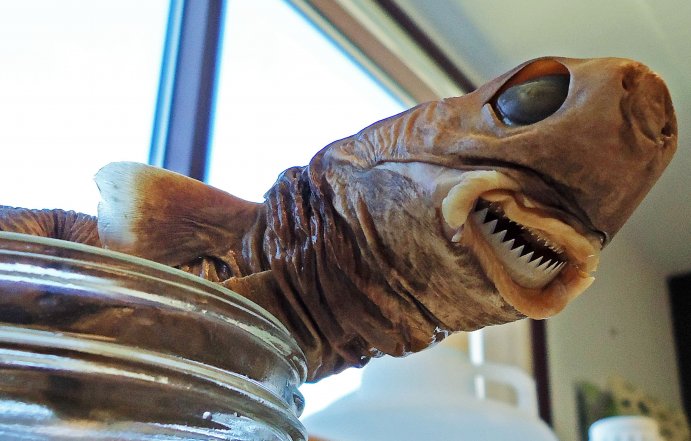
Cookiecutter Shark

cookie-cutter-shark
Ocean Portal, Smithsonian National Museum of Natural History © Jennifer Strotman, Collections Program

Cookiecutter sharks may sound cute, but don’t let their name fool you. They’re infamous for the cookie-like chunk their bite leaves on prey. The cookiecutter shark typically seeks out a larger prey item, like another shark, whale or seal, and latches on. Then it rotates its body in a circle, carving out a hunk of meat and leaving a perfectly circle-shaped scar. Fear not—these sharks are usually found at least 300 feet (90 m) deep and their bites are not fatal.

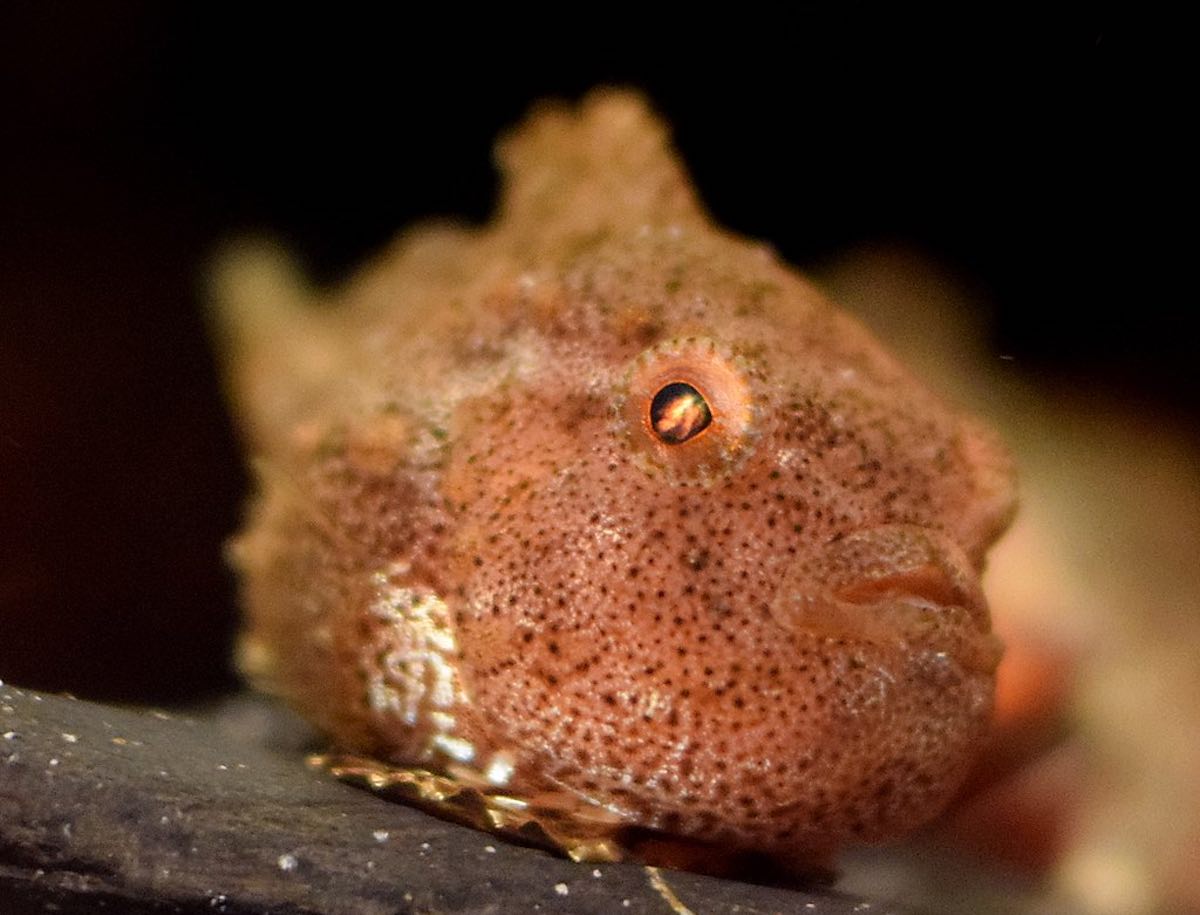
Lumpsucker

1024px-Lumpsucker_(23260270170)sm
© incidencematrix / Wikimedia

Lumpsuckers are a group of small, spherical fish that live in the chilly waters of the Arctic, North Pacific and North Atlantic. They’re part of the Cyclopteridae family, which gets its name from the Greek words “kyklos”, meaning “circle” or “round”, and “pteryx” meaning “fin”. There are 30 species of lumpsucker, ranging from the half-inch-long Lethotremus awae to the foot-long common lumpsucker (Cyclopterus lumpus). Their name isn’t the only thing that makes them unique: they also have a suction-cup-like disk on their underside, which allows them to attach to rocks and other surfaces.

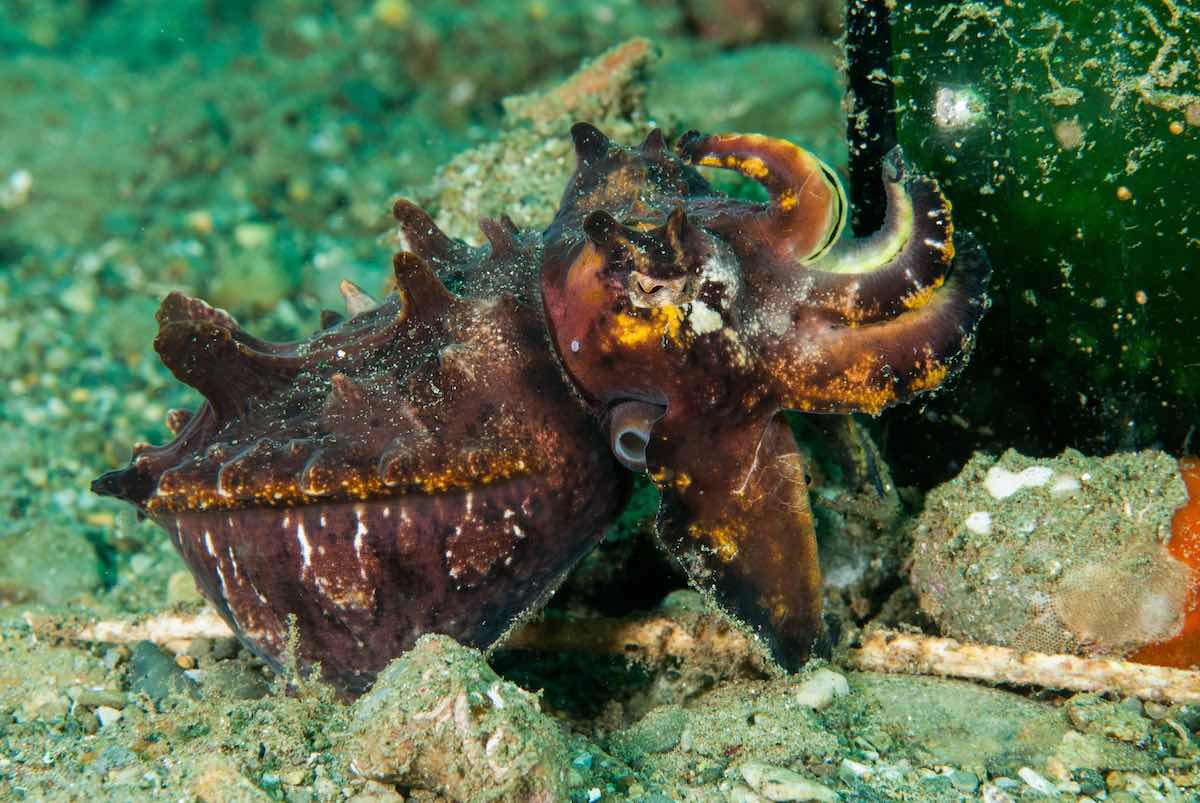
Flamboyant Cuttlefish

Flamboyant cuttlefish in Ambon, Maluku, Indonesia underwater
© Fenkieandreas/Fotolia

Native to sandy habitats in the Indo-Pacific Ocean, flamboyant cuttlefish (Metasepia pfefferi) only reach three inches in size. They’re on the small size for cuttlefish—for comparison, cuttlefish generally reach about six to ten inches. The first thing you notice about the flamboyant cuttlefish is its coloring. Monterey Bay Aquarium calls them “perpetual color machines”, and their mix of pink, yellow, brown and orange colors is, well, flamboyant. Despite their unique coloring, they’re remarkably well-camouflaged for their environment, making it easy for people (or predators) to pass them by.

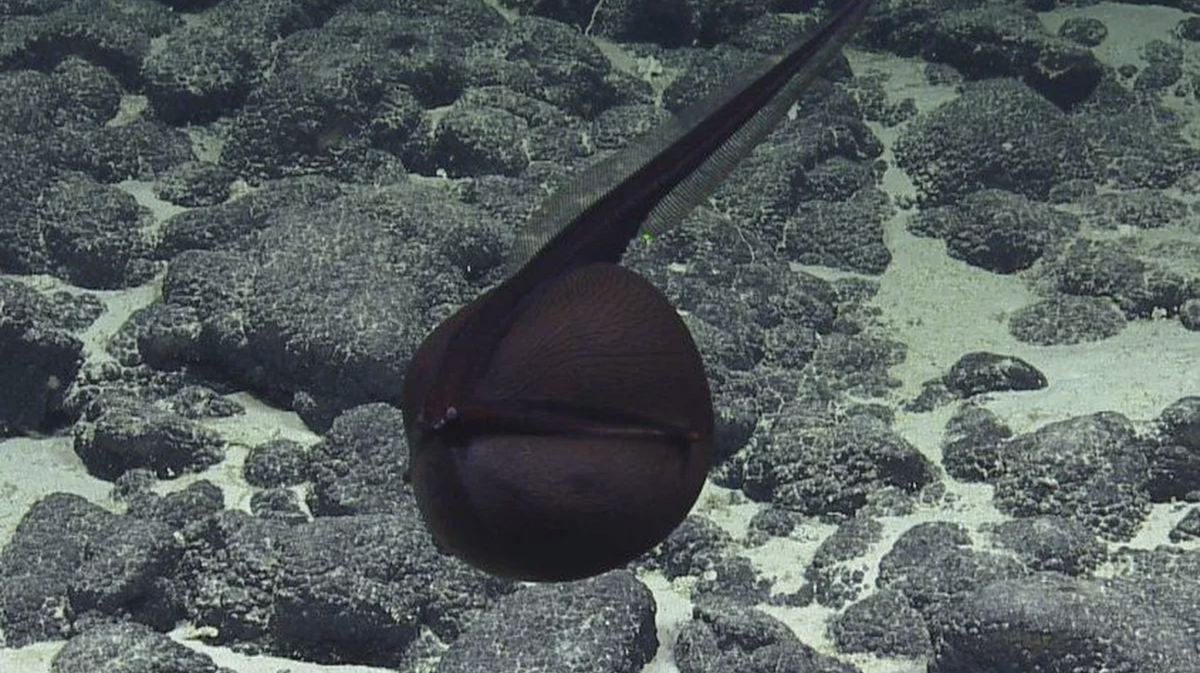
Gulper Eel

Screen Shot 2019-12-04 at 10.18.13 AM_sm
© OCEAN EXPLORATION TRUST

The mysterious gulper eel, also known as the pelican eel, is one of the most unusual deep-sea animals. The gulper eel might look like your run-of-the-mill eel: it has a long, narrow body that undulates back and forth to move through the water. They live in the deep sea, ranging from 1,600 to almost 10,000 feet below the surface. Gulper eels get their name from their massive, gulping mouth. Like pelicans (and the inspiration for gulper eels’ other name), it allows them to scoop up water into its mouth to swallow prey whole. They primarily feed on crustaceans, fish and cephalopods, but some scientists believe their wide mouth allows them to go after larger fish if food is hard to find.

Any unusually-named critters we missed? Let us know by tweeting at @OurOcean!

The post 7 Fish with Unusual Names appeared first on Ocean Conservancy.


from Ocean Conservancy https://ift.tt/2sAuSj8 https://ift.tt/eA8V8J

Thursday, 2 January 2020

Mantis Shrimp: The Ocean Predator You Need to Meet

The mantis shrimp is no ordinary shrimp. Between their sharp eyes, wild colors and killer claws, mantis shrimp are some of the most impressive predators in the ocean. These colorful crustaceans may be small, but they pack a mighty punch that is unlike anything else in the sea.

First things first: mantis shrimp aren’t like the “shrimp” we’re used to. The critters you dip in cocktail sauce are only mildly related to mantis shrimp: they’re both in the class Malacostraca, which is the largest class of crustaceans. This class also includes well-known ocean animals like lobsters, crabs, krill and crayfish. But while the rest of those species are further grouped in the order Decapoda, mantis shrimp are in order Stomatopoda. That’s why sometimes you’ll hear them also referred to as stomatopods.

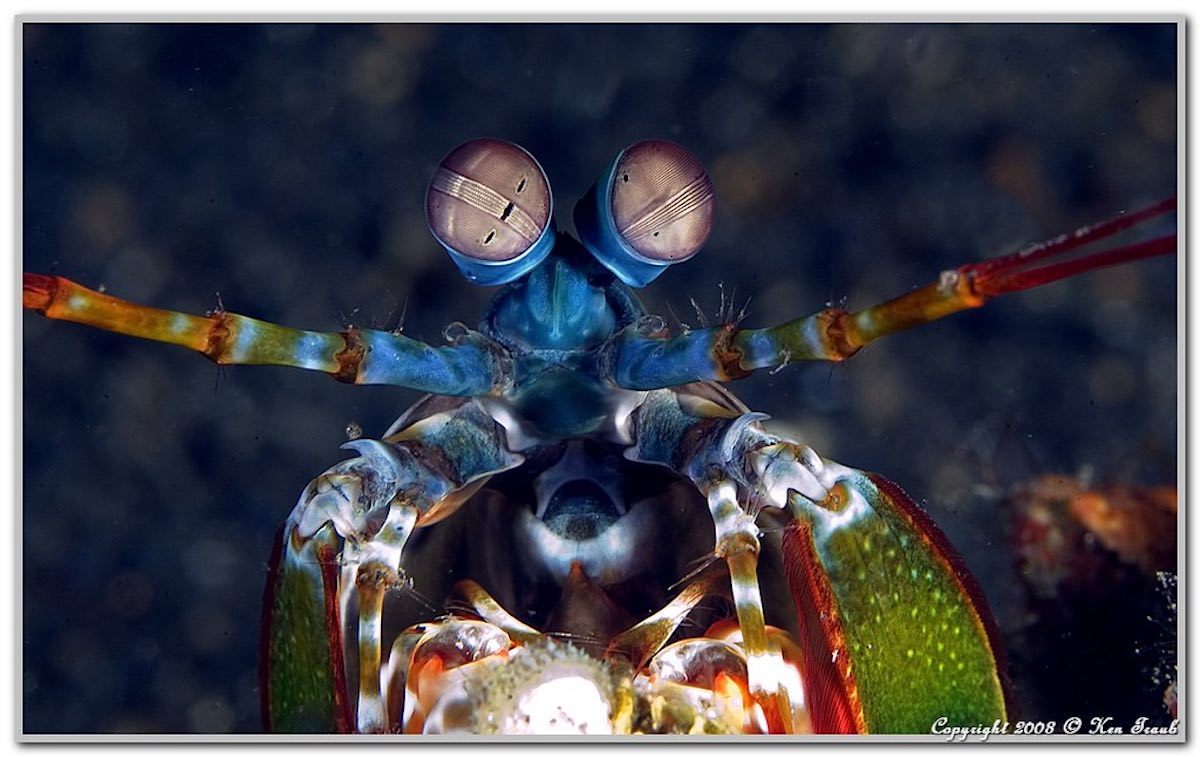
There are a few distinctive features that make mantis shrimp expert predators. First, stomatopod eyes are some of the most complicated eyes known in the animal kingdom. To see, animals have something in their eyes called photoreceptors, which are cells that respond to light. As humans, we have two types of photoreceptors called rods and cones. Mantis shrimp have up to sixteen types of photoreceptors, allowing them to see far more than we can! They can even see polarized light, which most (if not all) other animals can’t see.

2905107942_4789610b1b_bsm
© Ken Traub

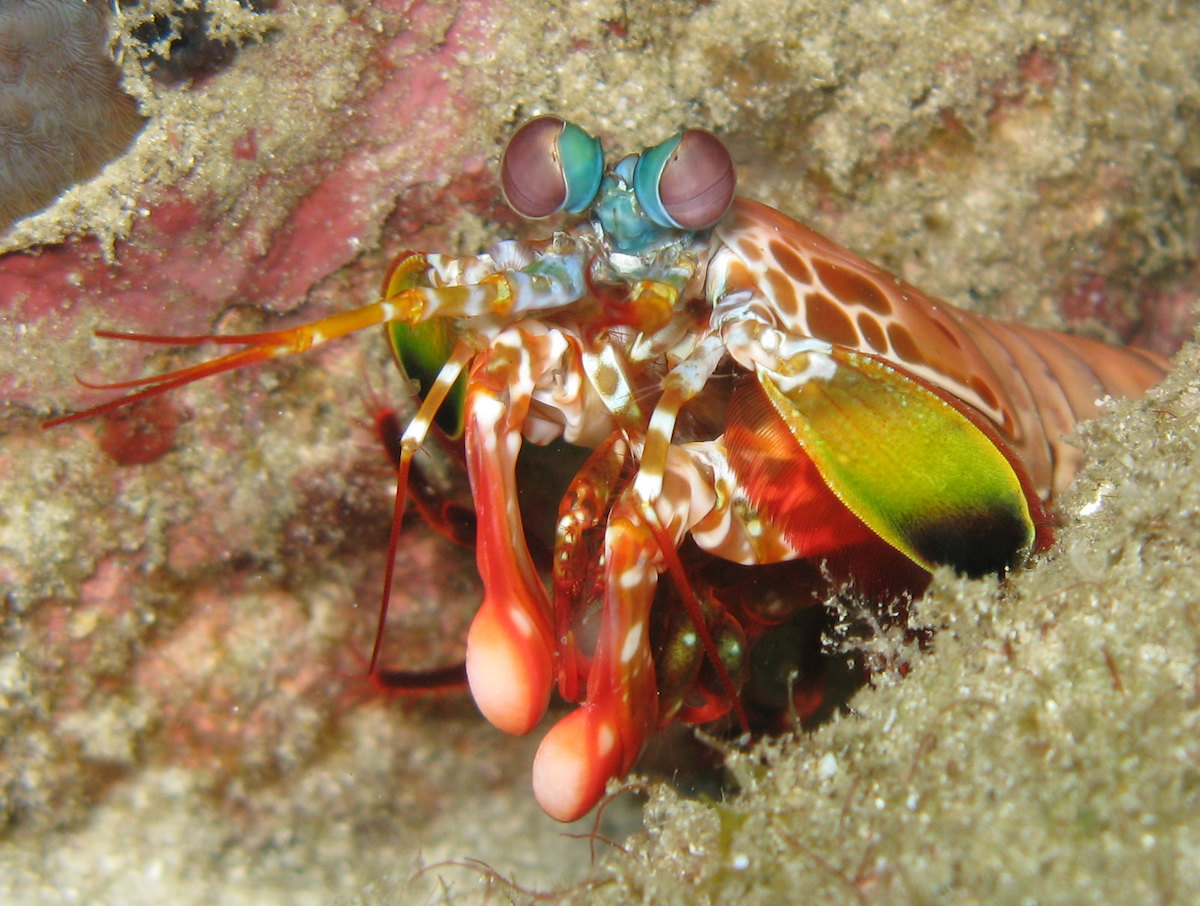
In addition to seeing wild colors, mantis shrimp come in wild colors. Of the 450 species of mantis shrimp, the most famous is the peacock mantis shrimp, which lives up to its name with a carapace of vivid red, orange, green and blue. The peacock mantis shrimp is found in tropical regions in the Western Pacific and Indian Ocean, and its color makes it a favorite of the aquarium industry. But although these colorful creatures may look pretty, they aren’t easy keepers—these voracious predators have been known to devour all other animals in their tanks.

But the most impressive feature of the mantis shrimp is its punch. Mantis shrimp have two appendages (modified legs) in the front of their body that that use to attack their prey. These claws fall into one of two categories: smashers, which bludgeon prey, and spearers, which stab prey (either way, bad news for prey). Mantis shrimp can shoot their limbs at the speed of a bullet—literally. They can accelerate their clubs at speeds up to 51 miles per hour! This means that even larger prey barely stand a chance against the mantis shrimp. They move their claws so quickly that the movement results in a shockwave of bubbles that produce light in a phenomenon called sonoluminescence.

There’s a reason why these hard-punching, bright-colored crustaceans have captivated people around the world. Although they’re difficult to see in the wild (mainly because they lurk in small crevices and holes), it’s exciting to know these tiny invertebrate murderers are out there, taking down their prey one punch at a time.

2276197031_180b95f9a5_ham
© prilfish / Flickr

The post Mantis Shrimp: The Ocean Predator You Need to Meet appeared first on Ocean Conservancy.


from Ocean Conservancy https://ift.tt/2u5oYGS https://ift.tt/eA8V8J

Wednesday, 1 January 2020

20 Ocean Places for Your 2020 Bucket List

To get 2020 off to a bang we thought we would provide you with some suggestions of places that you should know more about. These are some of the very best protected areas in the ocean or areas deserving stronger protection. They all need your support. Not every place thrives with human access, and some of these are best viewed and supported from afar. Endangered species need space, but in other cases there are ample opportunities to visit responsibly and engage with the local communities. In every case we hope you will support these special places! If you do visit these places we would love for you to share your experiences with us!


1. Aldabra Atoll Special Reserve (Platinum Blue Park) Seychelles

Surrounded by near pristine coral reefs, the Aldabra Atoll is described as “one of the wonders of the world.” The reserve supports a huge diversity of marine life including manta rays and humpback whales, and acts as an important nesting site for green turtles.

2. Wilsons Promontory Marine National Park (Platinum Blue Park) – Australia

The coastline of the park features beautiful sandy beaches, granite mountains and cliffs. The deep waters of the park are made up of colorful sponge gardens, corals and an abundance of fishes.

3. Cortes Bank United States

Cortes Bank is one of the numerous seamounts off the coast of California that Marine Conservation Institute is working to protect. Located off the coast of San Diego, it is home to a wide array of marine life including deep-sea corals and sponges, spiny lobsters, abalone, rockfish, sharks, sea turtles, and a host of marine mammals. The bank is often visited by recreational fishers, SCUBA divers, and big-wave surfers hunting for massive waves as large as 77 feet!

4. Réserve Naturelle Marine de Cerèbe-Banyuls (Silver Blue Park) – France

The diverse habitats of Cerèbe-Banyuls allows for exceptional biodiversity; over 1,000 animal species are known to live in the reserve. The reserve features seagrass meadows of Posidonia oceanica, and endemic species of the Mediterranean, which acts as a nursery for many species, including octopuses and seahorses.

5. Chumbe Island Coral Reef Sanctuary (Platinum Blue Park) Zanzibar

The coral reef sanctuary of Chumbe Island protects incredible marine biodiversity, including an array of invertebrates, 474 recorded species of reef fish and blacktip reef sharks. The sanctuary is privately managed by Chumbe Island Coral Park Ltd., and is the perfect destination for an ecotourism vacation!

6. Cape Rodney-Okakari Point Marine Reserve (Gold Blue Park) New Zealand

The reserve is located 800m from the north coast of New Zealand, and has been an exceptional example of conservation – the ecosystems within the protected area are healthier than those outside of it. The habitats of the reserve are highly diverse, comprising of rocky coastlines, sponge gardens and deep reefs.

7. ​​Pacific Remote Islands Marine National Monument – United States

This vast Pacific Monument includes the waters surrounding U.S. territories, Wake, Johnston, Palmyra, Kingman Reef, Baker, Howland, and Jarvis – and is filled with near-pristine coral reefs, open ocean foraging areas for tropical seabirds, and recovery zones for tunas. Marine Conservation Institute played a key role in the designation of this monument.

8. Parque Nacional Isla del Coco (Gold Blue Park) – Costa Rica

As a habitat for more than 300 species of marine fish, 600 species of marine mollusks, 800 species of insects, 130 species of birds, five species of freshwater fish, and 500 species of plants, Cocos Island contains 50% of the endemism in Costa Rica. The park also boasts one of the largest congregations of the scalloped hammerhead shark.

9. Exuma Cays Land and Sea Park (Platinum Blue Park) – The Bahamas 

The Exuma Cays Land and Sea Park contains a large population of queen conch, and is recognized as one of the only places in the Bahamas where conch density is above 50% per hectare. Along with queen conch, the park aims to promote Nassau grouper conservation.

10. Reserva Marina de Galápagos (Silver Blue Park) – Ecuador

The Galapagos Marine Reserve accounts for one of the largest biomasses of reef fish, the majority of which is made up of sharks including scalloped hammerhead, blacktip and mako sharks. The region also provides habitats to over 2,900 marine species such as penguins, marine iguanas, tropical fish and sea lions.

11. Santuario de Flora y Fauna Malpelo(Platinum Blue Park) – Colombia

The massive shark aggregations in Malpelomake the sanctuary a highly sought-after spot for divers. The area is teeming with a variety of other marine species as well, including marine mammals and hundreds of species of fish.

12. Misool Private Marine Reserve (Gold Blue Park)– Indonesia

Misool Private Marine Reserve protects a complex system of coral reefs, and is home to an abundance of endemic species such as the bamboo shark, Nursalim’s flasher wrasse, Jamal’s dottyback, Bird’s head jawfish, and Misool cardinalfish. The reserve is also a popular spot for manta ray aggregations.

13. MPAs around the Northern Channel Islands (Platinum Blue Park) – California, United States

Located off the coast of Southern California, the Channel Islands network protects the biodiverse waters surrounding these islands including deep sea coral gardens and giant kelp forests. The area is home to a handful of endangered species such as blue whales, white abalone, California least terns and leatherback sea turtles.

14. Inhambane Bay Community Conservation Network (Blue Park Accelerator) – Mozambique

The Inhambane Bay Community Conservation Network, a collection of nine areas protected by the local communities of Inhambane Bay, protects critically important marine ecosystems – seagrass meadows and mangrove forests. These ecosystems are important nurseries for fish and also support abundant seabirds and other marine life.

15. Rose Atoll Marine National Monument – United States

Rose Atoll, an uninhabited refuge in American Samoa, features giant clams, nesting seabirds and rare reef fish. Tuna, mahi-mahi, billfish, barracuda and sharks reside outside the lagoon. The atoll is a critical nesting habitat for threatened green and endangered hawksbill sea turtles. Marine Conservation Institute played a key role in the 2009 designation of this monument.

16. Area Marina Protetta di Torre Guaceto(Silver Blue Park) – Italy

Torre Guaceto boasts some of the highest species richness in the Mediterranean. The Mediterranean coral formations in the protected area are unique structures that are home to a handful of IUCN Red Listed species.

17. Tubbataha Reefs Natural Park (Platinum Blue Park) – Philippines

Tubbataha Reefs Natural Park is both a marine protected area and a world-renowned scuba diving site. It is home to more than 1,200 marine species including sea grasses, corals, sharks, sea turtles, and marine mammals. Additionally, the film, Tubbataha: A National Treasure, has received international acclaim.

18. Burdwood Bank (Blue Park Accelerator) – Argentina

Burdwood Bank is an area of unique marine ecosystems that hosts cold-water corals, soft corals and sponges. It is also a feeding ground for many threatened seabirds and marine mammals.

19. Coast of O’Higgins and El Maule Regions (Blue Park Accelerator) – Chile

Blue Parks partner, Fundación Rompientes, is coordinating the effort to protect coastal ecosystems in central Chile alongside the livelihoods of local communities. The management of these areas seeks to preserve the local heritage through conservation, traditional artisanal fishing, and the growing surf tourism in the region.

20. Western Aleutians – United States
The western Aleutian waters of Alaska harbor some of the richest marine ecosystems on Earth. Home to the endangered Steller sea lions, sea otters, northern fur seals, one of the world’s largest cold-water coral-sponge ecosystems, and millions of seabirds, climate change has begun to impact the area. Marine Conservation Institute identified this area as a priority in our Marine Priority Conservation Areas: Baja California to the Bering Sea Report.


from On the Tide https://ift.tt/2MN6B02 https://ift.tt/eA8V8J

The Annual Migration to Clean Up Our Coasts

Annually, seasonally and sometimes even daily, amazing oceanic migrations are taking place. Humpback whales migrate thousands of miles to b...