Wednesday, 30 October 2019

Why Quitting Plastic Cutlery Helps Save our Ocean

When it comes to ocean plastics, there are a number of images we paint within our minds. From plastic bottles and straws to food wrappers and single-use grocery bags, most of us are well aware that an ever-growing flood of garbage is entering our ocean on a daily basis.

The statistics that flow with this current of pollution seem to grow more astounding by the minute: it’s now estimated a whopping 8 million metric tons of plastic enters our blue planet’s marine waters annually. To put that in perspective, this volume of trash in just one year is approximately equivalent to an entire garbage truck full of plastic being dumped into our ocean every minute of every day … on all 365 of those days.

Yes, it’s that bad. But we haven’t lost hope yet.

With the growth of this tide of ocean trash, something else has grown as well: an awareness of the problem and a determined fire in the bellies of ocean advocates who are ready to fight back for the sake of our ocean. While there are many things we can do to combat plastic pollution, one of the most critical aspects of finding and executing solutions to the marine debris crisis is simple: we must better understand the factors that are instigating the problem in order to solve them. It’s simple, really: the more we know about specifically what trash is contaminating our waters, the better we can stop it from getting there in the first place.
ICC_Cleanup
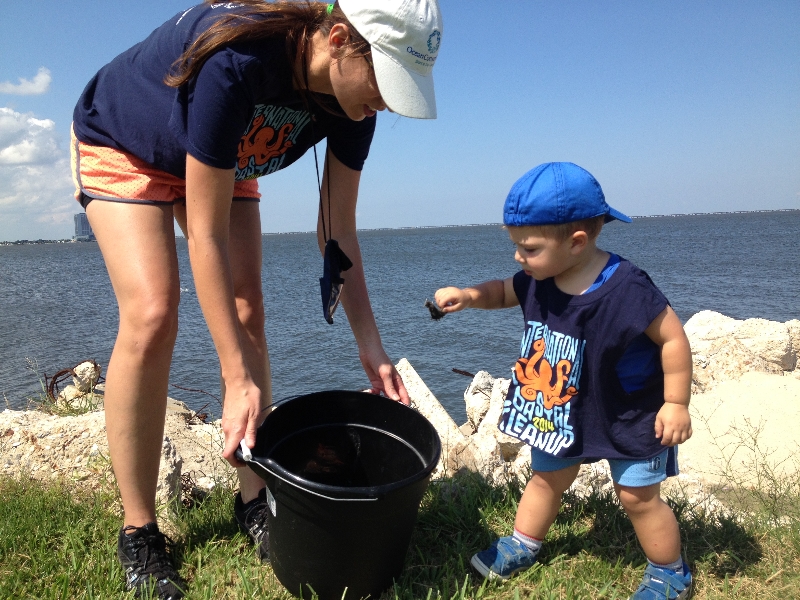
Alexis at an ICC cleanup © Alexis Baldera

For nearly 35 years, Ocean Conservancy’s International Coastal Cleanup (ICC) has rallied communities together to fight for one common cause: cleaning local coastlines and documenting the pollution that’s picked up. We use the data collected each year by the million-plus volunteers to not only report back to the public on just how much trash was removed, but also to do something arguably more important: spotlight exactly what was found. Last year, we found a lot of trash (23,333,816 pounds, to be exact). What was even more eyebrow-raising than the sheer volume of debris, however, was what constituted one of the most heavily-documented items in 2018.

For the first time since Ocean Conservancy began counting plastic cutlery, these utensils claimed a spot among the top ten most-collected pieces of trash at the 2018 cleanup. In just one day, volunteers removed close to 2 million single-use plastic forks, knives and spoons from waterways around the globe.

As with other environmental efforts combatting single-use plastics, such as our signature Skip the Straw campaign, a common theme seems to run through the heart of the movement to combat ocean plastic: the unquestionable, obvious truth that a portion of the problem, at its core, could be completely avoided with the switch to more sustainable alternatives. Most of us have the full capacity to skip plastic straws and invest in a reusable one. We have the ability to say no to single-use water bottles and treat ourselves to a reusable one. And there is nothing stopping us, at the end of the day, from quitting single-use plastic cutlery to help support a healthy ocean.
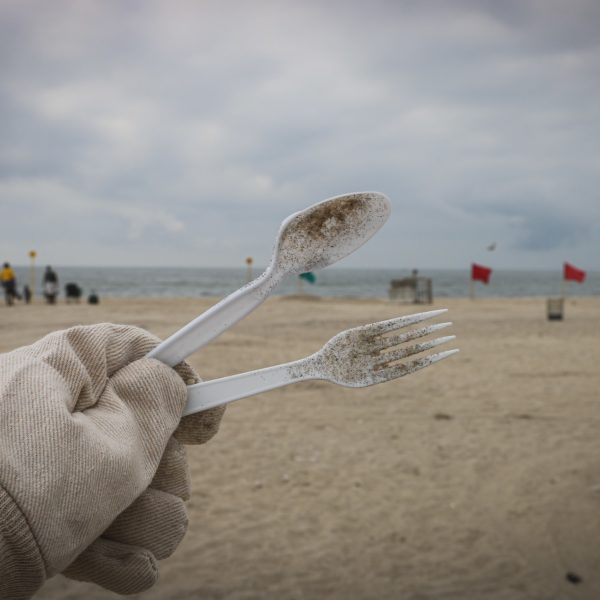
photo-1562684785-5d6053d8fe36
Public Domain

In a recent Forbes article, Nick Mallos, senior director of our Trash Free Seas program, explained the impact plastics like cutlery have on marine wildlife. “We have to remember that ocean animals and their feeding habits are not designed to distinguish plastic from food,” he said. “That’s why we see so many animals wash up with plastic in their guts, whether it’s straws, plastic bags or even more unusual items like plastic hoses.”

I don’t know about you, but with 2 million pieces of unnecessary plastic utensils added to that mix, my heart simply sinks. When it comes to quitting the cutlery, there’s one question that keeps repeating over and over again in my mind:

Do sea turtles need plastic sporks?

No, silly. They don’t. So why are we letting sporks enter their home in the first place?

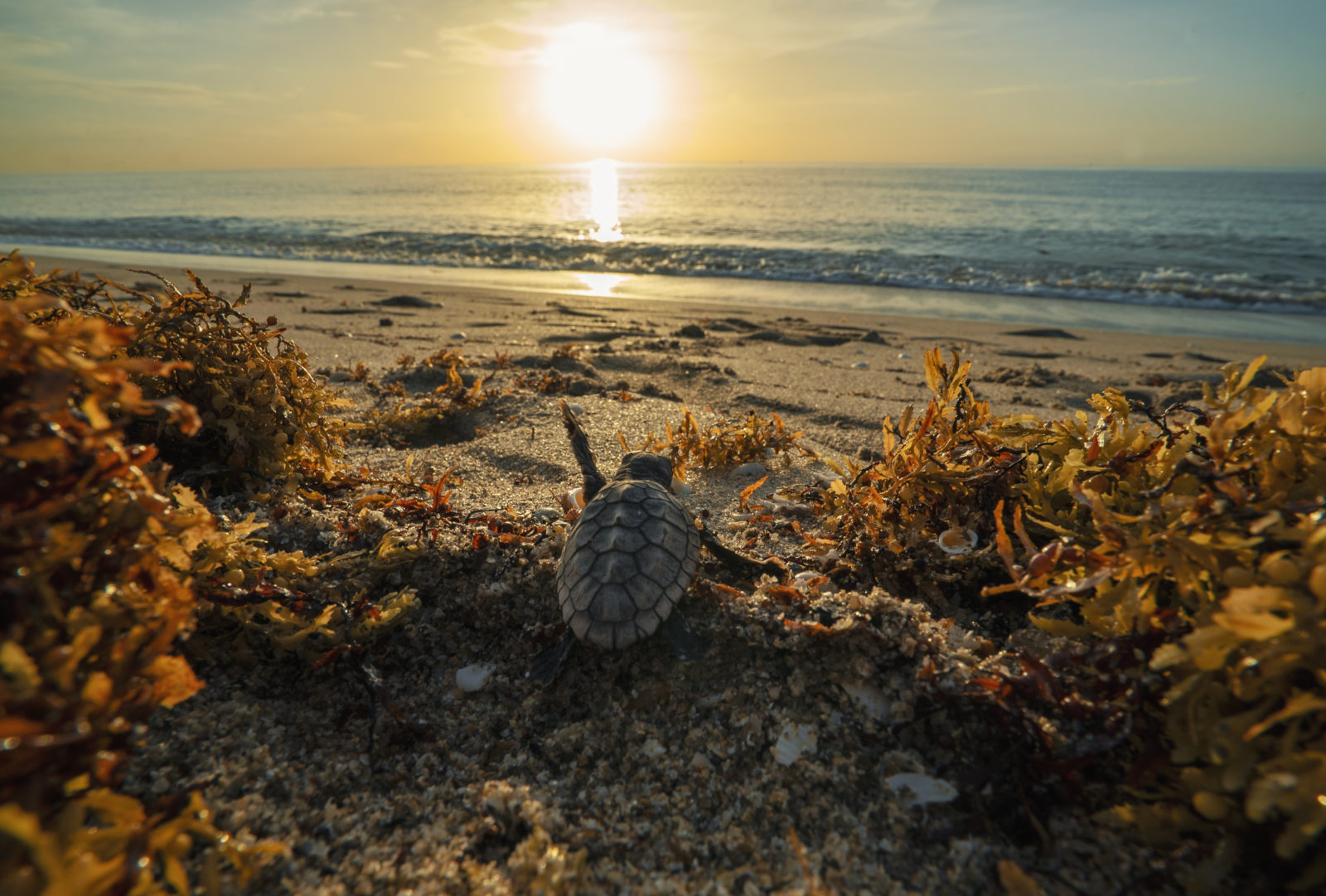
Saying yes to more sustainable practices goes far beyond cutting down on personal waste.  By bringing along reusable cutlery or asking your favorite takeout restaurant to look into greener, more eco-friendly business practices, little adjustments can make a world of a difference for the survival of marine animals like sea turtles.

Friends, it’s time to start standing up for wildlife and saying no to the very items we use on a regular basis that put them in harm’s way. It’s time to quit the cutlery.

Take the pledge today: quit the cutlery, and join the movement for a cleaner, healthier, more sustainable planet … both for our own sake, and the sake of all the animals who depend on us to make this change. If we can do it with straws, we can do it with other plastics, too.
Baby Turtle Sargassum 1
© David Diez Ortiz

The post Why Quitting Plastic Cutlery Helps Save our Ocean appeared first on Ocean Conservancy.


from Ocean Conservancy https://ift.tt/2MY0I0w https://ift.tt/eA8V8J

Tuesday, 29 October 2019

From the Archives: Mining social media: The new world of abundant, ‘messy’ data and what marine conservation and management can learn from it (MEAM May 2018, Issue 11:7)

Editor’s Note: From the Archives calls attention to past Skimmer/MEAM articles whose perspectives and insight remain relevant.

Coverage of social media usually focuses on how social media platforms (e.g., Twitter, Facebook) can be used to communicate with and educate stakeholders and the general public. But social media also provides publicly available information on how people are using and feeling about the marine environment. Learn how social media and other digital data are being used for marine conservation and management.


from OpenChannels News https://ift.tt/2PAQbd8 https://ift.tt/eA8V8J

Fishing for invertebrates is increasing dramatically, and it’s impacting marine ecosystems: How we can manage invertebrate fisheries better

Editor’s note: In 2016, roughly one-third of the total value of the world’s trade of fish and fish products was invertebrates. (They were approximately one-fifth of the global fish trade by live weight.) To learn more about the state and future of invertebrate fisheries management, The Skimmer interviewed Heike Lotze, a professor in the Department of Biology at Dalhousie University in Halifax, Canada.


from OpenChannels News https://ift.tt/32VCERm https://ift.tt/eA8V8J

Latest Marine Ecosystem News and Resources for Planners and Managers


from OpenChannels News https://ift.tt/2PrMEOj https://ift.tt/eA8V8J

What webinars would you like to see?


from OpenChannels News https://ift.tt/32Y2aWe https://ift.tt/eA8V8J

5 Famous Movie Monsters Inspired by Marine Animals

The ocean is a mysterious place, home to strange and wonderful critters that seem out of this world. For proof, look no further than the jaw-extending goblin shark, the luminous deep-sea angler fish or the ghostly chimaera.

So, when it comes time for writers to invent terrifying movie monsters, it’s no surprise that they turn to the sea for inspiration. Marine evolution has produced plenty of spines, shapes and strange behaviors for them to choose from.

Here are five of our favorite movie monsters that resemble real-life ocean organisms. Celebrate this Halloween with a screening of your favorites! Note: Although we find the resemblance uncanny, not all directors have confirmed these animals actually inspired their movie look-alikes!

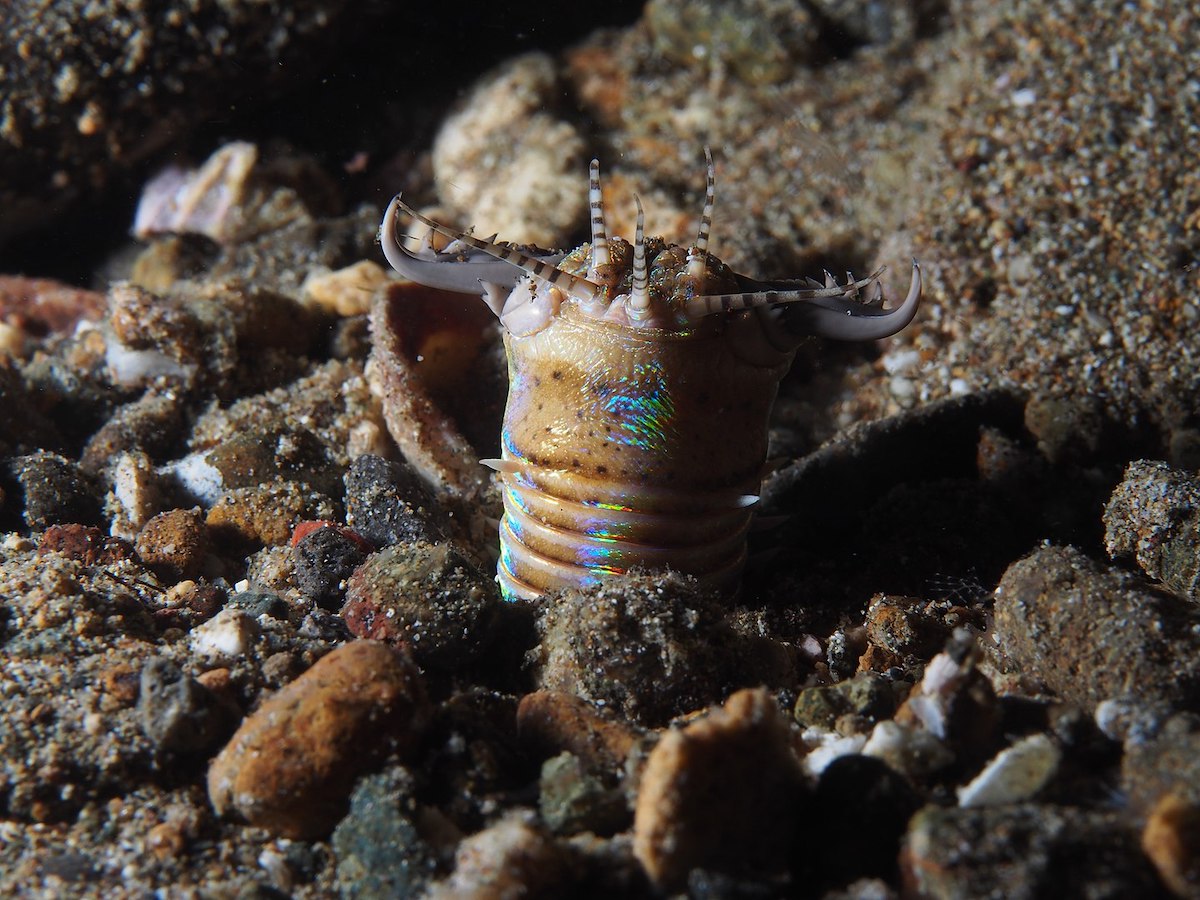
Tremors: Graboids as Bobbit Worms

© Rickard Zerpe

Tremors, a 1990s sci-fi gem starting the illustrious Kevin Bacon, features a town plagued by a killer sandworms called graboids. These 30-foot-long worms live underground and burst through the desert sand with their powerful jaws to attack and kill their prey (thankfully, that prey does not include Kevin Bacon). A graboid look-alike is alive and well in our ocean: the bobbit worm. Although it’s not 30 feet long (more like 10 feet), it has a similar hunting mechanism to the Tremors monster. The bobbit worm buries itself in the sand, then lunges and snaps its jaws when prey comes by. Those chompers are strong enough to cut prey in two—and could cause some serious problems if you got close enough to test it out.

Alien: Xenomorph as Phronima

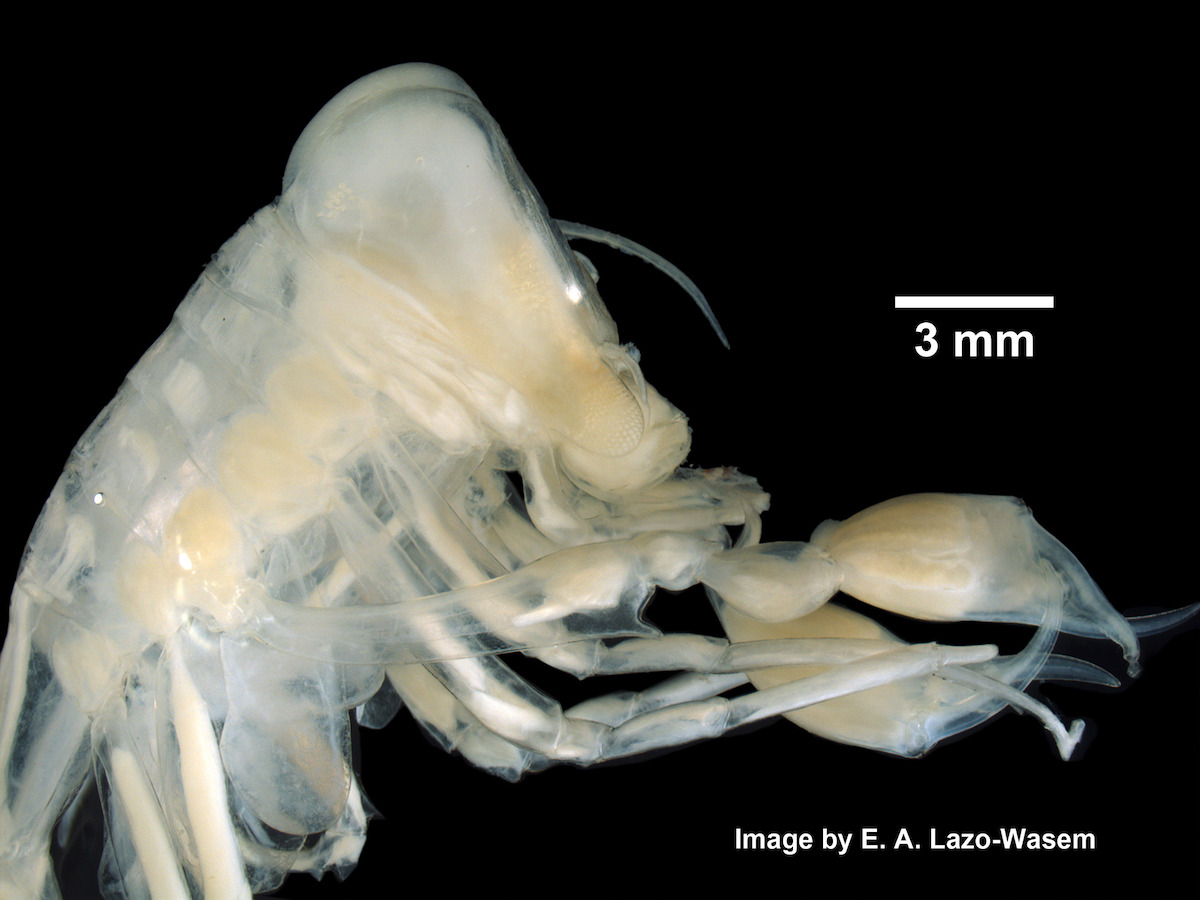
IZ.029121: Phronima
© Eric A. Lazo-Wasem

The Xenomorph is one of the most iconic—and terrifying—movie monsters out there. The Xenomorph is a parasite that plants its larvae in a human host, which will consume the host from inside out before emerging into the world (as illustrated by that famous chest-bursting scene in Alien). It’s rumored Xenomorphs (or, at least the alien queen morph) are inspired by the real-life ocean parasite Phronima. Phronima are tiny crustaceans that burrow a barrel-shaped nook inside salps (gelatinous plankton), killing the host. Phronima lay their eggs inside the dead salp, then continue to ride around with their young in the hollow salp body in a sort of twisted corpse-mobile. In this case, it’s safe to say the truth is even stranger than fiction.

Star Wars: Jabba the Hutt as a Sea Cucumber

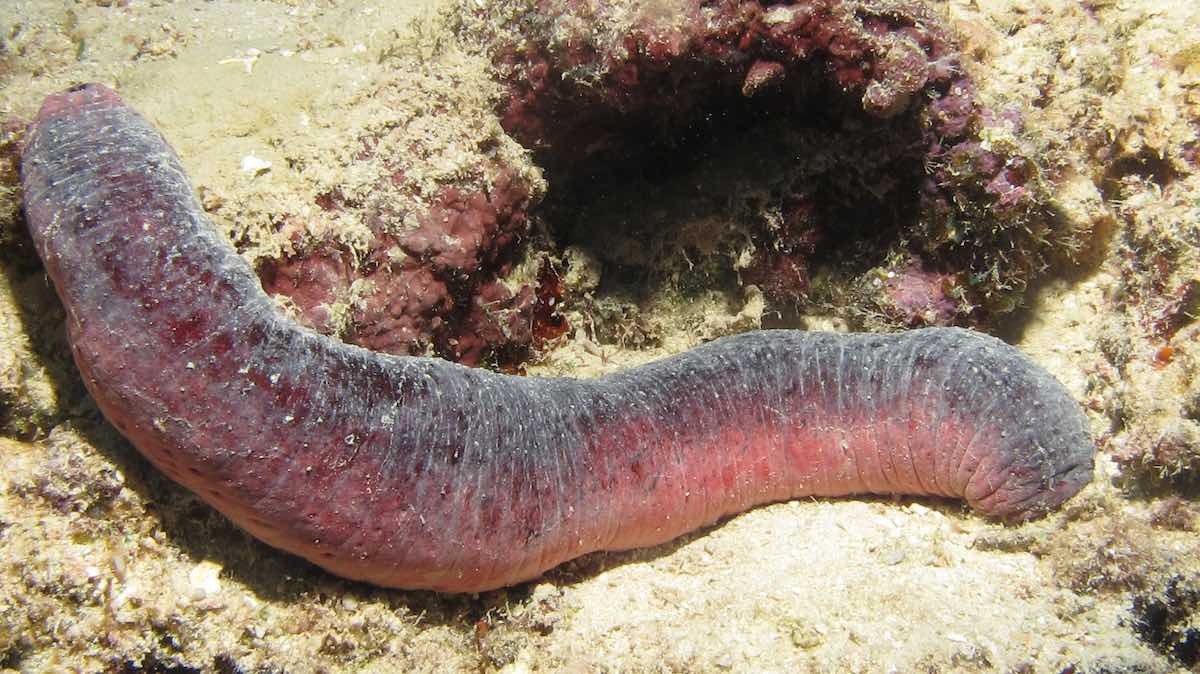
Edible Sea Cucumber (Holothuria edulis)
© Ed Bierman

Star Wars’ Jabba the Hutt was a powerful crime boss, known for his ruthless behavior and imposing slug-like appearance. He was almost 13 feet long and moved by slithering his bulbous body along the ground. Although the largest sea cucumbers can only grow to half that size (about 6.5 feet) their soft, bumpy bodies are decidedly Jabba-like. Sea cucumbers can also expel their insides as a self-defense mechanism, and although we have no proof Jabba could do that, we also have no proof that he couldn’t.

Pirates of the Caribbean: Kraken as a Giant Squid

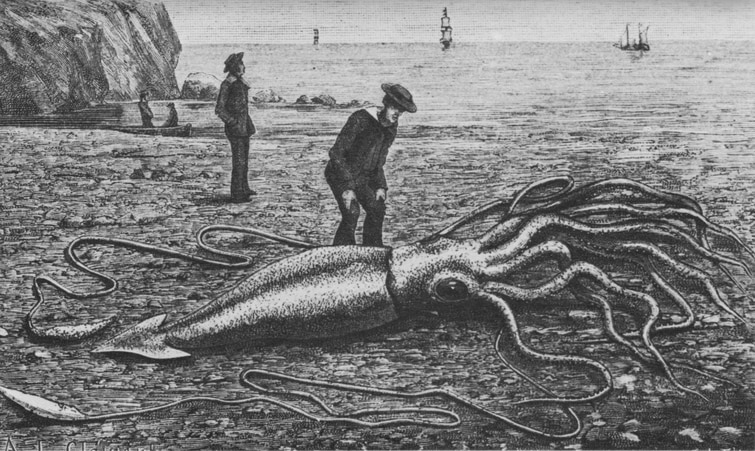
Popular Science : Wikimedia Commons- An engraving of a giant squid found in Newfoundland, 1877Wikimedia Commons
© Popular Science / Wikimedia Commons

The legend of the Kraken has been around for centuries, and is a popular monster in pop culture, including in Atlantis, Clash of the Titans, Twenty Thousand Leagues Under the Sea, and more. In the Pirates of the Caribbean series, the kraken is controlled by Davy Jones, who sends the monster to attack those who are in debt to him. The Kraken looks like a massive cephalopod, and the original kraken lore was likely inspired by sightings of giant squid. Although the real giant squid couldn’t crush a ship with its tentacles like the kraken, it can still reach up to 43 feet in length.

War of the Worlds: Aliens as Jellyfish

Crossota Jellyfish-NOAA
© NOAA

Since its initial release in 1897, H.G. Well’s War of the Worlds has sparked a number of movies, comics and TV series. In Steven Spielberg’s 2005 adaptation of the classic tale, the invading aliens’ appearance was supposedly inspired by jellyfish. They have round heads and numerous tentacles, and move in a light way that makes them seem like they are underwater (apparently, Spielberg wanted them to look “graceful”). In reality, jellyfish move by contracting and relaxing their bell, which moves the animal forward (as opposed the movie aliens, who walk on their tentacles). There are other major differences too, including the aliens being the size of skyscrapers and able to destroy entire cities. But otherwise, the resemblance is clear.

Do you have any examples of movie monsters inspired by marine animals that we’ve missed? If so, take to social media and share your creative examples with us by tagging @OurOcean!

The post 5 Famous Movie Monsters Inspired by Marine Animals appeared first on Ocean Conservancy.


from Ocean Conservancy https://ift.tt/36oNyBs https://ift.tt/eA8V8J

Monday, 28 October 2019

OC Overview for the week of 28 October 2019

After nonnative fish farming ban, Cooke Aquaculture plans a shift in Puget Sound

https://www.kitsapsun.com/story/news/2019/10/25/cooke-aquaculture-plans-...

Salmon swim above the Grand Coulee Dam for first time in 80 years

https://www.hcn.org/issues/51.18/people-and-places-salmon-swim-above-the...


from OpenChannels News https://ift.tt/2WkcwNH https://ift.tt/eA8V8J

What Kansas Can Teach Us About NOAA

If you asked most people in America which states depend on the ocean, Kansas would probably not top the list. No beaches. No ports. No ...